Success in aerospace engineering demands a blend of technical and soft abilities. Core competencies include a strong foundation in mathematics and physics, coupled with proficiency in computer-aided design (CAD) software and engineering simulation tools. Analytical problem-solving skills are critical for interpreting data, diagnosing issues, and developing effective solutions within complex aerospace systems.
Cultivating these skills is essential for designing, developing, testing, and maintaining aircraft, spacecraft, satellites, and missiles. Engineers equipped with these competencies contribute to advancements in aviation, space exploration, and national security, driving innovation and technological progress. Historically, the development and refinement of these abilities have been central to achieving significant milestones in aerospace, from the first successful flights to lunar landings and beyond.
A comprehensive understanding of aerodynamics, propulsion, structural analysis, and control systems forms the bedrock of expertise in this field. Effective communication, both written and oral, facilitates collaboration within multidisciplinary teams and allows for clear presentation of technical findings. Furthermore, adaptability and a commitment to continuous learning are necessary to keep pace with the rapid advancements in aerospace technology.
Essential Guidance for Aerospace Engineering Proficiency
Developing the required capabilities for a successful aerospace engineering career necessitates a strategic and dedicated approach. The following guidelines offer a framework for cultivating the essential skills and knowledge within this demanding field.
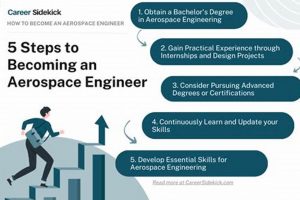
Tip 1: Strengthen Foundational Knowledge: Prioritize a deep understanding of mathematics, physics, and chemistry. These disciplines provide the theoretical basis for all aerospace engineering principles. Dedicate time to mastering calculus, differential equations, linear algebra, fluid mechanics, thermodynamics, and materials science.
Tip 2: Cultivate CAD and Simulation Proficiency: Acquire expertise in industry-standard CAD software such as CATIA, SolidWorks, or AutoCAD. Furthermore, develop skills in using simulation tools like ANSYS or MATLAB/Simulink for analyzing aerodynamic performance, structural integrity, and control system behavior. Hands-on experience with these tools is invaluable.
Tip 3: Develop Analytical Problem-Solving Skills: Aerospace engineering challenges often require complex problem-solving. Hone your ability to break down complex systems into manageable components, analyze data critically, identify potential issues, and propose effective solutions. Practice with case studies and real-world engineering scenarios.
Tip 4: Enhance Communication Skills: Proficiency in both written and oral communication is crucial. Aerospace engineers must effectively convey technical information to colleagues, clients, and stakeholders. Practice presenting technical data, writing clear and concise reports, and participating actively in team discussions.
Tip 5: Gain Practical Experience: Seek internships, co-op programs, or research opportunities in aerospace-related fields. Hands-on experience provides invaluable exposure to real-world engineering challenges and allows you to apply your theoretical knowledge in practical settings. Contribute to projects and actively seek mentorship from experienced engineers.
Tip 6: Specialize Strategically: The field of aerospace engineering encompasses numerous specializations, such as aerodynamics, propulsion, structures, and control systems. Identify your areas of interest and focus your studies and experiences to develop expertise in a specific area. This specialization will increase your value to potential employers.
Tip 7: Remain Current with Technological Advancements: The aerospace industry is constantly evolving. Stay abreast of the latest technological advancements, emerging trends, and industry standards by reading professional journals, attending conferences, and participating in continuing education programs. Lifelong learning is essential for career longevity.
Developing these abilities is a continuous process that demands dedication and perseverance. Prioritizing these areas ensures a robust foundation for a successful and impactful career in aerospace engineering.
Mastery of these areas is fundamental for contributing to innovation and progress in the aerospace sector.
1. Mathematical Proficiency

Mathematical proficiency is not merely a prerequisite, but an indispensable foundation upon which the discipline of aerospace engineering is built. Its application permeates virtually every aspect of the field, influencing design, analysis, and problem-solving methodologies. A strong command of mathematical principles enables aerospace engineers to tackle complex challenges and develop innovative solutions.
- Calculus and Differential Equations
Calculus and differential equations form the backbone for modeling dynamic systems in aerospace engineering, such as the motion of aircraft and spacecraft. These tools are essential for analyzing aerodynamic forces, optimizing trajectory planning, and controlling flight stability. For example, these concepts are used to derive and solve the equations governing lift and drag on an airfoil, informing wing design and aircraft performance.
- Linear Algebra
Linear algebra provides the means to represent and manipulate complex systems of equations that arise in structural analysis, finite element modeling, and control systems design. It is used to analyze the stresses and strains within aircraft structures, ensuring structural integrity under various loading conditions. In control systems, linear algebra facilitates the design of stable and responsive control algorithms.
- Statistics and Probability
Statistics and probability are vital for analyzing experimental data, assessing system reliability, and quantifying uncertainty in engineering designs. These mathematical tools are used to evaluate the performance of new materials, estimate the probability of component failure, and optimize maintenance schedules for aerospace vehicles, ultimately enhancing safety and reducing operational costs.
- Numerical Methods
Numerical methods are crucial for solving engineering problems that lack analytical solutions. Techniques like finite difference methods and computational fluid dynamics (CFD) rely on numerical approximations to simulate fluid flow, heat transfer, and structural behavior. These simulations provide valuable insights into system performance and allow engineers to optimize designs before physical prototypes are built.
The facets of mathematical proficiency detailed above demonstrate its critical relevance to aerospace engineering. These mathematical skills contribute directly to the engineer’s ability to model, simulate, and analyze complex systems, impacting the design, safety, and efficiency of aerospace vehicles and related technologies. Without a solid foundation in these areas, aspiring aerospace engineers face significant limitations in their ability to innovate and contribute to the field’s ongoing advancements.
2. Physics Fundamentals

A robust understanding of physics fundamentals is non-negotiable for aerospace engineers. The principles of mechanics, thermodynamics, electromagnetism, and optics underpin nearly every aspect of aerospace design and analysis. These principles are not abstract concepts; they are the tools used to predict and control the behavior of aircraft, spacecraft, and related systems. For instance, Newton’s laws of motion directly govern the flight dynamics of an aircraft, while the principles of thermodynamics are crucial for understanding and optimizing the performance of jet engines and rocket propulsion systems. A deficiency in understanding these core physics concepts directly translates to an inability to effectively design, analyze, and troubleshoot aerospace systems.
The practical application of physics fundamentals extends to a wide array of engineering tasks. Aerodynamic design relies heavily on fluid dynamics, a branch of physics, to shape aircraft wings and control surfaces for optimal lift and drag characteristics. Structural analysis utilizes the principles of elasticity and material science to ensure that aircraft structures can withstand the stresses encountered during flight. Furthermore, the development of advanced materials for aerospace applications demands a thorough grasp of solid-state physics and materials science. The effectiveness of a satellite’s communication system is deeply rooted in the principles of electromagnetism, dictating antenna design and signal propagation. These specific examples illustrate the direct and consequential relationship between physics knowledge and competent aerospace engineering practice.
In summary, physics fundamentals form the bedrock of aerospace engineering competency. A firm grasp of these principles enables engineers to translate theoretical concepts into practical designs, analyze complex systems, and contribute meaningfully to technological advancements. The inherent challenges of aerospace engineering necessitate a deep and intuitive understanding of physics. Without it, the ability to innovate and solve problems within this demanding field is severely curtailed. The demand for knowledgeable and proficient aerospace engineers means physics acumen is not merely useful, it is essential.
3. CAD Expertise

Computer-Aided Design (CAD) expertise forms a critical element within the spectrum of skills required for aerospace engineering. Its significance stems from the inherent need to translate theoretical designs and calculations into tangible, manufacturable components and systems. The proficiency in CAD software directly impacts an engineer’s ability to conceptualize, model, and refine aerospace designs, ensuring they meet stringent performance and safety criteria. The absence of CAD proficiency restricts an engineer’s capacity to effectively contribute to the design process, hindering their ability to visualize complex three-dimensional structures and assess their feasibility before physical prototyping.
The practical application of CAD expertise extends across numerous facets of aerospace engineering. Airfoil design, for instance, necessitates the precise creation and manipulation of complex curves, which are readily achieved through CAD software. Similarly, the design of intricate engine components, such as turbine blades, demands the ability to generate detailed models that can withstand extreme thermal and mechanical stresses. Beyond component design, CAD tools facilitate the creation of complete aircraft or spacecraft assemblies, enabling engineers to evaluate the integration of various systems and identify potential interferences. For example, the design of the International Space Station involved extensive CAD modeling to ensure the compatibility of modules from different countries and to optimize the layout of internal systems. These real-world applications underscore the indispensability of CAD expertise in modern aerospace engineering practice.
In conclusion, CAD expertise is not merely a supplementary skill; it is a core competency for aerospace engineers. Its proficiency directly influences an engineer’s capacity to design, analyze, and refine aerospace systems. While theoretical knowledge of aerodynamics, propulsion, and structures remains essential, the ability to translate those concepts into tangible designs through CAD software is equally crucial for successful project completion and contribution to the field. Thus, the development of CAD skills should be considered an integral part of any aerospace engineering education or professional development program.
4. Problem-Solving Acuity

Problem-solving acuity is a fundamental attribute for aerospace engineers, inextricably linked to the competencies necessary for success in this demanding field. Its significance derives from the complex and multifaceted challenges inherent in designing, developing, and maintaining aerospace systems. The ability to analyze intricate problems, devise effective solutions, and implement them efficiently is critical for ensuring the safety, performance, and reliability of aircraft and spacecraft.
- Systems Thinking
Aerospace engineering involves complex systems with interconnected components. Problem-solving acuity necessitates systems thinking – the ability to understand how individual parts interact and affect the overall performance. For instance, optimizing the fuel efficiency of an aircraft requires considering the interplay between engine design, aerodynamics, and weight distribution. Neglecting any of these elements can lead to suboptimal or even detrimental outcomes.
- Analytical Reasoning
Analytical reasoning is the capacity to dissect complex problems into smaller, manageable components, allowing for a systematic evaluation of potential solutions. In the context of “what skills are needed to be an aerospace engineer,” this involves assessing the structural integrity of an aircraft wing, requiring the ability to analyze stress distributions, identify potential failure points, and propose design modifications to enhance structural resilience. A failure to reason analytically can lead to catastrophic failures.
- Creative Innovation
Problem-solving often requires innovative solutions beyond conventional approaches. Aerospace engineers frequently encounter situations where existing technologies are inadequate, necessitating the development of novel concepts. The creation of lighter, stronger materials for aircraft construction exemplifies this need. Innovation in propulsion systems for space exploration is another key area. Creative thinking, therefore, plays a significant role.
- Decision-Making Under Pressure
Aerospace engineers frequently operate under tight deadlines and demanding constraints. Problem-solving acuity involves the ability to make informed decisions quickly and effectively, even in high-pressure situations. For example, during a critical flight test, engineers must be able to analyze real-time data, diagnose any anomalies, and determine the appropriate course of action to ensure the safety of the aircraft and crew. This requires a blend of technical knowledge and decisive judgment.
The aforementioned facets of problem-solving acuity collectively underscore its vital role for aerospace engineers. Developing proficiency in these areas is essential for addressing the complex engineering challenges inherent in the field. The emphasis is not merely on technical proficiency, but also on the ability to apply knowledge effectively and creatively to solve real-world problems, ultimately contributing to advancements in aerospace technology and ensuring the safety and reliability of aerospace systems.
5. Communication Skills

The capacity to communicate effectively is paramount among the competencies necessary for aerospace engineers. Engineering endeavors, particularly within the aerospace sector, are rarely solitary pursuits. They typically involve collaboration among multidisciplinary teams composed of engineers from various specializations, technicians, scientists, and project managers. Successful project outcomes hinge upon the seamless exchange of information, the clear articulation of technical concepts, and the ability to convey complex ideas in a manner comprehensible to individuals with diverse backgrounds. Miscommunication can lead to design flaws, project delays, and, in critical situations, safety compromises. Therefore, robust communication skills are not merely beneficial but essential for mitigating risk and fostering innovation within the aerospace domain.
The application of communication skills spans a broad range of activities within aerospace engineering. Writing technical reports, preparing presentations, and participating in design reviews are commonplace tasks requiring clear and concise communication. For instance, documenting test results and presenting findings to stakeholders requires the ability to translate complex data into easily understood narratives. Similarly, explaining design concepts to non-technical personnel, such as investors or government regulators, necessitates the ability to simplify technical jargon and highlight the salient features of a project. Moreover, effective communication extends beyond formal settings to encompass everyday interactions with colleagues, supervisors, and clients. The ability to actively listen, ask clarifying questions, and provide constructive feedback are critical for fostering a collaborative work environment and resolving conflicts effectively.
In summary, the connection between communication skills and the overall competencies required of aerospace engineers is undeniable. Effective communication serves as a critical enabler, facilitating collaboration, mitigating risk, and promoting innovation within the sector. While technical expertise remains fundamental, the ability to articulate ideas clearly, convey complex information concisely, and foster effective teamwork are equally vital for achieving successful outcomes in the challenging and dynamic field of aerospace engineering. Therefore, aspiring aerospace engineers should actively cultivate their communication skills alongside their technical knowledge to maximize their potential for professional success and contribute meaningfully to the advancement of aerospace technology.
6. Adaptability
Adaptability constitutes a core competency for aerospace engineers, intrinsically linked to the multifaceted nature of the profession and the rapid pace of technological advancement within the field. The aerospace industry is characterized by constant innovation, demanding that engineers continually update their knowledge, acquire new skills, and embrace evolving technologies. This capacity to adapt directly influences an engineer’s ability to contribute meaningfully to projects, solve complex problems, and remain relevant throughout their career. A rigid adherence to outdated methods or a resistance to new technologies can quickly render an engineer ineffective in this dynamic environment.
The practical manifestation of adaptability within aerospace engineering is evident in various scenarios. Consider the shift towards sustainable aviation, which requires engineers to develop expertise in alternative propulsion systems, novel materials, and optimized aerodynamic designs. Engineers who are adaptable can readily acquire these skills and contribute to the development of more environmentally friendly aircraft. Similarly, the increasing reliance on autonomous systems in aerospace necessitates proficiency in areas such as artificial intelligence, machine learning, and robotics. Engineers who embrace these technologies are better positioned to design and implement advanced control systems for unmanned aerial vehicles (UAVs) and spacecraft. Furthermore, adaptability is crucial for navigating the evolving regulatory landscape, as new safety standards and environmental regulations frequently impact design and operational practices. An adaptable engineer remains informed about these changes and adjusts their approach accordingly.
In conclusion, adaptability is not merely a desirable trait but an indispensable skill for aerospace engineers. The capacity to learn continuously, embrace new technologies, and adjust to evolving industry standards is paramount for sustained success. The dynamic nature of the aerospace industry demands that engineers possess a proactive mindset and a willingness to adapt to the challenges and opportunities that arise. By cultivating adaptability alongside core technical skills, aerospace engineers can maximize their potential for innovation, contribute meaningfully to the advancement of the field, and ensure their long-term professional relevance.
Frequently Asked Questions Regarding Aerospace Engineering Competencies
This section addresses common inquiries concerning the skillset required for success in aerospace engineering. It aims to provide clarity and informed answers to frequently asked questions.
Question 1: Is a strong foundation in mathematics truly essential for aerospace engineering?
A rigorous grounding in mathematics is not optional. Aerospace engineering principles rely heavily on mathematical models and analyses. Calculus, differential equations, linear algebra, and statistics form the bedrock for analyzing aerodynamic forces, optimizing trajectories, and ensuring structural integrity.
Question 2: How important is hands-on experience with CAD software?
Proficiency with Computer-Aided Design (CAD) software is critical. Aerospace engineers utilize CAD tools to design, model, and simulate components and systems. Practical experience with industry-standard software like CATIA, SolidWorks, or AutoCAD is highly valued by employers.
Question 3: Does aerospace engineering require specialization, or is a broad understanding sufficient?
While a broad understanding of aerospace engineering principles is important, specialization often enhances career prospects. Concentrating on areas such as aerodynamics, propulsion, structures, or control systems allows for the development of in-depth expertise that is highly sought after in specific roles.
Question 4: What role does communication play in aerospace engineering?
Effective communication is essential for collaboration within multidisciplinary teams. Aerospace engineers must articulate complex technical information clearly and concisely, both in written reports and oral presentations, to colleagues, clients, and stakeholders.
Question 5: Is adaptability a skill that can be learned, or is it an inherent trait?
Adaptability can be cultivated through continuous learning and a proactive approach to new technologies. The aerospace industry is constantly evolving, and engineers must be willing to update their skills and embrace new methodologies to remain competitive.
Question 6: How can aspiring aerospace engineers gain practical experience?
Internships, co-op programs, and research opportunities provide invaluable hands-on experience. These experiences allow students to apply theoretical knowledge to real-world problems, develop practical skills, and gain exposure to industry practices.
In summary, success in aerospace engineering necessitates a blend of technical expertise, practical skills, and soft abilities. A strong foundation in mathematics and physics, proficiency in CAD software, effective communication, and a willingness to adapt are crucial for achieving career success.
Continue exploring resources to gain a comprehensive understanding of the aerospace engineering field.
Conclusion
The preceding exploration of “what skills are needed to be an aerospace engineer” reveals a multifaceted and demanding skill set. Proficiency extends beyond theoretical knowledge, encompassing practical application, analytical problem-solving, and effective communication. The development of these core competencies is not merely advantageous but essential for contributing meaningfully to the aerospace sector.
Continued pursuit of these skills, coupled with a commitment to lifelong learning, will empower aspiring and current aerospace engineers to navigate the ever-evolving landscape of aerospace technology. The future of aerospace innovation hinges on the dedication and expertise of those who embrace these essential competencies.