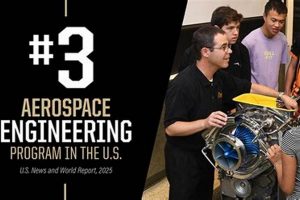
The academic foundation for professionals in this specialized engineering field typically involves a bachelor’s degree concentrated in a relevant discipline. Common choices include aerospace engineering itself, which provides a curriculum deeply rooted in aeronautics and astronautics principles. Alternatively, individuals may pursue a degree in mechanical engineering with a focus on fluid dynamics, thermodynamics, and structural analysis all critical components in aircraft and spacecraft design. Other potential undergraduate paths are electrical engineering, particularly for those interested in the electronics and control systems aspects of aerospace vehicles, or materials science and engineering for individuals keen on developing novel alloys and composites used in aerospace structures.
The advantage of a highly focused education lies in the specialized knowledge and skills gained, preparing graduates for specific roles within the aerospace industry. Conversely, a broader engineering education allows for greater career flexibility and adaptability across different engineering sectors. Historically, aerospace engineering emerged as a distinct discipline from mechanical engineering as the demands and complexities of flight and space exploration increased, necessitating a more specialized and dedicated training pathway. This specialization ensures engineers possess the advanced knowledge required for cutting-edge research, design, and development in this demanding field.
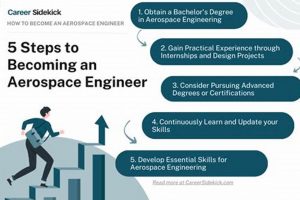
Following the selection of an appropriate undergraduate discipline, future aerospace engineers often augment their knowledge and skills through specialized coursework, research opportunities, and internships. These supplementary experiences further solidify their expertise in areas such as aerodynamics, propulsion, orbital mechanics, and flight control systems, enabling them to effectively contribute to the design, development, testing, and maintenance of aircraft, spacecraft, and related technologies.
Guidance for Aspiring Aerospace Engineers
Selecting an appropriate major constitutes a crucial initial step for individuals pursuing a career in aerospace engineering. Careful consideration should be given to the options available and their respective benefits.
Tip 1: Prioritize Foundational Engineering Principles: A robust understanding of fundamental engineering concepts such as mechanics, thermodynamics, and fluid dynamics is essential. Regardless of the specific major chosen, ensure the curriculum provides a solid foundation in these core areas.
Tip 2: Explore Specialization Options Within a Broader Engineering Field: If aerospace engineering is not offered directly, consider mechanical or electrical engineering with a concentration or specialization in aerospace-related topics. This approach provides flexibility while still allowing for targeted knowledge acquisition.
Tip 3: Emphasize Mathematics and Computational Skills: Aerospace engineering relies heavily on mathematical modeling and computational analysis. Strong proficiency in calculus, differential equations, and programming languages (e.g., MATLAB, Python) is indispensable.
Tip 4: Seek Relevant Research and Project Opportunities: Active participation in research projects or engineering design teams focused on aerospace applications provides valuable hands-on experience and enhances practical skills.
Tip 5: Obtain Internships in the Aerospace Industry: Internships offer direct exposure to the aerospace work environment and allow for the application of theoretical knowledge to real-world problems. They also facilitate networking and potential future employment opportunities.
Tip 6: Consider a Minor in a Complementary Field: A minor in a related field, such as physics, mathematics, or computer science, can broaden one’s skillset and enhance problem-solving abilities.
Tip 7: Maintain a Strong Academic Record: Aerospace engineering is a competitive field, and a strong academic performance is critical for securing internships, research positions, and ultimately, employment.
These strategies are designed to optimize preparation for a successful career in the aerospace industry, irrespective of the precise undergraduate major pursued. Focusing on fundamental principles, gaining practical experience, and developing strong analytical skills are key determinants of success.
By diligently following these guidelines, aspiring aerospace engineers can lay a solid foundation for a rewarding and impactful career in this exciting and challenging field.
1. Aerospace engineering

Aerospace engineering, as a designated field of study, represents a direct and specialized answer to the query, “what do aerospace engineers major in?”. It embodies a targeted educational path designed to equip students with the specific knowledge and skills required for the design, development, testing, and maintenance of aircraft and spacecraft. The curriculum typically encompasses aerodynamics, propulsion, structures, control systems, and orbital mechanics. This direct correlation underscores the importance of aerospace engineering as a primary component of the academic qualifications for professionals in the field. For example, graduates with a degree in aerospace engineering are often sought after for roles in companies like Boeing, SpaceX, and NASA due to their specialized training. The major’s existence directly addresses the industry’s need for individuals with focused expertise in aeronautical and astronautical systems.
However, the connection between “aerospace engineering” and the broader question of academic preparation is not exclusive. While a direct aerospace engineering degree is ideal, related fields such as mechanical engineering, electrical engineering, and physics also serve as viable pathways. Mechanical engineering, with its emphasis on thermodynamics, fluid dynamics, and structural analysis, provides a fundamental understanding applicable to aerospace design. Electrical engineering equips graduates with skills in control systems, avionics, and instrumentation, essential for modern aircraft and spacecraft. Physics provides a foundation in the underlying scientific principles governing flight and space travel. The practical significance of this understanding lies in recognizing that a diverse range of academic backgrounds can contribute to the aerospace industry, provided individuals acquire the necessary specialized knowledge through supplementary coursework, research, and practical experience.
In conclusion, while aerospace engineering constitutes a direct and preferred answer to the question of academic qualifications, it is not the only path. The connection highlights the importance of both specialized and foundational knowledge. Challenges arise in ensuring that individuals from related fields acquire the necessary specialized expertise to effectively contribute to the aerospace sector. A comprehensive understanding of this connection is essential for students planning their academic paths and for employers seeking to identify and recruit qualified professionals, contributing to a workforce equipped to advance aerospace technology.
2. Mechanical engineering
Mechanical engineering, as a discipline, maintains a significant connection to the foundational education of aerospace engineers. This connection stems from the overlap in fundamental principles and skills required in both fields. Mechanical engineering curricula provide a robust grounding in areas such as thermodynamics, fluid mechanics, heat transfer, and materials science. These are all areas critical to the design and analysis of aircraft and spacecraft components, including engines, airframes, and control systems. For example, understanding heat transfer is vital for designing thermal management systems in satellites, while fluid mechanics is essential for aerodynamic analysis of aircraft wings. The importance of mechanical engineering within aerospace education lies in its provision of a broad base of knowledge applicable to a wide array of aerospace engineering specializations.
Furthermore, mechanical engineering often serves as a preparatory path for individuals who later specialize in aerospace engineering through graduate studies or focused work experience. Many aerospace engineers hold undergraduate degrees in mechanical engineering, followed by master’s or doctoral degrees in aerospace-specific fields. This combination provides a deep understanding of fundamental engineering principles, coupled with specialized knowledge in areas such as orbital mechanics, propulsion systems, or aerospace structures. The practical application of this understanding is evident in the roles mechanical engineers play within the aerospace industry. For instance, they might work on the design and testing of aircraft engines, the development of new materials for spacecraft construction, or the analysis of structural integrity for launch vehicles.
In conclusion, the connection between mechanical engineering and the education of aerospace engineers is substantial and multi-faceted. Mechanical engineering provides a foundational knowledge base upon which specialized aerospace engineering skills can be built. While not a direct substitute for a dedicated aerospace engineering degree, it offers a viable and often preferred pathway into the field. Challenges may arise in ensuring that mechanical engineers possess sufficient knowledge of aerospace-specific topics. However, with strategic coursework, research opportunities, and practical experience, mechanical engineers can effectively transition into and contribute meaningfully to the aerospace industry.
3. Electrical engineering
Electrical engineering plays a vital, though sometimes less immediately apparent, role in the academic preparation of aerospace engineers. Its contribution stems from the pervasive integration of electronic systems within modern aircraft and spacecraft, necessitating a solid understanding of electrical engineering principles for aerospace design and functionality.
- Avionics Systems
Avionics encompass the electronic systems used on aircraft, including navigation, communication, flight control, and radar. Electrical engineers design, develop, and maintain these systems, ensuring reliable operation in demanding aerospace environments. An example is the design of sophisticated autopilot systems which rely heavily on electrical engineering principles for their functionality and precision in guiding aircraft. Their work directly impacts the safety and efficiency of flight operations, thus highlighting the relevance of electrical engineering in the curriculum of an aerospace engineer.
- Control Systems
Modern aircraft and spacecraft employ complex control systems for stability, maneuverability, and precise trajectory management. Electrical engineers contribute to the design of these systems, often utilizing feedback control loops and embedded systems. For instance, they develop flight control algorithms used in unmanned aerial vehicles (UAVs) which need to react in real-time to changes in wind, or other external factors. This facet reveals the need for an aerospace engineer to have a fundamental electrical understanding of these control systems to be effective.
- Power Systems
Aircraft and spacecraft require robust and reliable power systems to operate onboard equipment. Electrical engineers are involved in designing these power systems, ensuring efficient energy generation, storage, and distribution. This includes designing the electrical network of a spacecraft, ensuring each instrument gets the correct power necessary, or designing a backup power generator for aeroplanes. This ensures consistent operation during all phases of flight and space missions, hence demonstrating electrical engineering’s role.
- Instrumentation and Sensors
Aerospace systems rely on a wide range of sensors to measure critical parameters such as altitude, speed, temperature, and pressure. Electrical engineers design the electronic circuits and signal processing algorithms that enable these sensors to function accurately and reliably. Consider designing sensors for spacecraft that can withstand extreme temperature variations and radiation levels in space. The quality of these sensors often dictates the performance of the entire craft so it is crucial that aerospace engineers have a base electrical knowledge.
In summary, while not always the primary academic path, electrical engineering provides critical expertise for aerospace engineers, particularly in the design and operation of avionics, control systems, power systems, and sensor technology. These elements are integral to the functionality and safety of modern aircraft and spacecraft. A deep understanding of electrical engineering is thus highly beneficial, and often essential, for aerospace engineers working on the cutting edge of aerospace technology.
4. Physics
Physics serves as a bedrock for aerospace engineering, establishing a fundamental comprehension of natural laws that govern the behavior of aircraft, spacecraft, and their environments. This understanding is crucial for aerospace engineers in the design, analysis, and operation of complex aerospace systems.
- Aerodynamics and Fluid Dynamics
Aerodynamics, a branch of fluid dynamics, heavily relies on physics principles. Understanding concepts like Bernoulli’s principle, lift, drag, and boundary layer effects is essential for designing efficient airfoils and optimizing aircraft performance. For instance, computational fluid dynamics (CFD), used to simulate airflow around an aircraft, applies physics-based equations to predict aerodynamic forces. These predictions inform design modifications that improve fuel efficiency and stability.
- Propulsion Systems
The design and analysis of propulsion systems, such as jet engines and rocket engines, are deeply rooted in thermodynamics and fluid mechanics, both core areas of physics. Understanding the principles of combustion, heat transfer, and nozzle flow is crucial for optimizing engine performance and efficiency. Rocket engine design, for example, leverages principles of thermodynamics to maximize thrust and specific impulse.
- Orbital Mechanics and Astrodynamics
Orbital mechanics, or astrodynamics, relies on Newtonian mechanics and gravitational physics to predict and control the motion of spacecraft in orbit. Understanding concepts like Kepler’s laws of planetary motion, orbital maneuvers, and trajectory optimization is essential for mission planning and spacecraft navigation. For instance, calculating the precise timing and delta-v required for a Hohmann transfer orbit relies directly on fundamental physics principles.
- Materials Science and Structural Analysis
The selection and analysis of materials used in aerospace structures also depend on physics principles. Understanding material properties like stress, strain, elasticity, and thermal expansion is crucial for designing lightweight and robust structures that can withstand extreme conditions. Simulations to test the structural integrity of composite materials for an aircraft’s wing, for example, use physics-based models to predict the behavior of materials under different loading conditions.
These connections illustrate that while a direct major may be in aerospace engineering, the principles of Physics are interwoven into the curriculum. They are a prerequisite for aerospace engineers, enabling them to create viable technologies and systems. The strong emphasis on physics within aerospace engineering coursework and research confirms the field’s reliance on the fundamental laws governing the physical world.
5. Mathematics
Mathematics forms the indispensable analytical framework upon which aerospace engineering is constructed. Its applications are pervasive throughout the discipline, extending from fundamental design calculations to advanced simulations and modeling. Proficiency in mathematics is, therefore, a critical component of the academic skill set cultivated in those who enter the field.
- Calculus and Differential Equations
Calculus provides the tools necessary to analyze continuous changes and rates of change, crucial for understanding fluid flow in aerodynamics and heat transfer in propulsion systems. Differential equations are essential for modeling dynamic systems, such as flight control and orbital mechanics. Real-world examples include the use of calculus to optimize airfoil shapes for minimal drag and the application of differential equations to predict the trajectory of a spacecraft. These mathematical techniques enable aerospace engineers to model and predict the behavior of complex systems with precision, underpinning the design and optimization of aerospace vehicles.
- Linear Algebra
Linear algebra is fundamental for analyzing systems of equations, transforming coordinate systems, and modeling structural mechanics. It provides a framework for representing and manipulating vectors and matrices, essential in areas like flight simulation and control system design. For example, linear algebra is used to solve structural analysis problems for aircraft wings, determining stress and strain distributions under load. Its application is particularly critical in finite element analysis, a method used to model complex structural components and predict their response to external forces.
- Probability and Statistics
Probability and statistics are essential for assessing risk, analyzing experimental data, and optimizing system performance. These mathematical tools allow engineers to quantify uncertainty, assess the reliability of components, and make informed decisions based on limited data. One application is in the analysis of wind tunnel data to determine aerodynamic coefficients, accounting for measurement errors and statistical variations. These techniques are invaluable for improving the robustness and safety of aerospace systems, as they allow for a quantitative assessment of potential risks and uncertainties.
- Numerical Methods
Numerical methods provide techniques for approximating solutions to complex mathematical problems that cannot be solved analytically. These methods are widely used in computational fluid dynamics (CFD) and finite element analysis (FEA) to simulate fluid flow, heat transfer, and structural behavior. For instance, numerical methods are used to solve the Navier-Stokes equations, which describe fluid motion around an aircraft. They bridge the gap between theoretical models and practical engineering applications, enabling engineers to analyze and design systems too complex for traditional analytical approaches.
These facets of mathematics represent essential skills and knowledge acquired in diverse academic disciplines pursued by aspiring aerospace engineers. A comprehensive understanding of these mathematical principles is not merely beneficial but absolutely necessary for success in aerospace engineering, enabling the analysis, design, and optimization of advanced aerospace systems. The integration of mathematics into every aspect of aerospace engineering underscores its foundational importance and explains why strong mathematical aptitude is a prerequisite for entry into the field.
6. Materials science

The field of materials science occupies a crucial position in the academic preparation of aerospace engineers. Its importance arises from the stringent performance demands placed on materials used in aircraft and spacecraft. These materials must withstand extreme conditions, including high and low temperatures, intense stress, and corrosive environments. Consequently, a deep understanding of material properties, behavior, and processing techniques is essential for designing safe, efficient, and reliable aerospace systems. The selection of appropriate materials directly impacts a vehicle’s weight, strength, durability, and overall performance. For instance, the development and application of lightweight, high-strength composite materials have revolutionized aircraft design, enabling improved fuel efficiency and increased payload capacity. This underscores the significance of materials science as an integral component of aerospace engineering education.
Furthermore, the connection between materials science and aerospace engineering extends beyond the selection of existing materials. It also encompasses the development of novel materials tailored to meet specific aerospace requirements. Aerospace engineers collaborate with materials scientists to create new alloys, composites, and coatings with enhanced properties, such as improved heat resistance, corrosion resistance, and strength-to-weight ratios. An illustrative example is the development of ceramic matrix composites for use in high-temperature components of jet engines. These materials enable engines to operate at higher temperatures, leading to increased efficiency and reduced emissions. This collaboration highlights the practical application of materials science research in advancing aerospace technology.
In conclusion, materials science provides aerospace engineers with the knowledge and tools necessary to select, analyze, and develop materials optimized for aerospace applications. This understanding is critical for ensuring the safety, performance, and longevity of aircraft and spacecraft. The ongoing collaboration between materials scientists and aerospace engineers is essential for driving innovation and developing the next generation of advanced aerospace materials. As aerospace technology continues to evolve, the importance of materials science in the education and practice of aerospace engineering will only continue to grow, underscoring its inextricable link to the field.
7. Computer science

Computer science, while not always the most direct route, offers fundamental skills and knowledge highly applicable to aerospace engineering. Its increasing relevance stems from the pervasive integration of software and computational tools in aircraft and spacecraft design, operation, and analysis.
- Flight Simulation and Modeling
Flight simulation, a critical aspect of aerospace engineering, relies heavily on computer science principles. Sophisticated software models are employed to simulate aircraft behavior under various conditions, allowing engineers to test designs and train pilots in a safe and cost-effective environment. Examples include the use of computational fluid dynamics (CFD) software to model airflow around aircraft and finite element analysis (FEA) software to simulate structural behavior. The proficiency in programming and algorithms, acquired through computer science, is essential for developing and utilizing these simulation tools effectively. The understanding gleaned directly impacts the efficacy of system design and the reliability of performance predictions.
- Embedded Systems and Avionics Software
Modern aircraft and spacecraft are equipped with complex embedded systems that control various functions, including flight control, navigation, and communication. Computer science provides the foundational knowledge for designing, developing, and testing the software that runs these systems. Avionics systems, responsible for critical functions like autopilot and flight management, rely heavily on robust and reliable software. Expertise in programming languages, operating systems, and software engineering principles is, therefore, essential for aerospace engineers working on these systems. This directly impacts the operational safety and efficiency of aerospace vehicles, requiring a high degree of competence in software development and validation.
- Data Analysis and Machine Learning
Aerospace systems generate vast amounts of data from sensors, simulations, and flight tests. Computer science provides the tools and techniques for analyzing this data to extract valuable insights and improve system performance. Machine learning algorithms can be used to identify patterns, predict failures, and optimize control strategies. For instance, machine learning can be applied to analyze engine performance data to detect anomalies and predict maintenance needs, reducing downtime and improving safety. The ability to leverage data analytics and machine learning is becoming increasingly important in aerospace engineering, driving innovation and enabling more efficient and reliable operations.
- Robotics and Autonomous Systems
The development of autonomous systems, such as unmanned aerial vehicles (UAVs) and autonomous spacecraft, requires expertise in robotics, artificial intelligence, and computer vision. Computer science provides the necessary skills for designing and programming these systems, enabling them to perform complex tasks without human intervention. Aerospace applications include autonomous surveillance, remote sensing, and planetary exploration. Proficiency in robotics and autonomous systems is becoming increasingly valuable as the aerospace industry moves towards greater automation and autonomy, creating new opportunities for computer science graduates with aerospace interests.
In summation, while computer science may not be the most direct answer to the question of academic preparation, it significantly contributes to the skill set of a modern aerospace engineer. The ability to design, develop, and analyze software, simulate complex systems, and extract insights from data is increasingly critical for success in this evolving field. Although traditional pathways may still be preferable, the value and application of computer science concepts are continuing to be essential components of aerospace technology.
Frequently Asked Questions
The following section addresses common inquiries regarding the academic paths typically pursued by individuals entering the field of aerospace engineering. The intent is to provide clarity and guidance for prospective students and those seeking to understand the diverse educational foundations of aerospace professionals.
Question 1: Does an individual necessarily need to major specifically in aerospace engineering to become an aerospace engineer?
No, a direct degree in aerospace engineering is not always mandatory. While it provides a focused curriculum, related disciplines such as mechanical engineering, electrical engineering, or physics can also serve as viable pathways, provided that the individual acquires specialized knowledge through supplementary coursework, research, or practical experience.
Question 2: What are the core competencies gained from a mechanical engineering degree that are applicable to aerospace engineering?
A mechanical engineering curriculum provides a strong foundation in thermodynamics, fluid mechanics, heat transfer, and materials science. These principles are crucial for the design and analysis of aircraft and spacecraft components, including engines, airframes, and control systems.
Question 3: In what ways does electrical engineering contribute to the field of aerospace engineering?
Electrical engineering is essential for the design and operation of avionics systems, control systems, power systems, and sensor technology in modern aircraft and spacecraft. A solid understanding of electrical engineering principles is critical for professionals working on these systems.
Question 4: How does a background in physics benefit an aerospace engineer?
Physics provides a fundamental understanding of natural laws governing the behavior of aircraft, spacecraft, and their environments. Knowledge of mechanics, thermodynamics, electromagnetism, and optics is essential for designing and analyzing aerospace systems.
Question 5: What role does mathematics play in aerospace engineering?
Mathematics forms the analytical framework for aerospace engineering. Calculus, differential equations, linear algebra, probability, statistics, and numerical methods are all essential tools for modeling, simulating, and analyzing complex aerospace systems.
Question 6: Why is materials science important for aerospace engineers?
Materials science provides aerospace engineers with the knowledge to select, analyze, and develop materials optimized for aerospace applications. Understanding material properties, behavior, and processing techniques is critical for ensuring the safety, performance, and longevity of aircraft and spacecraft.
In summary, while a direct aerospace engineering degree offers the most focused preparation, successful careers in the field can be built upon strong foundations in related disciplines. Supplementary specialized knowledge is crucial for individuals entering aerospace engineering from other backgrounds.
The subsequent sections will delve into the specific skills and knowledge areas that are most valuable for aspiring aerospace engineers, irrespective of their chosen academic path.
Academic Foundations of Aerospace Engineering
The preceding exploration has elucidated the diverse academic paths leading to careers in aerospace engineering. While a direct concentration in aerospace engineering provides a focused and tailored curriculum, related disciplines such as mechanical engineering, electrical engineering, physics, mathematics, materials science, and computer science offer viable and valuable alternatives. The common thread uniting these diverse paths is a strong foundation in fundamental engineering principles and a commitment to acquiring specialized knowledge relevant to aerospace applications. The specific undergraduate major selected serves as a starting point, but continued learning and skill development remain crucial for success in this demanding field.
The continuing evolution of aerospace technology necessitates a workforce equipped with adaptable skills and a deep understanding of underlying scientific principles. Whether one embarks on a career path through a direct aerospace engineering degree or a related discipline, the pursuit of excellence and a commitment to lifelong learning are essential for advancing the field and shaping the future of aerospace innovation. The selection of an undergraduate major is a significant decision, but it represents merely the first step in a challenging and rewarding career.

![Best: Top 20 Aerospace Engineering Colleges Guide [2024] | Innovating the Future of Flight with Reliable Aviation Solutions](https://mixaerospace.com/wp-content/uploads/2026/04/th-337-300x200.jpg "Best: Top 20 Aerospace Engineering Colleges Guide [2024] Innovating the Future of Flight with Reliable Aviation Solutions")