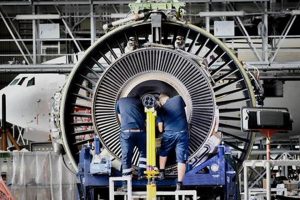
This academic pursuit is an undergraduate program that focuses on the design, development, testing, and production of aircraft, spacecraft, and related systems. Curricula commonly include topics such as aerodynamics, propulsion, structural analysis, flight mechanics, and control systems, providing students with a foundational understanding of the principles governing flight within and beyond Earth’s atmosphere. As an example, graduates may design components for a new commercial airliner or analyze the trajectory of a satellite.
The acquisition of this specific higher education credential offers numerous advantages. It provides entry into a field crucial for technological advancement and global connectivity, contributing significantly to both the civilian and military sectors. Historically, engineers with this training have been instrumental in pioneering aviation and space exploration, driving innovation, and pushing the boundaries of what is technologically achievable. The skills gained foster problem-solving abilities applicable across various industries.
Subsequent sections will delve into specific career paths available to graduates, highlight key skills developed during the course of study, and outline the curriculum structure typically found within such programs. The discussion will also cover relevant professional organizations and provide insights into the future outlook for individuals working in this dynamic field.
Essential Guidance for Aspiring Professionals
The following advice provides insights for individuals considering or pursuing academic qualification in the field. Adhering to these recommendations can enhance prospects for success and contribute to a fulfilling career.
Tip 1: Solidify Foundational Knowledge: A strong grounding in mathematics and physics is paramount. Ensure proficiency in calculus, differential equations, linear algebra, and fundamental physics principles before commencing the formal course of study. This base knowledge will significantly ease comprehension of advanced topics.
Tip 2: Cultivate Programming Skills: Proficiency in programming languages, such as Python, MATLAB, or C++, is crucial. These tools are indispensable for simulation, data analysis, and control system development. Practice coding regularly to enhance your abilities.
Tip 3: Seek Practical Experience: Internships, research opportunities, and participation in relevant projects provide invaluable hands-on experience. Actively seek out these opportunities to apply theoretical knowledge to real-world challenges.
Tip 4: Develop Communication Skills: Effective communication is essential for collaboration and presenting technical information. Hone your writing and presentation skills to effectively convey complex ideas to both technical and non-technical audiences.
Tip 5: Join Professional Organizations: Membership in organizations such as the American Institute of Aeronautics and Astronautics (AIAA) offers networking opportunities, access to technical resources, and exposure to current industry trends.
Tip 6: Specialize Strategically: Identify a specific area of interest, such as propulsion, structures, or control systems, and focus your studies accordingly. Specialization can enhance your competitiveness in the job market.
Tip 7: Stay Current with Industry Trends: The aerospace field is constantly evolving. Continuously update your knowledge by reading industry publications, attending conferences, and pursuing continuing education opportunities.
By prioritizing these elements, prospective and current students can optimize their preparedness for a successful career. A proactive approach to learning, combined with practical experience and professional development, yields the most advantageous results.
The subsequent sections will provide detailed guidance on specific career paths and skills. This guidance will further solidify the foundation for long-term success within the aerospace sector.
1. Aerodynamics

Aerodynamics, as a core component within a curriculum, is inextricably linked to the successful acquisition of knowledge and skills pertinent to the design and analysis of flight vehicles. The principles of aerodynamics govern the forces acting upon aircraft and spacecraft, directly influencing performance characteristics such as lift, drag, and stability. A thorough understanding of these principles is therefore foundational. Failure to grasp fundamental aerodynamic concepts hinders the capacity to design efficient and safe flight systems. For instance, the shape of an aircraft’s wing, meticulously crafted based on aerodynamic calculations, directly impacts its ability to generate lift at various speeds.
Further, aerodynamics extends beyond the basic understanding of airflow. Advanced concepts, such as compressible flow, boundary layer theory, and computational fluid dynamics (CFD), equip prospective engineers with the tools necessary to simulate and analyze complex flow phenomena. CFD, for example, enables engineers to model airflow around an entire aircraft configuration, identifying areas of high drag or potential instability. This analytical capability facilitates design optimization and minimizes risks associated with flight testing of unproven designs. The design of high-speed vehicles, such as supersonic jets or re-entry spacecraft, demands an even deeper understanding of these advanced aerodynamic principles to mitigate issues such as shockwave formation and thermal loading.
In summary, proficiency in aerodynamics is an indispensable attribute for any graduate in this discipline. This domain provides the scientific basis for aircraft and spacecraft design, influencing safety, efficiency, and overall performance. The knowledge gained enables accurate prediction of flight characteristics, optimization of designs, and mitigation of potential risks. Without a strong foundation in aerodynamics, professionals will be ill-equipped to meet the complex challenges of the ever-evolving aerospace industry.
2. Propulsion Systems

The study of propulsion systems constitutes a critical element within the curriculum. It provides students with the fundamental knowledge required to understand how vehicles are propelled through air and space, addressing design, analysis, and operational principles. This specialized area is essential for graduates seeking to contribute to the design and development of advanced aircraft and spacecraft.
- Thermodynamics and Combustion
Underlying the function of most propulsion systems are thermodynamic principles. Understanding how energy is converted and utilized within engines is crucial. Combustion, a rapid chemical process that releases energy, drives many propulsion systems. Students learn to analyze combustion efficiency, emissions, and the effects of different fuel types. Practical applications include optimizing fuel injection strategies in jet engines to reduce fuel consumption and pollutant output.
- Rocket Propulsion
Rocket engines are indispensable for space travel. Unlike air-breathing engines, rockets carry both fuel and oxidizer, allowing them to operate in the vacuum of space. Students examine various rocket engine designs, including solid-propellant, liquid-propellant, and hybrid rockets. They learn to calculate thrust, specific impulse, and the overall performance of rocket systems. Examples range from small satellite launch vehicles to large multi-stage rockets used for deep-space exploration.
- Air-Breathing Engines
Air-breathing engines, such as turbojets, turbofans, and ramjets, utilize atmospheric air as the oxidizer for combustion. They are commonly used in aircraft. The study of these engines involves analyzing the performance of components like compressors, turbines, and nozzles. Students learn how engine design affects aircraft speed, altitude, and fuel efficiency. Applications encompass commercial aircraft, military jets, and high-speed experimental vehicles.
- Electric Propulsion
Electric propulsion systems use electrical energy to accelerate propellant, generating thrust. While providing lower thrust compared to chemical rockets, electric propulsion offers higher specific impulse, enabling longer-duration missions and greater fuel efficiency. Types include ion thrusters, Hall-effect thrusters, and magnetoplasmadynamic thrusters. Students learn about plasma physics, electromagnetic fields, and the design of efficient electric propulsion systems. These systems are increasingly used for satellite station-keeping, orbit raising, and interplanetary missions.
These facets of propulsion systems provide a comprehensive understanding of the principles and technologies employed in aerospace vehicles. The knowledge acquired enables graduates to contribute to the advancement of propulsion technology, improving the performance, efficiency, and environmental impact of future aircraft and spacecraft. The integration of theoretical knowledge with practical applications prepares students for challenging careers in research, design, and development within the aerospace industry.
3. Materials Science

The selection and application of appropriate materials are paramount to the success of aerospace engineering endeavors. Materials Science provides the foundational knowledge necessary to understand the behavior of materials under extreme conditions of stress, temperature, and environment encountered by aircraft and spacecraft. A direct correlation exists between material properties and the performance and safety of aerospace vehicles; thus, a comprehensive understanding of Materials Science is indispensable. For instance, the utilization of high-strength, lightweight alloys in aircraft structures directly reduces weight, increasing fuel efficiency and payload capacity. Similarly, thermal protection systems employing specialized ceramic materials shield spacecraft during atmospheric re-entry, preventing catastrophic structural failure due to extreme heat.
Further analysis reveals that Materials Science encompasses the study of material structure, properties, processing, and performance. Engineers utilize this knowledge to select materials that meet stringent performance requirements while considering factors such as cost, manufacturability, and environmental impact. Advanced composite materials, such as carbon fiber reinforced polymers, exemplify this interplay. These materials offer exceptional strength-to-weight ratios, allowing for the creation of complex shapes with reduced mass, crucial for both aircraft and spacecraft applications. The development and characterization of new materials are often driven by the needs of the aerospace sector, leading to continuous innovation and improvements in vehicle performance.
In summary, Materials Science serves as a cornerstone within educational programs. The proper understanding of its principles ensures the structural integrity, efficiency, and safety of aerospace vehicles. Challenges remain in developing materials capable of withstanding increasingly demanding operational conditions, particularly in the context of hypersonic flight and long-duration space missions. As technological advancements continue, the role of Materials Science will only become more critical in pushing the boundaries of what is achievable in aerospace engineering.
4. Flight Mechanics

Flight Mechanics, as a core discipline within the structure of an aerospace engineering undergraduate program, is fundamental to the understanding of aircraft and spacecraft motion. The principles of Flight Mechanics dictate how aerospace vehicles move through the atmosphere and in space, providing a theoretical framework for analyzing stability, control, and performance. A graduate lacking a firm grasp of Flight Mechanics concepts would be unable to effectively design flight control systems, predict vehicle trajectories, or assess the maneuverability of an aircraft or spacecraft. For example, consider the design of an autopilot system; a thorough understanding of Flight Mechanics is essential for creating algorithms that maintain stable flight and accurately follow a pre-determined path.
The practical applications of Flight Mechanics span across numerous aspects of aerospace engineering. Simulation and modeling of flight dynamics, for instance, rely heavily on Flight Mechanics principles to predict the behavior of vehicles under various operating conditions. This is crucial during the design phase, allowing engineers to identify potential stability issues or control system deficiencies before physical prototypes are built. In the realm of spacecraft, Flight Mechanics governs orbital maneuvers, attitude control, and trajectory optimization for missions ranging from satellite deployment to interplanetary exploration. Consider the precise orbital insertion of a communications satellite; Flight Mechanics principles dictate the required thruster firings and timing to achieve the desired orbit.
In summary, Flight Mechanics is an indispensable component of aerospace engineering education, providing the theoretical underpinning for understanding and manipulating the motion of flight vehicles. It directly influences the design of control systems, the prediction of vehicle performance, and the planning of complex space missions. Challenges remain in developing more accurate and computationally efficient models for complex flight environments; however, the fundamental principles of Flight Mechanics remain essential for all practicing aerospace engineers.
5. Control Systems

Control Systems represent a critical area of specialization within the undergraduate education. These systems dictate the stability, maneuverability, and overall performance of aircraft and spacecraft. The connection between an engineer’s comprehension of Control Systems and the success of aerospace missions is direct and profound. Failure in this domain can lead to instability, loss of control, and potentially catastrophic consequences. As an illustration, consider the development of a flight control system for a modern fighter jet. This system must instantaneously process sensor data, compensate for atmospheric disturbances, and execute pilot commands with precision to maintain controlled flight.
Further applications of Control Systems extend to spacecraft attitude control, orbital maneuvering, and robotic systems used in space exploration. Designing a satellite’s attitude control system, for example, necessitates careful consideration of sensor selection (e.g., star trackers, gyroscopes), actuator design (e.g., reaction wheels, thrusters), and control algorithms to maintain the satellite’s orientation relative to the Earth or other celestial bodies. The precision with which this control is achieved directly impacts the quality of the data collected by the satellite’s instruments. Moreover, the design of autonomous navigation systems for unmanned aerial vehicles (UAVs) relies heavily on advanced control techniques, enabling these vehicles to perform complex tasks in dynamic environments.
In summary, Control Systems are a cornerstone of studies, enabling the safe and effective operation of vehicles in both atmospheric and space environments. The mastery of Control Systems principles is essential for graduates aiming to contribute to the design, analysis, and implementation of advanced aerospace technologies. The growing demand for autonomous systems and increasingly complex aerospace missions highlights the continued importance of this field.
6. Spacecraft Design
Spacecraft Design is a crucial specialization within a bachelor’s degree curriculum, representing the culmination of diverse engineering principles. The connection is direct: this undergraduate program provides the fundamental knowledge and skills necessary for designing, analyzing, and testing spacecraft intended for various missions. The cause-and-effect relationship is evident; successful completion of relevant coursework enables the graduate to contribute meaningfully to spacecraft development. For example, a thorough understanding of orbital mechanics, acquired during the degree program, directly influences the design of a satellite’s propulsion system, affecting its ability to maintain its designated orbit. Therefore, its understanding is integral to the practical application of learned skills.
Further illustrating this connection, consider the practical application of thermal control system design. Graduates with specialized knowledge are equipped to analyze heat transfer mechanisms, select appropriate insulation materials, and implement active cooling techniques to maintain spacecraft components within acceptable temperature ranges. This ensures the longevity and operational integrity of sensitive electronics and scientific instruments. Additionally, knowledge of structural analysis and materials science gained during studies enables engineers to design lightweight, yet robust spacecraft structures capable of withstanding launch loads and the harsh conditions of space. As an example, a properly designed spacecraft structure must resist the vibrations and accelerations encountered during launch, preventing component failure and mission compromise.
In conclusion, the practical significance of understanding the interplay between the degree and Spacecraft Design cannot be overstated. Challenges remain in designing increasingly complex and reliable spacecraft for deep-space exploration and commercial applications. However, the foundational knowledge acquired during the program provides graduates with the tools necessary to address these challenges, driving innovation and contributing to the ongoing advancement of space technology.
Frequently Asked Questions
This section addresses common inquiries regarding undergraduate programs in the field, providing clarity and dispelling potential misconceptions.
Question 1: What specific skills are developed through an undergraduate program in this field?
This educational path cultivates analytical problem-solving, critical thinking, and technical communication skills. Specific capabilities developed include proficiency in computer-aided design (CAD), computational fluid dynamics (CFD), and finite element analysis (FEA). Graduates acquire expertise in applying these tools to the design, analysis, and testing of aerospace vehicles and systems.
Question 2: What are the typical career paths pursued after completing an undergraduate program?
Graduates pursue diverse career paths within the aerospace industry and related sectors. Common roles include aerospace engineer, design engineer, systems engineer, test engineer, and research engineer. Opportunities exist in aircraft manufacturing, spacecraft development, government agencies (e.g., NASA, Department of Defense), and private research institutions.
Question 3: What is the typical curriculum structure?
A typical curriculum encompasses core courses in mathematics, physics, and engineering fundamentals, followed by specialized courses in aerodynamics, propulsion, structures, flight mechanics, and control systems. Many programs incorporate laboratory experiences, design projects, and capstone projects to provide practical application of theoretical knowledge.
Question 4: What are the admission requirements for a program?
Admission requirements generally include a strong academic record in mathematics and science courses, particularly physics and calculus. Standardized test scores (e.g., SAT, ACT) may be required. Some institutions may also consider extracurricular activities related to science and technology.
Question 5: Is financial aid available for students pursuing a program?
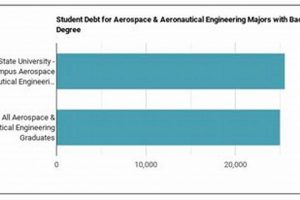
Financial aid options are available through various sources, including federal and state governments, educational institutions, and private organizations. These options may include grants, scholarships, loans, and work-study programs. Prospective students are encouraged to explore all available resources to finance their education.
Question 6: What is the job outlook for engineers with this education?
The job outlook for engineers in the aerospace industry is generally positive, driven by increasing demand for air travel, space exploration, and defense technologies. Specific job growth may vary depending on economic conditions and technological advancements. However, the industry is expected to continue to provide opportunities for qualified professionals.
The pursuit of this degree is demanding, but rewarding. This FAQ section aims to provide the required knowledge.
The following section delves into professional organizations.
Conclusion
This exploration has underscored the multifaceted nature of a bachelor’s degree aerospace engineering, detailing its core disciplines, career pathways, essential skills, and curriculum structure. It elucidated the degree’s significance, spanning from fundamental aerodynamic principles to advanced spacecraft design considerations. Further, insights into the professional organizations, frequently asked questions, and advice have provided a practical compass for those considering or currently undertaking this academic pursuit.
The attainment of such a qualification equips individuals to address complex challenges within a rapidly evolving industry. Given the increasing global emphasis on space exploration, sustainable aviation, and technological advancement, expertise in this domain will remain in high demand. Prospective and current professionals should endeavor to cultivate a robust skill set, maintain continuous professional development, and contribute to the innovations that will shape the future of flight and space exploration.
![Is a Masters in Aerospace Engineering Worth It? [Guide] | Innovating the Future of Flight with Reliable Aviation Solutions](https://mixaerospace.com/wp-content/uploads/2026/05/th-66-300x200.jpg "Is a Masters in Aerospace Engineering Worth It? [Guide] Innovating the Future of Flight with Reliable Aviation Solutions")