Aeronautical engineering focuses on the design, development, and production of aircraft that operate within Earth’s atmosphere. This discipline addresses aerodynamic principles, propulsion systems optimized for atmospheric flight, aircraft structures capable of withstanding atmospheric pressures, and control systems for navigation within the air. Consider the design of a new commercial airliner, where engineers optimize wing shape for fuel efficiency and structural integrity for safe operation at high altitudes.
Aerospace engineering is a broader field encompassing both atmospheric and space-based vehicles. It includes the principles of aeronautical engineering but extends to the design and development of spacecraft, satellites, missiles, and related systems. This discipline necessitates knowledge of astrodynamics, spacecraft propulsion, thermal management in space environments, and advanced materials capable of withstanding extreme conditions. The development of a Mars rover, requiring specialized materials to survive the Martian atmosphere and innovative propulsion systems for interplanetary travel, exemplifies aerospace engineering.
Therefore, while both fields share a foundation in engineering principles, the key distinction lies in their application environments. One concentrates on flight within Earth’s atmosphere, while the other addresses flight both within and beyond it, encompassing the challenges of space exploration and satellite technology.
Choosing between aeronautical and aerospace engineering requires careful evaluation of interests and career aspirations. Understanding the core differences will guide students and professionals towards the most suitable path.
Tip 1: Define Career Goals: Ascertain desired areas of focus. A career centered on commercial aviation, air traffic management, or aircraft design strongly suggests aeronautical engineering. Conversely, aspirations involving space exploration, satellite technology, or missile development necessitate aerospace engineering.
Tip 2: Assess Academic Interests: Evaluate strengths in relevant subjects. A strong inclination towards aerodynamics, aircraft propulsion, and structural mechanics is beneficial for aeronautical engineering. Aerospace engineering demands expertise in astrodynamics, spacecraft design, and advanced materials suitable for space environments.
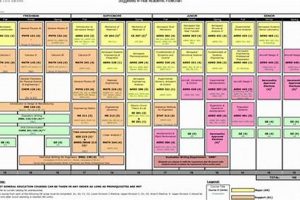
Tip 3: Research Curriculum Details: Compare coursework and specialization options offered by various universities. Aeronautical programs emphasize aircraft-specific topics, while aerospace programs provide a broader foundation encompassing both atmospheric and space-related subjects.
Tip 4: Consider Practical Experience: Seek internships or research opportunities in desired fields. Experience with aircraft manufacturers, airlines, or aviation-related research institutions aligns with aeronautical engineering. Opportunities at space agencies, satellite companies, or defense contractors provide valuable exposure to aerospace engineering.
Tip 5: Evaluate Long-Term Prospects: Understand the evolving job market in both sectors. The demand for skilled professionals in aircraft design, maintenance, and air transportation will likely remain strong within aeronautical engineering. Aerospace engineering offers opportunities in emerging fields such as space tourism, satellite communication, and advanced propulsion systems.
Tip 6: Understand Overlap: Recognize potential for career crossover. Many engineering principles are shared between the two fields, allowing for lateral movement. However, specialized knowledge in specific areas may require additional training or experience.
Careful consideration of these factors will enable individuals to make an informed decision, maximizing their potential for success in either aeronautical or aerospace engineering.
Ultimately, the selection hinges on individual passion and the pursuit of a fulfilling and impactful career within the broader field of engineering.
1. Atmospheric flight

Atmospheric flight fundamentally differentiates aeronautical and aerospace engineering. Aeronautical engineering, by definition, concentrates on vehicles that operate solely within Earth’s atmosphere. Consequently, its focus centers on optimizing aircraft performance within these environmental constraints. This involves addressing aerodynamic efficiency, engine performance at varying altitudes and air densities, and structural integrity under atmospheric pressures. A commercial airliner, for example, is a product of aeronautical engineering. Its design prioritizes fuel efficiency at cruising altitude, structural strength to withstand turbulence, and landing gear optimized for runway operations. The entirety of its operational design exists within the atmospheric realm.
Aerospace engineering, while incorporating principles of atmospheric flight applicable to the initial phase of space vehicle ascent, extends beyond this limitation. It deals with flight vehicles that operate both within and outside the atmosphere, requiring expertise in astrodynamics and propulsion systems capable of functioning in a vacuum. The design of a multi-stage rocket, for instance, necessitates consideration of atmospheric drag during the initial ascent, but also the deployment of spacecraft into specific orbits after exiting the atmosphere. The atmospheric phase becomes a component of a larger, more complex mission profile, requiring a broader range of engineering knowledge and techniques.
Therefore, understanding atmospheric flight is paramount in discerning the boundaries of each discipline. While aeronautical engineers specialize in optimizing performance exclusively within the atmosphere, aerospace engineers must consider atmospheric effects as one component of a system designed to operate beyond its limits. This difference significantly impacts the skill sets and career paths within each field.
2. Spacecraft design

Spacecraft design constitutes a fundamental element differentiating aeronautical and aerospace engineering. This discipline focuses on the creation of vehicles capable of functioning in the vacuum of space, exposing them to unique environmental stressors absent in atmospheric flight. The design process necessitates consideration of factors such as thermal management, radiation shielding, micrometeoroid impact protection, and propulsion systems optimized for operation in a zero-gravity environment. Consequently, expertise in areas such as astrodynamics and materials science becomes paramount.
In contrast, aeronautical engineering, concerned with aircraft operating within Earth’s atmosphere, typically does not address these considerations. Aircraft design prioritizes aerodynamic efficiency, structural integrity under atmospheric pressures, and propulsion systems adapted for air-breathing combustion. While some overlap exists in areas such as structural analysis, the specific requirements of spacecraft design significantly expand the scope of aerospace engineering. For instance, the International Space Station (ISS) exemplifies the complexities of spacecraft design. Its construction and operation necessitate intricate thermal control systems to manage extreme temperature variations, robust radiation shielding to protect occupants and equipment, and a modular design to facilitate ongoing maintenance and upgrades. These considerations are largely absent in the design of commercial aircraft.
Therefore, the inclusion of spacecraft design as a core competency distinguishes aerospace engineering from its aeronautical counterpart. While both fields share a foundation in engineering principles, the specialized demands of space-based systems require a distinct skill set and knowledge base, shaping the curriculum and career paths within each discipline. This distinction highlights the broader scope of aerospace engineering and its critical role in space exploration and satellite technology.
3. Propulsion systems

Propulsion systems represent a critical differentiating factor between aeronautical and aerospace engineering, stemming from the distinct operational environments. Aeronautical engineering focuses on air-breathing engines designed to operate within Earth’s atmosphere, relying on atmospheric oxygen for combustion. These systems encompass turbojets, turbofans, turboprops, and piston engines, each optimized for specific aircraft types and flight profiles. A commercial airliner’s turbofan engine, for example, is engineered to maximize fuel efficiency at cruising altitudes by drawing in and compressing air, mixing it with fuel, and expelling the exhaust to generate thrust. The limitations of air-breathing engines inherently confine aeronautical engineering to atmospheric flight.
Aerospace engineering, however, addresses propulsion systems for both atmospheric and space-based vehicles. While some aerospace vehicles utilize air-breathing engines during the initial ascent phase, a significant portion of the discipline involves developing propulsion systems capable of functioning in the vacuum of space. These include rocket engines, which carry their own oxidizer, enabling combustion independent of an atmosphere. Ion drives and other advanced propulsion systems are also employed for long-duration space missions, providing low but sustained thrust for orbital maneuvers. The Space Shuttle, for instance, used solid rocket boosters for initial lift-off, followed by liquid-fueled rocket engines for orbital insertion, illustrating the diverse propulsion requirements within aerospace engineering. The design and integration of these varied propulsion systems necessitates expertise in rocket propulsion principles, propellant management, and combustion dynamics applicable to vacuum conditions.
In summary, the type of propulsion system employed directly influences the boundaries of each discipline. Aeronautical engineering is constrained to air-breathing systems operating within the atmosphere, while aerospace engineering encompasses both air-breathing and non-air-breathing systems, extending its reach to space exploration. This fundamental difference necessitates specialized knowledge and skills, shaping the curriculum and career paths associated with each field. Understanding the nuances of propulsion systems is, therefore, essential for distinguishing between these two branches of engineering and appreciating their respective contributions to flight and space technology.
4. Astrodynamics
Astrodynamics, a branch of astronautics dealing with trajectory determination and orbital mechanics, constitutes a critical differentiating factor between aeronautical and aerospace engineering. Aeronautical engineering, focused on atmospheric flight, does not typically incorporate astrodynamics as a core discipline. Aircraft operate within a relatively predictable gravitational field and rely on aerodynamic forces for maneuvering. Their trajectories are primarily governed by pilot input and air traffic control, not celestial mechanics. Therefore, the principles of astrodynamics hold limited relevance to the design and operation of aircraft.
In contrast, astrodynamics forms a cornerstone of aerospace engineering. The design and operation of spacecraft, satellites, and other space-based vehicles necessitate a thorough understanding of orbital mechanics, trajectory planning, and spacecraft attitude control. For instance, launching a communication satellite into geostationary orbit requires precise calculations of launch angles, orbital insertion maneuvers, and station-keeping corrections. These calculations rely heavily on astrodynamic principles to ensure the satellite reaches its designated orbital slot and maintains its position over time. Furthermore, interplanetary missions, such as those to Mars or Jupiter, demand even more complex astrodynamic modeling to account for gravitational influences from multiple celestial bodies and minimize fuel consumption during transit. The success of these missions hinges on the accurate application of astrodynamic principles.
The practical significance of astrodynamics in aerospace engineering is undeniable. It enables the precise positioning of satellites for communication, navigation, and Earth observation. It facilitates the planning of interplanetary missions, allowing for the exploration of distant planets and the search for extraterrestrial life. And it supports the development of space-based infrastructure, such as the International Space Station, enabling scientific research and technological advancements in a microgravity environment. Therefore, the inclusion of astrodynamics as a core component definitively distinguishes aerospace engineering from aeronautical engineering, highlighting the broader scope and unique challenges associated with spaceflight.
5. Materials science

Materials science plays a crucial role in differentiating aeronautical and aerospace engineering due to the vastly different operational environments and performance demands placed on vehicles designed for atmospheric versus space-based applications. The selection and application of materials significantly impact the structural integrity, performance, and longevity of aircraft and spacecraft, thus influencing design choices and engineering priorities.
- Atmospheric Considerations: Aeronautical Engineering
In aeronautical engineering, materials are selected primarily to withstand aerodynamic loads, atmospheric pressures, temperature variations associated with altitude, and potential corrosion from environmental factors such as humidity and salt spray. Aluminum alloys, composites like carbon fiber reinforced polymers, and titanium alloys are commonly employed due to their strength-to-weight ratio, corrosion resistance, and fatigue properties. For instance, aircraft wings require materials that can withstand significant bending and shear forces during flight, demanding high tensile strength and resistance to crack propagation.
- Space Environment Challenges: Aerospace Engineering
Aerospace engineering confronts a far more demanding material environment. Spacecraft materials must endure extreme temperature fluctuations, high vacuum conditions, intense radiation exposure, and potential impact from micrometeoroids. These conditions necessitate the use of specialized materials with unique properties. For example, heat shields protecting spacecraft during atmospheric re-entry require materials capable of withstanding temperatures exceeding thousands of degrees Celsius. Moreover, materials used in space must exhibit low outgassing properties to prevent contamination of sensitive instruments and must be resistant to degradation from prolonged exposure to radiation.
- Propulsion System Requirements
Both aeronautical and aerospace engineering rely on advanced materials in propulsion systems, but with different focuses. In aeronautical engines, high-temperature alloys and ceramic matrix composites are utilized in turbine blades to withstand extreme heat and stress. Aerospace propulsion systems, particularly rocket engines, demand materials capable of withstanding even higher temperatures and pressures due to the extreme combustion processes involved. Advanced refractory alloys and ablative materials are critical for nozzle components and combustion chambers to prevent failure under these extreme conditions.
- Structural Design Implications
The choice of materials dictates structural design approaches. Aeronautical engineers can leverage established design principles based on well-characterized material behavior under atmospheric conditions. Aerospace engineers, however, must often innovate with novel structural designs to accommodate the unique properties and limitations of materials used in space applications. For example, deployable structures, such as solar arrays and antennas, require lightweight materials and innovative hinge mechanisms to facilitate deployment in zero gravity. These structures must also be capable of withstanding significant temperature gradients and vibrational loads during launch and operation.
In summary, the significant differences in operational environments and performance requirements between atmospheric flight and spaceflight directly influence the selection and application of materials, thereby distinguishing aeronautical and aerospace engineering. The materials used and the engineering challenges they present necessitate specialized knowledge and skills, leading to distinct areas of focus within each discipline. Understanding these material considerations is crucial for appreciating the complexity and innovation driving advancements in both aeronautical and aerospace technologies.
6. Control systems
Control systems are integral to both aeronautical and aerospace engineering, yet their design and implementation diverge significantly due to the distinct operational environments and mission objectives of each field. Understanding these differences highlights the specialized expertise required within each discipline.
- Atmospheric Flight Control
In aeronautical engineering, control systems primarily focus on maintaining aircraft stability, maneuverability, and navigation within Earth’s atmosphere. These systems rely on aerodynamic surfaces like ailerons, elevators, and rudders, as well as sophisticated autopilot systems that integrate sensor data (airspeed, altitude, attitude) to execute pilot commands or automated flight plans. A commercial airliner’s flight control system, for instance, incorporates stability augmentation systems to compensate for atmospheric turbulence and ensure passenger comfort. Such systems must adhere to stringent safety regulations and performance standards specific to atmospheric flight.
- Spacecraft Attitude Control
Aerospace engineering, particularly in the context of spacecraft, faces the challenge of attitude control in the vacuum of space. Unlike aircraft, spacecraft cannot rely on aerodynamic surfaces for maneuvering. Instead, they utilize reaction wheels, control moment gyroscopes, and thrusters to adjust their orientation. These systems must operate with extreme precision and reliability, as even small errors in attitude can have significant consequences for mission success. A satellite’s attitude control system, for example, ensures that its antennas remain pointed towards Earth or that its solar panels are optimally positioned to capture sunlight. This requires complex algorithms and robust hardware capable of withstanding the harsh space environment.
- Guidance and Navigation
While both fields employ guidance and navigation systems, the techniques and technologies differ. Aeronautical engineering relies heavily on GPS, inertial navigation systems (INS), and ground-based navigation aids for determining aircraft position and trajectory. Aerospace engineering, particularly for interplanetary missions, incorporates celestial navigation techniques that utilize star trackers and planetary ephemerides to determine spacecraft location. Deep-space navigation requires accounting for relativistic effects and the gravitational influence of multiple celestial bodies. Furthermore, the reliance on real-time communication with Earth for spacecraft guidance is often limited due to signal delays, necessitating autonomous navigation capabilities.
- Redundancy and Reliability
Both aeronautical and aerospace engineering prioritize redundancy and reliability in control system design. However, the consequences of failure in space missions are often more severe, leading to stricter requirements for fault tolerance and system backup. Spacecraft control systems typically incorporate multiple layers of redundancy and sophisticated fault detection and isolation mechanisms to mitigate the risk of mission failure. For instance, a critical component may have multiple backups that can be automatically activated in case of a malfunction. Furthermore, the long duration of many space missions necessitates radiation-hardened components and robust error correction techniques to ensure continued operation in the hostile space environment.
The contrasting demands placed on control systems in atmospheric and space environments underscore the fundamental differences between aeronautical and aerospace engineering. While both disciplines share a foundation in control theory, the specific technologies, design considerations, and operational requirements vary significantly, shaping the expertise and skill sets required for each field.
7. Orbital mechanics

Orbital mechanics, a core discipline within aerospace engineering, presents a fundamental point of divergence from aeronautical engineering. Its application is directly responsible for the capability to design and execute missions beyond Earth’s atmosphere, creating a clear distinction between the two fields. Aeronautical engineering, focused on atmospheric flight, does not necessitate an understanding of orbital mechanics. The trajectory of an aircraft is determined by aerodynamic forces and engine thrust within a relatively uniform gravitational field. The motion is governed by principles of fluid dynamics and terrestrial navigation.
Aerospace engineering, conversely, critically relies on orbital mechanics for spacecraft design, mission planning, and satellite operations. Understanding Kepler’s laws, orbital perturbations, and trajectory optimization is essential for placing satellites into specific orbits, navigating interplanetary probes, and ensuring the long-term stability of space-based assets. For example, the deployment of a GPS satellite constellation requires precise calculations of orbital parameters to ensure global coverage and accurate positioning data. These calculations account for the gravitational influences of the Earth, Sun, and Moon, as well as atmospheric drag effects at lower altitudes. Without a thorough understanding of orbital mechanics, these missions would be impossible.
In essence, orbital mechanics dictates the realm of aerospace engineering, enabling the design and operation of vehicles that traverse the space environment. The absence of this discipline from the aeronautical engineering curriculum highlights the differing objectives and operational domains of each field. While both share a foundation in engineering principles, orbital mechanics represents a specialized body of knowledge that defines the scope and capabilities of aerospace engineering, making it a critical component in distinguishing between the two fields.
Frequently Asked Questions
The following questions address common inquiries regarding the distinctions between aeronautical and aerospace engineering, providing clarity on their respective focuses and career paths.
Question 1: Is aerospace engineering simply a broader version of aeronautical engineering?
Aerospace engineering encompasses both atmospheric and space environments, while aeronautical engineering concentrates exclusively on atmospheric flight. The former integrates knowledge domains applicable to spacecraft and satellites, absent from the latter’s curriculum.
Question 2: Can an aeronautical engineer work on spacecraft projects?
With appropriate specialization and additional training in areas such as astrodynamics and spacecraft propulsion, an aeronautical engineer may transition to aerospace projects. However, a background in aerospace engineering provides a more direct pathway.
Question 3: Which field, aeronautical or aerospace engineering, offers better career prospects?
Career prospects depend on individual interests and evolving industry demands. Both fields offer opportunities in design, research, development, and testing. Aerospace engineering expands career options into space-related sectors.
Question 4: Do both aeronautical and aerospace engineers study aerodynamics?
Yes, aerodynamics is a fundamental subject in both disciplines. However, aerospace engineers extend their knowledge to include rarefied gas dynamics relevant to high-altitude and spaceflight conditions.
Question 5: What are the typical job titles for graduates of aeronautical engineering programs?
Typical job titles include aircraft design engineer, propulsion systems engineer, flight test engineer, and airworthiness engineer.
Question 6: What specialized skills are particularly valuable in aerospace engineering?
Expertise in orbital mechanics, spacecraft design, thermal management in space environments, and radiation shielding is highly valuable in aerospace engineering.
In summary, the choice between aeronautical and aerospace engineering depends on individual interests, career goals, and the desired focus on atmospheric or space-based applications.
The subsequent section will delve into the impact of technological advancements on these engineering disciplines.
Concluding Remarks
The distinction between aeronautical and aerospace engineering rests upon their respective domains of operation. Aeronautical engineering concentrates on the design, development, and production of vehicles that function within Earth’s atmosphere. Aerospace engineering, conversely, encompasses vehicles operating both within and beyond the atmosphere, extending to spacecraft and related technologies. Key differentiators include the application of orbital mechanics, specialized materials for space environments, and propulsion systems designed for vacuum conditions. The selection of one discipline over the other requires careful consideration of individual interests and career aspirations, recognizing the distinct skill sets and knowledge bases each demands.
As technology advances, the boundaries between these fields may blur. However, a fundamental understanding of their core principles remains essential for professionals seeking to contribute to advancements in air and space travel. Continued research and development in both areas are vital for the future of transportation, exploration, and technological innovation, driving progress in both atmospheric and space-based endeavors.