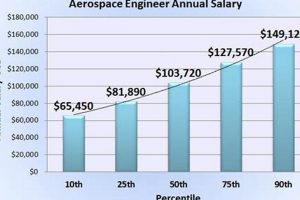
Compensation for professionals in the field of aircraft and spacecraft design, development, and testing is a crucial consideration for individuals entering or advancing within the aerospace industry. This remuneration reflects experience, education, specialization, and geographical location. For example, a recent graduate with a bachelor’s degree will typically command a different level of salary than a seasoned engineer with a doctorate and decades of experience leading complex projects.
Understanding earning potential offers numerous advantages. It allows prospective engineers to make informed decisions about their education and career paths, including specialization choices and the potential return on investment for advanced degrees. It also provides current professionals with a benchmark for evaluating their current earnings and negotiating for better compensation, fostering career growth and financial stability. Historically, demand for skilled aerospace professionals has influenced the levels of financial reward offered within the sector.
The following sections will delve deeper into the factors influencing remuneration, explore regional variations, and provide insights into career advancement opportunities that can lead to increased earnings in this dynamic and technologically advanced field.
The following provides guidance for understanding and maximizing earning potential within the aerospace engineering profession.
Tip 1: Research Market Standards. Thoroughly investigate prevailing rates for comparable roles based on experience, location, and specialization. Utilizing salary surveys and industry reports offers valuable benchmarking data.
Tip 2: Prioritize Skill Development. Acquire and refine specialized skills highly valued by employers. Focus on areas such as computational fluid dynamics (CFD), finite element analysis (FEA), or specific software proficiencies relevant to the desired role.
Tip 3: Pursue Advanced Education. Consider advanced degrees, such as a Master’s or Doctorate, to enhance expertise and open doors to higher-paying research and development positions. Evaluate the return on investment considering tuition costs and potential salary increases.
Tip 4: Seek Certifications and Licenses. Obtain relevant certifications, such as professional engineering (PE) licensure, to demonstrate competence and commitment to the profession. These credentials often lead to increased responsibility and higher compensation.
Tip 5: Network Strategically. Build and maintain professional connections within the aerospace community. Networking facilitates access to unadvertised job opportunities and provides insights into compensation trends.
Tip 6: Negotiate Effectively. Prepare thoroughly for salary negotiations by researching industry standards and quantifying the value of experience and skills. Confidently articulate achievements and desired compensation during the hiring process.
Tip 7: Track Career Progression. Regularly assess career trajectory and proactively seek opportunities for advancement. Document accomplishments and demonstrate increasing responsibilities to support requests for salary increases or promotions.
Maximizing earning potential necessitates proactive planning, continuous skill development, and a strategic approach to career management. Understanding market dynamics and effectively communicating value are essential for achieving financial success in aerospace engineering.
The subsequent section will provide concluding remarks summarizing the key concepts discussed.
1. Experience Level

Experience level is a primary determinant of financial compensation in aerospace engineering. As professionals accumulate practical knowledge and demonstrable skills, their value to employers increases, leading to commensurate adjustments in compensation. The following points elaborate on this connection.
- Entry-Level Positions
Entry-level aerospace engineers, typically holding a bachelor’s degree, begin their careers with foundational tasks such as assisting in design, analysis, or testing under the supervision of senior engineers. Compensation at this stage reflects the limited experience and the need for on-the-job training. Salary ranges are generally lower compared to more experienced colleagues.
- Mid-Career Roles
Mid-career engineers, with several years of experience, take on more complex projects, lead small teams, and contribute significantly to design and development processes. Their expertise allows for greater autonomy and decision-making authority. This increased responsibility translates into a notable increase in pay, reflecting their enhanced value and contributions.
- Senior Engineering Positions
Senior aerospace engineers possess extensive industry experience and a proven track record of successful project completion. They typically lead large teams, manage complex projects, and provide technical guidance to junior engineers. Their strategic oversight and technical expertise are highly valued, resulting in significantly higher compensation levels, often including bonuses and equity options.
- Leadership and Management
Some experienced aerospace engineers transition into management roles, overseeing engineering departments or leading entire project teams. These positions require strong leadership skills, strategic thinking, and the ability to manage budgets and resources effectively. Compensation in management roles reflects the added responsibility and impact on organizational performance, typically exceeding that of senior engineering positions.
In summary, the correlation between experience level and remuneration in aerospace engineering is direct and substantial. As engineers progress through their careers, acquiring new skills, assuming greater responsibility, and demonstrating leadership capabilities, their earnings potential increases significantly. Continuous professional development and a commitment to lifelong learning are essential for maximizing compensation throughout an aerospace engineering career.
2. Education Attainment

Educational attainment serves as a foundational element influencing compensation for aerospace engineers. A direct correlation exists between the level of formal education completed and the potential for increased earnings. This stems from the enhanced knowledge base, specialized skills, and advanced analytical capabilities cultivated through higher education.
For instance, an aerospace engineer holding a Master’s degree often commands a higher salary compared to an engineer with only a Bachelor’s degree. The Master’s curriculum typically involves in-depth study of specialized topics, research experience, and the development of advanced problem-solving abilities. These attributes make Master’s-prepared engineers more attractive to employers seeking expertise in areas such as advanced propulsion systems, structural analysis, or aerodynamics. Similarly, a doctoral degree, representing the highest level of academic achievement, equips engineers with the skills to conduct original research, develop innovative technologies, and lead research and development initiatives. Consequently, engineers with a Ph.D. are often sought after for research-intensive positions and typically receive the highest levels of compensation within the field. The specific curriculum and research focus within each degree level further influences earning potential, aligning with industry demands for specialized expertise.
In conclusion, educational attainment is a significant determinant of earning potential for aerospace engineers. While practical experience remains valuable, advanced degrees often unlock access to higher-paying positions, leadership roles, and opportunities for innovation. Understanding this relationship enables prospective and current aerospace engineers to make informed decisions regarding their educational investments and career trajectories, aligning their educational pursuits with their desired compensation levels and professional goals. However, the return on investment for advanced degrees should be carefully considered, balancing tuition costs with potential salary increases and career advancement opportunities.
3. Geographic Location
Geographic location exerts a significant influence on the remuneration levels of aerospace engineers. The presence of major aerospace companies, government research facilities, and defense contractors within a particular region directly impacts demand for skilled professionals, thereby affecting earning potential. For example, areas with a high concentration of aerospace activity, such as Southern California, Washington State (Seattle area), and Florida’s Space Coast, often exhibit higher salary averages compared to regions with limited aerospace industry presence. This disparity arises from the increased competition among employers to attract and retain qualified talent in these hubs.
The cost of living in a given area further compounds the effect of geographic location on compensation. Regions with high living expenses, such as the San Francisco Bay Area, typically offer higher salaries to offset these costs and maintain a competitive standard of living for their employees. Conversely, areas with lower living expenses may offer comparatively lower salaries, although the purchasing power of those earnings could be equivalent or even greater. State and local tax policies also contribute to variations in take-home pay, influencing the overall attractiveness of a particular location for aerospace professionals. Understanding these regional differences is essential for engineers when evaluating job offers and making career decisions.
In summary, geographic location is a critical determinant of aerospace engineer compensation, influenced by industry concentration, cost of living, and tax policies. This factor requires careful consideration when assessing employment opportunities and planning long-term career goals. Recognizing these geographic dynamics allows engineers to strategically position themselves to maximize their earning potential and achieve financial stability within the aerospace field.
4. Specific Specialization
The specific area of expertise within aerospace engineering significantly impacts compensation levels. Specialized skills in high-demand areas command premium salaries, reflecting the critical nature of these roles and the limited pool of qualified candidates.
- Avionics Systems Engineering
Avionics engineers design, develop, and test the electronic systems used in aircraft and spacecraft, including navigation, communication, and flight control systems. The increasing complexity of these systems, driven by advanced automation and data integration, makes avionics expertise highly valued. Strong proficiency in areas such as embedded systems, signal processing, and cybersecurity contributes to higher earning potential.
- Propulsion Systems Engineering
Propulsion engineers focus on the design, analysis, and testing of engines and propulsion systems for aircraft and spacecraft. As fuel efficiency and emissions reduction become increasingly important, expertise in advanced propulsion technologies, such as electric propulsion and hypersonic systems, is highly sought after. Knowledge of thermodynamics, fluid mechanics, and combustion principles is essential for this specialization, leading to increased earning capacity.
- Structural Engineering
Structural engineers are responsible for ensuring the structural integrity and safety of aircraft and spacecraft. This involves designing and analyzing airframes, wings, and other structural components to withstand extreme loads and environmental conditions. Specialization in composite materials, finite element analysis, and structural dynamics is particularly valuable due to the increasing use of lightweight, high-strength materials in aerospace design. Expertise in these areas commands a premium in the job market.
- Autonomous Systems Engineering
Autonomous systems engineers focus on the development of unmanned aerial vehicles (UAVs) and autonomous spacecraft. This rapidly growing field requires expertise in areas such as artificial intelligence, machine learning, sensor fusion, and robotics. As the demand for autonomous systems increases across various applications, including defense, surveillance, and transportation, engineers with specialized skills in these areas can expect to command higher salaries.
In conclusion, the selection of a specific specialization within aerospace engineering directly influences compensation potential. Areas experiencing rapid technological advancements, high demand, and a limited supply of qualified professionals offer the most lucrative opportunities. Engineers are encouraged to pursue specialized training and certifications to enhance their expertise and maximize their earning capacity within their chosen field.
5. Company Size
Company size is a notable factor influencing the remuneration of aerospace engineers. The scale of an organization often dictates resource allocation, project complexity, and the scope of individual responsibilities, all of which contribute to variations in compensation.
- Large Corporations
Multinational aerospace corporations, such as Boeing or Airbus, typically offer structured compensation packages, often including competitive salaries, comprehensive benefits, and opportunities for professional development. Their established financial stability and large-scale projects allow for competitive remuneration to attract and retain top talent. These companies may also provide stock options or performance-based bonuses, further enhancing earning potential. However, career advancement may be more hierarchical and competitive compared to smaller firms.
- Mid-Sized Companies
Companies operating in a mid-size range, often specializing in specific niches within the aerospace industry, may offer a balance between competitive salaries and opportunities for rapid career growth. These firms often provide employees with broader responsibilities and exposure to various aspects of engineering. While benefits packages may not be as comprehensive as those offered by larger corporations, mid-sized companies may offer more flexibility in work arrangements and a more collaborative work environment. Salary levels are typically competitive, reflecting the specialized skills and expertise required.
- Small Businesses and Startups
Small businesses and startups in the aerospace sector often operate with limited resources and a higher degree of risk. Compensation packages may be less structured and, in some cases, lower than those offered by larger corporations. However, these companies may offer significant equity opportunities, allowing employees to share in the company’s success if it achieves significant growth or acquisition. Small businesses often provide a highly entrepreneurial environment with opportunities for rapid learning and significant impact. The potential for career advancement can be substantial, but job security may be less certain than in larger, more established firms.
- Government Contractors
Government contractors, ranging in size from small businesses to large corporations, operate under specific contractual agreements with government agencies. Compensation levels for aerospace engineers working for government contractors are often influenced by government regulations and budgetary constraints. While salaries may be competitive with industry standards, they may not always reach the peak levels offered by some commercial aerospace companies. However, government contractors often provide stable employment opportunities and the chance to work on projects of national significance, which can be a significant motivator for some engineers.
In summary, company size is an essential consideration when evaluating compensation opportunities in the aerospace engineering field. Each size category offers unique advantages and disadvantages, ranging from the structured compensation and comprehensive benefits of large corporations to the equity opportunities and entrepreneurial environment of small businesses. Understanding these differences enables aerospace engineers to align their career goals with the characteristics of different company sizes, optimizing both their financial well-being and professional satisfaction.
6. Industry Sector

The industry sector in which an aerospace engineer is employed exerts a substantial influence on compensation levels. Variations in funding, profit margins, and project scope across different sectors contribute to significant differences in earning potential. Understanding these nuances is critical for career planning and salary negotiation.
- Commercial Aviation
The commercial aviation sector, encompassing companies involved in the design, manufacture, and maintenance of passenger and cargo aircraft, typically offers competitive salaries for aerospace engineers. The financial performance of airlines and aircraft manufacturers directly impacts the availability of resources for employee compensation. Fluctuations in air travel demand, fuel costs, and regulatory requirements influence profitability, subsequently affecting salary levels and bonus potential. Engineers working on new aircraft development programs or fuel efficiency initiatives may command higher compensation due to the strategic importance of these projects.
- Defense and Military Aerospace
The defense and military aerospace sector, primarily driven by government contracts, often provides stable employment opportunities and competitive salaries for aerospace engineers. Government funding levels, geopolitical events, and technological advancements influence the demand for skilled professionals in this sector. Engineers working on military aircraft, missile systems, or satellite programs may receive higher compensation due to the classified nature of the work and the specialized expertise required. Security clearances and specialized training can also contribute to increased earning potential.
- Space Exploration and Satellite Industry
The space exploration and satellite industry, encompassing government agencies such as NASA and private companies involved in satellite manufacturing and launch services, offers unique opportunities for aerospace engineers. Compensation levels in this sector are influenced by government funding for space exploration initiatives and the commercial viability of satellite-based services. Engineers working on manned space missions, satellite communication systems, or rocket propulsion systems may receive higher salaries due to the technical complexity and high-risk nature of these projects. Expertise in areas such as orbital mechanics, spacecraft design, and mission control is highly valued.
- Research and Development
The research and development sector, encompassing university research labs and corporate research facilities, focuses on developing new technologies and innovations for the aerospace industry. Compensation levels for aerospace engineers in R&D roles are influenced by the availability of research funding, the commercial potential of new technologies, and the level of academic achievement required for the position. Engineers with advanced degrees and a strong publication record may command higher salaries. Areas of specialization, such as advanced materials, nanotechnology, or artificial intelligence, can further enhance earning potential.
In conclusion, the industry sector in which an aerospace engineer is employed is a key determinant of compensation. Each sector presents unique opportunities and challenges, influencing salary levels, job security, and career advancement prospects. Understanding the dynamics of each sector is crucial for making informed career decisions and optimizing earning potential within the aerospace engineering field.
7. Demand Fluctuations
Fluctuations in demand for aerospace engineers exert a dynamic influence on compensation structures within the industry. Shifts in global economics, technological advancements, and geopolitical factors directly impact the volume of available positions and the corresponding levels of remuneration offered to attract and retain qualified professionals.
- Economic Cycles and Government Spending
Periods of economic expansion typically correlate with increased investment in aerospace projects, leading to higher demand for engineers and upward pressure on compensation. Conversely, economic downturns often result in budget cuts and project cancellations, reducing demand and potentially leading to salary stagnation or reductions. Government spending on defense, space exploration, and aviation research significantly impacts the number of available positions, particularly within the defense and space sectors. Changes in government priorities and budgetary allocations can create substantial fluctuations in demand for specific engineering specializations.
- Technological Advancements and Emerging Fields
Breakthroughs in aerospace technology, such as the development of electric propulsion systems, advanced composite materials, or autonomous aircraft, create new opportunities and drive demand for engineers with specialized expertise. Emerging fields often experience a surge in hiring as companies seek to capitalize on new market opportunities. Engineers possessing the skills and knowledge to contribute to these advancements are often able to command higher salaries and negotiate more favorable compensation packages. The pace of technological innovation can lead to rapid shifts in demand, requiring engineers to continually update their skills to remain competitive.
- Geopolitical Instability and National Security Concerns
Periods of geopolitical instability and heightened national security concerns typically lead to increased investment in defense and military aerospace programs, driving demand for engineers specializing in areas such as missile defense, cybersecurity, and intelligence gathering. These engineers are often required to possess security clearances and specialized training, further increasing their value in the job market. Fluctuations in geopolitical tensions and military spending can create significant volatility in demand for these specialized roles.
- Environmental Regulations and Sustainable Aviation
Growing concerns about climate change and the environmental impact of air travel are driving demand for engineers specializing in sustainable aviation technologies. Efforts to reduce fuel consumption, emissions, and noise pollution are creating new opportunities in areas such as alternative fuels, electric aircraft, and aerodynamic optimization. Engineers with expertise in these areas are well-positioned to benefit from increased demand and command higher salaries as the industry transitions towards more sustainable practices. Compliance with environmental regulations and the development of environmentally friendly technologies are becoming increasingly important factors in aerospace engineering, driving demand for engineers with specialized skills.
The interplay of these factors creates a dynamic and often unpredictable landscape for aerospace engineers. To navigate these demand fluctuations effectively, engineers must remain adaptable, continuously update their skills, and strategically position themselves in areas of high demand. Proactive career planning and a willingness to embrace new technologies are essential for maximizing earning potential and ensuring long-term career success in this evolving field. A deep understanding of the forces shaping the aerospace industry enables professionals to anticipate shifts in demand and adjust their skills and career paths accordingly.
Frequently Asked Questions
The following addresses common inquiries regarding financial compensation for professionals in aerospace engineering.
Question 1: What is the typical starting remuneration for an aerospace engineer with a bachelor’s degree?
Entry-level salaries vary based on factors such as location and specialization, but generally fall within a range reflective of similar engineering disciplines. Market research of prevailing rates is recommended for accurate assessment.
Question 2: How significantly does a master’s degree impact earning potential?
A master’s degree typically leads to a noticeable increase in salary, reflecting the advanced knowledge and specialized skills acquired. The magnitude of the increase depends on the specific program and its relevance to industry demands.
Question 3: Which geographic locations offer the highest compensation for aerospace engineers?
Regions with a high concentration of aerospace companies and government research facilities, such as California, Washington, and Texas, generally offer the highest salaries, though cost of living should also be considered.
Question 4: What specializations within aerospace engineering command the highest salaries?
Specializations in high-demand areas such as avionics, propulsion systems, and autonomous systems often lead to higher compensation due to the critical nature of these roles and the limited supply of qualified professionals.
Question 5: How does company size affect aerospace engineer payscale?
Large corporations tend to offer structured compensation packages, while smaller companies may offer equity opportunities. The ideal choice depends on individual priorities and risk tolerance.
Question 6: What is the role of professional certifications in increasing earning potential?
Professional certifications, such as the Professional Engineer (PE) license, demonstrate competence and commitment, often leading to increased responsibility and higher compensation.
In summary, understanding the factors influencing compensation, including education, location, specialization, and company size, is essential for navigating the aerospace engineering field and maximizing earning potential.
The subsequent section will provide concluding remarks summarizing key concepts related to aerospace engineer payscale.
Conclusion
This exploration of “aerospace engineer payscale” has illuminated the multifaceted factors that govern financial compensation within the field. Experience, education, location, specialization, company size, industry sector, and demand fluctuations collectively shape earning potential. A comprehensive understanding of these dynamics is crucial for both prospective and current professionals seeking to make informed career decisions and optimize their financial well-being.
The aerospace industry remains a technologically advanced and economically vital sector. Continual investment in skill development, strategic career planning, and a keen awareness of market trends are essential for achieving long-term success and maximizing remuneration within the aerospace engineering profession. Professionals are encouraged to engage in continuous learning and proactively adapt to the ever-evolving landscape of the industry.