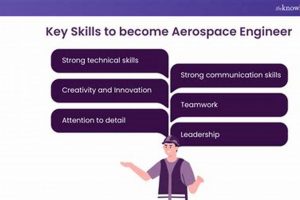
The disciplines within aerospace engineering encompass a wide range of specialized areas concerned with the design, development, testing, and production of aircraft and spacecraft. These areas delve into the complexities of atmospheric and space flight, including aerodynamics, propulsion, structures, materials science, and control systems. For instance, one might specialize in the optimization of aircraft wing design to improve fuel efficiency, or in developing novel propulsion systems for deep-space exploration.
Specialization in these areas fosters innovation and efficiency in air and space travel, leading to advancements in transportation, communication, national security, and scientific discovery. Historically, the development of these specific domains has been driven by the demands of both military and civilian applications, pushing the boundaries of engineering and materials science. Furthermore, these focused studies allow for deeper understanding and optimization within targeted areas, leading to more efficient and safer aerial and space vehicles.
The subsequent sections of this document will examine the core areas of specialization, highlighting key aspects within aerodynamics, propulsion, aerospace structures, control systems, and related disciplines. This exploration will provide a deeper understanding of the diverse opportunities available within the broader field of aerospace engineering.
This section provides objective recommendations for individuals considering focused study within the diverse sub-disciplines of aerospace engineering. The emphasis is on informed decision-making and strategic planning for a successful career.
Tip 1: Understand Foundational Principles: A robust understanding of fundamental engineering principles, including mathematics, physics, and computer science, is crucial. Solid grounding in these basics enables effective comprehension and application of more specialized knowledge within areas such as aerodynamics or propulsion.
Tip 2: Explore Sub-Disciplines Early: Engage with different aspects of the field through coursework, research projects, or internships. Early exposure to areas like control systems, materials science, or orbital mechanics allows for informed identification of personal interests and aptitudes.
Tip 3: Develop Strong Analytical Skills: The ability to analyze complex problems, interpret data, and develop innovative solutions is essential. Focus on developing analytical capabilities through coursework, problem-solving exercises, and practical applications of engineering principles. For example, practice analyzing computational fluid dynamics simulations to understand aerodynamic performance.
Tip 4: Cultivate Proficiency in Simulation Software: Modern aerospace engineering relies heavily on simulation and modeling software. Gaining proficiency in industry-standard tools such as ANSYS, MATLAB, or CATIA provides a significant advantage in research, design, and development roles. Mastering these tools allows for virtual prototyping and performance analysis.
Tip 5: Prioritize Hands-on Experience: Supplement theoretical knowledge with practical experience through laboratory work, internships, or involvement in student engineering projects. Direct exposure to real-world challenges and problem-solving enhances understanding and develops practical skills. Consider participating in rocketry competitions or aircraft design challenges.
Tip 6: Seek Mentorship and Networking Opportunities: Engage with experienced professionals in the field through industry events, professional organizations (e.g., AIAA), or mentorship programs. Learning from experienced engineers and building professional relationships provides valuable insights and career guidance.
Tip 7: Stay Abreast of Technological Advancements: Aerospace engineering is a rapidly evolving field. Continuously update knowledge and skills by reading technical journals, attending conferences, and pursuing continuing education opportunities. Staying current with emerging technologies, such as additive manufacturing or advanced composite materials, is crucial for career advancement.
These recommendations emphasize the importance of a strong foundation, proactive exploration, and continuous learning. By following these guidelines, aspiring aerospace engineers can effectively navigate the diverse areas of study and position themselves for success.
The following sections will provide further insights into specific career paths and emerging trends within the aerospace engineering landscape.
1. Aerodynamics

Aerodynamics represents a foundational pillar within the broader aerospace engineering landscape. It focuses on the study of air motion and its interaction with solid objects, particularly aircraft and spacecraft. Its application is fundamental to understanding and optimizing the performance of vehicles operating within Earth’s atmosphere and beyond.
- Lift Generation
Lift generation, a core element of aerodynamics, is the upward force that opposes gravity, enabling aircraft to achieve and maintain flight. This is achieved through the design of airfoils, wings with a specific cross-sectional shape that manipulates airflow to create a pressure differential. Examples include the varying wing designs of commercial airliners optimized for fuel efficiency versus fighter jets designed for high-speed maneuverability. Proper lift generation is paramount for efficient and safe aerial operations.
- Drag Reduction
Drag, the force that opposes motion through the air, directly impacts fuel consumption and vehicle speed. Aerodynamic studies focus on minimizing drag through streamlined designs, surface treatments, and advanced airfoil profiles. The development of winglets on modern aircraft, for example, significantly reduces induced drag, resulting in improved fuel economy and range. Effective drag reduction is crucial for enhancing overall aerodynamic efficiency.
- Stability and Control
Aerodynamic principles dictate the stability and control characteristics of aircraft. This involves analyzing the moments and forces acting on the vehicle to ensure predictable and controllable behavior in various flight conditions. Control surfaces, such as ailerons, elevators, and rudders, manipulate airflow to adjust the aircraft’s attitude and trajectory. Precise aerodynamic analysis is essential for designing stable and responsive flight control systems.
- Computational Fluid Dynamics (CFD)
CFD is a critical tool used in modern aerodynamic analysis. It employs numerical methods to simulate airflow around complex geometries, allowing engineers to visualize and quantify aerodynamic forces and moments. CFD enables the optimization of designs before physical prototypes are built, saving time and resources. For instance, CFD simulations are extensively used to analyze airflow over aircraft wings, fuselages, and engine inlets to identify areas of improvement.
In conclusion, aerodynamics is inextricably linked to the overarching field of aerospace engineering. The principles and techniques described above are crucial for the design, analysis, and optimization of all aircraft and spacecraft. Advancements in aerodynamics directly translate to improvements in vehicle performance, safety, and efficiency, underscoring its continuing importance within the discipline.
2. Propulsion Systems
Propulsion systems represent a critical area within aerospace engineering, directly enabling powered flight for both atmospheric and space vehicles. The study, design, and implementation of these systems are fundamental to the performance capabilities and operational constraints of any aircraft or spacecraft.
- Engine Types and Performance
Different propulsion technologies, such as turbojets, turbofans, ramjets, and rocket engines, are suited for distinct flight regimes. Turbojets and turbofans are typically employed in atmospheric aircraft, while rocket engines are necessary for operation in the vacuum of space. The selection of an appropriate engine type depends on factors such as desired thrust, specific impulse (a measure of propellant efficiency), and operating altitude. These considerations directly impact the range, speed, and payload capacity of aerospace vehicles.
- Combustion and Thermodynamics
The efficient conversion of chemical energy into kinetic energy is central to the operation of propulsion systems. This involves understanding complex combustion processes, thermodynamic cycles, and fluid dynamics within engine components. Research in this area focuses on improving combustion efficiency, reducing emissions, and managing heat transfer to enhance engine performance and longevity. Advancements in these areas contribute directly to the development of more sustainable and environmentally friendly aerospace technologies.
- Nozzle Design and Optimization
The design of nozzles, which accelerate exhaust gases to generate thrust, is a crucial aspect of propulsion system performance. Nozzle geometry influences exhaust velocity, thrust vectoring, and overall engine efficiency. Optimization techniques, including computational fluid dynamics and experimental testing, are employed to refine nozzle designs for specific applications. Variable geometry nozzles, for example, allow for optimized performance across a range of flight speeds and altitudes.
- Propellant Management
For rocket engines, the storage, delivery, and management of propellants are critical for mission success. Cryogenic propellants, such as liquid hydrogen and liquid oxygen, require specialized handling and storage systems to minimize boil-off and ensure reliable engine operation. The design of propellant tanks, pumps, and feed systems must account for extreme temperatures, pressures, and accelerations experienced during flight. Efficient propellant management directly affects mission duration and payload capacity.
The aforementioned elements are interconnected aspects of propulsion systems, each contributing significantly to the overall performance characteristics of aerospace vehicles. Further development in these and related areas continues to drive advancements in space exploration, air travel, and national security.
3. Aerospace Structures

Aerospace structures constitutes a critical discipline within aerospace engineering, focusing on the design, analysis, and testing of airframes and spacecraft structures. Its relevance stems from ensuring structural integrity under the extreme conditions encountered during flight and space operations. This directly impacts safety, performance, and mission success.
- Stress Analysis and Material Selection
Stress analysis involves evaluating the distribution of internal stresses within a structure subjected to external loads. This process informs material selection, ensuring that chosen materials possess sufficient strength and stiffness to withstand these stresses without failure. For instance, finite element analysis (FEA) is commonly used to model complex structures and predict stress concentrations. The appropriate selection of materials, such as high-strength aluminum alloys or composite materials, is paramount to minimizing weight while maintaining structural integrity, crucial considerations for both aircraft and spacecraft.
- Load Path Analysis and Design Optimization
Understanding the path through which loads are transferred within a structure is essential for efficient design. Load path analysis identifies critical structural elements and ensures that loads are distributed effectively to minimize stress concentrations. Design optimization techniques, such as topology optimization, can then be applied to refine the structural layout, reducing weight and improving performance. This approach is exemplified in the design of aircraft wings, where load paths are carefully engineered to transfer aerodynamic loads to the fuselage efficiently.
- Fatigue and Fracture Mechanics
Fatigue and fracture mechanics address the long-term durability of aerospace structures under cyclic loading conditions. Fatigue analysis predicts the onset of cracking and crack growth due to repeated stress cycles. Fracture mechanics evaluates the stability of cracks and determines the critical crack size that would lead to catastrophic failure. These analyses are vital for establishing inspection intervals and maintenance procedures to ensure the continued safe operation of aircraft and spacecraft. Non-destructive testing methods, such as ultrasonic inspection and radiographic imaging, are used to detect cracks before they reach critical size.
- Structural Testing and Validation
Structural testing provides empirical validation of analytical predictions and design assumptions. Full-scale structural tests, such as wing bending tests and fuselage pressure tests, are conducted to verify structural integrity under simulated flight conditions. These tests identify potential weaknesses and provide data for refining structural models. Correlation of test results with analytical predictions is crucial for establishing confidence in the design and ensuring the structural reliability of aerospace vehicles. For example, the Boeing 787 underwent extensive structural testing to validate its composite fuselage design.
The facets discussed highlight the interconnectedness of aerospace structures with other disciplines within aerospace engineering. Sound structural design is fundamental to aircraft and spacecraft safety, efficiency, and longevity. By applying rigorous analysis, testing, and optimization techniques, aerospace engineers ensure that these structures can withstand the demanding conditions of flight and space exploration.
4. Control Systems

Control systems are integral to aerospace engineering, serving as the mechanisms that govern the behavior and performance of aircraft and spacecraft. The effectiveness of these systems directly impacts stability, maneuverability, and overall mission success. A deficient control system can compromise safety, reduce efficiency, and even result in mission failure. For instance, an unstable control system in an aircraft can lead to oscillations or uncontrolled movements, posing a significant risk to flight safety. Similarly, a poorly designed control system for a satellite can hinder its ability to maintain its designated orbit or accurately point its sensors.
One crucial application of control systems lies in flight control. Autopilots, which are sophisticated control systems, automate many aspects of flight, reducing pilot workload and enhancing precision, especially during long-duration flights or in adverse weather conditions. These systems utilize sensors to gather data on airspeed, altitude, and attitude, and then employ algorithms to adjust control surfaces, such as ailerons, elevators, and rudders, to maintain the desired flight path. Furthermore, control systems are essential for spacecraft attitude control, enabling precise pointing of instruments and antennas. Reaction wheels, thrusters, and control moment gyroscopes are utilized to orient spacecraft in space, ensuring accurate data collection and communication with Earth.
In summary, control systems represent a cornerstone of aerospace engineering, providing the means to effectively manage and optimize the performance of aircraft and spacecraft. Challenges in this field include designing robust systems that can adapt to changing environmental conditions, mitigating the effects of system failures, and developing advanced algorithms that enable autonomous operation. The ongoing development of sophisticated control systems is vital for achieving safer, more efficient, and more capable aerospace vehicles. As aerospace technology continues to advance, the importance of robust and reliable control systems will only continue to grow.
5. Materials Science

Materials science is an indispensable component of aerospace engineering, acting as a critical enabler for advancements in aircraft and spacecraft design. The discipline investigates the properties and behavior of materials, directly influencing structural integrity, performance, and operational lifespan. Its connection to the broader aerospace field is a cause-and-effect relationship; specific material characteristics dictate design possibilities, while demanding aerospace applications drive materials research. For example, the pursuit of lighter, stronger materials for aircraft wings has spurred the development of advanced composites, leading to increased fuel efficiency and payload capacity. The selection of appropriate materials is therefore not merely a supporting function, but a central determinant in the feasibility and effectiveness of aerospace projects.
Practical applications of materials science in aerospace are pervasive. Turbine blades in jet engines, operating under extreme temperatures and stresses, rely on nickel-based superalloys engineered for exceptional creep resistance. Spacecraft heat shields, designed to withstand intense aerodynamic heating during atmospheric re-entry, utilize ceramic matrix composites with high thermal resistance. The development and implementation of these materials require precise control over composition, microstructure, and processing techniques. Furthermore, materials science plays a vital role in addressing challenges such as corrosion, fatigue, and impact resistance, ensuring the long-term reliability of aerospace structures. The evolution of materials like carbon fiber reinforced polymers has revolutionized aircraft design, offering significant weight savings and improved structural performance compared to traditional aluminum alloys.
In conclusion, materials science is not merely a supporting discipline within aerospace engineering; it is a fundamental driver of innovation and performance. Its understanding of material properties and behavior directly impacts design possibilities, operational effectiveness, and long-term reliability. Addressing challenges such as developing materials capable of withstanding extreme environments and reducing the environmental impact of aerospace materials remains a continuing area of focus, ensuring the ongoing synergy between materials science and the advancement of the aerospace field.
6. Orbital Mechanics

Orbital mechanics, also known as astrodynamics, is a core discipline within aerospace engineering, governing the motion of spacecraft and celestial bodies. Its importance stems from providing the theoretical framework for designing and executing space missions. The principles of orbital mechanics dictate how spacecraft transfer between orbits, maintain their designated positions in space, and interact with other celestial objects. Mastery of this area is fundamental to mission planning, spacecraft navigation, and overall success in space exploration.
Practical applications of orbital mechanics span a wide range of space-based activities. Designing satellite constellations for communication or Earth observation requires precise calculations of orbital parameters to ensure adequate coverage and minimize interference. Interplanetary missions, such as those to Mars or Jupiter, rely on sophisticated trajectory optimization techniques based on orbital mechanics principles to minimize propellant consumption and travel time. Even seemingly simple tasks, such as maintaining the orbit of the International Space Station, necessitate continuous monitoring and adjustment based on orbital mechanics calculations. The accuracy of these calculations directly affects the cost, efficiency, and feasibility of space missions.
In summary, orbital mechanics is an indispensable component of aerospace engineering, providing the analytical tools and theoretical understanding necessary to design and execute space missions effectively. The challenges in this field involve accounting for complex gravitational interactions, atmospheric drag, and other perturbing forces to achieve precise orbital control. Continued advancements in orbital mechanics are essential for pushing the boundaries of space exploration and realizing the full potential of space-based technologies.
Frequently Asked Questions Regarding Aerospace Engineering Fields of Study
This section addresses common inquiries and clarifies ambiguities surrounding the various specialized areas within aerospace engineering, offering concise and authoritative responses.
Question 1: What distinguishes aerodynamics from other areas within aerospace engineering?
Aerodynamics focuses specifically on the interaction of air with solid objects, such as aircraft and spacecraft. This differs from areas like propulsion, which deals with generating thrust, or structures, which concerns the integrity of airframes under load. Aerodynamics concentrates on the forces and moments generated by airflow and their impact on vehicle performance.
Question 2: How does a materials science background contribute to aerospace engineering?
Materials science is crucial for selecting and developing the materials used in aerospace structures and components. This includes understanding the properties of metals, composites, and ceramics to ensure they can withstand the extreme conditions of flight, such as high temperatures, stresses, and radiation. The performance and longevity of aerospace vehicles are directly dependent on the materials used in their construction.
Question 3: What role do control systems play in aerospace applications?
Control systems govern the stability, maneuverability, and autonomous operation of aircraft and spacecraft. These systems utilize sensors, actuators, and algorithms to maintain desired flight paths, attitude, and orbital parameters. Examples include autopilots in aircraft and attitude control systems in satellites.
Question 4: Why is propulsion systems a critical area within aerospace engineering?
Propulsion systems provide the thrust necessary for aircraft and spacecraft to overcome drag and gravity. The efficiency, reliability, and performance of propulsion systems directly impact the range, speed, and payload capacity of aerospace vehicles. Different propulsion technologies, such as jet engines and rocket engines, are suited for distinct flight regimes.
Question 5: How does orbital mechanics influence the design and operation of satellites?
Orbital mechanics provides the theoretical framework for understanding and predicting the motion of satellites in space. This knowledge is essential for designing satellite orbits, planning orbital maneuvers, and maintaining the positions of satellites in their designated orbits. Accurate orbital mechanics calculations are critical for mission success.
Question 6: What are some emerging trends in aerospace engineering fields of study?
Emerging trends include the development of more fuel-efficient aircraft, the exploration of hypersonic flight, the use of advanced composite materials, and the advancement of autonomous flight technologies. These trends are driving research and innovation across all areas of aerospace engineering.
The information provided addresses common questions and clarifies the diverse nature of studies. Further investigation is encouraged for deeper comprehension of individual areas.
The subsequent sections will explore the career paths available and relevant advice related to advancement in the specific disciplines.
Conclusion
This document has presented an overview of the diverse areas of specialization encompassed by aerospace engineering fields of study. Each domain, from aerodynamics to orbital mechanics, contributes uniquely to the design, analysis, and operation of aircraft and spacecraft. A comprehensive understanding of these specialties is essential for advancing capabilities in air and space travel.
Continued progress in these fields demands rigorous study and dedicated research. Addressing the challenges inherent in aerospace engineering will pave the way for future innovation and the expanded exploration of our atmosphere and beyond. The ongoing pursuit of knowledge and expertise in these domains is critical to ensuring continued advancement in this vital field.