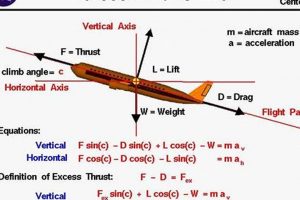
This field is concerned with the design, development, testing, and production of aircraft and spacecraft. It integrates principles from various engineering disciplines, including aerodynamics, propulsion, structural analysis, materials science, and control systems. A professional working within this domain might be involved in creating a new type of commercial airliner or designing a satellite for Earth observation.
The advancement of flight and space exploration has significantly impacted global communication, transportation, and scientific understanding. Its developments have led to faster travel times, enhanced weather forecasting, and a deeper comprehension of the universe. Historically, key innovations, such as the jet engine and composite materials, have revolutionized the capabilities of vehicles designed for atmospheric and extraterrestrial environments.
The subsequent sections will delve into specific areas of concentration within this multifaceted discipline, exploring aspects like aerodynamic optimization, novel propulsion technologies, and the challenges of designing systems for extreme environments. These focus areas demonstrate the breadth of knowledge and skill required of professionals in the sector.
Key Considerations in Vehicle Design and Operation
The following points outline crucial elements for effective practice and innovation within this demanding field.
Tip 1: Prioritize Aerodynamic Efficiency: Minimizing drag is paramount. Employ computational fluid dynamics (CFD) simulations to optimize airfoil shapes and reduce air resistance for improved fuel efficiency and performance.
Tip 2: Emphasize Structural Integrity: Employ rigorous stress analysis techniques. Finite element analysis (FEA) should be applied to identify potential weak points in airframe or spacecraft structures, ensuring resistance to extreme loads and preventing catastrophic failure.
Tip 3: Advance Propulsion Systems: Investigate alternative fuel sources and propulsion methods. Research into electric propulsion, hybrid systems, or advanced rocket engine designs can yield enhanced performance and reduced environmental impact.
Tip 4: Integrate Advanced Materials: Exploit the properties of lightweight composites. Carbon fiber reinforced polymers (CFRP) and other advanced materials offer high strength-to-weight ratios, enabling lighter structures and improved payload capacity.
Tip 5: Refine Control Systems: Implement robust and adaptive control algorithms. Develop control systems capable of compensating for atmospheric disturbances, system failures, or unexpected maneuvers, ensuring stability and safety.
Tip 6: Ensure Rigorous Testing and Validation: Conduct thorough wind tunnel tests and flight simulations. Validating designs through physical testing and high-fidelity simulations is essential for identifying potential flaws and verifying performance characteristics.
Tip 7: Promote Interdisciplinary Collaboration: Foster communication between different engineering teams. Effective communication between specialists in aerodynamics, propulsion, structures, and control systems ensures a cohesive and optimized design.
Adhering to these guidelines promotes advancements in vehicle performance, safety, and sustainability. These considerations are fundamental for achieving breakthroughs in both atmospheric and space-based operations.
The subsequent sections will further explore the impact of these considerations on specific applications, such as commercial aviation and space exploration, and discuss potential future advancements.
1. Aerodynamics

Aerodynamics, the study of air in motion, forms a foundational pillar of this field. The interaction between a vehicle and the air through which it moves dictates crucial performance characteristics, including lift, drag, and stability. These aerodynamic forces directly influence fuel efficiency, maneuverability, and the overall safety of aircraft and spacecraft. A fundamental understanding of aerodynamic principles is thus indispensable for engineers designing vehicles operating within Earth’s atmosphere or beyond.
For example, the design of an aircraft’s wing relies heavily on aerodynamic principles to generate sufficient lift for flight. Airfoil shapes are meticulously engineered to create pressure differentials that counteract the force of gravity. Similarly, spacecraft design incorporates aerodynamic considerations during atmospheric reentry to manage heat dissipation and control trajectory. The Space Shuttle, with its unique delta wing configuration, exemplified the application of aerodynamic principles to enable controlled landing after orbital missions. The development of increasingly efficient aircraft wings through advanced aerodynamic modeling demonstrates ongoing efforts to minimize drag and maximize fuel economy.
Aerodynamic challenges present constant areas of focus in vehicle development. Boundary layer control techniques, such as laminar flow control, and drag reduction strategies, like winglets, are continually refined to improve vehicle performance. Computational fluid dynamics (CFD) allows for detailed simulation and optimization of aerodynamic designs prior to physical prototyping, reducing development costs and enhancing the overall effectiveness of engineered flight systems. Therefore, understanding aerodynamics and applying it to design and operational considerations is crucial.
2. Propulsion

Propulsion represents a critical element within this field, directly enabling both atmospheric flight and space travel. The ability to generate thrust, overcoming drag and gravity, defines the operational capabilities of any aircraft or spacecraft. Without effective propulsion systems, sustained flight within the atmosphere and the exploration of space would remain unrealized. The selection and design of a propulsion system are thus fundamental considerations in the engineering process, influencing vehicle performance, mission parameters, and overall feasibility. The evolution of jet engines, for example, revolutionized commercial aviation, enabling faster travel over longer distances. Rocket propulsion, similarly, made space exploration possible, allowing for the deployment of satellites and manned missions to the Moon.
The implementation of advanced propulsion technologies presents a pathway to improved efficiency and performance. Research into alternative propulsion methods, such as electric propulsion and hypersonic propulsion, holds the potential for significant advancements in both atmospheric and space-based applications. Electric propulsion, utilizing ion thrusters or Hall-effect thrusters, offers high specific impulse for long-duration space missions, while hypersonic propulsion aims to enable faster atmospheric flight. The development of more efficient rocket engines, employing staged combustion or advanced nozzle designs, improves payload capacity and reduces propellant consumption. These ongoing advancements in propulsion technology are vital for pushing the boundaries of aerial and space capabilities.
Effective understanding and application of propulsion principles are essential for navigating the complexities of this field. The development of sustainable propulsion solutions, such as the use of biofuels or alternative propellants, addresses the growing environmental concerns associated with air travel and space exploration. The design of reliable and efficient propulsion systems directly impacts mission success and the overall viability of aeronautical and space activities. Ultimately, propulsion systems are a driving force behind advancements in atmospheric and space capabilities.
3. Structures

The structural integrity of aircraft and spacecraft is paramount. Structures provide the framework that withstands aerodynamic forces, gravitational loads, and internal pressures, ensuring the safety and operational effectiveness of vehicles in diverse and demanding environments. The design and analysis of these structures rely on a rigorous understanding of materials science, mechanics, and computational modeling.
- Airframe Design
The airframe, or spacecraft frame, constitutes the primary load-bearing element. It must maintain its shape and integrity under extreme stress. Design considerations involve material selection, such as aluminum alloys, titanium alloys, or composite materials, and the implementation of structural reinforcement techniques. For example, the fuselage of a commercial airliner is designed to withstand pressurization and aerodynamic loads during flight, while a spacecraft’s structure is built to endure the stresses of launch and the vacuum of space.
- Load Analysis
Accurate load analysis is crucial for predicting structural behavior under various operating conditions. Finite element analysis (FEA) is frequently employed to simulate stress distribution, identify potential failure points, and optimize structural design. The wings of an aircraft, for instance, are subjected to significant bending and torsional loads during flight. Load analysis ensures that the wing structure can withstand these forces without deformation or failure.
- Material Selection
The choice of materials significantly impacts structural performance and weight. Lightweight materials with high strength-to-weight ratios, such as carbon fiber reinforced polymers (CFRP), are commonly used to reduce overall weight and improve fuel efficiency. The selection process considers factors such as strength, stiffness, fatigue resistance, and corrosion resistance. The use of titanium in spacecraft structures, for instance, provides high strength and resistance to extreme temperatures.
- Structural Health Monitoring
Ensuring the long-term integrity of aircraft and spacecraft structures requires continuous monitoring. Structural health monitoring (SHM) systems employ sensors to detect damage, track crack propagation, and assess structural condition in real-time. These systems enable proactive maintenance, prevent catastrophic failures, and extend the service life of vehicles. Embedding sensors within composite materials allows for early detection of delamination or other forms of damage, enhancing safety and reducing maintenance costs.
These facets of structural design and analysis demonstrate the critical role of structures in advancing capabilities. As technology advances, so too will the methodologies for ensuring their integrity in increasingly demanding operational environments.
4. Materials

The selection and application of materials are paramount in the realm of this engineering discipline. Performance, safety, and efficiency are directly influenced by the materials used in the construction of aircraft and spacecraft. These decisions are driven by the need to withstand extreme conditions and optimize vehicle characteristics.
- Lightweight Alloys
Aluminum and titanium alloys are extensively used due to their high strength-to-weight ratios. These materials contribute to reducing overall vehicle mass, improving fuel efficiency in aircraft and increasing payload capacity in spacecraft. For example, the fuselage and wings of many commercial aircraft are constructed using aluminum alloys, offering a balance between strength and weight. The application of these alloys enables the design of larger, more efficient aircraft with extended ranges.
- Composite Materials
Carbon fiber reinforced polymers (CFRP) offer exceptional strength and stiffness at a fraction of the weight of traditional metals. These composites are increasingly employed in aircraft wings, fuselages, and control surfaces, as well as in spacecraft structures and heat shields. The Boeing 787 Dreamliner, for example, utilizes a significant amount of CFRP in its airframe, leading to improved fuel efficiency and reduced maintenance costs. The use of composites enables the creation of complex shapes and optimized aerodynamic designs that are not achievable with conventional materials.
- High-Temperature Ceramics
Ceramic materials are essential for components exposed to extreme heat, such as rocket nozzles and thermal protection systems. These materials maintain their strength and integrity at temperatures that would cause metals to melt or degrade. The Space Shuttle’s thermal protection system, comprised of ceramic tiles, shielded the vehicle from the intense heat generated during atmospheric reentry. Advanced ceramic composites are being developed for hypersonic vehicles to withstand the extreme temperatures associated with high-speed flight.
- Shape Memory Alloys
Shape memory alloys (SMAs) exhibit unique properties, allowing them to return to a predefined shape after being deformed. These alloys are used in actuators, sensors, and morphing structures in aircraft and spacecraft. For instance, SMAs can be used to actuate wing flaps or adjust control surfaces, improving aerodynamic performance. Their potential applications include self-healing materials and adaptive structures that respond to changing flight conditions.
These examples underscore the critical role of materials in realizing advances across this discipline. Ongoing research and development in materials science continue to drive improvements in vehicle performance, safety, and sustainability. These new materials pave the way for more efficient, reliable, and capable aircraft and spacecraft, enabling continued progress in atmospheric flight and space exploration.
5. Control Systems

Within the realm of aeronautics and aerospace engineering, control systems form a critical, often unseen, backbone that enables safe, stable, and efficient operation of aircraft and spacecraft. These systems are engineered to manage and regulate the behavior of complex vehicles, ensuring they respond predictably to pilot inputs or autonomous commands. The proper functionality of these systems is not merely desirable; it is essential for the successful completion of any mission, whether it involves transporting passengers across continents or deploying satellites into orbit. Any deviation from the intended trajectory or instability in flight attitude can have catastrophic consequences. An example lies in autopilot systems, enabling aircraft to maintain course and altitude, and even execute complex maneuvers, reducing pilot workload and improving fuel efficiency. The development of fly-by-wire systems, replacing traditional mechanical linkages with electronic signals, represents a significant advancement, enhancing responsiveness and maneuverability while reducing weight.
The practical applications of sophisticated control systems extend beyond maintaining stable flight. These systems are also critical for tasks such as navigation, guidance, and autonomous operation. For instance, spacecraft rely on attitude control systems to precisely orient themselves in space, enabling communication with Earth or accurate data collection from scientific instruments. Missile guidance systems employ complex algorithms to guide projectiles to their targets with pinpoint accuracy. Unmanned aerial vehicles (UAVs) depend heavily on autonomous control systems for surveillance, reconnaissance, and delivery applications. The ongoing development of adaptive control systems, which can learn and adjust to changing environmental conditions or vehicle characteristics, promises to further enhance the performance and reliability of aircraft and spacecraft.
In summary, control systems are an indispensable aspect of aeronautics and aerospace engineering. Their effectiveness directly impacts vehicle performance, safety, and mission success. Addressing the challenges associated with designing robust, reliable, and adaptable control systems remains a central focus of ongoing research and development efforts, driving advancements in both atmospheric and space exploration. The intricacies and sophistication of these systems highlight the interdisciplinary nature of this engineering field.

Navigation, the precise determination and maintenance of a vehicle’s position and heading, is inextricably linked to aeronautics and aerospace engineering. Its accuracy directly affects safety, efficiency, and mission success. Within atmospheric flight, navigational errors can lead to deviations from flight paths, increased fuel consumption, and potential collisions. In space, precise navigation is essential for orbital maneuvers, rendezvous with other spacecraft, and accurate trajectory control during interplanetary missions.
Several navigation technologies are commonly employed. Inertial navigation systems (INS), which rely on accelerometers and gyroscopes, provide autonomous position and attitude information but are subject to drift over time. Satellite navigation systems, such as GPS, offer higher accuracy but are vulnerable to jamming or signal loss. Integration of these technologies, along with celestial navigation techniques, is often implemented to enhance robustness and reliability. The development of advanced algorithms for sensor fusion and Kalman filtering improves navigational accuracy and mitigates the limitations of individual systems. For example, the precise navigation required for autonomous landing of spacecraft on Mars relies on a combination of radar, inertial sensors, and visual tracking.
The ongoing refinement of navigational systems is vital for continued progress in aeronautics and aerospace engineering. Challenges include developing navigation systems that are resilient to interference, accurate in GPS-denied environments, and capable of operating autonomously for extended periods. These improvements will enable more efficient air traffic management, safer and more reliable space missions, and the exploration of previously inaccessible regions of space. Future advancements may involve utilizing quantum sensors or advanced artificial intelligence to enhance navigational capabilities, thus furthering the frontiers of atmospheric and spacefaring activities.
Frequently Asked Questions about Aeronautics & Aerospace Engineering
This section addresses common inquiries and clarifies fundamental aspects of this multifaceted engineering discipline. The information aims to provide a factual and comprehensive overview.
Question 1: What are the core disciplines encompassed by this engineering field?
Aeronautics and aerospace engineering integrates principles from aerodynamics, propulsion, structural analysis, materials science, control systems, and avionics. The relative importance of each discipline varies depending on the specific application.
Question 2: How does aeronautics differ from aerospace engineering?
Aeronautics focuses on the design, development, and operation of aircraft that operate within Earth’s atmosphere. Aerospace engineering encompasses both aeronautics and astronautics, the latter dealing with spacecraft and spaceflight.
Question 3: What are the primary challenges currently facing professionals in this field?
Significant challenges include developing sustainable propulsion systems, reducing aircraft noise pollution, ensuring the safety and reliability of autonomous flight systems, and mitigating the risks associated with space debris.
Question 4: What role does simulation play in the design process?
Simulation, particularly computational fluid dynamics (CFD) and finite element analysis (FEA), is critical for analyzing aerodynamic performance, structural integrity, and system behavior. These tools enable engineers to optimize designs and identify potential flaws prior to physical prototyping.
Question 5: What are some emerging trends in aeronautics and aerospace engineering?
Notable trends include the development of electric and hybrid-electric aircraft, the exploration of hypersonic flight, the increasing use of composite materials, and the integration of artificial intelligence for autonomous control.
Question 6: What are the typical career paths available to graduates with a degree in this area?
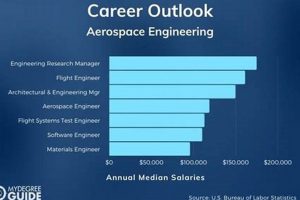
Graduates may pursue careers in aircraft design, spacecraft engineering, propulsion system development, flight testing, research and development, and government regulatory agencies.
These answers provide a concise overview of key aspects of aeronautics and aerospace engineering. Further exploration is encouraged for a more in-depth understanding.
The following section will delve into the historical evolution of this engineering field.
Conclusion
This exploration has illuminated the multifaceted nature of aeronautics & aerospace engineering, underscoring its pivotal role in shaping both atmospheric flight and space exploration. Key aspects, from aerodynamic optimization and propulsion advancements to materials innovation and control system sophistication, have been examined, revealing the depth of knowledge and expertise required within this field.
As technology continues to evolve, the challenges and opportunities facing professionals in aeronautics & aerospace engineering will only intensify. Continued dedication to innovation, research, and responsible development is crucial for ensuring future advancements benefit society and propel humanity further into the vastness of space. The progress made in this sector is paramount to our understanding of the universe and our ability to navigate it.
![Best Aerospace Engineering Fundamentals Publisher [Guide] | Innovating the Future of Flight with Reliable Aviation Solutions](https://mixaerospace.com/wp-content/uploads/2026/05/th-229-300x200.jpg "Best Aerospace Engineering Fundamentals Publisher [Guide] Innovating the Future of Flight with Reliable Aviation Solutions")