A supplementary academic discipline pursued alongside aerospace engineering can significantly enhance a graduate’s skill set and career prospects. These secondary areas of study provide specialized knowledge and complementary abilities that broaden an engineer’s capabilities. For example, studying computer science can equip an aerospace engineer with skills in software development and data analysis, increasingly crucial for modern aerospace systems.
Selecting a relevant secondary field offers considerable advantages. It allows for specialization within a niche area of aerospace engineering, such as propulsion systems or structural analysis. Furthermore, it demonstrates adaptability and a commitment to continuous learning, qualities highly valued by employers. Historically, while specialized aerospace degrees were the norm, the increasing complexity of aerospace projects necessitates interdisciplinary expertise, making a well-chosen secondary field strategically advantageous.
Therefore, the subsequent sections will examine several disciplines that can effectively complement a degree in aerospace engineering, providing a detailed overview of their respective benefits and applications within the aerospace industry.
Strategic Selection of Supplementary Disciplines
Careful consideration of supplementary disciplines is crucial for maximizing the benefits of an aerospace engineering education. The following guidelines offer direction in choosing a secondary field that aligns with individual career goals and industry demands.
Tip 1: Evaluate Career Aspirations: Identify specific career interests within the aerospace field. If interested in spacecraft design, consider a secondary field in physics or materials science. For those drawn to aircraft performance, mathematics or computer science may be more suitable.
Tip 2: Assess Skill Gaps: Determine any areas where additional expertise could enhance marketability. Many aerospace engineering programs focus primarily on theoretical knowledge, so a secondary field emphasizing practical application, such as manufacturing or project management, could be beneficial.
Tip 3: Consider Emerging Technologies: Explore fields aligned with future trends in the aerospace industry. As autonomous systems and advanced materials become increasingly prevalent, specializations in robotics or nanotechnology are worth considering.
Tip 4: Analyze Curriculum Overlap: Choose a secondary field with coursework that complements the aerospace engineering curriculum. This can streamline the learning process and provide a more integrated understanding of relevant concepts.
Tip 5: Seek Faculty Guidance: Consult with academic advisors and professors in the aerospace engineering department. They can offer valuable insights into which secondary fields are most beneficial based on current industry needs and research opportunities.
Tip 6: Research Industry Trends: Stay informed about the evolving demands of the aerospace industry. Trade publications, professional organizations, and industry conferences can provide insights into the skills and knowledge that are most sought after by employers.
Tip 7: Prioritize Practical Skills: Opt for a secondary field that emphasizes hands-on experience, such as laboratory work, simulations, or internships. These experiences can provide valuable practical skills that complement theoretical knowledge.
Thoughtful selection of a complementary discipline enables aerospace engineers to broaden their expertise, enhance their problem-solving abilities, and increase their career prospects. By carefully considering individual interests, skill gaps, and industry trends, students can make informed decisions that support their long-term professional goals.
The following sections will further explore specific supplementary fields that can effectively complement a degree in aerospace engineering, providing a detailed overview of their respective benefits and applications within the aerospace industry.
1. Mathematics Proficiency

Mathematics proficiency is a cornerstone of effective aerospace engineering practice, and its influence on the selection of supplementary disciplines is substantial. Advanced mathematical skills provide the analytical foundation necessary to understand complex phenomena in aerodynamics, propulsion, and structural mechanics. A lack of strong mathematical understanding can limit an engineer’s ability to model and predict the behavior of aerospace systems. Therefore, selecting a supplementary discipline that reinforces and extends mathematical capabilities is a logical strategy.
The cause-and-effect relationship between mathematics proficiency and success in complementary fields is evident. For instance, pursuing a minor in physics or computer science relies heavily on mathematical modeling and analysis. Without a solid grounding in calculus, differential equations, and linear algebra, an aerospace engineer may struggle to grasp the underlying principles in these fields, limiting their ability to apply the knowledge effectively in aerospace applications. Consider the design of a control system for an unmanned aerial vehicle (UAV). This task necessitates a thorough understanding of control theory, which is fundamentally based on mathematical models and algorithms. Similarly, computational fluid dynamics (CFD) simulations, crucial for analyzing aircraft aerodynamics, require advanced numerical methods and mathematical analysis. A solid grasp of mathematics enables a deeper and more effective application of these tools.
Consequently, an aerospace engineering student deficient in mathematics may benefit from a minor in mathematics itself, or a related field such as statistics or applied mathematics. This strategic focus can address weaknesses, bolster analytical abilities, and provide a more robust foundation for advanced engineering work. Ultimately, mathematics proficiency is not merely a desirable attribute but a critical requirement for effective problem-solving and innovation in aerospace engineering, and its cultivation through a thoughtfully selected minor is a key element in maximizing career potential.
2. Computer Science acumen

Computer Science acumen represents a critical asset within modern aerospace engineering, driving innovation across diverse areas. A focused supplementary study in computer science provides aerospace engineers with the skills necessary to address the increasing complexity of aerospace systems and the growing demand for data-driven solutions. Several key facets contribute to the value of such acumen.
- Software Development for Aerospace Systems
Aerospace systems rely heavily on complex software for flight control, navigation, and data processing. Understanding software development principles enables aerospace engineers to design, implement, and test critical software components. For example, developing the autopilot system for a commercial airliner requires a deep understanding of real-time operating systems, control algorithms, and software testing methodologies. Specialized knowledge in this area ensures the reliability and safety of aerospace systems.
- Data Analysis and Machine Learning for Performance Optimization
The aerospace industry generates vast amounts of data from flight tests, simulations, and operational systems. Computer Science skills enable aerospace engineers to analyze this data to identify trends, optimize performance, and predict potential failures. Machine learning algorithms, for instance, can be used to improve fuel efficiency by optimizing flight paths based on real-time weather conditions and air traffic patterns. The ability to extract meaningful insights from data is crucial for driving innovation and improving the efficiency of aerospace operations.
- Simulation and Modeling Capabilities
Computer simulations play a crucial role in the design and testing of aerospace vehicles and systems. A background in computer science enables aerospace engineers to develop and utilize advanced simulation tools for aerodynamic analysis, structural analysis, and system integration. For example, computational fluid dynamics (CFD) simulations are used extensively to analyze the airflow around aircraft wings, providing valuable insights into lift and drag characteristics. Similarly, finite element analysis (FEA) simulations are used to assess the structural integrity of aerospace components under various loading conditions. These simulation capabilities reduce the need for costly physical prototypes and accelerate the design process.
- Cybersecurity for Aerospace Systems
As aerospace systems become increasingly connected and reliant on digital technologies, cybersecurity becomes a paramount concern. A computer science background equips aerospace engineers with the knowledge to protect aerospace systems from cyber threats. This includes understanding encryption algorithms, network security protocols, and vulnerability assessment techniques. Given the potential for catastrophic consequences resulting from cyberattacks on aerospace systems, expertise in cybersecurity is increasingly valuable.
Therefore, the strategic development of Computer Science acumen, often achieved through a carefully selected minor, provides aerospace engineers with a critical advantage in addressing the challenges of the modern aerospace industry, enabling them to design, analyze, and operate increasingly complex and interconnected systems with greater efficiency and security.
3. Physics foundation

A robust physics foundation constitutes a fundamental prerequisite for aerospace engineering. The principles of physics underpin the behavior of aircraft, spacecraft, and related technologies. Therefore, the selection of supplementary disciplines should ideally reinforce and expand upon this foundational knowledge, directly impacting the effectiveness of any chosen secondary field.
- Aerodynamics and Fluid Dynamics
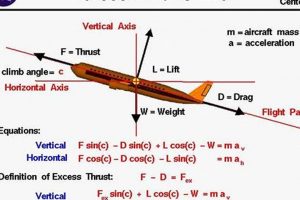
Aerodynamics, a sub-discipline of fluid dynamics, is fundamentally rooted in classical mechanics, thermodynamics, and continuum mechanics. The ability to analyze airflow over aircraft surfaces, understand lift and drag phenomena, and predict aerodynamic performance relies directly on a solid grasp of these physical principles. A minor in physics, particularly with coursework in fluid mechanics or computational physics, provides a deeper understanding of these complex phenomena, leading to improved designs and performance predictions. For example, understanding the Navier-Stokes equations, crucial for CFD simulations, requires a strong background in vector calculus and fluid mechanics.
- Propulsion Systems
The design and analysis of propulsion systems, including jet engines, rocket engines, and electric propulsion systems, are heavily dependent on thermodynamics, heat transfer, and combustion physics. Understanding the thermodynamic cycles that govern engine performance, the heat transfer mechanisms that affect engine efficiency, and the chemical kinetics that drive combustion processes necessitates a strong physics background. A minor in physics with coursework in thermodynamics or combustion provides a more detailed understanding of these principles, enabling engineers to optimize engine designs and improve performance characteristics. For example, the design of a scramjet engine requires a thorough understanding of high-speed aerodynamics and combustion physics.
- Spacecraft Dynamics and Control
Spacecraft dynamics and control rely on classical mechanics, orbital mechanics, and electromagnetism. Understanding the motion of spacecraft in orbit, the forces acting on spacecraft, and the control systems needed to maintain orientation and trajectory requires a strong physics foundation. A minor in physics with coursework in orbital mechanics or control systems provides a more detailed understanding of these principles, enabling engineers to design more efficient and reliable spacecraft. For example, calculating the delta-v requirements for a mission to Mars necessitates a thorough understanding of orbital mechanics.
- Materials Science and Structural Analysis
The selection and analysis of materials for aerospace structures require a strong foundation in solid-state physics and materials science. Understanding the mechanical properties of materials, the effects of stress and strain, and the failure mechanisms that can occur under extreme conditions necessitates a knowledge of atomic structure, crystal defects, and phase transformations. A minor in physics with coursework in materials science provides a more detailed understanding of these principles, enabling engineers to select appropriate materials and design robust structures. For example, designing the heat shield for a re-entry vehicle requires a thorough understanding of thermal properties of materials and heat transfer mechanisms.
In summary, a firm physics foundation is essential for success in aerospace engineering. Selecting supplementary disciplines that build upon this foundation, such as mathematics, computer science, or materials science, enables aerospace engineers to tackle complex problems, design innovative solutions, and advance the state-of-the-art in aerospace technology. A carefully chosen minor, therefore, serves as a strategic investment in future career prospects and professional development.
4. Electrical Engineering knowledge
Electrical Engineering knowledge is a vital component of a well-rounded aerospace engineering education. Its impact stems from the pervasive role of electrical systems in modern aircraft and spacecraft. These systems encompass power generation and distribution, avionics, control systems, communication networks, and sensor technologies. Consequently, aerospace engineers lacking a fundamental understanding of electrical engineering principles will face limitations in designing, analyzing, and maintaining these critical components. The incorporation of electrical engineering topics within a supplementary field offers a significant advantage. For example, a minor in electrical engineering provides a focused exploration of circuit analysis, digital logic, signal processing, and control systems. This additional knowledge enables aerospace engineers to effectively integrate electrical systems into overall vehicle design.
The integration manifests in several practical applications. Consider the design of a flight control system. This task requires a thorough understanding of feedback control theory, sensor technologies (e.g., accelerometers, gyroscopes), and actuators (e.g., servomotors). All these elements possess an electrical engineering underpinning. Similarly, developing a communication system for a satellite necessitates knowledge of modulation techniques, antenna design, and signal processing algorithms. Even in areas such as structural health monitoring, electrical engineering plays a key role through the use of sensors to detect cracks or other structural anomalies. Furthermore, electrical propulsion systems are increasingly important for spacecraft, demanding expertise in power electronics and plasma physics. The effect is that aerospace engineers with a solid grasp of these principles are better equipped to contribute to innovative solutions.
In conclusion, while aerospace engineering curricula introduce some electrical engineering concepts, a supplementary discipline dedicated to electrical engineering provides depth and breadth. This understanding enables aerospace engineers to engage effectively with electrical systems, develop integrated designs, and address challenges arising in modern aerospace applications. A supplementary study in electrical engineering enhances problem-solving capabilities and contributes to the creation of more efficient, reliable, and advanced aerospace vehicles. The ability to bridge the gap between aerospace and electrical engineering domains is particularly valuable in multidisciplinary projects, fostering collaboration and innovation.
5. Materials Science understanding
An understanding of Materials Science is paramount for aerospace engineers due to its direct impact on structural integrity, performance, and longevity of aerospace vehicles. Selection of materials for aircraft and spacecraft is not arbitrary; it is a complex process governed by considerations of strength-to-weight ratio, thermal resistance, corrosion resistance, and cost. Consequently, a supplementary discipline reinforcing Materials Science knowledge significantly enhances an aerospace engineer’s capabilities. A minor in Materials Science provides specialized knowledge in areas such as material properties, processing techniques, and failure analysis. The effect is a more informed approach to design and problem-solving in the context of aerospace applications.
The cause-and-effect relationship between materials selection and aerospace performance is readily apparent. For example, the development of high-temperature alloys for jet engine turbine blades directly impacts engine efficiency and thrust. Similarly, the use of composite materials in aircraft wings reduces weight, leading to improved fuel economy and maneuverability. Understanding the degradation mechanisms of materials in extreme environments, such as the vacuum of space or the high temperatures of hypersonic flight, is crucial for ensuring the reliability of spacecraft components. Selecting appropriate materials and understanding their limitations are critical for ensuring structural integrity and preventing catastrophic failures. Furthermore, knowledge of materials processing techniques, such as additive manufacturing and powder metallurgy, enables the creation of complex geometries and customized material properties.
In summary, an aerospace engineer equipped with a strong understanding of Materials Science is better positioned to design and develop advanced aerospace vehicles that meet stringent performance and safety requirements. A minor dedicated to Materials Science enhances problem-solving capabilities and contributes to innovation within the field. It enables a more informed approach to material selection, processing, and failure analysis, leading to more efficient, reliable, and durable aerospace systems. The benefits include improved fuel efficiency, enhanced structural integrity, and extended operational lifetimes. The practical significance of this understanding cannot be overstated, as it directly impacts the safety and efficiency of air and space travel.
6. Business acumen
Business acumen, while not traditionally associated with core engineering disciplines, offers significant advantages to aerospace engineers, particularly those aspiring to leadership roles or entrepreneurial ventures. A secondary field developing business acumen equips engineers with the skills to understand market dynamics, manage projects effectively, and make informed financial decisions, contributing to overall project success and career advancement.
- Project Management Proficiency
Aerospace projects are inherently complex and multifaceted, requiring careful planning, resource allocation, and risk management. A supplementary field in business, particularly with coursework in project management, provides aerospace engineers with the tools and techniques to effectively manage these projects, ensuring they are completed on time, within budget, and to the required specifications. This involves understanding critical path analysis, resource leveling, and risk mitigation strategies. For example, managing the development of a new aircraft requires coordinating the efforts of numerous teams, each responsible for different aspects of the project, from aerodynamics and structural design to avionics and propulsion. Effective project management is essential for ensuring the successful integration of these components and the timely delivery of the final product. A minor in business can provide this valuable skill.
- Financial Literacy and Budget Management
Aerospace projects often involve substantial financial investments, and engineers with financial literacy skills are better equipped to make informed decisions about resource allocation and cost control. A supplementary field in business, particularly with coursework in accounting, finance, or economics, provides aerospace engineers with the knowledge to understand financial statements, analyze investment opportunities, and manage project budgets effectively. This involves understanding concepts such as return on investment (ROI), net present value (NPV), and cost-benefit analysis. For example, choosing between two different materials for an aircraft wing requires considering not only their mechanical properties but also their cost and availability. Engineers with financial literacy skills can make informed decisions that balance performance and cost considerations.
- Marketing and Sales Awareness
While not directly involved in sales, aerospace engineers benefit from an understanding of marketing principles and customer needs. This awareness allows them to design products and services that meet market demands and contribute to the overall success of the company. A supplementary field in business, particularly with coursework in marketing or sales, provides aerospace engineers with insights into customer segmentation, product positioning, and competitive analysis. This involves understanding concepts such as market research, branding, and product development. For example, designing a new aircraft cabin layout requires understanding the needs and preferences of different passenger demographics. Engineers with marketing awareness can contribute to the development of innovative and customer-centric designs.
- Entrepreneurial Skills for Innovation
Aerospace engineers with entrepreneurial skills are well-positioned to identify opportunities for innovation and develop new products and services that address unmet needs in the market. A supplementary field in business, particularly with coursework in entrepreneurship or innovation management, provides aerospace engineers with the knowledge and skills to start and manage their own companies. This involves understanding concepts such as business planning, venture capital, and intellectual property protection. For example, developing a new type of drone for commercial applications requires not only technical expertise but also business acumen to identify market opportunities, secure funding, and manage the growth of the company.
Therefore, integrating business-related skills into an aerospace engineering curriculum through a strategically chosen minor provides graduates with a competitive edge. It equips them with the ability to understand the broader business context in which engineering decisions are made, fostering innovation, effective project management, and informed financial stewardship. This integration contributes not only to individual career advancement but also to the overall success and sustainability of aerospace enterprises.
7. Systems Engineering skillset

A Systems Engineering skillset is profoundly valuable for aerospace engineers, providing a holistic approach to complex projects. Its connection to appropriate secondary fields lies in augmenting the engineer’s capacity to manage intricate systems from conception to decommissioning. Systems Engineering emphasizes interdisciplinary collaboration, requirements analysis, and validation testing. An aerospace engineer with a strong Systems Engineering foundation can effectively integrate diverse components, ensuring seamless functionality and optimal performance of aerospace vehicles and related technologies. Good supplementary fields can bolster this foundation.
The cause-and-effect relationship is evident in project outcomes. For example, a design flaw in an aircraft’s avionics system, stemming from inadequate systems-level thinking, can lead to costly redesigns or even catastrophic failures. A supplementary field like computer science, when combined with Systems Engineering principles, enables the engineer to better manage the software and hardware integration challenges inherent in avionics development. Similarly, a supplementary field in electrical engineering equips the engineer with the knowledge to effectively manage power distribution and control systems within the aircraft. An engineer might choose to study mathematics which helps develop accurate models which are used to create simulations. Real-life examples abound. The development of the Space Shuttle involved countless engineering disciplines. Effective Systems Engineering was critical to coordinating these diverse elements and ensuring mission success. The absence of robust Systems Engineering practices could have resulted in critical system failures.
In conclusion, Systems Engineering skillset enhances the value of a carefully chosen secondary field, enabling aerospace engineers to tackle complex problems with a holistic perspective. Strategic selection of a supplementary discipline, coupled with a strong understanding of Systems Engineering principles, provides a significant competitive advantage in the aerospace industry. The challenges of modern aerospace engineering demand integrated thinking and a capacity for managing complexity, qualities that are cultivated through a combination of Systems Engineering skillset and complementary technical expertise. The ability to effectively manage system complexities contributes to innovation and ensures the delivery of safe, reliable, and high-performing aerospace solutions.
Frequently Asked Questions
The following addresses common inquiries regarding the pursuit of complementary fields of study alongside aerospace engineering.
Question 1: What is the primary benefit of pursuing supplementary academic work?
A secondary academic discipline can broaden an aerospace engineer’s skillset, providing specialized knowledge and complementary abilities valuable to the aerospace industry. It provides a more diverse expertise.
Question 2: How does a supplementary discipline enhance career prospects?
Choosing a relevant secondary field allows for specialization within a niche area of aerospace engineering and demonstrates adaptability and a commitment to continuous learning, qualities highly valued by employers.
Question 3: Which supplementary fields are most commonly recommended?
Mathematics, computer science, physics, electrical engineering, and materials science are frequently recommended due to their direct relevance to aerospace engineering principles and practices.
Question 4: Why is mathematics considered a crucial supplementary discipline?
Advanced mathematical skills are essential for understanding complex phenomena in aerodynamics, propulsion, and structural mechanics. A strong mathematical foundation is vital for modeling and analyzing aerospace systems.
Question 5: How does computer science knowledge benefit aerospace engineers?
Computer science skills enable aerospace engineers to develop software for aerospace systems, analyze data for performance optimization, create simulations, and address cybersecurity concerns.
Question 6: What is the role of materials science in aerospace engineering?
Materials science provides the knowledge to select appropriate materials for aerospace structures, considering factors such as strength-to-weight ratio, thermal resistance, and corrosion resistance.
The selection of a secondary field should align with individual career goals and industry demands. Careful consideration of interests, skills, and future trends is essential for making an informed decision.
The subsequent section will summarize the importance and benefits of integrating diverse skillsets into aerospace engineering career.
The Strategic Value of Good Minors for Aerospace Engineering
The preceding exploration underscores the strategic advantage conferred by carefully selected “good minors for aerospace engineering.” The acquisition of supplementary expertise in fields such as mathematics, computer science, physics, electrical engineering, materials science, business, or systems engineering equips graduates with a more versatile and competitive skillset. A deliberate choice of secondary discipline amplifies core aerospace engineering competencies, preparing professionals to address the multifaceted challenges of the modern aerospace landscape.
As the aerospace sector continues to evolve, driven by technological innovation and increasing complexity, the value of interdisciplinary expertise will only intensify. Aerospace engineering professionals are encouraged to embrace a commitment to continuous learning and to proactively develop skills that transcend traditional disciplinary boundaries. The strategic incorporation of relevant supplementary knowledge is essential for future success and leadership within the industry.
![Best Aerospace Engineering Fundamentals Publisher [Guide] | Innovating the Future of Flight with Reliable Aviation Solutions](https://mixaerospace.com/wp-content/uploads/2026/05/th-229-300x200.jpg "Best Aerospace Engineering Fundamentals Publisher [Guide] Innovating the Future of Flight with Reliable Aviation Solutions")