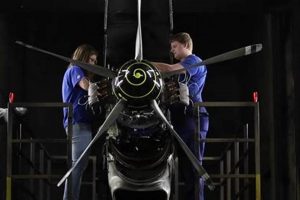
The pursuit of a career focused on the design, development, testing, and production of aircraft, spacecraft, and related systems demands a specific combination of skills, knowledge, and personal attributes. A foundational understanding of mathematics, physics, and engineering principles is paramount. For example, proficiency in calculus, differential equations, and thermodynamics is essential for analyzing aerodynamic forces, propulsion systems, and structural integrity.
This field offers the opportunity to contribute to advancements in air travel, space exploration, and national defense. Its impact extends beyond technological innovation, fostering economic growth and scientific discovery. The history of flight, from early experiments to the current state of aviation, showcases continuous progress driven by ingenuity and a commitment to overcoming technical challenges.
Consequently, aspiring professionals should cultivate a robust educational background, practical experience, and crucial soft skills. The following sections will delve into the necessary academic qualifications, technical competencies, and personal qualities that are instrumental for success in this demanding, yet rewarding, profession. It will also explore potential career paths and the ongoing evolution of the field.
Guidance for Aspiring Professionals
To effectively navigate the demanding path toward a career focused on aircraft and spacecraft, consider the following key principles. Diligence and foresight are paramount.
Tip 1: Emphasize a Strong Foundation in STEM: Prioritize rigorous coursework in mathematics, physics, and computer science. For example, mastering computational fluid dynamics software is crucial for aerodynamic analysis.
Tip 2: Pursue Relevant Internships: Seek practical experience with aerospace companies or research institutions. Hands-on involvement in projects offers invaluable insights beyond theoretical knowledge.
Tip 3: Develop Proficiency in CAD Software: Become adept at using industry-standard computer-aided design tools. SolidWorks and CATIA, for instance, are widely used for designing aircraft components.
Tip 4: Cultivate Analytical and Problem-Solving Skills: Engineering challenges require meticulous analysis and innovative solutions. Practice applying critical thinking to complex problems.
Tip 5: Enhance Communication Skills: Effectively communicate technical information in both written and oral formats. Collaboration with other engineers demands clear and concise communication.
Tip 6: Consider Specialization: Explore specific areas of interest, such as aerodynamics, propulsion, or structural analysis. Focused expertise can lead to more specialized career opportunities.
Tip 7: Stay Current with Technological Advancements: Continuously update knowledge with emerging technologies and trends. The aerospace field is constantly evolving, requiring ongoing learning.
Adherence to these principles will enhance preparation and increase the likelihood of success within this technically challenging domain. Developing a solid foundation of knowledge, skills, and experience is critical.
These points serve as a guide for those contemplating a career in aerospace. The subsequent section will provide further information on relevant professional resources and associations.
1. Technical Proficiency

Technical proficiency is a cornerstone of aerospace engineering, directly influencing the ability to conceptualize, design, and implement successful aerospace systems. It represents the tangible application of theoretical knowledge and practical skills, forming the foundation upon which innovation and problem-solving are built within the field.
- Solid Understanding of Core Principles
A firm grasp of fundamental scientific and engineering principles is indispensable. This includes mechanics, thermodynamics, fluid dynamics, and materials science. For example, accurately predicting the aerodynamic forces acting on an aircraft wing requires a deep understanding of fluid dynamics principles and their application through computational methods.
- Proficiency in Engineering Software and Tools
The ability to effectively utilize industry-standard software is critical for design, analysis, and simulation. CAD (Computer-Aided Design) software such as CATIA or SolidWorks allows for the creation of detailed 3D models of aircraft and spacecraft components. CAE (Computer-Aided Engineering) tools, like ANSYS or NASTRAN, facilitate structural analysis, thermal analysis, and computational fluid dynamics simulations to validate designs.
- Knowledge of Aerospace Materials and Manufacturing Processes
Familiarity with the properties and behavior of aerospace materials, such as aluminum alloys, titanium alloys, composites, and advanced ceramics, is essential for selecting appropriate materials for specific applications. Understanding manufacturing processes, including machining, welding, casting, and additive manufacturing, enables the efficient and cost-effective production of aerospace components.
- Experience with Testing and Validation Procedures
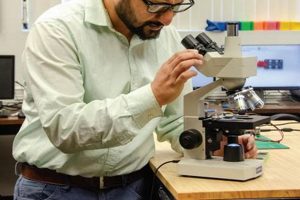
Aerospace engineers must be proficient in designing and conducting tests to validate the performance and reliability of aerospace systems. This involves using specialized equipment, collecting and analyzing data, and interpreting results to identify potential issues or areas for improvement. Examples include wind tunnel testing, structural testing, and engine testing, all of which contribute to ensuring the safety and effectiveness of aerospace vehicles.
These facets of technical proficiency, combined, represent the essential skills and knowledge base that an aerospace engineer must possess. They are integral to achieving successful outcomes in a field that demands precision, innovation, and a commitment to safety and performance.
2. Analytical Acumen

Analytical acumen is an indispensable attribute for the aspiring aerospace engineer. It signifies the capacity to dissect complex systems, identify critical parameters, and formulate reasoned judgments based on data. This ability directly influences design decisions, problem-solving approaches, and overall project success in a field where precision and reliability are paramount.
- Data Interpretation and Modeling
Aerospace engineering relies heavily on empirical data from simulations and experiments. The ability to interpret this data, identify trends, and construct accurate mathematical models is essential. For example, analyzing wind tunnel data to determine aerodynamic coefficients for aircraft design requires a strong understanding of statistical analysis and modeling techniques. Inability to accurately interpret data can lead to flawed designs and compromised performance.
- Systems Thinking and Interdependency Assessment
Aerospace systems are characterized by intricate interdependencies. Changes in one component can cascade through the entire system. Analytical acumen allows the engineer to assess these interdependencies and predict their effects. For instance, increasing the thrust of an engine may require redesigning the aircraft’s structure to withstand the increased stresses, as well as adjusting the control system to maintain stability. This holistic approach prevents unforeseen consequences and optimizes overall system performance.
- Risk Assessment and Mitigation
Aerospace projects involve inherent risks, both technical and programmatic. Analytical acumen allows for the identification, quantification, and mitigation of these risks. For example, analyzing the potential failure modes of a spacecraft component and developing redundancy strategies is crucial for ensuring mission success. Thorough risk assessment minimizes the likelihood of catastrophic failures and improves overall system reliability.
- Optimization and Trade-off Analysis
Aerospace engineering often involves making trade-offs between competing objectives, such as performance, cost, and weight. Analytical acumen facilitates the optimization of designs by evaluating these trade-offs and selecting the best compromise. For example, choosing between different wing designs involves balancing aerodynamic efficiency, structural weight, and manufacturing complexity. A clear understanding of the performance implications of each design choice is essential for making informed decisions.
The components of analytical acumen, as outlined above, collectively equip an engineer with the capacity to approach complex challenges systematically and effectively. In the context of “what does it take to be an aerospace engineer,” analytical prowess is not merely a desirable trait, but a fundamental requirement for success in a field where precision, safety, and performance are of utmost importance.
3. Problem-Solving Skills

The ability to effectively address and resolve complex engineering challenges constitutes a core requirement in the realm of aerospace engineering. Problem-solving skills, therefore, are inextricably linked to the core competencies involved in “what does it take to be a aerospace engineer.” Cause-and-effect relationships are central to this association; inadequate problem-solving capabilities directly impair an engineer’s capacity to design, analyze, and troubleshoot aerospace systems. The absence of these skills can lead to design flaws, inefficient performance, and compromised safety, underscoring their critical role.
Consider, for example, the design of a new spacecraft heat shield. Engineers must contend with extreme temperature variations and aerodynamic forces. Problem-solving skills are essential for determining the optimal material composition, geometry, and insulation methods to ensure the spacecraft’s survival during atmospheric re-entry. Similarly, when faced with unexpected engine malfunctions during flight testing, aerospace engineers must systematically diagnose the root cause, propose solutions, and implement corrective measures under pressure. The effective application of problem-solving methodologies, such as root cause analysis and fault tree analysis, is crucial in these scenarios.
In conclusion, problem-solving skills represent a cornerstone of competence in the aerospace engineering field. The demands of this profession necessitate a proactive and analytical approach to challenges, requiring engineers to possess both technical expertise and the ability to creatively apply that knowledge in novel and unforeseen situations. A deficiency in this area fundamentally undermines the professional’s ability to contribute meaningfully to the design, development, and operation of aerospace systems. It would not be an exaggertion to say these skills define the practical execution of the role.
4. Effective Communication

Effective communication is a critical element of success in aerospace engineering. Its importance stems from the inherently collaborative and multidisciplinary nature of the field. The design, development, and deployment of aerospace systems necessitate seamless interaction among engineers from various specialties, technicians, project managers, and regulatory agencies. Inadequate communication directly impedes the efficient exchange of information, leading to misunderstandings, errors, delays, and potentially, catastrophic failures. Therefore, a high degree of communication proficiency is a non-negotiable attribute for those aspiring to excel as aerospace engineers. This proficiency encompasses not only the clear and concise conveyance of technical information but also active listening, constructive feedback, and the ability to adapt communication styles to different audiences.
Consider, for example, the scenario of designing a new aircraft wing. Aerodynamicists, structural engineers, and manufacturing specialists must collaboratively determine the optimal wing shape, material composition, and production methods. Effective communication ensures that each discipline’s requirements and constraints are fully understood and integrated into the final design. Similarly, when addressing unexpected technical challenges during flight testing, clear and concise communication between test pilots, ground engineers, and program managers is essential for rapid problem identification, analysis, and resolution. In these high-stakes situations, ambiguous or incomplete communication can have severe consequences. Furthermore, the ability to present complex technical data in a clear and accessible manner to non-technical stakeholders, such as investors or government officials, is crucial for securing funding and regulatory approvals.
In conclusion, effective communication represents a fundamental component of “what does it take to be a aerospace engineer.” The complex and collaborative nature of this field necessitates the clear, concise, and accurate exchange of information among diverse stakeholders. Engineers who possess strong communication skills are better equipped to contribute to successful project outcomes, mitigate risks, and advance the field as a whole. Consequently, aspiring aerospace engineers must prioritize the development and refinement of their communication abilities alongside their technical expertise to ensure a successful and impactful career.
5. Continuous Learning

The connection between continuous learning and the requirements for a career in aerospace engineering is undeniable. This is not merely a desirable attribute, but a fundamental prerequisite. The rapid pace of technological advancement in aerospace necessitates ongoing education and skill development to maintain competence and contribute effectively. A failure to engage in continuous learning directly translates to obsolescence in a field characterized by constant innovation.
For instance, consider the evolution of aircraft design software. Early aerospace engineers relied on manual drafting techniques and slide rules. Today, engineers utilize sophisticated CAD/CAM software packages, computational fluid dynamics tools, and finite element analysis programs. An engineer who has not kept pace with these advancements would be severely limited in their ability to design and analyze modern aircraft. Similarly, the emergence of new materials, such as carbon fiber composites and shape memory alloys, requires continuous learning to understand their properties, manufacturing processes, and potential applications. Staying abreast of regulatory changes, such as evolving safety standards and environmental regulations, also falls under the umbrella of continuous learning. Neglecting this aspect can lead to non-compliance and compromised operational integrity.
Continuous learning extends beyond formal education and encompasses a variety of activities, including attending conferences, participating in workshops, reading technical publications, and engaging in self-directed study. The field’s ongoing evolution presents inherent challenges, particularly in the form of rapidly changing technologies. Professionals must actively seek out learning opportunities to ensure their skills remain relevant. Ultimately, the commitment to continuous learning distinguishes successful aerospace engineers from those who are unable to adapt and thrive in this dynamic environment. Embracing a mindset of lifelong learning is crucial for sustained professional growth and contribution to the field.
Frequently Asked Questions About Pursuing a Career in Aerospace Engineering
This section addresses common inquiries regarding the path to becoming an aerospace engineer, providing concise and informative answers.
Question 1: Is a graduate degree required to enter the aerospace engineering field?
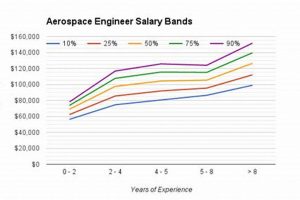
While a bachelor’s degree in aerospace engineering or a related field is typically the minimum requirement for entry-level positions, a graduate degree, such as a Master of Science or a Ph.D., can significantly enhance career prospects. Advanced degrees often lead to specialized roles, research opportunities, and higher earning potential.
Question 2: What are the most crucial technical skills for an aspiring aerospace engineer?
Essential technical skills include a strong foundation in mathematics (calculus, differential equations), physics (mechanics, thermodynamics), and computer programming (C++, Python). Proficiency in industry-standard software for CAD, CAE, and CFD is also highly valued.
Question 3: How important are internships and co-op experiences for aerospace engineering students?
Internships and co-op experiences are highly valuable for gaining practical experience, applying theoretical knowledge to real-world problems, and networking with industry professionals. These experiences often provide a competitive edge when seeking full-time employment.
Question 4: What types of research opportunities are available for aerospace engineering students?
Research opportunities are available in various areas, including aerodynamics, propulsion, materials science, control systems, and space systems. These opportunities can be found at universities, government research labs, and private aerospace companies.
Question 5: Are there specific personality traits that are beneficial for aerospace engineers?
Beneficial personality traits include strong analytical skills, problem-solving abilities, attention to detail, creativity, and a collaborative mindset. A passion for space exploration and aviation is also a significant asset.
Question 6: What is the job outlook for aerospace engineers?
The job outlook for aerospace engineers is generally positive, with projected growth in employment driven by increased demand for air travel, space exploration, and national defense systems. However, job availability may fluctuate based on economic conditions and government spending priorities.
This overview addresses common queries regarding the necessary factors. Individuals contemplating this path should consider these variables and seek additional information from educational institutions and industry sources.
The subsequent section will provide a list of recommended resources and professional organizations.
Conclusion
The multifaceted requirements to be an aerospace engineer, as explored, encompass a blend of technical expertise, analytical prowess, problem-solving acumen, effective communication skills, and a commitment to continuous learning. The attainment of success in this field hinges on mastering these essential elements, enabling engineers to contribute meaningfully to the design, development, and advancement of aerospace systems.
The path to becoming a proficient aerospace engineer demands dedication and perseverance. The pursuit is not solely about acquiring technical knowledge, but also cultivating the necessary personal and professional qualities. Embracing these challenges will pave the way for a rewarding career that shapes the future of air and space travel.