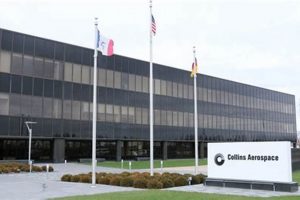
Rockwell Collins and Collins Aerospace represent different stages in the evolution of a major aerospace and defense technology company. The former, known for its avionics and communications equipment, underwent a significant transformation. This transformation culminated in its acquisition and integration into a larger entity.
The shift is important to understand due to the size and importance of the original companies. Rockwell Collins was a major player in cockpit avionics, cabin electronics, mission communications, and information management. Its history and reputation played a key role in shaping the current capabilities of the successor organization. Understanding this background provides context for the resources, skills, and portfolio held by the current corporate structure.
The following sections will detail the transition, current organization, and the specific offerings and services now delivered under the new corporate structure, including the technologies and solutions previously associated with Rockwell Collins.
This section provides essential information for those seeking to understand the corporate evolution of Rockwell Collins and its relationship to Collins Aerospace. It emphasizes practical advice for navigating this transition effectively.
Tip 1: Recognize the Historical Context: Understand that Rockwell Collins was acquired by United Technologies Corporation (UTC) in 2018. UTC then merged with Raytheon, forming Raytheon Technologies. This acquisition led to Rockwell Collins becoming a part of Collins Aerospace.
Tip 2: Acknowledge Brand Evolution: While the Rockwell Collins brand is no longer used as a standalone entity, its legacy and product lines persist within Collins Aerospace. Be aware of the brand name in legacy systems or historical data.
Tip 3: Identify the Correct Contact Information: When seeking assistance or information related to products or services formerly offered by Rockwell Collins, direct inquiries to Collins Aerospace. Consult the Collins Aerospace website for updated contact details.
Tip 4: Understand Product Line Integration: The product portfolio previously offered by Rockwell Collins has been integrated into Collins Aerospace’s broader offerings. Familiarize yourself with the updated product nomenclature and categorizations on the Collins Aerospace website.
Tip 5: Review Contractual Obligations: For existing contracts or agreements that reference Rockwell Collins, verify the terms of the acquisition and ensure that the obligations are correctly transferred to Collins Aerospace. Consult legal counsel if necessary.
Tip 6: Consult Official Documentation: Refer to official documentation released by Collins Aerospace regarding the integration of Rockwell Collins. This documentation will provide valuable insights into the organizational structure and future direction.
Tip 7: Leverage Existing Relationships: If you had established relationships with Rockwell Collins personnel, attempt to maintain contact within Collins Aerospace to facilitate a smoother transition and access relevant information.
The key takeaway is to approach inquiries and interactions with the understanding that Rockwell Collins is now a part of Collins Aerospace. This will ensure efficient communication and accurate information retrieval.
The next section will address frequently asked questions regarding this transformation, offering further clarity and guidance.
1. Acquisition

The acquisition of Rockwell Collins by United Technologies Corporation (UTC) is the pivotal event that fundamentally answers the question of whether it is the same as Collins Aerospace. The acquisition dissolved Rockwell Collins as an independent entity, marking its integration into a larger corporate structure.
- Transfer of Ownership
The acquisition involved the transfer of ownership of Rockwell Collins’ assets, technologies, and intellectual property to UTC. This established UTC as the legal successor to Rockwell Collins, effectively ending the latter’s independent existence. The transition resulted in former Rockwell Collins assets and personnel becoming part of the acquiring company.
- Integration into Collins Aerospace
Following the acquisition, UTC merged Rockwell Collins with its existing aerospace business to form Collins Aerospace. This signifies that Rockwell Collins ceased to operate as a distinct entity and became a division within Collins Aerospace. The integration process involved aligning operations, product lines, and corporate strategies.
- Impact on Brand Identity
The Rockwell Collins brand, while retaining recognition within specific sectors, is no longer the primary identifier for the integrated entity. The “Collins Aerospace” brand became the dominant identity, representing the combined capabilities of the merged organizations. Marketing materials and corporate communications now predominantly feature the Collins Aerospace brand.
- Contractual and Legal Implications
All existing contracts, legal obligations, and agreements previously held by Rockwell Collins were transferred to Collins Aerospace. This means that Collins Aerospace is now responsible for fulfilling the terms of those agreements and handling any related legal matters. Stakeholders previously engaging with Rockwell Collins must now interact with Collins Aerospace for ongoing business.
In summary, the acquisition rendered Rockwell Collins as a part of Collins Aerospace. The acquisition created a new business structure, replacing the legacy Rockwell Collins with the new Collins Aerospace brand. The financial and legal obligations of Rockwell Collins transferred to Collins Aerospace; therefore, Rockwell Collins is no longer the same as Collins Aerospace.
2. Integration

Integration, in the context of Rockwell Collins and Collins Aerospace, refers to the process of combining the assets, operations, and personnel of the former into the latter. This process is central to understanding why Rockwell Collins, as an independent entity, ceased to exist and became part of a larger organization. The success and nature of this integration directly determines the degree to which the original Rockwell Collins identity and capabilities are preserved or transformed within Collins Aerospace.
- Operational Consolidation
Operational consolidation involves merging the day-to-day activities of Rockwell Collins into the existing framework of Collins Aerospace. This includes streamlining manufacturing processes, consolidating supply chains, and aligning administrative functions. For example, if Rockwell Collins had a distinct manufacturing facility for cockpit displays, its operations would be evaluated for potential integration into a larger Collins Aerospace facility, potentially leading to facility closures or workforce realignment. This consolidation results in a unified operating structure rather than maintaining parallel systems.
- Technological Alignment
Technological alignment focuses on combining the technological expertise and product portfolios of both companies. This involves identifying synergies between different technologies and developing integrated solutions that leverage the strengths of both Rockwell Collins and Collins Aerospace. An example would be the integration of Rockwell Collins’ communication systems with Collins Aerospace’s flight control systems to create more advanced and integrated avionics platforms. This alignment ensures that the combined entity offers a more comprehensive suite of technological solutions.
- Personnel Restructuring
Personnel restructuring entails reorganizing the workforce to eliminate redundancies and create a more efficient organizational structure. This often involves layoffs, reassignments, and the creation of new roles within the integrated entity. For instance, managerial positions previously held at Rockwell Collins may be consolidated with similar roles at Collins Aerospace, leading to a reduction in the overall number of managers. This restructuring aims to streamline decision-making processes and improve overall efficiency. This consolidation can be disruptive for employees of both companies.
- Brand and Identity Management
Brand and identity management involves determining how the Rockwell Collins brand will be represented within the Collins Aerospace brand. This could range from phasing out the Rockwell Collins brand entirely to retaining it for specific product lines or services. In practice, the “Rockwell Collins” name has largely been retired, with the “Collins Aerospace” brand becoming the primary identifier. However, legacy products or services may still reference the Rockwell Collins name for a period of time to ensure continuity and customer recognition. The brand transition is critical to communicate the integrated entity’s unified vision and market presence.
The integration process effectively transforms Rockwell Collins from an independent company into a component of Collins Aerospace. This transformation means that one is no longer the same as the other. The combined entity operates under a new organizational structure, strategic direction, and market identity, reflecting the complete absorption of Rockwell Collins into the Collins Aerospace framework. It is therefore essential to view this evolution as a fundamental shift in corporate identity and operational structure.
3. Brand Transition
Brand transition is a key element in understanding whether Rockwell Collins is the same as Collins Aerospace. The change in branding represents a fundamental shift in corporate identity and reflects the integration of Rockwell Collins into a larger organizational structure. The evolution and management of brand names provides considerable insight.
- Elimination of the Rockwell Collins Brand
The most direct indicator of brand transition is the phasing out of the Rockwell Collins name as the primary identifier for the business. Following the acquisition, the Rockwell Collins brand ceased to be promoted independently. New products, services, and marketing materials adopted the Collins Aerospace branding. This shift implies a unified corporate identity where the legacy Rockwell Collins identity is subsumed under the broader Collins Aerospace brand, confirming that they are no longer distinct entities.
- Rebranding of Products and Services
Existing Rockwell Collins products and services were rebranded under the Collins Aerospace name. This rebranding process involves updating product documentation, marketing collateral, and online presence to reflect the Collins Aerospace identity. For instance, a radar system formerly advertised as a Rockwell Collins product is now marketed as a Collins Aerospace product. Such rebranding efforts reinforce the transition from two separate entities to a single, integrated organization.
- Impact on Customer Perception
Brand transition influences customer perception of the merged entity. The Collins Aerospace brand aims to convey a broader range of capabilities and a larger corporate scale than the Rockwell Collins brand alone. Customers who previously associated with Rockwell Collins for specific avionics solutions now interact with Collins Aerospace, which offers a more diversified portfolio. This shift in customer perception reflects the strategic intent to represent a comprehensive aerospace technology provider.
- Legal and Contractual Implications
Legally and contractually, the brand transition necessitates the updating of contracts, agreements, and legal documentation to reflect the Collins Aerospace name. New contracts are issued under the Collins Aerospace identity, and existing contracts may be amended to reflect the change in ownership and branding. This legal formality underscores the fact that Rockwell Collins, as a distinct legal entity, no longer exists, and all obligations and rights now reside with Collins Aerospace.
The brand transition, therefore, is not merely a cosmetic change. It signifies a complete integration of Rockwell Collins into Collins Aerospace, impacting corporate identity, product marketing, customer perception, and legal obligations. The comprehensive nature of this brand transition is strong evidence that Rockwell Collins is no longer the same as Collins Aerospace, but rather a historical component of a new entity.
4. Product Portfolio
The product portfolio provides a tangible link when evaluating whether Rockwell Collins is the same as Collins Aerospace. The merging or consolidation of product lines from both entities directly reflects the degree of integration and the resulting corporate identity. If the product lines remained distinct, with separate branding and marketing, it would suggest a looser affiliation. However, the reality is that a significant consolidation and rebranding of products occurred.
For example, consider flight management systems. Prior to the acquisition, Rockwell Collins offered a range of flight management systems under its brand. Post-acquisition, these systems were integrated into the broader Collins Aerospace product catalog. In some instances, the underlying technology might remain largely unchanged, but the product is now marketed and sold under the Collins Aerospace banner. This integration extends beyond individual products to encompass entire suites of avionics, cabin management systems, and communication technologies. The practical significance of this lies in the fact that customers seeking solutions previously provided by Rockwell Collins must now engage with Collins Aerospace and navigate its integrated product portfolio.
The consolidation of the product portfolio is a direct consequence of the acquisition and integration processes. It demonstrates a clear effort to create a unified market presence and leverage the combined capabilities of the two companies. The challenge for customers lies in understanding how the specific products and services they relied upon from Rockwell Collins map onto the current Collins Aerospace offerings. Ultimately, the integrated product portfolio reinforces the understanding that Rockwell Collins is no longer an independent entity, but a part of Collins Aerospace, whose offerings reflect the combined strengths of both organizations. This is an important perspective for customers, suppliers, and anyone tracking the aerospace market.
5. Organizational Structure
Organizational structure is a key indicator in determining whether Rockwell Collins and Collins Aerospace are the same entity. The post-acquisition organizational framework defines reporting lines, functional responsibilities, and decision-making hierarchies, directly impacting the extent to which Rockwell Collins retains its prior autonomy.
- Reporting Hierarchy Integration
The integration of reporting hierarchies involves aligning management structures and reporting lines from Rockwell Collins within the broader Collins Aerospace organization. For example, senior executives who previously led divisions within Rockwell Collins now report to Collins Aerospace leadership. This consolidation concentrates decision-making power and eliminates the independent authority previously held by Rockwell Collins management. The shift in reporting structures indicates a fundamental change in corporate governance, reinforcing that it has become part of a larger entity.
- Functional Consolidation
Functional consolidation entails merging similar departments and functions from both Rockwell Collins and Collins Aerospace into unified teams. For instance, the engineering departments of both entities were combined to create a single engineering organization under Collins Aerospace leadership. Similarly, sales, marketing, and finance functions are integrated to eliminate redundancies and improve efficiency. This consolidation centralizes operational control and ensures that strategic decisions are aligned across the entire organization, meaning it is no longer the original entity.
- Business Unit Alignment
Business unit alignment involves reorganizing the product lines and service offerings of Rockwell Collins into the existing business units of Collins Aerospace. The product lines from Rockwell Collins are assimilated into Collins Aerospace, losing their previous distinct identity. For example, communication systems formerly managed as a separate business unit within Rockwell Collins are now integrated into a larger Collins Aerospace business unit focused on connectivity solutions. This realignment ensures that all products and services are managed within a cohesive organizational framework.
- Resource Allocation Control
Resource allocation control involves centralizing the management of financial and human resources within Collins Aerospace. Investment decisions, budget allocations, and personnel management are now directed from the corporate headquarters of Collins Aerospace, rather than being independently managed within the former Rockwell Collins divisions. This centralization gives leadership decision-making power over how resources are distributed across the organization. This indicates a shift of financial and operational authority and further emphasizes that it is now just a division within Collins Aerospace.
The changes in organizational structure illustrate a complete integration of Rockwell Collins into Collins Aerospace. This integration demonstrates that Rockwell Collins no longer exists as a distinct entity with independent decision-making authority. The centralized control over reporting hierarchies, functional responsibilities, business unit alignment, and resource allocation reinforces the fundamental shift in corporate structure, confirming that one is not the same as the other.
6. Technological Synergies

Technological synergies are central to understanding whether Rockwell Collins and Collins Aerospace are the same. The extent to which the technologies of Rockwell Collins are integrated and leveraged within Collins Aerospace is a key indicator of the depth of the merger and whether Rockwell Collins retains any operational independence.
- Integrated Avionics Platforms
Prior to the acquisition, Rockwell Collins was known for its expertise in flight deck avionics, while Collins Aerospace had strengths in cabin management and connectivity solutions. The integration of these technologies has resulted in more comprehensive and integrated avionics platforms. For example, communication systems developed by Rockwell Collins are now integrated with flight control systems from Collins Aerospace, offering enhanced situational awareness and operational efficiency. This integration illustrates a concerted effort to combine complementary technologies, which suggests that it is not operating independently.
- Shared Research and Development
The combination of research and development efforts is a crucial indicator. If separate R&D teams were maintained, it would imply a more arms-length relationship. However, the integration of R&D resources allows Collins Aerospace to leverage the expertise of both legacy companies in developing next-generation technologies. Resources are strategically allocated to programs that capitalize on the combined technological strengths, such as advanced sensor technologies or enhanced cybersecurity solutions for aircraft systems. The merging of R&D suggests a move toward a unified company.
- Cross-Product Line Integration
Technologies developed within Rockwell Collins are now being incorporated into Collins Aerospace product lines beyond the original scope. For instance, display technologies originally designed for flight decks may be adapted for use in passenger entertainment systems or maintenance applications. This cross-pollination of technologies expands the applicability and value of the combined product portfolio. This product integration would not happen if the companies were separate.
- Enhanced Solution Offerings
The integration of technologies enables Collins Aerospace to offer enhanced solution packages to customers. Instead of selling discrete components, the company can provide comprehensive, end-to-end solutions that address a wider range of customer needs. For example, Collins Aerospace can now offer a complete suite of avionics, connectivity, and cabin management solutions, providing a more integrated and seamless experience for airlines and passengers. This move towards integrated, comprehensive solution offerings suggests it is no longer the original entity.
The development and deployment of technological synergies indicates that Rockwell Collins has been integrated into Collins Aerospace. This demonstrates that it is no longer the same but a division under the Collins Aerospace brand.
7. Raytheon Technologies
Raytheon Technologies serves as the ultimate parent company in the corporate hierarchy encompassing both Rockwell Collins’ legacy and Collins Aerospace. Its role is critical to understanding why Rockwell Collins is no longer an independent entity. Raytheon Technologies’ strategic decisions and organizational structure dictate the operational framework within which Collins Aerospace functions.
- Formation Through Merger
Raytheon Technologies was formed through the merger of United Technologies Corporation (UTC) and Raytheon Company. UTC, which had previously acquired Rockwell Collins and integrated it into Collins Aerospace, became part of this new entity. This merger consolidated several major aerospace and defense players under a single corporate umbrella. The resulting organizational structure placed Collins Aerospace, along with its legacy Rockwell Collins assets, under the direct oversight and control of Raytheon Technologies, signifying the lack of independence of the former company.
- Strategic Direction and Resource Allocation
Raytheon Technologies determines the strategic direction for all its subsidiary business units, including Collins Aerospace. This includes setting long-term goals, defining market priorities, and allocating financial resources. Investment decisions, research and development initiatives, and product development strategies are all influenced by Raytheon Technologies’ overarching corporate objectives. Collins Aerospace’s operational decisions are thus framed by Raytheon Technologies’ strategic imperatives, solidifying the fact that one is controlled by the other.
- Financial Oversight and Performance Metrics
Raytheon Technologies exercises financial oversight over Collins Aerospace, setting performance metrics and monitoring financial results. Collins Aerospace is accountable to Raytheon Technologies for achieving specific financial targets and contributing to the overall profitability of the parent company. Raytheon Technologies’ financial reporting consolidates the financial performance of Collins Aerospace, integrating it into the larger corporate financial picture. This financial integration underscores the extent to which Collins Aerospace is a component of Raytheon Technologies rather than an independent entity.
- Corporate Governance and Compliance
Raytheon Technologies establishes corporate governance policies and compliance standards that apply to all its subsidiary companies, including Collins Aerospace. These policies cover areas such as ethics, legal compliance, and risk management. Collins Aerospace is required to adhere to these policies and procedures, ensuring that its operations align with the broader corporate governance framework established by Raytheon Technologies. This governance structure reinforces that Collins Aerospace, and thus the legacy assets of Rockwell Collins, operate under the corporate control of Raytheon Technologies.
Raytheon Technologies’ role as the parent company underscores that Rockwell Collins, through its integration into Collins Aerospace, operates within a larger corporate structure that dictates its strategic direction, financial performance, and governance framework. This hierarchical relationship highlights the fundamental distinction between Raytheon Technologies and its subsidiary companies, clarifying that these are components within a larger entity and thus the legacy company is now fully integrated as well.
Frequently Asked Questions
This section addresses common inquiries regarding the relationship between Rockwell Collins and Collins Aerospace, providing clarity on their current status and historical context.
Question 1: What is the current operational status of Rockwell Collins?
Rockwell Collins, as an independent entity, no longer exists. It was acquired by United Technologies Corporation (UTC) and subsequently integrated into Collins Aerospace. The Rockwell Collins brand is largely retired, though its legacy remains in the technologies and solutions offered by Collins Aerospace.
Question 2: Did Collins Aerospace acquire Rockwell Collins?
While Collins Aerospace did not directly acquire Rockwell Collins, it is the entity into which Rockwell Collins was integrated. United Technologies Corporation (UTC) acquired Rockwell Collins and then merged its existing aerospace business with Rockwell Collins to create Collins Aerospace.
Question 3: How does the acquisition of Rockwell Collins impact existing contracts and agreements?
All existing contracts and agreements previously held by Rockwell Collins are now managed by Collins Aerospace. The terms and conditions of these agreements remain in effect, with Collins Aerospace assuming the obligations and responsibilities formerly held by Rockwell Collins.
Question 4: Where can one find information about products previously offered by Rockwell Collins?
Information regarding products and services formerly offered by Rockwell Collins can be found on the Collins Aerospace website. The product portfolio has been integrated into Collins Aerospace’s broader offerings, and details about specific products, specifications, and support resources are available there.
Question 5: Is the Rockwell Collins name still used in any capacity?
While the Rockwell Collins brand is no longer the primary identifier, it may still appear in reference to legacy systems, historical data, or specific product lines. However, the official branding and marketing materials now predominantly feature the Collins Aerospace name.
Question 6: How does the organizational structure reflect the integration of Rockwell Collins?
The organizational structure of Collins Aerospace reflects the complete integration of Rockwell Collins. The reporting hierarchies, functional responsibilities, and decision-making processes have been consolidated, with former Rockwell Collins executives and departments now operating within the Collins Aerospace framework.
In summary, Rockwell Collins has been integrated into Collins Aerospace, which operates under Raytheon Technologies. While the Rockwell Collins legacy remains in the technologies and solutions offered, it no longer exists as an independent entity.
The final section will present a concluding overview of the key points discussed throughout this article.
Conclusion
This exploration has thoroughly addressed the query of whether Rockwell Collins and Collins Aerospace are the same entity. Through an examination of the acquisition, integration processes, brand transition, product portfolio consolidation, organizational restructuring, technological synergies, and the role of Raytheon Technologies, a clear answer emerges. Rockwell Collins, as an independent company, no longer exists. Its assets, personnel, and technologies have been fully integrated into Collins Aerospace. The historical significance of Rockwell Collins remains, but it is now a part of a larger organizational structure.
Understanding this transition is crucial for stakeholders across the aerospace industry. As the industry evolves, continued awareness of these organizational changes is essential for effective strategic planning and business operations. The legacy of Rockwell Collins continues to shape the capabilities of Collins Aerospace, contributing to innovation and progress within the sector. This integrated strength under Collins Aerospace will drive the aerospace industry forward in areas like flight management, communication systems, and avionics solutions.