The career opportunities stemming from a background in designing, developing, and testing aircraft and spacecraft are diverse. This field involves working with cutting-edge technologies and applying scientific principles to create innovative solutions in both the atmosphere and beyond. Professionals utilize their expertise in aerodynamics, propulsion, materials science, and control systems to contribute to advancements in air travel, space exploration, and defense. An example includes developing more fuel-efficient aircraft or designing satellites for communication and observation.
These positions contribute significantly to technological advancement and economic growth. The field plays a crucial role in enabling global connectivity, facilitating scientific discovery, and ensuring national security. Historically, investment in this sector has driven innovation in numerous related industries, leading to breakthroughs in materials, manufacturing processes, and computing power. Furthermore, careers in this area often provide opportunities for international collaboration and involvement in projects with global impact.
The following sections will delve into specific roles and areas of specialization within this broad field, examining the required skills, typical responsibilities, and potential career paths available to graduates and experienced professionals alike. This exploration aims to provide a comprehensive overview of the possibilities that exist for individuals seeking to contribute to the advancement of flight and space technology.
Career Advancement Strategies in Aerospace Engineering
The following are actionable strategies designed to enhance prospects for obtaining and succeeding in specific positions within the aerospace sector. These recommendations focus on developing key competencies and aligning skills with industry demands.
Tip 1: Cultivate a Strong Foundation in Fundamental Engineering Principles: A thorough understanding of aerodynamics, thermodynamics, structural analysis, and control systems is paramount. Regularly review core concepts and seek opportunities to apply them through simulations or personal projects. For example, analyzing the lift and drag characteristics of different airfoil designs.
Tip 2: Specialize in a High-Demand Area: Identifying and developing expertise in niche areas such as autonomous flight systems, advanced materials, or propulsion technology can significantly enhance marketability. Focusing on areas driven by current industry trends, such as sustainable aviation, is beneficial.
Tip 3: Gain Practical Experience Through Internships and Research: Hands-on experience is invaluable. Seek internships with aerospace companies or participate in research projects at universities. Working on a team designing and testing a small-scale rocket engine is an excellent example.
Tip 4: Master Relevant Software and Tools: Proficiency in industry-standard software such as CAD/CAM, computational fluid dynamics (CFD) packages, and finite element analysis (FEA) programs is essential. Consider taking online courses or workshops to develop these skills. Examples include using ANSYS for structural simulations or SolidWorks for 3D modeling.
Tip 5: Develop Strong Communication and Collaboration Skills: Aerospace projects are inherently collaborative. The ability to effectively communicate technical information, work in teams, and present findings is crucial. Participate in group projects, give presentations, and actively seek feedback.
Tip 6: Obtain Relevant Certifications: Certain certifications, such as those related to project management or specific software platforms, can demonstrate competence and enhance credibility. Investigate certifications relevant to the desired career path.
Tip 7: Network with Industry Professionals: Attending industry conferences, joining professional organizations (e.g., AIAA), and connecting with engineers on platforms such as LinkedIn can provide valuable insights and networking opportunities. Consider attending workshops and participating in mentoring programs.
By implementing these strategies, aspiring aerospace engineers can significantly improve their qualifications and increase their chances of securing fulfilling and impactful careers. The key lies in continuous learning, practical application of knowledge, and strategic networking within the aerospace community. The subsequent discussion will address emerging trends shaping opportunities in this dynamic sector.
1. Design Engineer

The role of a Design Engineer is central within the spectrum of positions attainable with expertise in aerospace engineering. It represents a foundational career path where theoretical knowledge converges with practical application, directly influencing the development and refinement of aerospace systems and components.
- Conceptualization and Development
Design Engineers are responsible for generating initial concepts and transforming them into detailed designs, often utilizing computer-aided design (CAD) software. This process involves considering factors such as aerodynamic performance, structural integrity, and manufacturing feasibility. For example, a Design Engineer might develop the wing structure for a new commercial aircraft, optimizing it for fuel efficiency and passenger comfort. This directly contributes to advancements within the aviation industry, aligning with the broader field of career possibilities in aerospace engineering.
- Material Selection and Analysis
Choosing appropriate materials is a critical aspect of the Design Engineer’s role. This involves assessing material properties, such as strength, weight, and resistance to extreme temperatures and pressures. A Design Engineer working on spacecraft components, for instance, must select materials that can withstand the harsh conditions of space, including radiation and vacuum. The material selection impacts the lifespan and performance of aerospace products, underscoring its importance in the field.
- Performance Simulation and Optimization
Design Engineers employ simulation tools to evaluate the performance of their designs under various operating conditions. This includes computational fluid dynamics (CFD) for aerodynamic analysis and finite element analysis (FEA) for structural assessment. The aim is to identify potential weaknesses and optimize designs for maximum efficiency and reliability. For example, a Design Engineer might use CFD to simulate airflow around a jet engine nacelle to reduce drag. This iterative process ensures that the final design meets performance requirements and contributes to overall system effectiveness.
- Collaboration and Integration
The role requires close collaboration with other engineering disciplines, including systems, manufacturing, and testing. Design Engineers must ensure that their designs are compatible with other system components and can be effectively manufactured and tested. For example, a Design Engineer might work with a manufacturing engineer to optimize a design for efficient production. This interdisciplinary collaboration is essential for successful project completion within the broader context of aerospace engineering careers.
In conclusion, the Design Engineer’s function is integral to the realization of aerospace advancements, influencing the trajectory of numerous aerospace engineering careers. Their ability to innovate, analyze, and collaborate contributes significantly to the success of aerospace projects and the overall advancement of the field.
2. Research Scientist

The role of a Research Scientist represents a highly specialized avenue within the array of “jobs you can get with aerospace engineering.” It involves conducting theoretical and experimental investigations to advance knowledge and develop innovative technologies applicable to the aerospace sector. The research performed often serves as the foundation for future engineering developments and technological breakthroughs.
- Fundamental Scientific Inquiry
Research Scientists engage in basic research to understand fundamental phenomena related to flight, propulsion, materials, and space exploration. This may involve studying the behavior of materials under extreme conditions, investigating novel propulsion concepts, or developing new algorithms for autonomous navigation. For example, a Research Scientist might investigate the properties of carbon nanotubes for use in lightweight aircraft structures. This fundamental knowledge forms the basis for practical applications in the design and engineering of aerospace systems.
- Applied Research and Development
In addition to basic research, Research Scientists also conduct applied research aimed at developing specific technologies or solutions for practical problems in aerospace engineering. This can involve designing and testing new types of sensors, developing advanced control systems, or creating innovative manufacturing processes. A Research Scientist might work on developing a more efficient jet engine turbine blade or a new type of heat shield for spacecraft re-entry. This type of work bridges the gap between fundamental scientific discoveries and tangible engineering applications.
- Data Analysis and Modeling
A significant portion of a Research Scientist’s work involves analyzing data from experiments and simulations to identify trends, validate hypotheses, and develop predictive models. This requires strong analytical skills and proficiency in statistical analysis, numerical modeling, and data visualization techniques. For instance, a Research Scientist might analyze flight test data to assess the performance of a new aircraft design or develop a computational model to simulate the behavior of a hypersonic vehicle. This data-driven approach is essential for understanding complex aerospace systems and making informed engineering decisions.
- Publication and Collaboration
Research Scientists are expected to publish their findings in peer-reviewed journals and present their work at conferences. This contributes to the advancement of knowledge within the aerospace community and allows for collaboration with other researchers and engineers. Presenting research findings at an AIAA conference or publishing a paper on advanced composite materials in a scientific journal are examples of this facet. Collaboration is often essential for tackling complex research problems that require expertise from multiple disciplines.
The contributions of Research Scientists are indispensable for pushing the boundaries of aerospace technology. Their work informs the design and development of next-generation aircraft, spacecraft, and related systems. Success in this area of “jobs you can get with aerospace engineering” typically demands advanced degrees, often a Ph.D., and a strong aptitude for scientific investigation.
3. Test Engineer

The role of a Test Engineer is a critical component within the broader landscape of “jobs you can get with aerospace engineering.” This position focuses on the rigorous evaluation and validation of aerospace products, systems, and components to ensure they meet specified performance, safety, and reliability standards. The work of a Test Engineer directly impacts the airworthiness and operational effectiveness of aircraft and spacecraft. For example, a Test Engineer might oversee the structural testing of a new aircraft wing to verify its ability to withstand maximum load conditions. This process directly confirms the design’s integrity and compliance with safety regulations.
The activities performed by Test Engineers encompass a wide range of assessments, including functional testing, environmental testing (simulating extreme temperatures, pressures, and vibrations), and performance testing. These tests often involve sophisticated instrumentation and data acquisition systems to collect and analyze relevant performance metrics. For instance, a Test Engineer might design and execute a series of engine performance tests to measure thrust, fuel consumption, and emissions under various operating conditions. The data gathered provides valuable insights into system behavior and informs design improvements. Furthermore, Test Engineers are involved in troubleshooting problems identified during testing and developing corrective actions. They also collaborate with design engineers to implement design changes based on test results.
In summary, the Test Engineer position plays a vital role in ensuring the safety and reliability of aerospace products, thereby representing a key employment area attainable with expertise in aerospace engineering. The ability to design, execute, and interpret test results is essential for verifying that aerospace systems meet stringent requirements. Challenges in this domain include keeping pace with evolving testing technologies and adapting testing methodologies to complex, integrated systems. Nevertheless, Test Engineering remains a crucial and rewarding career path within the broader field, contributing directly to the advancement and assurance of aerospace technology.
4. Project Manager
The role of Project Manager is a highly valued position within the range of “jobs you can get with aerospace engineering.” The effectiveness of any aerospace endeavor, from designing a new aircraft to launching a satellite, relies heavily on competent project management. The Project Manager ensures that projects are completed on time, within budget, and to the required specifications. These professionals oversee all aspects of a project, from initial planning and resource allocation to risk management and team coordination. A practical example would involve a Project Manager overseeing the development of a new space telescope, coordinating the efforts of engineers, scientists, and technicians to meet stringent deadlines and performance objectives.
Successful Project Managers in the aerospace sector possess a strong understanding of engineering principles, coupled with exceptional organizational and leadership skills. They are responsible for defining project scope, creating detailed schedules, and managing budgets effectively. Furthermore, they must be adept at identifying and mitigating potential risks that could impact project timelines or costs. Real-world applications also require adept stakeholder management, communicating project progress to various teams, clients, and regulatory agencies. For instance, a Project Manager responsible for the development of a new commercial aircraft would need to communicate regularly with airline clients, regulatory bodies such as the FAA, and internal engineering teams to ensure alignment and resolve any issues that arise. They contribute to minimizing delays and improving overall program efficiency.
In summation, the Project Manager role is crucial within aerospace engineering, ensuring the successful execution of complex and technologically advanced projects. The ability to effectively manage resources, mitigate risks, and communicate with stakeholders is essential for achieving project goals and advancing the industry as a whole. While potential challenges include navigating complex regulatory environments and managing highly specialized technical teams, a strong Project Manager can make a significant positive impact on the successful delivery of aerospace solutions.
5. Systems Engineer

The role of Systems Engineer is integral to the spectrum of opportunities within “jobs you can get with aerospace engineering.” This position focuses on the holistic design, integration, and management of complex systems, ensuring that all components function together effectively to meet overall project objectives. The Systems Engineer acts as a unifying force, bridging the gap between different engineering disciplines and stakeholders to deliver comprehensive aerospace solutions.
- System Architecture and Design
Systems Engineers are responsible for defining the overall architecture of aerospace systems, including the interactions between various subsystems. This involves creating detailed system models, defining interfaces, and establishing performance requirements. For example, a Systems Engineer might design the architecture for a new satellite communication system, specifying the interactions between the satellite, ground stations, and user terminals. This architectural framework ensures that all components work seamlessly together and meet mission objectives.
- Requirements Management and Traceability
A crucial task is the management of system requirements, ensuring that they are clearly defined, documented, and traceable throughout the development process. This involves working with stakeholders to elicit requirements, translating them into technical specifications, and verifying that the final system meets those requirements. A Systems Engineer might track the requirements for an aircraft flight control system, ensuring that each requirement is met through testing and validation. This rigorous process minimizes risks and ensures that the system performs as intended.
- Integration and Verification
Systems Engineers play a central role in the integration and verification of aerospace systems. This involves coordinating the integration of different subsystems, conducting system-level testing, and verifying that the integrated system meets all performance requirements. For instance, a Systems Engineer might oversee the integration of the propulsion, navigation, and communication systems in a spacecraft, conducting rigorous testing to ensure that the integrated system functions correctly in the space environment. Successful integration and verification are essential for ensuring system reliability and mission success.
- Risk Management and Mitigation
Identifying and mitigating potential risks is a critical aspect of the Systems Engineer’s role. This involves assessing potential risks to system performance, schedule, or cost, and developing mitigation strategies to minimize their impact. A Systems Engineer might identify the risk of component failure in a critical system and implement redundancy measures to ensure continued operation. Proactive risk management helps to prevent costly delays and ensures the overall success of the project.
In conclusion, the Systems Engineer function is essential for realizing successful outcomes within aerospace. Their expertise ensures that complex systems meet performance requirements and contribute to advancement across various segments of the industry. Careers in “jobs you can get with aerospace engineering” in systems engineering demand advanced degrees and strong analytical, technical, and communication skills.
6. Manufacturing Engineer

The role of the Manufacturing Engineer is a crucial aspect when considering the “jobs you can get with aerospace engineering.” It focuses on the efficient and cost-effective production of aerospace components and systems. This role bridges the gap between design and production, ensuring that designs are manufacturable and that production processes are optimized for quality, efficiency, and safety. The implications of this position directly impact the ability of aerospace companies to deliver products on time and within budget.
- Process Development and Optimization
Manufacturing Engineers are responsible for developing and optimizing manufacturing processes for aerospace components. This includes selecting appropriate equipment, tooling, and materials, as well as designing process layouts and work instructions. For instance, a Manufacturing Engineer might develop a new process for machining a complex titanium aircraft component, optimizing cutting parameters to minimize waste and maximize production speed. This ensures that the design intent is translated into a reliable and repeatable manufacturing process.
- Quality Control and Assurance
Ensuring the quality of manufactured aerospace components is a paramount concern. Manufacturing Engineers implement quality control procedures and systems to monitor production processes and identify potential defects. They may utilize statistical process control (SPC) techniques to track key process variables and implement corrective actions when necessary. For example, a Manufacturing Engineer might implement a rigorous inspection process for composite aircraft parts to ensure they meet stringent quality standards. This reduces the risk of in-service failures and enhances product reliability.
- Lean Manufacturing and Continuous Improvement
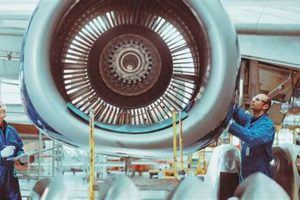
Applying lean manufacturing principles to reduce waste and improve efficiency is a core responsibility. Manufacturing Engineers identify areas for improvement within the production process and implement lean techniques such as value stream mapping, 5S, and Kaizen. For example, a Manufacturing Engineer might lead a team to streamline the assembly process for aircraft engines, reducing lead time and improving overall productivity. This continuous improvement mindset is essential for staying competitive in the aerospace industry.
- Automation and Robotics Integration
The integration of automation and robotics into manufacturing processes is increasingly common in the aerospace sector. Manufacturing Engineers are involved in the design, implementation, and maintenance of automated systems. This can include programming robots for tasks such as welding, painting, or assembly, as well as integrating automated inspection systems. A Manufacturing Engineer might oversee the installation of a robotic cell for drilling and fastening aircraft fuselage panels, improving precision and reducing manual labor. This automation leads to increased efficiency and improved safety in the manufacturing environment.
The facets highlight the critical contribution Manufacturing Engineers make within aerospace. These skilled professionals bridge design concepts and production realities. This highlights the broad spectrum of career options encompassed under “jobs you can get with aerospace engineering,” revealing the interplay between design, development, and manufacturing in realizing successful aerospace ventures. It is clear the Manufacturing Engineers are paramount for ensuring efficient and reliable production within the aerospace industry.
7. Aerospace Consultant
The position of Aerospace Consultant represents a specialized application of the expertise developed through training and experience in the field, illustrating a specific opportunity within “jobs you can get with aerospace engineering.” This role leverages in-depth knowledge to provide advisory services to aerospace organizations across various aspects of their operations.
- Technical Expertise and Problem Solving
Aerospace Consultants utilize their technical knowledge to address complex engineering challenges faced by clients. This may involve analyzing aircraft or spacecraft designs, evaluating the performance of propulsion systems, or assessing the structural integrity of aerospace components. For instance, a consultant might analyze the root cause of an engine failure or develop a solution to reduce noise emissions from an aircraft. This practical application of technical skills is central to consulting engagements.
- Strategic Planning and Business Development
Beyond technical expertise, Aerospace Consultants also advise clients on strategic planning, market analysis, and business development. They may conduct market research to identify new opportunities, develop business plans for new product lines, or assess the competitive landscape. An example involves a consultant assisting a company in entering the space tourism market or evaluating the feasibility of developing autonomous aircraft. This strategic guidance can be critical for long-term success.
- Regulatory Compliance and Safety Assessment
Aerospace Consultants often provide guidance on regulatory compliance and safety assessment. This involves helping clients navigate complex regulatory requirements, such as those imposed by the FAA or EASA, and conducting safety audits to identify potential hazards. For example, a consultant might assist an airline in developing a safety management system or conduct a risk assessment of a new airport design. Ensuring compliance and safety are paramount in the aerospace industry.
- Project Management and Process Improvement
Aerospace Consultants may be engaged to manage specific projects or to improve existing processes. This involves developing project plans, managing budgets, and tracking progress. For instance, a consultant might be brought in to manage the development of a new aircraft modification or to streamline the manufacturing process for a specific component. Effective project management and process improvement can lead to significant cost savings and increased efficiency.
The role of Aerospace Consultant highlights the diverse career pathways available within the broader field of “jobs you can get with aerospace engineering.” It demands a combination of technical expertise, business acumen, and communication skills, offering a challenging and rewarding career for experienced professionals seeking to apply their knowledge to solve real-world problems and drive innovation in the aerospace sector.
Frequently Asked Questions
The following addresses common inquiries regarding positions obtainable with training and expertise in aerospace engineering, providing clarifying information to assist in career planning and decision-making.
Question 1: What specific undergraduate degree is required to pursue a career in the field?
A bachelor’s degree in aerospace engineering is a direct route. However, related engineering disciplines such as mechanical, electrical, or materials engineering can also provide a foundation, often requiring supplementary coursework or graduate studies in aerospace-specific subjects.
Question 2: Is a graduate degree essential for career advancement?
While not always mandatory for entry-level positions, a master’s or doctoral degree can significantly enhance career prospects. Advanced degrees often open doors to specialized roles in research, development, and leadership, while also potentially leading to higher compensation.
Question 3: What are the most crucial skills for succeeding in this domain?
Technical proficiency in areas like aerodynamics, propulsion, and structures is paramount. Equally important are strong analytical, problem-solving, and communication skills. Additionally, teamwork and project management abilities are essential for collaborating effectively on complex projects.
Question 4: Are there opportunities for specialization within aerospace engineering?
Yes, a high degree of specialization is possible. Specific areas of focus can include aircraft design, spacecraft engineering, propulsion systems, avionics, and space exploration technologies, among others. Specialization often involves advanced coursework, research experience, or on-the-job training.
Question 5: What is the typical career trajectory for an aerospace engineer?
Entry-level positions often involve supporting senior engineers in design, testing, or manufacturing roles. With experience, individuals can progress to leading projects, managing teams, or specializing in a particular area of expertise. Some may also transition into management or consulting roles.
Question 6: How does job market demand fluctuate in this sector?
The job market is influenced by factors such as government spending on space exploration and defense, as well as commercial aviation trends. Economic conditions and technological advancements can also impact demand. Staying informed about industry trends and developing in-demand skills is crucial for long-term career security.
Aerospace engineering provides numerous career paths for individuals with strong technical skills and a passion for flight and space exploration. Continued learning and adaptability are key for navigating the dynamic nature of the field.
A summary of key considerations is discussed to provide a basis for informed career-related actions.
Career Pathways in Aerospace Engineering
The preceding discussion has outlined a range of “jobs you can get with aerospace engineering,” spanning design, research, testing, management, and consulting roles. These positions are integral to advancing flight and space technology, requiring specialized skills and a commitment to continuous learning. The aerospace sector demands professionals capable of addressing complex challenges and contributing to innovation across diverse domains.
The exploration emphasizes the importance of a strong technical foundation, adaptability to evolving industry trends, and effective collaboration. As technology continues to advance, individuals prepared with the requisite skills and knowledge will find meaningful opportunities to shape the future of aerospace. The advancement of this field depends on dedicated individuals who pursue these opportunities with diligence and vision.