



The formal preparation required to become a professional designing, developing, testing, and maintaining aircraft, spacecraft, and related systems encompasses a rigorous curriculum. This often involves completing a four-year bachelor’s degree program focused on engineering principles, mathematics, physics, and specialized aerospace topics. For instance, aspiring professionals may take courses in aerodynamics, propulsion, orbital mechanics, and control systems.
Investment in this foundational instruction is critical for national security, economic advancement, and the continued exploration of space. Historically, advancements in flight and space travel have been directly linked to the quality of instruction received by those entering the field. A strong educational background equips graduates with the problem-solving and analytical skills needed to address complex challenges in this dynamic area.
Subsequent sections will delve into specific degree programs, core curriculum components, available specializations, and the necessary skills developed through the course of academic study. Furthermore, this document will explore continuing professional development opportunities and career trajectories accessible to those with formal credentials.
Guidance for Pursuing a Career in Aerospace Engineering
The following recommendations are designed to assist individuals considering or currently undertaking the rigorous academic preparation necessary for a successful career in aerospace engineering.
Tip 1: Develop a Strong Foundation in Mathematics and Physics: Proficiency in calculus, differential equations, linear algebra, and physics (especially mechanics, thermodynamics, and electromagnetism) is crucial. These disciplines form the bedrock upon which advanced aerospace concepts are built. Neglecting these areas will hinder comprehension of later coursework.
Tip 2: Focus on Core Aerospace Engineering Subjects: Aerodynamics, propulsion, flight mechanics, and structural analysis are fundamental. Gain a solid understanding of these areas through coursework, independent study, and hands-on projects. For example, analyzing the airflow over a wing profile or calculating the thrust required for a rocket launch.
Tip 3: Seek Practical Experience: Internships and co-op programs provide invaluable real-world exposure. Working alongside experienced engineers on actual projects allows for the application of theoretical knowledge and the development of practical skills. Contacting aerospace companies or research institutions is recommended.
Tip 4: Specialize Based on Interests and Aptitude: Aerospace engineering encompasses diverse sub-disciplines, such as propulsion systems, spacecraft design, and unmanned aerial vehicles. Identifying areas of particular interest early on can guide coursework and career choices, leading to greater expertise and job satisfaction. For instance, an interest in combustion might lead to a focus on propulsion systems.
Tip 5: Cultivate Strong Communication and Teamwork Skills: Aerospace projects typically involve collaborative teams. The ability to effectively communicate technical information, both verbally and in writing, is essential for successful project execution. Practice active listening and clear articulation of ideas.
Tip 6: Stay Current with Technological Advancements: The aerospace industry is constantly evolving. Actively following industry publications, attending conferences, and pursuing continuing education opportunities are essential for maintaining a competitive edge. New materials, design methods, and software tools are frequently introduced.
Tip 7: Consider Advanced Degrees: A Master’s or Doctoral degree can open doors to more specialized roles and leadership positions. Advanced studies allow for deeper exploration of specific areas within aerospace engineering and the development of expertise sought after by employers. A master’s degree often provides more specialization opportunities.
By diligently following these suggestions, aspiring aerospace engineers can significantly enhance their prospects for academic success and career fulfillment. Mastering the fundamentals, gaining practical experience, and specializing in a chosen area are vital to contributing to future advancements in the field.
The following sections will provide a more in-depth look at the career paths available following the successful completion of an aerospace engineering curriculum.
1. Rigorous Curriculum

A demanding and comprehensive academic plan forms the cornerstone of aerospace engineer education. The intensity of this curriculum is not arbitrary; it directly reflects the complex and critical nature of the work that aerospace engineers undertake. The link between the curriculum’s rigor and the field’s requirements is one of cause and effect. The demanding nature of aerospace engineering necessities a strong understanding of a broad range of scientific and engineering principles.
The curriculum is not simply a collection of courses but a carefully sequenced progression designed to build upon foundational knowledge. For example, a course in fluid mechanics provides the essential background for understanding aerodynamics. Similarly, courses in materials science are critical for designing structures capable of withstanding extreme conditions. The consequences of inadequate instruction, such as miscalculation of stress tolerances, could lead to catastrophic failures in aerospace systems. The theoretical knowledge gained must be coupled with practical applications and hands-on experiences. These real-world applications are crucial for understanding the limitations and challenges in the field.
In summary, the rigor of the aerospace engineer education curriculum is a necessary prerequisite for ensuring competence and mitigating risks in this safety-critical field. The curriculum ensures a strong grounding in scientific fundamentals, promotes practical application, and prepares students for the complex challenges they will face in their careers. This approach contributes directly to the advancement and reliability of aerospace technology.
2. Hands-on Experience

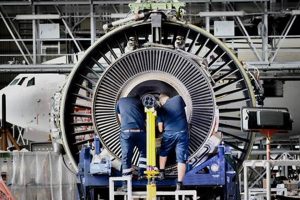
Hands-on experience serves as a critical component of aerospace engineer education, bridging the gap between theoretical knowledge and practical application. The direct correlation between practical involvement and comprehension is evident in the design, construction, and testing of aerospace systems. Passive acquisition of knowledge alone proves insufficient for mastering the complexities inherent in the field. For example, understanding aerodynamic principles is enhanced through wind tunnel experiments, where students directly observe and measure the effects of airflow on various wing designs. Similarly, the design and construction of a small-scale rocket provides tangible understanding of propulsion systems and flight dynamics.
The importance of hands-on training extends beyond simply reinforcing theoretical concepts. It fosters critical problem-solving skills, teamwork, and adaptability qualities highly valued in the aerospace industry. Students engaging in design projects learn to identify and address challenges, analyze data, and collaborate effectively with others. For instance, a team designing a drone must consider factors such as weight distribution, power consumption, and control system integration. These are complex problems which requires practical skills. Moreover, hands-on experience exposes students to the real-world constraints and limitations that cannot be fully appreciated through textbook study alone. This includes the management of resources, time constraints, and the impact of unforeseen challenges.
In conclusion, hands-on experience is essential for transforming aerospace engineer education from a primarily academic exercise to a practical preparation for professional practice. It strengthens knowledge, promotes problem-solving skills, facilitates teamwork, and cultivates an understanding of real-world constraints. The combination of rigorous theoretical knowledge and practical application equips aerospace engineers with the ability to tackle complex challenges and contribute meaningfully to the advancement of the field. Failure to provide sufficient hands-on experiences could lead to engineers who can understand theoretical concepts but are unable to implement them.
3. Mathematical Foundation

A robust mathematical foundation is indispensable to aerospace engineer education, serving as the bedrock upon which all subsequent engineering principles and applications are built. The ability to model, analyze, and predict the behavior of complex aerospace systems hinges directly on a firm grasp of mathematical concepts. The absence of a strong mathematical skillset impedes the student’s ability to grasp even the most basic of aerospace engineering subjects.
- Calculus and Differential Equations
These form the basis for understanding rates of change, optimization problems, and the modeling of dynamic systems. For example, calculating the optimal trajectory of a rocket launch, modeling the heat transfer through an aircraft fuselage, or designing stable control systems relies heavily on these mathematical tools. Improper application of these equations could lead to unstable systems and hazardous operations.
- Linear Algebra
Essential for solving systems of equations, performing transformations, and analyzing structural stability. Finite element analysis, used to simulate the stresses on an aircraft wing, and control system design rely extensively on linear algebra. Deficiencies in this area will result in an inability to use vital simulation software, as well as a reduced understanding of structural behaviours and dynamic systems.
- Probability and Statistics
Used to quantify uncertainty, analyze experimental data, and assess the reliability of aerospace systems. Determining the probability of component failure in a satellite or analyzing wind tunnel data to validate aerodynamic models necessitates a thorough understanding of these concepts. This can be vital in predicting the safety and lifespan of many different pieces of equipment used on aerospace vehicles.
- Numerical Methods
Crucial for solving complex engineering problems that lack analytical solutions. Computational Fluid Dynamics (CFD), used to simulate airflow around aircraft, and finite element analysis relies on numerical methods. This expertise is essential for simulation in the design process and the virtual testing of new prototypes and technologies. Without this knowledge, it is difficult to assess simulations properly.
The preceding facets underscore the pervasive influence of mathematics within aerospace engineer education. The ability to effectively apply these mathematical principles is not merely a theoretical exercise; it directly impacts the safety, efficiency, and reliability of aerospace systems. Students must therefore dedicate significant effort to mastering these mathematical tools to successfully navigate the challenges of the field. Deficiencies in any of these areas can translate to serious problems down the line, and possibly catastrophic system failures in the field.
4. Specialized Knowledge

Aerospace engineer education culminates in the acquisition of specialized knowledge, focusing on particular sub-disciplines within the field. This specialization is not merely an optional addendum but a necessary consequence of the breadth and depth of aerospace engineering, enabling professionals to contribute meaningfully to specific aspects of design, development, and research.
- Aerodynamics and Fluid Mechanics
Focuses on the study of airflow and its interaction with aircraft and spacecraft. Specialized knowledge here allows engineers to optimize wing designs, reduce drag, and improve overall aerodynamic performance. This area includes computational fluid dynamics (CFD), wind tunnel testing, and the development of new airfoil shapes. For instance, a specialized understanding of turbulence models is critical for accurate CFD simulations of high-speed aircraft.
- Propulsion Systems
Centers on the design, analysis, and testing of engines used in aircraft and spacecraft. Specialized knowledge enables engineers to develop more efficient and powerful engines, including gas turbines, ramjets, and rocket engines. This field necessitates a deep understanding of thermodynamics, combustion, and fluid dynamics. Example: optimization of fuel injection strategies for cleaner combustion in aircraft engines.
- Structures and Materials
Concerns the design and analysis of aircraft and spacecraft structures, ensuring they can withstand the extreme loads and temperatures encountered during flight. Specialized knowledge involves the selection of appropriate materials, the development of lightweight structures, and the analysis of stress and strain. This area directly influences safety and performance. Example: development of new composite materials for increased strength-to-weight ratio in aircraft wings.
- Guidance, Navigation, and Control (GNC)
Focuses on the systems that control the movement and stability of aircraft and spacecraft. Specialized knowledge enables engineers to design autopilots, develop satellite navigation systems, and implement advanced control algorithms. This area relies heavily on mathematics, physics, and computer science. Example: Development of autonomous flight control systems for unmanned aerial vehicles (UAVs).
These specializations, though distinct, are not mutually exclusive. Integrated design requires engineers to understand the interdependencies between these areas. An aerodynamicist must consider the structural implications of their designs, while a propulsion engineer must account for the impact of engine exhaust on aircraft stability. Therefore, aerospace engineer education, while emphasizing specialization, also cultivates a broad understanding of the field as a whole, ensuring that graduates can collaborate effectively across disciplines and contribute to the holistic design of aerospace systems.
5. Communication Skills

Effective communication skills are integral to aerospace engineer education, serving as the conduit through which technical expertise is translated into tangible results. The complex, collaborative nature of aerospace projects necessitates clear and precise communication at all stages, from initial design to final testing and implementation. The absence of adequate communication skills can lead to misunderstandings, errors, and ultimately, project failures. The link between effective communication and successful outcomes in aerospace is direct and consequential.
Consider the design of a new aircraft wing. Aerodynamicists, structural engineers, and manufacturing specialists must communicate effectively to ensure that the design meets performance requirements while adhering to safety standards and manufacturing constraints. Clear written reports, concise oral presentations, and well-documented technical drawings are essential for conveying design details, analysis results, and manufacturing specifications. In a scenario where engineers fail to adequately communicate a critical stress point on the wing structure, the aircraft may suffer catastrophic failure during flight, resulting in loss of life and significant financial repercussions. Therefore, educational programs place considerable emphasis on developing both written and verbal communication proficiency.
In conclusion, communication skills are not merely supplementary skills but a core competency within aerospace engineer education. They facilitate collaboration, mitigate risks, and ensure that technical expertise is effectively translated into the design, development, and operation of safe and reliable aerospace systems. The inability to convey technical information effectively can significantly hinder an engineer’s ability to contribute to team efforts and can jeopardize the success of critical aerospace projects. As such, these skills must be rigorously taught and practiced throughout the academic program.
6. Continuous Learning

In the field of aerospace engineering, characterized by rapid technological advancement and complex systems, continuous learning is not merely beneficial but essential. The ongoing evolution of materials, design methodologies, and regulatory standards necessitates a commitment to lifelong education for all practitioners of aerospace engineer education.
- Technological Advancements
The aerospace industry consistently introduces novel technologies, ranging from advanced composite materials to sophisticated autonomous systems. Aerospace engineers must engage in continuous learning to remain proficient in utilizing and adapting to these advancements. Example: An engineer who graduated ten years ago may need to acquire new skills in additive manufacturing techniques to effectively design and produce lightweight components for modern aircraft. The implications of not doing so can be a lack of innovation and reduced competitiveness.
- Evolving Regulatory Landscape
Aerospace engineering is subject to stringent regulations and standards imposed by governmental agencies and international organizations. Continuous learning ensures that engineers remain compliant with the latest safety protocols, environmental guidelines, and operational procedures. Example: An engineer involved in aircraft certification must stay abreast of amendments to airworthiness directives and certification requirements. Failure to adhere to these regulations may result in grounding aircraft and legal liabilities.
- Emerging Specializations
The field of aerospace engineering is continually diversifying, with new specializations emerging in areas such as space exploration, unmanned aerial vehicles (UAVs), and hypersonic flight. Continuous learning enables engineers to acquire the specialized knowledge and skills necessary to contribute to these burgeoning fields. Example: An engineer with a background in traditional aircraft design may need to pursue additional training in orbital mechanics and satellite systems to transition to a career in space engineering. Without this, career advancement opportunities will be significantly limited.
- Problem-Solving and Innovation
Continuous learning fosters critical thinking and problem-solving skills, enabling aerospace engineers to address unforeseen challenges and develop innovative solutions. By engaging in ongoing professional development, engineers expand their knowledge base and refine their analytical capabilities. Example: An engineer encountering unexpected vibrations in a newly designed aircraft may leverage their continuous learning experiences to identify the root cause and devise an effective mitigation strategy. This proactive approach improves safety and reduces maintenance costs.
These facets highlight the critical importance of continuous learning in the context of aerospace engineer education. By embracing a commitment to lifelong education, aerospace engineers can effectively navigate the ever-changing technological landscape, adhere to evolving regulations, contribute to emerging specializations, and enhance their problem-solving capabilities. This commitment to continuous development ensures their ongoing competence and allows them to contribute meaningfully to the advancement of the aerospace industry.
Frequently Asked Questions Regarding Aerospace Engineer Education
The following questions and answers address common inquiries and misconceptions surrounding the rigorous educational path required to become a qualified aerospace engineer. The information aims to provide clarity and guidance for prospective students.
Question 1: What are the minimum educational requirements to practice as an aerospace engineer?
A bachelor’s degree in aerospace engineering, or a closely related field such as mechanical engineering with a specialization in aerospace, is the standard minimum requirement. Many employers and advanced roles may require or prefer a Master’s degree.
Question 2: Is a professional engineering license required to work in aerospace engineering?
While not always mandatory for entry-level positions, a Professional Engineer (PE) license may be required for roles involving direct responsibility for public safety and welfare, such as signing off on designs or overseeing critical projects. The licensing process typically involves completing accredited education, passing an examination, and gaining relevant work experience.
Question 3: What are the most important skills developed during aerospace engineer education?
Critical skills include analytical problem-solving, mathematical modeling, knowledge of aerodynamics, propulsion, structures, and control systems, proficiency in computer-aided design (CAD) and simulation software, and effective communication skills for teamwork and technical reporting.
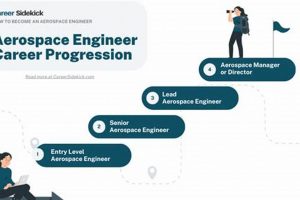
Question 4: What are the typical career paths available following completion of aerospace engineer education?
Graduates can pursue careers in aircraft design and manufacturing, spacecraft development, satellite systems engineering, propulsion systems, research and development, government agencies (such as NASA or national defense organizations), and consulting firms.
Question 5: Is it possible to specialize within aerospace engineer education?
Yes, specializations include aerodynamics, propulsion, structural analysis, flight mechanics, control systems, and space systems engineering. Specialization often occurs during advanced degree studies (Master’s or Ph.D.) or through focused professional development activities.
Question 6: What role does hands-on experience play in aerospace engineer education?
Hands-on experience, such as internships, co-op programs, and participation in engineering design projects, is crucial for applying theoretical knowledge to practical problems and developing essential engineering skills. These experiences enhance employability and prepare graduates for real-world challenges.
In summary, a rigorous academic foundation combined with practical experience and a commitment to continuous learning are paramount for success in aerospace engineering. Understanding the educational requirements, skill development, and career paths available is essential for aspiring aerospace engineers.
The following section will further explore the career trajectories attainable following successful completion of aerospace engineer education.
Conclusion
This document has examined the multifaceted nature of aerospace engineer education, underscoring the necessity of a rigorous curriculum, practical experience, a strong mathematical foundation, specialized knowledge, robust communication skills, and a commitment to continuous learning. These elements are not disparate components but rather interconnected facets of a comprehensive educational process designed to equip individuals with the competencies required to excel in this demanding field.
The pursuit of excellence in aerospace necessitates dedication and persistent effort. The future of flight and space exploration depends on the commitment of individuals to fully embrace the challenges and opportunities presented by aerospace engineer education. The advancement of aerospace technology hinges on the skills and knowledge imparted through these rigorous programs.
![Is a Masters in Aerospace Engineering Worth It? [Guide] | Innovating the Future of Flight with Reliable Aviation Solutions](https://mixaerospace.com/wp-content/uploads/2026/05/th-66-300x200.jpg "Is a Masters in Aerospace Engineering Worth It? [Guide] Innovating the Future of Flight with Reliable Aviation Solutions")