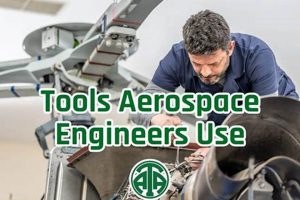
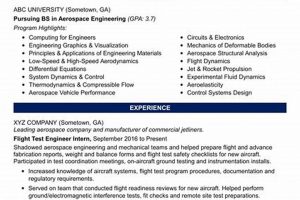
An entry-level position within the aeronautical and astronautical engineering field typically involves individuals with a recent academic background in relevant disciplines, such as aerospace, mechanical, or physics. Responsibilities at this stage often encompass assisting senior team members with design, analysis, and testing of aircraft, spacecraft, and related systems. For instance, a new graduate might contribute to computational fluid dynamics simulations or aid in the structural analysis of an aircraft wing component under supervision.
This initial role serves as a crucial foundation for career progression, offering opportunities to gain practical experience and develop specialized skills. It allows aspiring professionals to apply theoretical knowledge acquired during their education to real-world challenges. The practical knowledge gained at this stage, including specific software proficiency and hands-on testing procedures, are invaluable for long-term success in the industry. Historically, these roles have been vital for fostering innovation and ensuring the continuous development of expertise within aerospace companies and research institutions.
The following sections will delve into the specific skills and qualifications expected of individuals starting in this type of position, explore common career paths available, and discuss strategies for professional development and advancement within the aerospace engineering sector.
Tips for the Aerospace Engineering Entry-Level Professional
The transition from academic study to a professional engineering environment can present several challenges. Adhering to established guidelines and proactively seeking opportunities for growth can significantly improve success and integration within an aerospace engineering team.
Tip 1: Emphasize Fundamental Principles. Solid foundational knowledge of physics, mathematics, and core engineering concepts is paramount. While specific software and tools may vary between organizations, a strong grasp of underlying principles enables adaptability and problem-solving proficiency.
Tip 2: Develop Proficiency in Relevant Software. Familiarity with industry-standard Computer-Aided Design (CAD), Computer-Aided Engineering (CAE), and simulation software is essential. Actively seek training and opportunities to apply these tools in practical projects.
Tip 3: Cultivate Effective Communication Skills. Clear and concise communication, both written and oral, is critical for conveying technical information and collaborating effectively with team members. Practice presenting technical data and participating in design reviews.
Tip 4: Seek Mentorship and Guidance. Engage with experienced engineers within the organization. Their insights and guidance can provide valuable perspective on project management, technical challenges, and career development.
Tip 5: Proactively Pursue Learning Opportunities. The aerospace industry is constantly evolving. Stay current with advancements in technology, materials, and design methodologies through continuing education courses, industry conferences, and professional publications.
Tip 6: Document Work Thoroughly. Meticulous documentation of design processes, analyses, and test results is essential for traceability and quality control. Adhere to established documentation standards and ensure clarity and accuracy.
Tip 7: Embrace a Growth Mindset. View challenges as opportunities for learning and development. A willingness to adapt, experiment, and persevere is crucial for navigating the complexities of aerospace engineering projects.
By prioritizing foundational knowledge, cultivating essential skills, and actively seeking mentorship, individuals entering the aerospace engineering field can establish a strong foundation for a successful and rewarding career.
The concluding sections will summarize key considerations for long-term career advancement and address potential future trends within the aerospace engineering industry.
1. Technical Skill Acquisition

Technical skill acquisition forms the bedrock of competence for an entry-level aeronautical and astronautical engineering professional. It is the direct cause of an individual’s ability to contribute meaningfully to engineering projects, from design and analysis to testing and development. For instance, a recent graduate entering the field might possess theoretical knowledge of computational fluid dynamics (CFD), but practical competence requires the ability to apply that knowledge using industry-standard software. This capability, acquired through targeted training and hands-on experience, enables them to perform simulations, interpret results, and contribute to design improvements. The absence of these technical skills severely limits the individual’s utility within the organization and hinders their professional growth.
The importance of mastering specific software packages, such as MATLAB, ANSYS, or specialized CAD tools, cannot be overstated. Consider the example of a structural analysis task. While an understanding of finite element analysis (FEA) principles is fundamental, the engineer must possess the skills to create accurate models, define appropriate boundary conditions, and interpret the resulting stress and strain distributions using FEA software. The failure to correctly apply these tools leads to inaccurate results and potentially catastrophic design flaws. Furthermore, skill acquisition extends beyond software proficiency to encompass practical laboratory skills, data analysis techniques, and familiarity with relevant testing equipment. These combined competencies allow the engineer to validate analytical models and ensure the integrity of engineered systems.
In summary, the acquisition of relevant technical skills directly influences the value and contribution of an entry-level aerospace engineer. It is a continuous process, driven by the evolving demands of the industry and the increasing complexity of aerospace systems. Investing in ongoing technical training and actively seeking opportunities to apply newly acquired skills in practical projects are essential strategies for long-term professional success and innovation within the field.
2. Project Team Integration

Effective participation within project teams is a crucial aspect of a beginning aerospace engineering career. Integration facilitates knowledge transfer, skill development, and the successful execution of complex aerospace projects.
- Collaboration and Communication
Collaboration and communication are fundamental to successful project team integration. Individuals starting in the aerospace engineering field must effectively communicate their ideas, actively listen to colleagues, and constructively contribute to discussions. This often involves presenting technical information clearly and concisely, both verbally and in writing. An example includes a junior engineer presenting simulation results to a senior engineer during a design review, which allows the team to make informed decisions based on the data presented. A lack of effective communication could lead to misunderstandings, delays, and design flaws, directly impacting project outcomes.
- Role Definition and Responsibility
Within a project team, clearly defined roles and responsibilities are essential for ensuring accountability and preventing duplication of effort. Individuals new to the aerospace engineering field must understand their specific responsibilities and how their contributions fit into the larger project objectives. For instance, a junior engineer assigned to a specific component design must understand the design requirements, constraints, and interfaces with other components. They are also responsible for ensuring their work meets quality standards and adheres to project timelines. Ambiguity in roles and responsibilities can result in inefficiencies and errors, hindering team productivity and potentially compromising project success.
- Knowledge Sharing and Mentorship
Project teams provide a valuable environment for knowledge sharing and mentorship. Those earlier in their careers benefit from the guidance and experience of senior engineers, while experienced engineers gain from the fresh perspectives and innovative ideas of newcomers. A mentorship relationship might involve a senior engineer providing guidance on design best practices, troubleshooting technical challenges, or navigating organizational processes. Conversely, a junior engineer might introduce newer software tools or simulation techniques to the team. This exchange of knowledge promotes continuous learning, skill development, and a collaborative team culture.
- Conflict Resolution and Team Dynamics
Disagreements and conflicts are inevitable within project teams, but effective conflict resolution is crucial for maintaining a productive work environment. Individuals must be able to respectfully express their opinions, listen to alternative viewpoints, and work towards mutually acceptable solutions. This might involve mediating disagreements between team members, identifying underlying causes of conflict, and proposing strategies for improving team dynamics. A positive and collaborative team environment fosters creativity, innovation, and a shared commitment to project goals. Conversely, unresolved conflicts can lead to decreased morale, reduced productivity, and increased project risks.
These facets of project team integration are intrinsically linked to professional development, as it determines an individual’s ability to contribute effectively to complex projects, build relationships, and acquire the knowledge and skills necessary for career advancement in this industry.
3. Regulatory Compliance Awareness
Regulatory compliance awareness is a critical, and often mandatory, component of an individual’s professional development. This awareness directly influences the safety, reliability, and legality of the work produced. The absence of adequate compliance understanding can lead to severe consequences, including design flaws, system failures, and legal repercussions for both the individual and the organization. For example, a failure to adhere to Federal Aviation Administration (FAA) regulations regarding aircraft structural integrity during design can result in catastrophic structural failures during flight. A thorough understanding of these regulations can directly prevent such an outcome.
Specifically, entry-level personnel must possess a working knowledge of relevant standards and regulations. These requirements might encompass airworthiness directives, safety standards, environmental regulations, and export control laws. For instance, the International Traffic in Arms Regulations (ITAR) govern the export of defense-related technologies, and junior engineers working on projects involving controlled technologies must be cognizant of these restrictions to avoid potential violations. Furthermore, compliance extends beyond simply knowing the regulations. Individuals must understand how to apply these standards in practice, document compliance efforts, and participate in audits or inspections. This practical application often requires collaboration with senior engineers, quality assurance personnel, and regulatory experts.
In summary, regulatory compliance awareness is not merely a checkbox item but an essential skillset which is a main responsibility. It forms an integral part of safe engineering and project success. An entry-level engineer’s dedication to comprehending and adhering to relevant regulatory frameworks directly contributes to the integrity and reliability of aerospace systems and mitigates the risk of legal and ethical breaches. This comprehension is vital for responsible and sustainable innovation within the aerospace field.
4. Continuous Learning Imperative
The aerospace industry is characterized by rapid technological advancement and stringent regulatory requirements. For an entry-level professional, maintaining proficiency and contributing effectively necessitates a commitment to continuous learning. This imperative is not merely a suggestion, but a critical requirement for career progression and sustained competence in the field.
- Technological Advancements
The aerospace sector is marked by continual innovation in materials science, propulsion systems, avionics, and computational modeling. Entry-level engineers must actively seek knowledge of these emerging technologies through formal training, industry publications, and professional development courses. For example, a junior engineer working on composite materials might need to understand the latest advancements in carbon fiber reinforced polymers (CFRP) and their application in aircraft structures. Without such knowledge, they are unable to design optimally with these materials or effectively contribute to the team’s decision-making process. The imperative to stay abreast of technological progress ensures the engineer remains capable of utilizing state-of-the-art tools and techniques.
- Regulatory Updates and Compliance
Aerospace engineering is heavily regulated to ensure safety and reliability. Regulations and standards are constantly evolving, requiring ongoing professional development. For instance, the FAA frequently updates airworthiness directives and certification requirements. A junior engineer working on aircraft systems must stay informed of these changes to ensure their designs meet the latest regulatory standards. Compliance requires a detailed understanding of these regulations, and an inability to maintain an up-to-date understanding can lead to design flaws, safety violations, and potential legal ramifications.
- Skill Diversification and Specialization
Continuous learning enables specialization in a niche area, such as aerodynamics, structural analysis, or propulsion systems, while simultaneously fostering skill diversification. An engineer who begins with expertise in aerodynamics, for instance, might benefit from developing skills in finite element analysis (FEA) to better understand the structural implications of aerodynamic loads. This diversification increases their value to the organization and enhances their ability to tackle complex engineering challenges. This type of skill expansion allows more versatile contributions, and opens avenues for advancement into more technically specialized roles.
- Problem-Solving and Innovation
The aerospace industry faces numerous complex challenges, requiring innovative solutions. Continuous learning enhances problem-solving capabilities by broadening an engineer’s knowledge base and exposing them to different approaches and perspectives. An engineer faced with a design challenge, such as reducing aircraft drag, can benefit from knowledge acquired through continuing education on advanced aerodynamic concepts and innovative design methodologies. This may include bio-inspired designs or new control surface configurations. The resulting insights often lead to creative solutions that improve performance, efficiency, and sustainability. It is this adaptive approach, fostered by a commitment to knowledge acquisition, which drives advancement in the field.
These facets demonstrate the indispensable nature of continuous learning for junior aerospace engineers. Active participation in professional development activities, combined with a commitment to staying abreast of industry trends, is crucial for building a successful and fulfilling career in this dynamic and demanding field. An ongoing investment in knowledge and skills directly translates into enhanced technical capabilities, increased professional value, and the ability to contribute to cutting-edge innovation.
5. Professional Network Development

For an entry-level aerospace engineer, proactive engagement in professional network development is a critical component of career progression. This process directly influences opportunities for mentorship, knowledge acquisition, and access to potential employment. Building a robust professional network enables access to experienced engineers, industry experts, and peers, fostering a collaborative environment. This promotes the exchange of information, best practices, and insights related to industry trends, technological advancements, and regulatory changes. Examples of network development include attending industry conferences, joining professional organizations such as the American Institute of Aeronautics and Astronautics (AIAA), and actively participating in online forums and discussions. These activities extend beyond simple networking; they are crucial for developing credibility and visibility within the community, creating a pathway for future opportunities.
The development of professional relationships is particularly important in the context of seeking mentorship. Guidance from experienced engineers can prove invaluable for navigating the complexities of the aerospace industry, accelerating skill development, and avoiding common pitfalls. Mentors can provide insights into career paths, offer feedback on technical work, and introduce junior engineers to other influential individuals within their network. Furthermore, networking facilitates the identification of potential job opportunities. Many aerospace companies actively recruit at industry events and through professional organizations. By building relationships with engineers and recruiters, a junior engineer increases visibility and improves their prospects of securing internships, entry-level positions, or advancement opportunities. An absence of a professional network can limit access to information, mentors, and job opportunities, thereby hindering career advancement. This underlines the importance of actively cultivating professional relationships from the outset of an aerospace engineering career.
In summary, active engagement in professional network development constitutes a vital investment for the aspiring aerospace engineer. The exchange of information, mentorship opportunities, and job prospects all stem from this endeavor. Prioritizing networking is essential for accelerating professional growth, fostering technical competence, and navigating the complexities of the industry. Furthermore, challenges such as time constraints, geographic limitations, and communication barriers can be overcome by actively seeking opportunities for networking through online platforms and industry events, ensuring sustainable and continuous career development.
Frequently Asked Questions Regarding Entry-Level Aerospace Engineering Positions
This section addresses common inquiries concerning positions for aerospace engineering graduates and those entering the field. It is designed to provide clear and concise information to those considering or preparing for such a career.
Question 1: What are the most critical skills for a junior aerospace engineer to possess?
Core competencies include a solid foundation in mathematics, physics, and engineering fundamentals. Additionally, proficiency in industry-standard software such as CAD, CAE, and MATLAB is essential. Effective communication and teamwork skills are also highly valued.
Question 2: What educational background is typically required for entry-level roles?
A bachelor’s degree in aerospace engineering, mechanical engineering with an aerospace focus, or a closely related field is generally the minimum requirement. Some positions may prefer or require a master’s degree, particularly those involving research or advanced analysis.
Question 3: What are common responsibilities for an aerospace engineer at the junior level?
Responsibilities may include assisting senior engineers with design, analysis, and testing of aircraft, spacecraft, and related systems. Other duties may include performing simulations, conducting research, and documenting engineering processes.
Question 4: What is the typical career progression for an aerospace engineer starting at the junior level?
A typical career path involves gaining experience and expertise in a specific area, leading to roles with increased responsibility and technical leadership. This can include senior engineer, project engineer, lead engineer, and potentially management positions. The specific trajectory is influenced by individual interests, skills, and career goals.
Question 5: What are the most promising areas of specialization within aerospace engineering for recent graduates?
Areas such as advanced materials, autonomous systems, space exploration, and sustainable aviation are currently experiencing significant growth and demand for skilled engineers. Focus on developing expertise in these emerging fields can be beneficial for career prospects.
Question 6: What strategies can a junior engineer employ to accelerate their professional development?
Strategies include seeking mentorship from experienced engineers, actively participating in professional organizations, pursuing continuing education and certifications, and taking on challenging projects that expand skill sets and knowledge. A proactive approach to professional growth is essential for long-term success.
In summary, preparation for an entry-level aerospace engineering career involves acquiring relevant technical skills, pursuing appropriate education, and actively engaging in professional development activities. Successful navigation of this early phase can lead to a rewarding and impactful career.
The following section will explore potential future trends and challenges within the aerospace engineering sector.
Concluding Remarks
The preceding analysis has examined the multi-faceted aspects of an entry-level position within the aeronautical engineering sector. The various elements, from technical proficiency and teamwork integration to regulatory compliance, continuous learning, and professional development, collectively shape the foundation of a successful trajectory for an aerospace engineer. The responsibilities, learning curves, and critical skill-building exercises inherent in this role have been defined. An understanding of these parameters is vital for individuals entering the field.
Prospective aerospace engineers must recognize the demanding yet rewarding nature of this career path. The industry requires not only technical expertise but also adaptability, problem-solving acumen, and a commitment to ongoing professional growth. By embracing these attributes and continuously honing their skills, those starting their careers in this field can contribute meaningfully to the advancement of aerospace technology and shape the future of flight and space exploration.