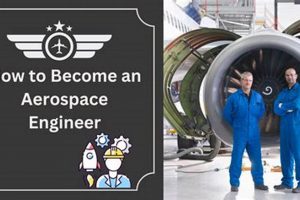
The fundamental principles governing the design, development, and testing of aircraft and spacecraft are central to the field. It encompasses a broad spectrum of scientific and technological disciplines. Examples include aerodynamics, propulsion, structural analysis, and control systems that are crucial for enabling flight within and beyond Earth’s atmosphere.
Mastery of these core concepts allows for the creation of safe, efficient, and innovative aerial and spacefaring vehicles. Historically, a firm grounding in these areas has been instrumental in pushing the boundaries of aviation and space exploration, leading to significant advancements in transportation, communication, and scientific discovery.
Further exploration of the subject reveals deeper insights into specific sub-disciplines. These include vehicle performance, stability analysis, and materials science. Each of these areas plays a critical role in shaping the future of air and space travel.
Essential Guidance for Aerospace Engineering Foundations
The following recommendations are designed to assist individuals in establishing a strong foundation within the aerospace domain. Adherence to these guidelines can improve comprehension and practical application.
Tip 1: Master Fundamental Physics and Mathematics: A strong understanding of classical mechanics, thermodynamics, fluid dynamics, and calculus is paramount. These principles underpin nearly all aerospace engineering concepts. For example, the Navier-Stokes equations are fundamental in modeling airflow over airfoils.
Tip 2: Develop Proficiency in CAD and Simulation Software: Familiarization with industry-standard software such as CATIA, ANSYS, and MATLAB is crucial. These tools are used for design, analysis, and simulation of aerospace systems. Learning to use these software packages efficiently will significantly increase productivity.
Tip 3: Focus on Aerodynamics Principles: A deep knowledge of aerodynamic forces, boundary layers, and airfoil design is necessary for aircraft and spacecraft performance. Understanding concepts like lift, drag, and stall is crucial for optimizing vehicle design and flight characteristics.
Tip 4: Study Propulsion Systems Extensively: Investigate different types of engines, including jet engines, rocket engines, and electric propulsion systems. Understand the thermodynamic cycles, combustion processes, and performance parameters associated with each type.
Tip 5: Learn Structural Analysis and Materials Science: Understand the principles of stress, strain, and material properties relevant to aerospace structures. This includes knowledge of composite materials, alloys, and their behavior under different loading conditions and temperatures. Finite element analysis (FEA) is a crucial tool.
Tip 6: Practice Control Systems Theory: Develop a solid understanding of feedback control systems, stability analysis, and system modeling. Control systems are essential for maintaining aircraft stability, trajectory control, and autopilot functions.
Tip 7: Engage in Hands-on Projects: Participation in practical projects, such as building model rockets, designing airfoils, or participating in aerospace competitions, provides invaluable experience and reinforces theoretical knowledge.
A thorough grasp of foundational principles coupled with practical application is essential for success in this complex field. Dedication to these areas will enhance comprehension, analytical abilities, and the capacity for innovation.
Subsequent sections will delve into more specialized topics relevant to specific areas within the field.
1. Aerodynamics Fundamentals

Aerodynamics represents a cornerstone discipline within aerospace engineering. It governs the interaction between a solid object and the air or gas flowing around it, fundamentally impacting the performance, efficiency, and safety of flight vehicles.
- Airfoil Design and Lift Generation
Airfoil design focuses on shaping the wings to generate lift efficiently. The geometry of an airfoil influences the pressure distribution around it, leading to a net upward force. Examples include the NACA series airfoils, each optimized for specific flight conditions. Inadequate lift leads to stall and loss of control.
- Drag Reduction Techniques
Drag, the force resisting motion through the air, must be minimized to improve fuel efficiency and increase speed. Techniques include streamlining, boundary layer control, and the use of winglets. For example, laminar flow airfoils reduce skin friction drag, enhancing performance.
- Compressible Flow and Shockwaves
At high speeds, the air becomes compressible, leading to shockwave formation. Understanding shockwaves is critical for designing supersonic aircraft. Shockwaves create drag and can destabilize a vehicle. Technologies such as swept wings and area ruling are used to mitigate shockwave effects.
- Wind Tunnel Testing and Computational Fluid Dynamics (CFD)
Aerodynamic principles are validated through wind tunnel testing and CFD simulations. These methods allow engineers to predict vehicle performance and identify potential design flaws before physical prototypes are built. CFD can model complex flow phenomena around an aircraft. Wind tunnel testing provides empirical data for validation.
The integration of these elements ensures the aerodynamic integrity of aerospace vehicles. Mastery of aerodynamics fundamentals directly translates to improvements in aircraft performance, fuel efficiency, and overall operational safety. Further advancements in computational capabilities and experimental techniques continue to refine and enhance our understanding of these foundational concepts.
2. Propulsion Systems

Propulsion systems are integral to aerospace engineering. They provide the means by which aircraft and spacecraft overcome gravity and atmospheric resistance, enabling controlled flight and movement through space. Their selection, design, and integration significantly influence mission capabilities, performance, and safety.
- Jet Engines and Air-Breathing Propulsion
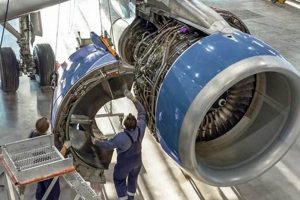
Jet engines, including turbojets, turbofans, and turboprops, are widely used for atmospheric flight. They operate by ingesting air, compressing it, mixing it with fuel, igniting the mixture, and exhausting the hot gas to generate thrust. The design of these engines impacts fuel efficiency, thrust-to-weight ratio, and operational altitude. A Boeing 737, for example, relies on turbofan engines for efficient and reliable transportation.
- Rocket Engines and Space Propulsion
Rocket engines are essential for space travel, as they carry both fuel and oxidizer, allowing them to operate in the vacuum of space. Chemical rockets, such as those used in the Saturn V rocket, generate thrust through the rapid combustion of propellants. Electric propulsion systems, such as ion drives, offer higher efficiency but lower thrust, making them suitable for long-duration space missions.
- Propellant Management and Combustion Stability
Effective propellant management is crucial for both jet and rocket engines. In jet engines, stable combustion is essential to prevent engine stall or surge. In rocket engines, the efficient mixing and combustion of propellants maximize thrust and minimize unburned fuel. Variations in propellant composition or flow rates can significantly impact performance and safety.
- Nozzle Design and Thrust Vectoring
The nozzle of a propulsion system accelerates the exhaust gases to generate thrust. Nozzle design directly impacts the velocity and direction of the exhaust stream. Thrust vectoring, achieved through movable nozzles or vanes, allows for controlled maneuvering of aircraft and spacecraft. Military aircraft often employ thrust vectoring for enhanced agility and maneuverability.
The principles governing propulsion systems are fundamental in aerospace vehicle design. From understanding the thermodynamic cycles of jet engines to the combustion processes in rocket engines, a thorough knowledge of these systems is essential for aerospace engineers. Continued advancements in propulsion technology, such as hypersonic engines and advanced electric propulsion, are pushing the boundaries of air and space travel.
3. Structural Mechanics

Structural mechanics, a fundamental pillar of aerospace engineering, directly governs the integrity and performance of flight vehicles. Its principles dictate how aircraft and spacecraft withstand applied loads, aerodynamic forces, and thermal stresses. A failure to adequately address structural concerns results in catastrophic consequences, underscoring its critical role within this area.
Consider the design of an aircraft wing. Structural mechanics principles are applied to determine the required spar and rib dimensions to prevent bending and torsion under flight loads. Finite Element Analysis (FEA), a tool rooted in structural mechanics, is routinely used to simulate stress distribution and predict potential failure points. For instance, the Comet airliner disasters in the 1950s were traced back to structural fatigue failures around the square windows, a design flaw identifiable through modern structural analysis techniques. This historical example underscores the practical significance of understanding stress concentrations and fatigue behavior of materials. Another example, The Space Shuttle Challenger disaster was caused by failure of O-rings due to low temperature. This also shows the importance of material selection and structure design.
In conclusion, structural mechanics is not merely a theoretical exercise but a practical necessity in aerospace engineering. Understanding its principles, and its application in areas such as material selection, structural design, and failure analysis, is vital for ensuring the safety, reliability, and longevity of aircraft and spacecraft. Challenges in structural mechanics continue to drive innovation in new materials, design methodologies, and advanced analysis techniques to enable future advancements in aerospace capabilities. These advanced techniques allow engineers to simulate more accurately and to predict vehicle’s structure behavior.
4. Flight Dynamics

Flight dynamics, a sub-discipline within aerospace engineering, addresses the behavior and control of aircraft and spacecraft in motion. Its relevance to the foundational knowledge base is profound, as it builds upon core principles to ensure stable and predictable flight characteristics.
- Stability Analysis
Stability analysis investigates an aircraft’s tendency to return to its equilibrium state after a disturbance. Longitudinal, lateral, and directional stability are critical considerations. For example, the Wright brothers’ early aircraft designs lacked inherent longitudinal stability, necessitating constant pilot input. Stability derivatives, derived from aerodynamic principles, are essential for quantitative analysis. Improper stability characteristics can lead to uncontrolled oscillations or divergence, posing significant safety risks.
- Control System Design
Control system design involves developing mechanisms and algorithms to manipulate an aircraft’s attitude and trajectory. Control surfaces, such as ailerons, elevators, and rudders, are actuated to generate control moments. Autopilot systems, a sophisticated application of control theory, automate flight tasks. The design process considers factors such as actuator response time, sensor accuracy, and feedback loop stability. Modern fly-by-wire systems rely heavily on control system design to enhance aircraft performance and safety margins.
- Aircraft Performance Prediction
Aircraft performance prediction involves calculating key performance parameters, such as takeoff distance, climb rate, range, and endurance. These calculations rely on aerodynamic data, engine performance characteristics, and aircraft weight. Performance predictions are essential for mission planning and operational efficiency. For instance, accurate range predictions enable airlines to optimize flight routes and fuel consumption. Discrepancies between predicted and actual performance can indicate design flaws or operational inefficiencies.
- Flight Simulation and Modeling
Flight simulation provides a virtual environment for analyzing aircraft behavior and training pilots. Flight models, based on mathematical representations of the aircraft’s dynamics, are used to simulate its response to control inputs and external disturbances. Simulations allow engineers to evaluate design modifications and test control laws in a safe and cost-effective manner. Modern flight simulators incorporate high-fidelity graphics and motion platforms to provide realistic training scenarios.
These facets of flight dynamics, while distinct, are interconnected and collectively contribute to the overall understanding of aerospace engineering fundamentals. A solid grasp of these concepts is crucial for designing and operating safe, efficient, and high-performing aircraft and spacecraft. Further investigation into related areas, such as aeroelasticity and gust response, can provide a more comprehensive perspective.
5. Materials Science

Materials science constitutes a fundamental discipline within aerospace engineering. It is the study of the properties and applications of materials, determining their suitability for various aerospace components and structures. Material selection directly affects a vehicle’s weight, strength, thermal resistance, and overall performance. For example, the transition from aluminum alloys to carbon fiber composites in aircraft construction exemplifies this relationship. Composites offer higher strength-to-weight ratios, leading to lighter aircraft and improved fuel efficiency. This choice, based on materials science principles, has a direct, positive effect on operational costs and performance.
The selection of appropriate materials also addresses extreme environmental conditions encountered in aerospace applications. High-speed flight generates significant frictional heating, necessitating materials with high-temperature resistance. Similarly, spacecraft components must withstand radiation exposure and extreme temperature fluctuations in space. Examples include the use of heat-resistant tiles on the Space Shuttle’s exterior and titanium alloys in jet engine components. The properties of these materialssuch as high melting points, low coefficients of thermal expansion, and resistance to oxidationare critical for withstanding these harsh environments and maintaining structural integrity.
In summary, materials science provides the foundational knowledge for selecting and utilizing materials in aerospace applications. The interplay between material properties and performance requirements is critical in achieving optimal designs. Challenges in materials science, such as developing even lighter, stronger, and more heat-resistant materials, directly influence future advancements in aerospace engineering and the exploration of increasingly demanding flight environments. A deep understanding of materials science is, therefore, essential for any aerospace engineer aiming to push the boundaries of flight and space exploration.
Frequently Asked Questions
The following questions address common inquiries and misconceptions regarding the basic principles of aerospace engineering.
Question 1: What are the core disciplines encompassed within aerospace engineering?
Aerospace engineering integrates aerodynamics, propulsion, structural mechanics, materials science, and flight dynamics. Each discipline is essential for the design, development, and operation of air and space vehicles.
Question 2: Why is a strong foundation in mathematics and physics essential for aerospace engineers?
Aerospace engineering relies heavily on mathematical models and physical laws to analyze and predict the behavior of complex systems. Proficiency in calculus, differential equations, fluid dynamics, and thermodynamics is critical for accurate analysis and design.
Question 3: How does aerodynamics influence aircraft design?
Aerodynamics governs the forces acting on an aircraft as it moves through the air. Airfoil design, lift generation, drag reduction, and stability are critical aerodynamic considerations that directly impact an aircraft’s performance, efficiency, and safety.
Question 4: What role do propulsion systems play in aerospace engineering?
Propulsion systems provide the thrust necessary for aircraft and spacecraft to overcome gravity and atmospheric resistance. The selection and design of propulsion systems, including jet engines and rocket engines, significantly affect mission capabilities, performance, and fuel efficiency.
Question 5: Why is materials science important in aerospace engineering?
Materials science focuses on the properties and applications of materials used in aerospace structures. The selection of appropriate materials, such as aluminum alloys, titanium alloys, and composite materials, is crucial for achieving optimal strength-to-weight ratios, thermal resistance, and durability.
Question 6: How does flight dynamics contribute to the overall design process?
Flight dynamics addresses the stability, control, and performance characteristics of aircraft and spacecraft. Understanding flight dynamics principles is essential for designing control systems, predicting aircraft behavior, and ensuring safe and stable flight.
A thorough understanding of these fundamentals is critical for aspiring aerospace engineers. Continued dedication to learning and applying these core principles fosters innovation and advancement within the field.
The subsequent section will address further applications of aerospace engineering principles.
Aerospace Engineering Basics
This examination has traversed the fundamental landscapes of aerospace engineering. Aerodynamics, propulsion, structural mechanics, flight dynamics, and materials science emerge as critical, interwoven disciplines. A mastery of these principles is essential for any engineer involved in the creation and operation of vehicles designed to navigate the Earth’s atmosphere and beyond.
Continued inquiry and rigorous application of these fundamental concepts remain paramount. The future of air and space travel, and the continued exploration of these frontiers, depends upon a solid foundation in these essential principles, and a commitment to their ongoing refinement and advancement.