A bachelor’s level academic program focused on the design, development, testing, and production of aircraft and spacecraft. This course of study incorporates principles from mechanical, electrical, and materials engineering to address the complexities of flight and space exploration. Graduates typically possess a strong foundation in aerodynamics, propulsion, structures, and control systems. As an example, a student undertaking this program might learn to model airflow over a wing using computational fluid dynamics software.
Completing this undergraduate degree provides a solid foundation for careers in the aerospace industry, government agencies, and research institutions. It equips individuals with the analytical and problem-solving skills necessary to contribute to advancements in air and space travel. Historically, the demand for professionals with this specialization has mirrored the growth and innovation within the aviation and space sectors, driven by both commercial and national interests.
The subsequent sections of this article will delve into specific curriculum components, potential career paths, and the evolving trends shaping the field of aeronautical and astronautical expertise at the baccalaureate level. These topics will provide a more detailed understanding of the knowledge and opportunities available to those pursuing this technical education.
Guidance for Success
The following recommendations are presented to optimize the undergraduate experience in this specialized field, fostering both academic excellence and professional preparedness.
Tip 1: Prioritize Foundational Knowledge: A strong grasp of mathematics, physics, and computer science is critical. Ensure mastery of these subjects as they form the bedrock of all advanced topics. For instance, a firm understanding of calculus is essential for analyzing aerodynamic forces.
Tip 2: Seek Practical Experience: Actively pursue internships or co-op opportunities within the aerospace industry. Hands-on experience complements theoretical knowledge and provides valuable insight into real-world applications. Consider roles in design, testing, or manufacturing.
Tip 3: Develop Strong Communication Skills: Effectively communicating technical information is crucial. Practice writing clear and concise reports, presenting technical findings, and collaborating within multidisciplinary teams. Participate in group projects and seek opportunities to present research.
Tip 4: Specialize Early, but Broadly: Identify areas of interest within aerospace engineering, such as propulsion, structures, or control systems. While specializing allows for deeper learning, maintain a broad understanding of all aspects of the field. This enhances adaptability and problem-solving capabilities.
Tip 5: Engage in Research Opportunities: Participate in undergraduate research projects to gain experience in scientific inquiry and contribute to the advancement of knowledge. This provides valuable exposure to research methodologies and the process of innovation.
Tip 6: Join Relevant Professional Organizations: Membership in organizations such as the American Institute of Aeronautics and Astronautics (AIAA) provides access to resources, networking opportunities, and professional development. Attend conferences and workshops to stay abreast of industry trends.
Tip 7: Cultivate Problem-Solving Abilities: Aerospace engineering challenges often require creative and innovative solutions. Develop strong analytical and critical thinking skills to effectively address complex problems. Practice problem-solving through simulations, design projects, and competitions.
Adherence to these recommendations can significantly enhance the undergraduate experience and prepare individuals for successful careers in the aerospace sector.
The subsequent sections will explore career options and future trends.
1. Aerodynamics Expertise

Aerodynamics forms a cornerstone within the “aerospace engineering btech” curriculum. A comprehensive understanding of airflow behavior around objects is essential for the efficient and safe design of aircraft and spacecraft. The following facets highlight the crucial role of this expertise.
- Lift and Drag Analysis
Analyzing lift and drag forces acting on airfoils and entire aircraft configurations is fundamental. Students learn to calculate these forces using computational fluid dynamics software and wind tunnel experiments. This analysis informs wing design, ensuring sufficient lift for takeoff and minimizing drag for efficient flight.
- Boundary Layer Theory
Understanding the behavior of the boundary layer, the thin layer of air adjacent to the surface of a moving object, is critical. Knowledge of boundary layer transition from laminar to turbulent flow allows engineers to predict and mitigate drag increases and prevent flow separation, which can lead to stall.
- Compressible Flow
At high speeds, air becomes compressible, altering its properties and significantly affecting aerodynamic forces. This expertise is vital for the design of supersonic and hypersonic aircraft, where shock waves and other compressible flow phenomena must be carefully managed to ensure stability and performance.
- Stability and Control
Aerodynamic principles are integral to ensuring aircraft stability and control. Students learn how to design control surfaces (e.g., ailerons, elevators, rudders) and implement control systems that allow pilots to maintain stable flight and execute maneuvers safely and effectively. This facet connects aerodynamic understanding with practical flight control implementation.
These facets of aerodynamics expertise are directly applicable to the design and analysis processes inherent in “aerospace engineering btech.” Proficiency in these areas equips graduates with the skills to optimize aircraft performance, enhance flight safety, and contribute to advancements in aerospace technology. Examples include designing more fuel-efficient wings for commercial airliners or developing control systems for unmanned aerial vehicles.
2. Propulsion Systems

The study of propulsion systems represents a critical element within the “aerospace engineering btech” curriculum. The design, analysis, and integration of engines and other propulsive devices directly influence the performance and capabilities of aircraft and spacecraft. A strong understanding of thermodynamics, fluid mechanics, and combustion is essential for students to effectively address the challenges inherent in propulsion system development.
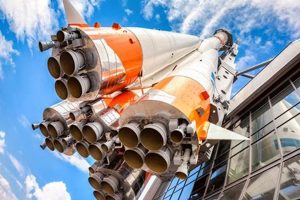
Propulsion systems encompass a wide range of technologies, from conventional gas turbine engines used in commercial aviation to rocket engines employed in space exploration. A curriculum emphasizes the operational principles, performance characteristics, and limitations of various engine types. Students might, for example, analyze the thermodynamic cycles of a jet engine, conduct simulations of rocket nozzle flow, or investigate alternative propulsion concepts such as electric propulsion. Specific applications range from optimizing fuel efficiency in commercial aircraft to designing high-thrust engines for launch vehicles. The education also prepares students to assess the environmental impact and sustainability of propulsion technologies.
The connection between propulsion systems and “aerospace engineering btech” is direct and consequential. Effective propulsion is fundamental to achieving flight and enabling space travel. Challenges in designing efficient, reliable, and environmentally responsible propulsion systems necessitate a comprehensive engineering approach. The rigorous study within this specialization prepares graduates to contribute to advancements in propulsion technology, influencing the future of air and space transportation. The subsequent sections might explore control systems or materials science as the other elements of aerospace engineering.
3. Structural Integrity

Structural integrity constitutes a critical domain within “aerospace engineering btech.” It encompasses the ability of an aircraft or spacecraft structure to withstand the loads and environmental conditions encountered during flight and operation. Maintaining structural integrity is paramount for ensuring safety, reliability, and performance.
- Stress Analysis and Finite Element Methods
Stress analysis techniques, including finite element methods (FEM), are essential for predicting stress distributions within aerospace structures. FEM software allows engineers to model complex geometries and loading scenarios, identifying areas of high stress concentration. This informs design decisions to optimize structural strength and prevent failure. For instance, FEM analysis can be used to evaluate the stress on a wing spar under maximum load conditions, or the heat stress effects on leading edge of hypersonic vehicles.
- Material Selection and Fatigue Analysis
The choice of materials plays a crucial role in structural integrity. Aerospace engineers must select materials with high strength-to-weight ratios and resistance to fatigue, corrosion, and thermal degradation. Fatigue analysis is used to predict the lifespan of structural components under cyclic loading conditions, accounting for the effects of crack initiation and propagation. This facet helps in determining inspection intervals and component replacement schedules.
- Structural Testing and Validation
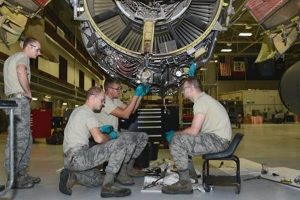
Experimental testing is vital for validating structural designs and verifying analytical predictions. Full-scale structural tests, such as subjecting an aircraft fuselage to simulated flight loads, provide valuable data on structural behavior under realistic conditions. Non-destructive testing methods, such as ultrasonic inspection and X-ray imaging, are used to detect flaws and damage without compromising structural integrity. Data from these tests validates design assumptions and ensures components meet the required standards.
- Damage Tolerance and Repair
Aircraft structures are designed to tolerate a certain level of damage without catastrophic failure. Damage tolerance analysis assesses the ability of a structure to withstand crack growth and maintain its load-carrying capacity. Repair techniques, such as composite patching and metal bonding, are employed to restore structural integrity after damage occurs. Knowledge of damage tolerance principles and repair methods is crucial for maintaining the safety and extending the service life of aerospace vehicles.
These facets of structural integrity are interconnected and essential to the “aerospace engineering btech” curriculum. Through a deep understanding of these principles, graduates are equipped to design and analyze safe, reliable, and high-performance aerospace structures. Proficiency in this area directly contributes to advancements in aircraft and spacecraft design, enabling innovative solutions for challenging engineering problems. The next area to explore is the concept of control systems.
4. Control Systems

Control systems are integral to the safe and efficient operation of aircraft and spacecraft, representing a core component of the “aerospace engineering btech” curriculum. These systems govern the stability, maneuverability, and overall performance of aerospace vehicles. A comprehensive understanding of control system principles is vital for engineers to design, analyze, and implement effective control strategies. The stability augmentation systems in commercial aircraft, for instance, rely on sophisticated control algorithms to counteract turbulence and maintain smooth flight. Similarly, the guidance, navigation, and control (GNC) systems of spacecraft ensure accurate trajectory tracking and orbital maneuvers.
The design and analysis of control systems in aerospace engineering typically involve the application of feedback control theory, dynamics, and signal processing. Students learn to model the dynamic behavior of aerospace vehicles, design controllers that meet specific performance requirements, and simulate the performance of control systems under various operating conditions. Adaptive control systems, for example, adjust their parameters in real-time to compensate for changing flight conditions or system uncertainties, a crucial element for high-performance aircraft. The understanding extends to designing the autopilot feature in aircraft. Modern fly-by-wire systems, which replace mechanical linkages with electronic control signals, offer enhanced control authority and improved safety. Robust control techniques are employed to ensure that control systems remain stable and perform reliably in the presence of disturbances and uncertainties.
In summary, control systems are a foundational element within the “aerospace engineering btech” education, facilitating the advancement of flight. Control systems are also crucial to the future of autonomous flight and space exploration. The integration of artificial intelligence and machine learning into control systems is driving the development of more intelligent and adaptive aerospace vehicles, enabling more complex missions and enhancing operational capabilities. Future challenges in control systems engineering include the development of robust control algorithms for hypersonic vehicles, autonomous navigation systems for unmanned aerial vehicles, and advanced control strategies for space robotics.
5. Materials Science

Materials science plays a pivotal role within “aerospace engineering btech,” directly influencing the performance, safety, and longevity of aircraft and spacecraft. The selection and application of appropriate materials are fundamental considerations in aerospace design due to the extreme environments and demanding operational requirements. The need for lightweight yet exceptionally strong materials drives continuous innovation in this field. For example, the shift from aluminum to composite materials in aircraft fuselages has reduced weight, improved fuel efficiency, and enhanced corrosion resistance. Consequently, a deep understanding of materials properties and behavior is indispensable for aerospace engineers.
The application of materials science principles in aerospace engineering extends beyond simple material selection. It encompasses fatigue analysis, corrosion prevention, thermal management, and the development of novel materials tailored for specific aerospace applications. The creation of heat-resistant alloys for turbine blades in jet engines exemplifies this. Similarly, the development of ablative materials for spacecraft heat shields demonstrates how materials science enables safe atmospheric reentry. Such advancements are not merely theoretical; they translate into tangible improvements in aircraft range, payload capacity, and overall safety.
In conclusion, the link between materials science and “aerospace engineering btech” is inseparable. The ability to develop, characterize, and apply advanced materials is a defining factor in aerospace innovation. As aerospace vehicles push the boundaries of speed, altitude, and endurance, the role of materials science will only become more critical. Future challenges will focus on creating materials that are not only lightweight and strong but also self-healing, environmentally sustainable, and capable of withstanding extreme conditions. Such advancements will require a continued synergy between materials science research and aerospace engineering design.
6. Spacecraft Design
Spacecraft design constitutes a specialized and critical area within the broader field of “aerospace engineering btech.” It encompasses the processes of conceptualizing, designing, analyzing, and constructing vehicles intended for operation in the vacuum of space and the harsh environments of planetary surfaces. This discipline draws upon fundamental principles from various engineering domains, including mechanical, electrical, thermal, and materials engineering, all tailored to the unique challenges of spaceflight. The successful execution of spacecraft design is directly related to mission success, as it determines the vehicle’s ability to withstand extreme temperatures, radiation exposure, and prolonged periods of operation without maintenance. As such, it is an indispensable aspect of a well-rounded education in aerospace engineering.
The importance of spacecraft design as a component of “aerospace engineering btech” is evident in numerous real-world examples. The design of the James Webb Space Telescope, for instance, required intricate thermal management systems to maintain its sensitive instruments at cryogenic temperatures. The Mars rovers, such as Curiosity and Perseverance, necessitate robust structures and power systems to operate autonomously in the challenging Martian environment. These examples underscore the need for aerospace engineers specializing in spacecraft design to possess a deep understanding of orbital mechanics, propulsion systems, power generation and storage, communication systems, and radiation shielding. The practical application of this knowledge translates directly into the ability to create reliable and effective spacecraft capable of achieving complex scientific and exploratory objectives. Further integration between mechanical, electrical and chemical knowledge is paramount.
In summary, spacecraft design represents a vital specialization within “aerospace engineering btech,” demanding a comprehensive understanding of diverse engineering principles and their application to the unique challenges of spaceflight. The success of any space mission hinges on the ability of engineers to design spacecraft that can withstand extreme conditions and perform their intended functions reliably. Future challenges in spacecraft design include developing lighter and more efficient structures, improving radiation shielding techniques, and creating autonomous systems capable of operating in deep space for extended periods. These challenges necessitate a continued focus on innovation and collaboration between researchers, engineers, and policymakers. Therefore, it is important to invest in the workforce.
7. Avionics Integration

Avionics integration forms a critical element within the “aerospace engineering btech” curriculum, addressing the complex interplay between electronic systems and the overall functionality of aircraft and spacecraft. This discipline focuses on the design, development, testing, and certification of integrated electronic systems that control, navigate, and monitor aerospace vehicles. The efficacy of avionics integration directly affects flight safety, operational efficiency, and mission success. The integration process involves ensuring seamless communication and data exchange between various subsystems, such as flight control computers, navigation systems, communication equipment, and sensor arrays. This entails addressing issues of electromagnetic compatibility, signal integrity, and data security to ensure reliable operation under diverse environmental conditions. The failure to properly integrate avionics systems can lead to catastrophic consequences, underscoring the importance of rigorous engineering practices and thorough testing protocols. Real-life examples of successful avionics integration include advanced flight management systems in commercial airliners that optimize flight paths and reduce fuel consumption and automated landing systems that enable aircraft to land safely in adverse weather conditions.
Practical applications of avionics integration extend beyond commercial aviation to military and space exploration. Military aircraft rely on sophisticated avionics systems for target acquisition, electronic warfare, and weapons delivery. The integration of radar systems, infrared sensors, and electronic countermeasures requires careful consideration of data fusion, sensor calibration, and system redundancy to ensure effective operation in contested environments. Spacecraft avionics systems must withstand extreme radiation levels and temperature fluctuations while maintaining reliable communication with ground stations and controlling the vehicle’s attitude and trajectory. Examples include the integration of guidance, navigation, and control systems in interplanetary probes that enable autonomous navigation and precise maneuvers in deep space. Moreover, the development of unmanned aerial vehicles (UAVs) has spurred innovation in avionics integration, requiring engineers to design lightweight, power-efficient, and highly reliable electronic systems for autonomous flight control, sensor data processing, and communication.
In summary, avionics integration is an indispensable aspect of “aerospace engineering btech,” demanding a comprehensive understanding of electronic systems, software engineering, and aerospace vehicle dynamics. The challenges associated with integrating complex avionics systems require a multidisciplinary approach that combines theoretical knowledge with practical experience. Future trends in avionics integration include the adoption of open architectures, the use of artificial intelligence for autonomous decision-making, and the development of secure communication protocols for networked aerospace vehicles. The continued advancement of avionics technology will drive improvements in flight safety, operational efficiency, and the capabilities of aerospace vehicles across various applications. This means that the curriculum must be well funded and continuously improved.
Frequently Asked Questions
This section addresses common inquiries regarding undergraduate education focused on the design, development, and analysis of aircraft and spacecraft. The following questions aim to provide clarity on the curriculum, career prospects, and necessary skills.
Question 1: What core subjects constitute the foundation of the BTech curriculum?
The undergraduate program typically includes a strong emphasis on mathematics, physics, fluid mechanics, thermodynamics, structural analysis, control systems, and computer programming. These subjects are considered essential for understanding and applying aerospace engineering principles.
Question 2: What career opportunities are available to graduates holding a BTech in this field?
Graduates can pursue careers in the aerospace industry, government agencies, research institutions, and related fields. Potential roles include design engineer, test engineer, systems engineer, propulsion engineer, and flight control engineer.
Question 3: What specific skills are highly valued by employers seeking individuals with this degree?
Employers often seek candidates with strong analytical, problem-solving, communication, and teamwork skills. Proficiency in computer-aided design (CAD) software, computational fluid dynamics (CFD) tools, and programming languages is also highly desirable.
Question 4: Does this undergraduate program typically include opportunities for practical experience?
Many programs offer internships, co-op programs, and research opportunities that provide students with hands-on experience in the aerospace industry. These experiences are invaluable for developing practical skills and building professional networks.
Question 5: What is the typical duration of the undergraduate degree program?
The BTech program in aerospace engineering typically requires four years of full-time study to complete the required coursework and meet graduation requirements.
Question 6: What are some potential advanced degree options for individuals with a BTech in aerospace engineering?
Graduates can pursue advanced degrees, such as a Master of Science (MS) or Doctor of Philosophy (PhD), to specialize in a particular area of aerospace engineering and pursue careers in research or academia.
In summary, the program requires a rigorous curriculum, offers diverse career paths, and emphasizes the development of both technical and soft skills. Practical experience is highly valued, and advanced degree options are available for those seeking further specialization.
The next section will consider ethical considerations and emerging technologies.
Conclusion
This article has explored the multifaceted nature of “aerospace engineering btech,” detailing its core curriculum, essential skills, and diverse career opportunities. The investigation revealed that this undergraduate degree necessitates a strong foundation in mathematics and physics, coupled with expertise in aerodynamics, propulsion, structural integrity, control systems, materials science, spacecraft design, and avionics integration. The analysis underscored the importance of practical experience and the value employers place on analytical, problem-solving, and communication skills.
The knowledge acquired through “aerospace engineering btech” programs is instrumental in driving innovation and addressing complex challenges within the aerospace industry. The pursuit of this education is critical to enabling future advancements in air and space travel, demanding a commitment to rigorous study and ethical engineering practices to promote safety and efficiency in the field.