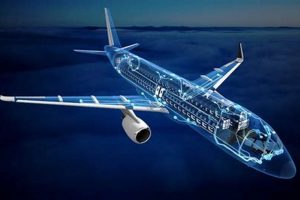
The fundamental preparation for a career dedicated to designing, developing, and testing aircraft, spacecraft, and related systems involves a specific curriculum. This specialized academic path integrates physics, mathematics, and engineering principles. For instance, aspiring professionals typically pursue a bachelor’s degree emphasizing aerodynamics, propulsion, structural analysis, and control systems.
The rigorous study equips individuals with the analytical and problem-solving skills essential for addressing complex challenges in the aerospace sector. Historically, such dedicated learning has been instrumental in driving innovation, from the development of jet engines to the exploration of outer space. The subsequent expertise ensures a competent workforce capable of advancing technological boundaries and maintaining safety standards within the industry.
The following sections will delve into the specific coursework, advanced degree options, and professional certifications relevant to building a successful and impactful career in this demanding field. It will further explore the role of practical experience, such as internships and research opportunities, in complementing formal academic study and preparing individuals for the realities of the aerospace industry.
Guidance for Aspiring Aerospace Engineers
The following represents key considerations for individuals pursuing academic and professional development in the aerospace field. Diligent attention to these points can significantly enhance career prospects and technical capabilities.
Tip 1: Emphasize Foundational Knowledge: A robust understanding of mathematics, physics, and computer science is paramount. Dedicate significant effort to mastering calculus, differential equations, linear algebra, classical mechanics, thermodynamics, and programming languages like Python or MATLAB. These form the bedrock of subsequent specialized coursework.
Tip 2: Select a Focused Curriculum: Opt for a degree program with a strong aerospace engineering specialization. Investigate course offerings related to aerodynamics, propulsion, structures, control systems, and orbital mechanics. Ensure the program aligns with specific career interests within the broader aerospace domain.
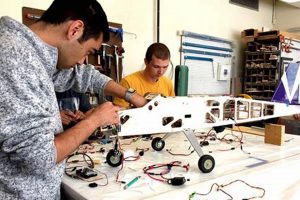
Tip 3: Pursue Practical Experience: Secure internships or research opportunities that provide hands-on experience. Participating in projects involving wind tunnel testing, computational fluid dynamics (CFD) simulations, or spacecraft design can significantly enhance technical skills and demonstrate practical aptitude to potential employers.
Tip 4: Engage in Extracurricular Activities: Participate in aerospace-related clubs or organizations, such as the American Institute of Aeronautics and Astronautics (AIAA) or student chapters focused on rocketry or unmanned aerial vehicles (UAVs). These activities provide opportunities for teamwork, leadership development, and networking.
Tip 5: Develop Strong Communication Skills: Cultivate the ability to communicate technical information clearly and concisely, both orally and in writing. Practice presenting research findings, writing technical reports, and participating in group discussions. Effective communication is essential for collaboration and project management in the aerospace industry.
Tip 6: Consider Advanced Studies: A master’s degree or doctorate can provide specialized knowledge and research experience, particularly for individuals seeking careers in research and development or advanced engineering roles. Explore graduate programs that align with specific areas of interest, such as hypersonics, composite materials, or autonomous systems.
Tip 7: Obtain Professional Certifications: Explore opportunities to obtain relevant professional certifications, such as those offered by professional engineering societies. These certifications can demonstrate competence and enhance credibility within the industry.
Adherence to these guidelines fosters a strong foundation for a successful and impactful career in the challenging yet rewarding field of aerospace engineering. The acquisition of both theoretical knowledge and practical skills remains paramount for advancing innovation and contributing to the continued progress of the industry.
These points provide a framework for navigating the academic and early career stages. The subsequent sections will address more advanced topics, career pathways, and ongoing professional development opportunities within the aerospace sector.
1. Mathematics and Physics

The rigorous application of mathematics and physics constitutes the bedrock upon which aerospace engineering is built. A comprehensive understanding of these disciplines is indispensable for the design, analysis, and operation of aircraft and spacecraft. The depth of knowledge required far surpasses introductory concepts and extends into advanced theoretical frameworks.
- Calculus and Differential Equations
These mathematical tools are critical for modeling and analyzing continuous systems, such as fluid flow over aircraft wings or the trajectory of a satellite. For example, computational fluid dynamics (CFD) relies heavily on numerical methods for solving partial differential equations that govern fluid motion. Without a solid foundation in these areas, accurate simulation and prediction of aerodynamic performance are impossible.
- Linear Algebra and Vector Analysis
Aerospace structures and control systems are fundamentally rooted in linear algebra. Analyzing the stability of an aircraft or optimizing its control surfaces involves solving systems of linear equations and performing eigenvalue analysis. Vector analysis is essential for describing forces, moments, and velocities in three-dimensional space, enabling engineers to accurately model and predict the behavior of aerospace vehicles.
- Classical Mechanics
Newtonian mechanics and Lagrangian mechanics provide the framework for understanding the motion of aircraft and spacecraft. Calculating orbital trajectories, analyzing the stability of a spinning satellite, and designing control systems to maintain a desired attitude all require a thorough understanding of these principles. Advanced topics such as rigid body dynamics and orbital perturbations are crucial for spacecraft mission design.
- Thermodynamics and Fluid Mechanics
The design of efficient and effective propulsion systems hinges on a deep understanding of thermodynamics and fluid mechanics. Analyzing the performance of jet engines, rocket motors, and hypersonic propulsion systems requires knowledge of thermodynamic cycles, compressible flow, and heat transfer. These principles also govern the behavior of airfoils and other aerodynamic surfaces, influencing lift, drag, and overall aircraft performance.
In conclusion, a mastery of advanced mathematics and physics is not merely desirable, but absolutely essential for success in the field. These disciplines provide the analytical foundation for understanding and solving the complex challenges inherent in aerospace engineering. A robust academic foundation in these areas is crucial for any aspiring professional in the sector.
2. Aerodynamics Principles
The inclusion of aerodynamics principles within aerospace engineering education is non-negotiable. The effective design and operation of any vehicle intended to traverse the atmosphere or navigate beyond it hinges upon a thorough understanding of these principles. This requirement is not merely theoretical; it dictates the feasibility, efficiency, and safety of all aerospace endeavors. For example, the shape of an aircraft wing, meticulously crafted based on aerodynamic equations, directly influences lift generation and drag reduction. Without a solid grasp of these concepts, engineers would be unable to create functional and safe flying machines.
A cornerstone of any accredited aerospace engineering program is a rigorous curriculum encompassing fundamental concepts such as Bernoulli’s principle, boundary layer theory, and compressible flow. Students are expected to apply these concepts through computational fluid dynamics simulations and wind tunnel experiments, bridging the gap between theoretical knowledge and practical application. The design of modern jet engines, for instance, requires in-depth knowledge of compressible flow and shock wave phenomena. Similarly, the development of high-speed aircraft and spacecraft necessitates a comprehensive understanding of hypersonic aerodynamics and thermal management.
The integration of aerodynamics principles into the required educational framework directly impacts the success of the aerospace industry. A workforce well-versed in these concepts is essential for continued innovation and advancement in air and space travel. The challenges inherent in designing more efficient, faster, and safer vehicles demand a deep and nuanced understanding of fluid dynamics. Ultimately, the robust aerospace engineering education required, particularly in aerodynamics, ensures that future engineers are adequately prepared to address these challenges and contribute to the field’s ongoing progress. The lack of focus on these principles results in compromised designs and decreased safety.
3. Propulsion Systems

The study of propulsion systems is a critical element integrated into the aerospace engineering academic path. Proficiency in this area is indispensable for designing, analyzing, and optimizing the engines and mechanisms that enable flight within and beyond Earth’s atmosphere. Its significance warrants dedicated attention within established curricula.
- Thermodynamics and Combustion
A foundational understanding of thermodynamics is paramount. This knowledge facilitates the analysis of engine cycles, combustion processes, and energy conversion efficiency. Real-world applications include optimizing fuel injection strategies in jet engines to minimize fuel consumption and emissions. Within aerospace engineering education, rigorous coursework in thermodynamics is critical for enabling students to design more efficient and environmentally responsible propulsion systems.
- Rocket Propulsion Principles
The design and analysis of rocket engines demand a specialized understanding of chemical kinetics, nozzle design, and propellant management. The successful launch of satellites and interplanetary probes depends on the efficient and reliable operation of these systems. Aerospace curricula must include comprehensive coverage of rocket propulsion principles to prepare engineers for challenges associated with space exploration and satellite deployment.
- Gas Turbine Engine Design
Gas turbine engines power the vast majority of commercial and military aircraft. Their design involves a complex interplay of aerodynamics, thermodynamics, and structural mechanics. Optimizing the performance of these engines requires advanced knowledge of compressor and turbine blade design, combustion chamber dynamics, and control systems. Aerospace engineering programs must provide students with the tools and knowledge necessary to contribute to advancements in gas turbine engine technology.
- Electric Propulsion
Electric propulsion systems, such as ion thrusters and Hall-effect thrusters, offer high efficiency for long-duration space missions. These systems rely on electromagnetic forces to accelerate ionized propellant. Understanding the physics of plasma and the design of high-voltage power supplies are essential for developing advanced electric propulsion technologies. The increasing importance of electric propulsion in space exploration necessitates its inclusion in aerospace engineering education.
The convergence of thermodynamics, rocket principles, gas turbine design, and electric propulsion within aerospace engineering education empowers graduates to address current and future challenges in aerospace transportation and space exploration. A curriculum that robustly integrates these facets ensures that engineers are well-equipped to develop innovative and sustainable propulsion solutions. This detailed understanding helps to propel humans to more places.
4. Structures and Materials

The integrity of any aerospace vehicle, be it aircraft, spacecraft, or missile, fundamentally depends on the selection, analysis, and application of suitable structures and materials. Consequently, a comprehensive understanding of these disciplines is inextricably linked to aerospace engineering education. The relationship is causal: inadequate knowledge in structures and materials directly precipitates compromised vehicle performance, increased failure risk, and potentially catastrophic outcomes. Therefore, its significance as a core component is vital.
Consider the development of the Boeing 787 Dreamliner. Its extensive use of composite materials, such as carbon fiber reinforced polymers (CFRP), enabled significant weight reduction, improved fuel efficiency, and enhanced corrosion resistance. However, realizing these benefits demanded a thorough understanding of composite material behavior under various loads, environmental conditions, and manufacturing processes. The curriculum must therefore equip students with expertise in stress analysis, finite element methods, material science, and manufacturing techniques specific to aerospace-grade materials. Without this specialized academic study, the use of advanced materials becomes a liability rather than an asset. The practical significance extends to areas such as fatigue analysis, damage tolerance design, and non-destructive testing, all critical for ensuring the long-term reliability of aerospace structures.
The challenges inherent in developing future aerospace vehicles, such as hypersonic aircraft and space habitats, will demand even more sophisticated understanding of structures and materials. Issues such as extreme temperatures, radiation exposure, and micrometeoroid impact necessitate the development of novel materials and innovative structural designs. Aerospace engineering academic study must therefore evolve to incorporate these emerging challenges, ensuring that graduates are equipped to address the structural and material demands of future aerospace systems. The continued advancement and safety of aerospace technology depends on prioritizing these concepts as a cornerstone of the curriculum.
5. Control Systems

Control systems are an indispensable element within aerospace engineering education. The safe and effective operation of aircraft, spacecraft, and related systems necessitates precise control of motion, attitude, and stability. A lack of robust control systems directly translates to compromised performance, increased risk of instability, and potential mission failure. Therefore, their inclusion in the curriculum is not merely advantageous but strictly required. The correlation between a comprehensive education in control systems and the successful design and operation of aerospace vehicles is a causal one.
Consider the Fly-By-Wire systems implemented in modern commercial aircraft. These systems replace traditional mechanical linkages with electronic interfaces and sophisticated control algorithms. The successful implementation of Fly-By-Wire technology relies heavily on feedback control principles, robust stability analysis, and fault-tolerant design. Aerospace engineering degree programs must, therefore, equip students with expertise in classical control theory, modern control techniques (e.g., state-space methods, optimal control), and digital control implementation. Without this academic foundation, engineers would be unable to design and analyze the complex control systems that underpin the safety and performance of contemporary aircraft. The practical implications extend to autopilot systems, navigation control, and flight path management, all integral to safe and efficient air travel.
The challenges associated with controlling hypersonic vehicles, spacecraft attitude, and unmanned aerial vehicles (UAVs) will require even more advanced control systems. Issues such as aerodynamic uncertainties, sensor noise, and actuator limitations necessitate the development of adaptive control algorithms, robust estimation techniques, and fault-detection mechanisms. Aerospace engineering academic study must evolve to address these complexities, ensuring that graduates are prepared to design and implement reliable and high-performance control systems for the next generation of aerospace vehicles. Ultimately, continued advancement and mission assurance in the aerospace sector depends on prioritizing the inclusion of rigorous and comprehensive control systems academic study.
Frequently Asked Questions
The following addresses common inquiries regarding the academic prerequisites and educational pathways necessary for pursuing a career in aerospace engineering. It aims to clarify misconceptions and provide factual information based on industry standards and academic best practices.
Question 1: Is a bachelor’s degree in aerospace engineering absolutely necessary to work in the aerospace industry?
While related fields such as mechanical engineering or electrical engineering can provide a pathway into specific roles, a bachelor’s degree specifically in aerospace engineering offers the most direct and comprehensive preparation. The specialized coursework and design projects provide targeted knowledge and skills valued by aerospace employers.
Question 2: How critical is a strong foundation in mathematics and physics?
A robust understanding of mathematics and physics is foundational to success in aerospace engineering. These disciplines underpin nearly all core concepts, including aerodynamics, propulsion, and structural analysis. Deficiencies in these areas will severely limit an individual’s ability to comprehend and apply advanced engineering principles.
Question 3: What role do internships and co-op programs play in aerospace engineering academic development?
Internships and co-op programs offer invaluable practical experience that complements theoretical academic learning. These experiences allow students to apply their knowledge to real-world problems, develop professional skills, and network with industry professionals, thereby enhancing their employability after graduation.
Question 4: Are advanced degrees (master’s or doctorate) typically required for career advancement in aerospace engineering?
While a bachelor’s degree can lead to entry-level positions, advanced degrees often become necessary for career progression into specialized roles or leadership positions. A master’s degree can provide in-depth knowledge in a specific area, while a doctorate is generally required for research-oriented positions.
Question 5: What are some key skills, besides technical knowledge, that are vital for aerospace engineers?
Beyond technical expertise, strong communication, teamwork, and problem-solving skills are crucial. Aerospace projects often involve multidisciplinary teams, requiring engineers to effectively communicate complex ideas, collaborate with others, and address unforeseen challenges creatively.
Question 6: How important is it to stay current with technological advancements in the aerospace field after completing formal academic study?
The aerospace industry is characterized by rapid technological innovation. Therefore, ongoing professional development is essential for maintaining competence and staying competitive. This may involve attending conferences, participating in workshops, or pursuing continuing education courses.
In summary, comprehensive aerospace engineering education requires a strong foundation in mathematics and physics, specialized coursework, practical experience, and a commitment to continuous learning. A well-rounded academic path enhances career prospects and enables meaningful contributions to the industry.
The subsequent discussion will explore specific career paths within aerospace engineering and the associated academic credentials and skill sets required for each.
Conclusion
The preceding exploration has elucidated the critical components of “aerospace engineering education required.” Foundational knowledge in mathematics, physics, aerodynamics, propulsion, structures, and control systems forms the basis of professional competence. The integration of practical experience, such as internships and research opportunities, complements theoretical learning and prepares individuals for the demands of the industry.
The attainment of a robust academic grounding in these areas is not merely a suggestion; it constitutes a fundamental prerequisite for contributing to the advancement of aerospace technology and ensuring the safety and efficacy of future aerospace systems. The rigor and depth of aerospace engineering education required are directly proportional to the increasingly complex challenges and opportunities that define the sector’s trajectory. Continuous pursuit of expertise remains paramount.