A comparison of two distinct engineering disciplines reveals fundamental differences in focus and application. One concentrates on the design, development, and testing of aircraft, spacecraft, and related systems. The other centers on the creation, maintenance, and evolution of computer programs and systems. The contrasting natures of these fields lead to unique career paths and skill requirements.
Understanding the core principles and specialized knowledge associated with each discipline is essential for individuals considering careers in either area. The former plays a vital role in advancing air and space travel, national defense, and scientific exploration. The latter is critical in enabling digital communication, automation, data analysis, and countless other aspects of modern life. Both fields have evolved significantly over time, driven by technological advancements and societal needs, each contributing uniquely to global progress.
The following sections will explore the specific educational pathways, job roles, required skills, and typical career trajectories associated with each field, providing a detailed comparison to inform decision-making and offer a clearer understanding of the distinct characteristics of each career path. This comparison highlights the differences in work environments, salary expectations, and future outlooks for graduates pursuing these disciplines.
Guidance on Choosing Between Aerospace and Software Engineering
Selecting the appropriate engineering discipline requires careful consideration of personal interests, aptitudes, and career goals. A thorough evaluation of the distinct characteristics of each field is crucial for informed decision-making.
Tip 1: Evaluate Foundational Interests: Assess inherent interest in physics, mathematics, and problem-solving related to physical systems versus logical reasoning, algorithm design, and abstract problem-solving inherent in coding and software architecture.
Tip 2: Research Curriculum Differences: Compare the specific coursework required for each degree. Aerospace engineering typically involves thermodynamics, fluid dynamics, and structural analysis. Software engineering emphasizes data structures, algorithms, and software design patterns.
Tip 3: Consider Career Opportunities: Investigate the types of jobs available in each field. Aerospace engineers may work on aircraft design, spacecraft propulsion, or satellite systems. Software engineers develop applications, design databases, or manage software projects.
Tip 4: Explore Required Skill Sets: Determine the skills needed for success in each field. Aerospace engineering often requires strong analytical and problem-solving skills, as well as an understanding of physical principles. Software engineering necessitates proficiency in programming languages, software development methodologies, and teamwork.
Tip 5: Analyze Work Environment Preferences: Assess preferred work environment. Aerospace engineering may involve working in research labs, testing facilities, or manufacturing plants. Software engineering typically involves working in office settings, often in collaborative teams.
Tip 6: Examine Future Trends: Consider the long-term outlook for each field. The aerospace industry is influenced by advancements in materials science, propulsion technology, and space exploration. The software industry is driven by innovations in artificial intelligence, cloud computing, and cybersecurity.
Tip 7: Network with Professionals: Engage with engineers in both fields to gain firsthand insights into their experiences and challenges. Attend industry events, join professional organizations, and seek mentorship opportunities.
A balanced assessment of these factors provides a solid foundation for determining the optimal engineering path. Careful consideration of personal strengths, career aspirations, and industry trends facilitates a well-informed decision.
The subsequent sections will delve into advanced topics within each discipline, providing further clarity for career planning and academic pursuits.
1. Physics-based vs Logic-based

The distinction between physics-based and logic-based approaches is a foundational element differentiating aerospace engineering from software engineering. Aerospace engineering operates within the constraints of the physical universe, demanding a comprehensive understanding of physics principles. Success in this field depends on applying concepts such as aerodynamics, thermodynamics, and structural mechanics to design and analyze aircraft and spacecraft. Consider, for example, the design of an aircraft wing. Aerospace engineers must apply computational fluid dynamics to optimize the wing’s shape for lift and minimize drag. This requires precise calculations rooted in the laws of physics. Errors in these calculations can have catastrophic consequences, emphasizing the critical nature of a physics-based approach.
Software engineering, conversely, operates primarily in the realm of abstract logic. It involves creating and manipulating algorithms, data structures, and programming languages to develop software applications. The constraints are primarily logical and computational rather than physical. A software engineer designing a search algorithm focuses on optimizing its efficiency and accuracy, not on physical properties. For instance, developing a sorting algorithm involves minimizing the number of comparisons and swaps needed to arrange data in a specific order. While computers and hardware have physical limitations, the core focus is on the logical structure of the software.
This dichotomy does not imply one approach is superior; instead, it highlights the distinct intellectual skill sets and problem-solving methodologies inherent in each field. Understanding whether one’s strengths and interests lie in mastering the complexities of the physical world or in constructing elegant logical systems is a crucial step in choosing between aerospace and software engineering. While software can control aerospace systems, the core design and functionality of the systems themselves hinge on a deep understanding of physical principles, solidifying the critical difference between physics-based and logic-based engineering.
2. Hardware vs Software
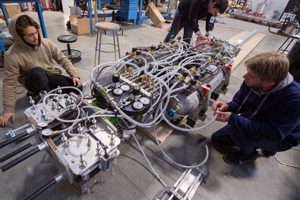
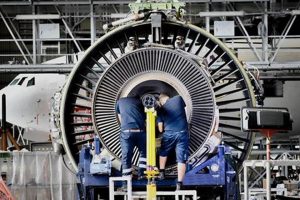
The fundamental distinction between hardware and software underscores a major divergence between aerospace engineering and software engineering. Aerospace engineering is intrinsically linked to hardware; its core purpose lies in the design, development, and construction of physical objects, such as aircraft, spacecraft, and satellites. These systems are composed of tangible components, including engines, wings, control surfaces, avionics, and structural elements. The integrity and performance of these hardware elements directly determine the overall functionality and safety of the aerospace system. For example, the design of a jet engine involves intricate hardware considerations, including materials selection, turbine blade geometry, and combustion chamber design. These elements must withstand extreme temperatures and pressures, demanding precision engineering and robust materials.
Software engineering, conversely, primarily deals with the creation and manipulation of intangible code. While software undoubtedly runs on hardware, its focus is on the logical instructions and algorithms that control the behavior of computer systems. In aerospace applications, software plays a crucial role in flight control systems, navigation, and data processing. However, the reliability and performance of this software are predicated on the underlying hardware’s proper functioning. A flight control system, regardless of its software sophistication, cannot compensate for a malfunctioning sensor or a damaged actuator. Furthermore, the complexity of modern aerospace systems necessitates a collaborative approach where hardware and software engineers work closely together. Communication protocols, data interfaces, and system integration become critical areas of focus, requiring an understanding of both hardware and software principles.
Understanding the interplay between hardware and software is critical in both fields, though the primary emphasis differs. Aerospace engineers must possess a deep understanding of material properties, manufacturing processes, and physical constraints, while software engineers must master programming languages, software design methodologies, and real-time operating systems. The successful integration of hardware and software within an aerospace system necessitates a holistic perspective, acknowledging the limitations and capabilities of each domain. This interdisciplinary approach is essential for ensuring the safety, reliability, and performance of modern aerospace vehicles, thereby highlighting the practical significance of differentiating between hardware and software-centric engineering disciplines.
3. Aircraft, Spacecraft vs Applications
The distinction between focusing on physical objects like aircraft and spacecraft versus creating software applications forms a critical component in differentiating aerospace engineering from software engineering. Aerospace engineering is fundamentally concerned with the design, construction, testing, and operation of physical vehicles that operate within the Earth’s atmosphere or in outer space. Aircraft examples include commercial airliners, military jets, and helicopters. Spacecraft encompass satellites, space probes, and crewed vehicles for space exploration. Software engineering, in contrast, centers on the creation, testing, and maintenance of software applications designed to run on computers and other digital devices. These applications can range from operating systems and databases to mobile apps and web services. The connection arises because aircraft and spacecraft increasingly rely on complex software for their operation, control, and navigation.
The dependency of aircraft and spacecraft on software exemplifies the interconnectedness of these fields. Modern aircraft employ sophisticated flight control systems programmed by software engineers, enabling precise maneuvering and stability. Satellite systems rely on software for communication, data processing, and orbital management. However, the creation of these applications is distinct from the design of the vehicles themselves. While a software engineer might develop the autopilot system for an aircraft, the aerospace engineer is responsible for the aerodynamic design of the wings, the selection of materials for the fuselage, and the integration of all systems to ensure safe and efficient flight. Furthermore, practical significance lies in the fact that different skill sets and educational backgrounds are required for each domain. Aerospace engineers require a strong foundation in physics, mathematics, and materials science, while software engineers need expertise in programming languages, algorithms, and software design principles. Both disciplines are essential for the advancement of air and space travel, but their focuses and methodologies remain fundamentally different.
In summary, understanding the distinction between working with physical aircraft and spacecraft versus developing software applications is paramount for individuals considering careers in either aerospace or software engineering. While software applications are increasingly integral to the operation of aerospace vehicles, the core responsibilities and skill sets required for each field remain distinct. This distinction highlights the practical importance of carefully evaluating personal interests and aptitudes when choosing an engineering career path. The challenge lies in recognizing that both fields contribute to technological advancement, but in fundamentally different ways, demanding distinct skill sets and approaches to problem-solving.
4. Testing vs Debugging

Rigorous verification is paramount in both aerospace and software engineering; however, the nature and consequences of failures differ significantly. This necessitates distinct approaches to testing and debugging in each field. The relative cost and potential impact of errors shape the methodologies employed, influencing the entire engineering lifecycle.
- Scope and Scale of Testing
In aerospace engineering, testing often involves physical prototypes and simulations conducted under extreme conditions. Full-scale aircraft, engine components, and spacecraft subsystems undergo rigorous testing to validate performance and safety. The high cost and complexity of aerospace systems limit the frequency of testing, necessitating comprehensive pre-flight analysis. Conversely, software engineering benefits from agile development cycles, enabling frequent and iterative testing. Unit tests, integration tests, and system tests can be automated and executed repeatedly, facilitating early detection of defects. The scale of testing in software allows for a more granular approach to identifying and resolving issues.
- Nature of Errors and Consequences
Aerospace errors often stem from physical phenomena, such as material fatigue, aerodynamic instability, or combustion inefficiencies. The consequences of failure can be catastrophic, potentially leading to loss of life and significant financial damages. Testing focuses on preventing such failures through meticulous inspection, non-destructive testing, and redundancy. Software errors, on the other hand, typically arise from logical flaws in code, incorrect data handling, or security vulnerabilities. While software failures can have serious consequences, such as data breaches or system outages, they are often less immediately life-threatening than aerospace failures. Debugging involves identifying and correcting these logical errors through code analysis, debugging tools, and software testing.
- Debugging Methodologies
Debugging in aerospace engineering often involves analyzing telemetry data, inspecting physical components, and conducting failure analysis to determine the root cause of a problem. Sophisticated instrumentation and data acquisition systems are used to monitor system performance and identify anomalies. Corrective actions may involve redesigning components, modifying manufacturing processes, or implementing stricter quality control measures. Software debugging utilizes debuggers, log files, and code analysis tools to trace the execution of a program and identify the source of errors. Debugging strategies include code reviews, unit testing, and integration testing. The iterative nature of software development allows for rapid prototyping and experimentation, facilitating the identification and correction of bugs.
- Regulatory Oversight and Certification
The aerospace industry is subject to stringent regulatory oversight by agencies such as the Federal Aviation Administration (FAA) and the European Aviation Safety Agency (EASA). Aircraft and spacecraft must undergo rigorous certification processes to ensure compliance with safety standards. Testing plays a crucial role in demonstrating compliance and obtaining certification. Software engineering, while subject to some regulatory requirements, generally faces less stringent oversight than aerospace. However, software used in safety-critical systems, such as medical devices or automotive control systems, is subject to more rigorous testing and certification requirements. The level of regulatory scrutiny reflects the potential impact of failures on public safety and welfare.
In conclusion, while both aerospace and software engineering place a high value on testing and debugging, the approaches and methodologies differ significantly due to the nature of the systems and the potential consequences of failure. Aerospace engineering prioritizes preventing catastrophic failures through rigorous physical testing and meticulous inspection, whereas software engineering emphasizes iterative testing and debugging to identify and correct logical errors in code. Both disciplines require a commitment to quality and a deep understanding of the systems being developed, highlighting the importance of effective verification strategies.
5. Materials Science vs Algorithms

The dichotomy between materials science and algorithms represents a core divergence between aerospace engineering and software engineering. One focuses on the physical properties and manipulation of matter, while the other emphasizes abstract logic and computational processes. Understanding their distinct roles is crucial for appreciating the unique challenges and requirements within each field.
- Materials in Aerospace Engineering
Aerospace engineering critically relies on materials science for the selection, development, and application of materials capable of withstanding extreme conditions. Aircraft and spacecraft operate in environments characterized by high temperatures, extreme pressures, and corrosive atmospheres. Materials science provides the knowledge to select alloys, composites, and ceramics that meet these demands, ensuring structural integrity and operational reliability. For instance, turbine blades in jet engines require nickel-based superalloys to maintain strength at high temperatures. The development and testing of these materials are essential to aerospace engineering.
- Algorithms in Software Engineering
Software engineering is fundamentally rooted in algorithms. These are step-by-step procedures for solving computational problems. The efficiency and correctness of algorithms directly impact the performance and reliability of software systems. Software engineers design and implement algorithms for tasks ranging from data sorting and searching to machine learning and artificial intelligence. In the context of aerospace, algorithms are essential for flight control systems, navigation, and data processing. For example, pathfinding algorithms are used to optimize flight routes, reducing fuel consumption and travel time.
- Interdependence in Complex Systems
Despite their differences, materials science and algorithms are interdependent in complex aerospace systems. The performance of a spacecraft’s communication system, for example, depends not only on the algorithms used to encode and decode data, but also on the materials used to construct the antenna and electronic components. Improvements in materials science can enable the creation of lighter, more efficient communication systems, while advancements in algorithms can enhance data throughput and reliability. Effective system integration requires a holistic understanding of both the physical and computational aspects.
- Research and Development Drivers
The pursuit of improved performance drives research and development in both materials science and algorithms. Aerospace engineers constantly seek materials with higher strength-to-weight ratios, improved temperature resistance, and enhanced durability. Software engineers strive to develop algorithms that are faster, more memory-efficient, and more accurate. These efforts are often intertwined, as advancements in one area can enable progress in the other. For example, the development of new composite materials for aircraft structures has been facilitated by computational algorithms that simulate material behavior under stress, enabling engineers to optimize designs and reduce weight.
In conclusion, the interplay between materials science and algorithms highlights the diverse skill sets and knowledge domains that contribute to aerospace and software engineering. While materials science focuses on the physical realm and the properties of matter, algorithms address the computational realm and the logic of information processing. Effective collaboration between these disciplines is essential for the development of advanced aerospace systems, ensuring their safety, reliability, and performance. The ongoing advancements in both fields are crucial for driving innovation and enabling new possibilities in air and space exploration.
6. Regulations, Safety vs Scalability
The paramount importance of regulations and safety in aerospace engineering contrasts starkly with the emphasis on scalability in software engineering. This difference profoundly shapes development processes, resource allocation, and overall priorities within each field. Aerospace engineering operates under stringent regulatory frameworks, dictated by agencies such as the FAA and EASA. These regulations mandate rigorous testing, meticulous documentation, and adherence to exacting safety standards. Failure to comply can result in catastrophic consequences, including loss of life. Consequently, safety takes precedence over scalability. An example is the development of commercial aircraft. Every aspect, from wing design to engine performance, must be thoroughly validated and certified to ensure passenger safety, regardless of the resources required. Scalability, in the sense of rapidly increasing production or adding features, is secondary to ensuring that all systems meet stringent safety criteria. This contrasts sharply with software engineering.
In software engineering, scalability the ability of a system to handle increasing workloads or user demand is often a primary concern. While safety is also a factor, particularly in areas like cybersecurity and critical infrastructure control, the consequences of software failure are typically less immediate and catastrophic than those in aerospace. Therefore, scalability is often prioritized to meet market demands and user expectations. Consider a social media platform. Rapid growth in users necessitates the ability to scale the infrastructure quickly to accommodate the increasing load on servers and databases. The development process emphasizes agility and rapid deployment, with scalability being a key performance metric. Safety is addressed through security protocols and data privacy measures, but the primary focus remains on ensuring the platform can handle growing user traffic and data volume. This emphasis often leads to different design choices and resource allocation strategies than those found in aerospace engineering.
In conclusion, the contrasting priorities of regulations and safety versus scalability highlight a fundamental divergence between aerospace and software engineering. Aerospace engineering operates in a highly regulated environment where safety is the paramount concern, often at the expense of scalability. Software engineering, while acknowledging the importance of safety, typically prioritizes scalability to meet the demands of a rapidly evolving digital landscape. Understanding this difference is crucial for appreciating the distinct challenges and trade-offs inherent in each field. The future likely will bring greater convergence, with increased automation and software control in aerospace systems necessitating greater attention to scalability, while growing concerns about cybersecurity and data privacy will demand a stronger emphasis on safety within the software industry.
7. Mathematical Foundations vs Coding
The distinction between mathematical foundations and coding skills illuminates a critical divergence in the core competencies required for aerospace engineering versus software engineering. Aerospace engineering demands a deep understanding of mathematical principles as a foundation for design, analysis, and problem-solving. These principles encompass calculus, differential equations, linear algebra, and numerical methods, which are essential for modeling aerodynamic forces, analyzing structural stresses, and simulating complex systems. For instance, the design of an aircraft wing requires solving partial differential equations to optimize airflow and minimize drag. Without a robust mathematical background, an aerospace engineer cannot effectively analyze and design such systems. Conversely, while mathematical understanding is beneficial, software engineering places a greater emphasis on coding proficiency. The ability to write clean, efficient, and maintainable code in various programming languages is paramount. Software engineers develop algorithms, design software architectures, and implement software solutions using coding skills as their primary tool.
The relative importance of mathematical foundations versus coding skills can be seen in the typical tasks performed by engineers in each field. Aerospace engineers spend a significant amount of time performing calculations, developing simulations, and analyzing data using mathematical models. While coding may be involved in developing software for flight control systems or data analysis tools, it is typically a secondary skill. Software engineers, on the other hand, spend the majority of their time coding, debugging, and testing software. Mathematical concepts are applied in algorithm design and optimization, but the emphasis is on practical coding skills and the ability to translate abstract concepts into working software. A software engineer developing a web application, for example, needs strong coding skills in languages like Python or JavaScript, while knowledge of advanced calculus is less critical.
In summary, while both aerospace and software engineering require a certain level of mathematical and coding proficiency, the emphasis differs significantly. Aerospace engineering relies heavily on mathematical foundations to understand and model physical systems, while software engineering prioritizes coding skills for developing and implementing software solutions. This distinction is crucial for individuals considering careers in either field, as it highlights the importance of aligning one’s strengths and interests with the core requirements of each discipline. The ongoing advancements in both fields necessitate a continuous learning approach, with aerospace engineers increasingly incorporating computational tools and software engineers requiring a deeper understanding of the mathematical principles underlying their work, solidifying the link between these skill sets.
Frequently Asked Questions
The following section addresses common inquiries regarding the key differences, career paths, and educational requirements associated with aerospace engineering and software engineering. The aim is to provide clarity and informed guidance to individuals considering these fields.
Question 1: What is the fundamental distinction between aerospace engineering and software engineering?
Aerospace engineering focuses on the design, development, and testing of aircraft and spacecraft. Software engineering centers on the creation, maintenance, and evolution of software systems. The former deals with physical objects, while the latter deals with abstract code.
Question 2: Which field offers higher earning potential?
Salaries vary based on experience, location, and specialization. Both fields offer competitive salaries, but software engineering may offer faster initial salary growth due to high demand. However, experienced aerospace engineers in specialized roles can also command high salaries.
Question 3: Which field requires more mathematical knowledge?
Aerospace engineering typically requires a more extensive understanding of advanced mathematics, including calculus, differential equations, and linear algebra. Software engineering also uses mathematical concepts, but the emphasis is often on discrete mathematics and algorithmic analysis.
Question 4: Which field is more challenging?
The level of challenge is subjective and depends on individual strengths and interests. Aerospace engineering involves complex physical systems and stringent safety requirements. Software engineering requires abstract thinking, problem-solving, and continuous learning of new technologies.
Question 5: What are the typical career paths in each field?
Aerospace engineers may work as design engineers, propulsion engineers, or test engineers in the aerospace industry. Software engineers may work as software developers, software architects, or data scientists in various industries.
Question 6: Is a graduate degree necessary for either field?
A bachelor’s degree is generally sufficient for entry-level positions in both fields. However, a graduate degree can enhance career prospects and lead to more specialized roles, particularly in research and development.
In summary, both aerospace and software engineering offer rewarding career paths with unique challenges and opportunities. The optimal choice depends on individual aptitudes, interests, and career goals. Thorough research and self-assessment are essential for making an informed decision.
The following sections will present some case studies highlighting successes, challenges, and innovations, providing practical insights into each engineering domain.
Conclusion
This examination of aerospace engineering vs software engineering reveals distinct disciplines with unique challenges and requirements. Aerospace engineering necessitates a strong foundation in physics and materials science, with a focus on safety and regulatory compliance. Software engineering emphasizes coding proficiency and algorithmic design, prioritizing scalability and adaptability. While both fields contribute significantly to technological advancement, their core skill sets and approaches to problem-solving differ substantially.
Individuals considering careers in either field must carefully evaluate their aptitudes and interests. A thorough understanding of the demands and rewards of each discipline is essential for informed decision-making. Continued innovation and collaboration between these fields will be crucial for future progress in areas such as autonomous systems and advanced transportation. Ultimately, the selection of an engineering career path should be guided by a clear understanding of the fundamental principles and practical applications within each domain.