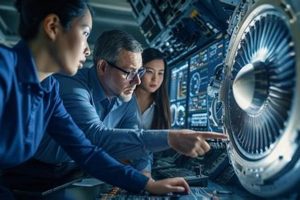
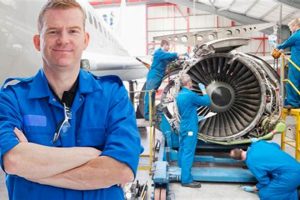
This professional is responsible for the design, analysis, and testing of aerospace structures, including aircraft, spacecraft, and missiles. For example, they might calculate the stress and strain on an aircraft wing during flight or develop new materials to withstand the extreme temperatures of space travel. Their work ensures the safety and integrity of these complex systems.
The contributions of these specialists are vital to the success and safety of air and space travel. Their expertise has been instrumental in developing lighter, stronger, and more efficient structures. Historically, their advancements have enabled longer flights, heavier payloads, and more ambitious space exploration missions. These individuals are at the forefront of technological innovation, pushing the boundaries of what’s possible in aviation and spaceflight.
The subsequent sections will delve into the specific responsibilities, educational requirements, essential skills, and career outlook associated with this critical engineering field.
Guidance for Aspiring Professionals
The following insights are intended to provide prospective professionals with valuable guidance as they pursue a career focused on aerospace structural integrity.
Tip 1: Solidify Foundational Knowledge: A strong understanding of fundamental engineering principles, including statics, dynamics, and materials science, is paramount. This base knowledge forms the bedrock for advanced structural analysis and design.
Tip 2: Master Finite Element Analysis: Proficiency in utilizing Finite Element Analysis (FEA) software, such as ANSYS or Abaqus, is essential. These tools are used to simulate structural behavior under various loading conditions and identify potential failure points.
Tip 3: Develop Materials Expertise: Familiarity with a wide range of aerospace materials, including aluminum alloys, composites, and titanium, is crucial. Understanding their properties, strengths, and limitations enables informed material selection for specific applications.
Tip 4: Prioritize Continuing Education: The field is constantly evolving with new technologies and materials. Continuous learning through workshops, conferences, and advanced coursework is necessary to stay abreast of the latest advancements.
Tip 5: Seek Internship Opportunities: Practical experience gained through internships in aerospace companies is invaluable. Internships provide exposure to real-world engineering challenges and allow aspiring engineers to apply their theoretical knowledge.
Tip 6: Cultivate Strong Communication Skills: The ability to effectively communicate technical information to both technical and non-technical audiences is critical. Clear and concise reports, presentations, and discussions are essential for successful collaboration and project execution.
Tip 7: Understand Regulatory Requirements: A working knowledge of aerospace industry standards and regulations, such as those from the FAA and NASA, is essential. Adherence to these standards ensures safety and compliance.
These tips offer a framework for building a successful career. Emphasizing core competencies, practical experience, and continuous learning enhances one’s ability to contribute to the advancement of aerospace technology.
The subsequent sections will further explore the educational pathways, career opportunities, and future trends in this dynamic engineering discipline.
1. Stress Analysis

Stress analysis is a foundational element of aerospace structural engineering. It involves the calculation and prediction of internal stresses and strains within aerospace structures subjected to various loads and environmental conditions. Its application is not merely theoretical; it directly impacts the structural integrity and safety of aircraft, spacecraft, and related components. Without precise stress analysis, the potential for catastrophic failures increases exponentially, rendering it an indispensable skill for those in the field. For instance, during the design phase of an aircraft wing, stress analysis techniques are employed to determine the optimal shape and material composition, ensuring that the wing can withstand aerodynamic forces without exceeding its structural limits. This proactive approach mitigates the risk of in-flight structural failures.
The practical significance of stress analysis extends beyond preventing immediate structural collapse. It also informs decisions related to material selection, fatigue life prediction, and preventative maintenance schedules. Finite element analysis (FEA) software is routinely used to simulate complex stress distributions under various loading scenarios, providing engineers with detailed insights into structural behavior. For example, stress analysis can identify areas of high stress concentration around fastener holes in an aircraft fuselage, allowing engineers to reinforce these areas and extend the service life of the aircraft. Similarly, in spacecraft design, stress analysis helps engineers select materials that can withstand the extreme thermal gradients and vacuum conditions of space.
In summary, stress analysis is not simply a tool; it is a cornerstone of aerospace structural engineering. It bridges the gap between theoretical design and real-world performance, ensuring the safety, reliability, and longevity of aerospace structures. Challenges remain in accurately predicting complex loading scenarios and material behavior, but ongoing research and technological advancements continue to refine stress analysis techniques, contributing to the ongoing evolution and advancement of the aerospace industry.
2. Material Selection
Material selection constitutes a critical responsibility within the domain of aerospace structural engineering. The choice of materials directly influences the structural integrity, performance, and longevity of aerospace vehicles. A crucial consequence of inappropriate material selection can range from premature component failure to catastrophic structural collapse. The interaction between an engineer’s understanding of material properties and the specific operational demands of an aerospace structure is, therefore, paramount.
The selection process involves a comprehensive evaluation of factors such as strength-to-weight ratio, fatigue resistance, corrosion resistance, thermal stability, and cost. For instance, the shift from aluminum alloys to carbon fiber composites in aircraft fuselage and wing structures exemplifies this process. Carbon fiber composites offer a superior strength-to-weight ratio compared to aluminum, leading to reduced fuel consumption and increased payload capacity. However, composites also present unique challenges related to manufacturing, inspection, and repair. The proper selection also entails adherence to stringent industry standards and regulatory requirements mandated by agencies such as the FAA and NASA. An aerospace structural engineer must demonstrate a thorough understanding of these standards to ensure compliance and safety.
Ultimately, material selection is a multifaceted decision-making process that demands a deep understanding of material science, structural mechanics, and aerospace engineering principles. Careful consideration of all relevant factors, combined with rigorous testing and validation, is essential to ensure the safety, reliability, and performance of aerospace structures. Future advancements in materials science, such as the development of self-healing composites and advanced alloys, will continue to shape the role of the engineer in the selection and application of materials in the aerospace sector.
3. Structural Design

Structural design is a core competency inherent to the role. It is the process of configuring the shape, size, and material arrangement of aerospace components to withstand anticipated loads and environmental factors. Flaws in structural design directly correlate with reduced performance, premature failure, and potential hazards. The engineer utilizes principles of mechanics, materials science, and computational analysis to create designs that meet performance requirements while adhering to stringent safety regulations. The design of an aircraft wing, for example, necessitates careful consideration of aerodynamic forces, material properties, and internal structural elements to ensure it can support the aircraft’s weight and withstand turbulence during flight. This process is iterative, involving multiple design revisions, simulations, and testing to optimize structural performance and minimize weight.
The implementation of structural design principles extends to diverse aerospace applications, including spacecraft, missiles, and satellites. In spacecraft design, engineers must account for the extreme temperatures, vacuum conditions, and radiation exposure encountered in space. The structural design must ensure the spacecraft can withstand launch forces, maintain its structural integrity throughout its mission, and protect sensitive equipment from the harsh space environment. Similarly, missile design requires consideration of high-speed aerodynamics, extreme acceleration forces, and thermal loads. The structural design must ensure the missile can maintain its trajectory, withstand aerodynamic heating, and deliver its payload accurately. Real-world examples showcase the effectiveness of sound structural design principles. The robust structure of the International Space Station, for instance, demonstrates how careful design and meticulous engineering can create a stable and functional platform in the hostile environment of space.
In summary, structural design is an indispensable aspect of the engineering discipline. It is a multifaceted process that demands a deep understanding of engineering principles, material properties, and regulatory requirements. The engineer’s role in structural design is to ensure the safety, reliability, and performance of aerospace vehicles across a wide range of operating conditions. Challenges remain in designing structures that are both lightweight and capable of withstanding extreme loads and environmental factors. Continued advancements in materials science, computational analysis, and manufacturing techniques will continue to push the boundaries of what is possible in aerospace structural design, creating more efficient, durable, and safer air and space vehicles.
4. Testing & Validation

Testing and validation are integral processes in the work of an aerospace structural engineer. These processes serve to confirm that structural designs meet specified performance requirements and safety standards. The link between design and validation is direct: designs are theoretical until empirically proven. Without rigorous testing and validation, unforeseen weaknesses and potential failure points may remain undetected, potentially leading to catastrophic consequences in real-world applications. Tests range from component-level evaluations to full-scale structural tests under simulated operational conditions. For example, a newly designed aircraft wing undergoes extensive wind tunnel testing to measure aerodynamic performance and structural response to various wind speeds and loads. Data gathered from these tests are then compared to analytical predictions, ensuring that the wing’s performance aligns with design expectations. Another example is when engineers perform a fatigue test to determine the service life of a new material being used to build a rocket. The result of these tests determine the real word safety and potential of the component or material.
The practical application of testing and validation extends beyond simply verifying design accuracy. It also provides valuable insights into material behavior, structural response, and potential failure modes. These insights inform design improvements, material selection, and maintenance strategies. For instance, if testing reveals unexpected stress concentrations around a fastener hole, the design may be modified to redistribute the stress more evenly. Or, if a composite material exhibits unexpected degradation under certain environmental conditions, alternative materials or protective coatings may be considered. Additionally, testing validates the accuracy of computational models used in structural analysis, allowing engineers to refine these models and improve their predictive capabilities. For example, the data derived from testing allow the simulation software to create a more accurate model of a real-world scenario.
In conclusion, testing and validation are not merely procedural steps but essential components of the broader engineering process. They ensure that aerospace structures meet the stringent safety and performance requirements necessary for successful operation. The challenges inherent in these processes include simulating realistic operational conditions, accurately measuring structural response, and interpreting test data. Continuous advancements in testing techniques, instrumentation, and data analysis are critical to further improving the reliability and safety of aerospace vehicles. This area of study is constantly being improved and it vital to the performance of the aerospace industry.
5. Regulatory Compliance

Regulatory compliance forms a cornerstone of the aerospace structural engineer’s responsibilities. The field is governed by stringent regulations imposed by agencies such as the Federal Aviation Administration (FAA) and the European Aviation Safety Agency (EASA). Adherence to these regulations is not optional; it is a legal imperative directly linked to safety and public welfare. Structural engineers must demonstrate that their designs meet or exceed these standards through rigorous analysis, testing, and documentation. Non-compliance can result in significant consequences, including grounding of aircraft, costly redesigns, and legal repercussions. For example, the FAA mandates specific structural load requirements for aircraft wings. Engineers must demonstrate through analysis and testing that the wing can withstand these loads with a sufficient safety margin.
The practical application of regulatory compliance extends to every stage of the design and manufacturing process. Engineers must be knowledgeable about relevant regulations, incorporate them into their designs, and maintain meticulous records to demonstrate compliance. This includes documenting material properties, stress analyses, test results, and any deviations from standard practices. Furthermore, they often work closely with regulatory agencies to obtain certifications and approvals for new designs or modifications. One particular example is the certification of a new composite material for use in aircraft structures. The structural engineer would need to demonstrate that the material meets all applicable FAA flammability, strength, and durability requirements. Without such compliance, the material could not be used in commercial aircraft.
In summary, regulatory compliance is an inseparable element of aerospace structural engineering. It safeguards public safety, ensures the reliability of aerospace vehicles, and underpins the industry’s reputation for safety. Challenges persist in interpreting and applying increasingly complex regulations, but a thorough understanding and unwavering commitment to compliance are essential for all structural engineers in the field. This understanding is critical to fostering innovation while maintaining an acceptable level of risk, and drives a culture of safety within aerospace organizations.
Frequently Asked Questions by an Aerospace Structural Engineer
This section addresses common inquiries regarding the role, responsibilities, and requirements associated with the profession.
Question 1: What is the primary objective of an aerospace structural engineer?
The primary objective is to design, analyze, and test aerospace structures to ensure their safety, reliability, and performance under various operating conditions. This includes preventing structural failures and optimizing designs for efficiency and weight.
Question 2: What educational qualifications are typically required to become an aerospace structural engineer?
A bachelor’s degree in aerospace engineering, mechanical engineering, or a closely related field is generally required. Many positions also prefer or require a master’s degree, particularly for research-oriented roles or advanced structural analysis work.
Question 3: What are some of the key software tools used in the field?
Commonly used software includes finite element analysis (FEA) programs like ANSYS and Abaqus, CAD software like CATIA and SolidWorks, and specialized aerospace analysis tools for flutter analysis, fatigue analysis, and composite material analysis.
Question 4: How does one stay current with advancements in the field?
Remaining current requires continuous learning through attending conferences, workshops, and professional development courses. Subscribing to relevant industry publications and actively participating in professional organizations are also crucial.
Question 5: What are some of the typical challenges faced by aerospace structural engineers?
Challenges include balancing conflicting design requirements (e.g., strength vs. weight), dealing with uncertainty in loading conditions, mitigating fatigue and corrosion, and complying with stringent regulatory standards.
Question 6: How important is teamwork in this profession?
Teamwork is essential. Structural engineers frequently collaborate with other engineers, designers, and technicians throughout the product development process. Effective communication and collaboration skills are therefore critical.
In summary, this career requires a strong educational foundation, proficiency in specialized software, a commitment to continuous learning, and the ability to work effectively in a team environment.
The following sections will examine emerging technologies and future trends impacting the field.
Conclusion
The preceding discussion has detailed the multifaceted role of the individual, encompassing design, analysis, material selection, testing, and regulatory compliance. The importance of this role to the safety, performance, and economic viability of the aerospace sector cannot be overstated. A deep understanding of fundamental engineering principles, coupled with proficiency in advanced analytical tools and a commitment to continuous learning, are essential for success in this demanding field.
The future will demand even greater innovation in structural design to accommodate novel propulsion systems, increased automation, and a growing emphasis on sustainability. Continued advancements in materials science, computational modeling, and manufacturing techniques will further reshape the role of the engineer. The aerospace industry must therefore foster a culture of lifelong learning and embrace technological advancements to maintain its competitive edge and ensure the continued safety and efficiency of air and space travel. The dedication and expertise remain paramount to the continued advancement of aerospace technology.