The Bureau of Labor Statistics (BLS) provides comprehensive data on various occupations, including those specializing in the design, development, testing, and production of aircraft, spacecraft, and related systems. This government resource offers detailed information regarding job outlook, salary expectations, educational requirements, and typical work environments for professionals in this field. As an example, the BLS website outlines that these engineers typically need a bachelor’s degree in aerospace engineering or a related field, and it projects employment growth based on factors like increased air travel and defense spending.
Accessing data from this authoritative source is beneficial for individuals considering a career in this technical discipline. It allows potential students and job seekers to make informed decisions about their education and career path by providing a reliable overview of the labor market. Historically, the BLS has served as a key resource for understanding workforce trends and informing policy decisions, making its occupational data particularly valuable. This data allows for a better understanding of the profession’s demand, typical earnings, and the qualifications necessary for success.
The following sections will delve into specific aspects of this career, drawing upon information commonly found on the referenced government site. This will cover typical duties, necessary skills, potential career paths, and the economic factors that may influence opportunities in the field.
Career Guidance for Aspiring Professionals
The following guidelines, informed by data accessible through government labor statistics, aim to provide direction for individuals pursuing a career in aerospace engineering.
Tip 1: Obtain a Strong Foundation in STEM. A solid understanding of science, technology, engineering, and mathematics is paramount. Focus on coursework in physics, calculus, differential equations, and computer programming. Success in these areas forms the basis for more advanced engineering studies.
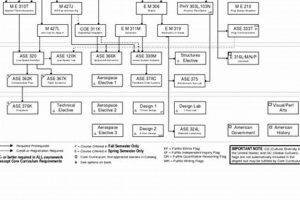
Tip 2: Pursue a Bachelor’s Degree in Aerospace Engineering or a Related Field. Most entry-level positions require a bachelor’s degree. Accreditation from ABET (Accreditation Board for Engineering and Technology) is highly recommended. Related fields include mechanical engineering or electrical engineering with a focus on aerospace applications.
Tip 3: Consider Internships and Co-op Opportunities. Practical experience is invaluable. Seek internships with aerospace companies or government agencies to gain hands-on experience and build a professional network. These experiences often translate into full-time employment offers.
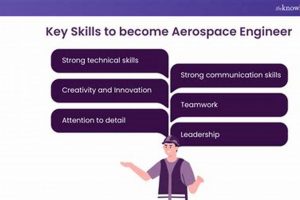
Tip 4: Develop Strong Analytical and Problem-Solving Skills. Aerospace engineers must be able to analyze complex systems, identify problems, and develop effective solutions. These skills are honed through coursework, research projects, and practical experience.
Tip 5: Cultivate Effective Communication Skills. Aerospace engineers must be able to communicate technical information clearly and concisely, both orally and in writing. Strong communication skills are essential for collaboration with colleagues, clients, and stakeholders.
Tip 6: Stay Current with Industry Trends. The aerospace industry is constantly evolving. Stay informed about new technologies, materials, and design methods by reading industry publications, attending conferences, and participating in professional organizations.
Tip 7: Consider Advanced Education. A master’s degree or doctorate can enhance career prospects and open doors to specialized roles in research, development, and management. Consider pursuing advanced studies in a specific area of interest within aerospace engineering.
Adhering to these suggestions can significantly improve the likelihood of success in this competitive and demanding field, leading to a fulfilling and impactful career. Individuals should continue to monitor resources such as the Bureau of Labor Statistics for current data regarding job outlook and salary expectations.
The subsequent sections will explore the future trends and innovations shaping the aerospace engineering profession.
1. Job Outlook

The connection between job outlook and government labor statistics relating to aerospace engineers is one of direct dependency and informational reliance. Labor statistics, such as those published by the Bureau of Labor Statistics (BLS), provide quantitative data regarding projected employment growth, reflecting anticipated changes in the number of positions available in a specific occupation. This information serves as a critical indicator of the health and dynamism of the aerospace engineering sector. For example, an increase in air travel demand, expansion of space exploration initiatives, or investment in new defense technologies can positively influence the projected job outlook for aerospace engineers. A favorable job outlook signals opportunities for those entering or advancing within the field, directly linking to career prospects.
The accuracy and reliability of these projections are paramount, as they influence career decisions, educational investments, and workforce development strategies. For instance, if the BLS projects a significant decline in aerospace engineering jobs due to automation or offshoring, prospective students may reconsider their choice of study, and existing professionals may seek retraining or career diversification. Conversely, a strong projected growth rate could incentivize increased enrollment in aerospace engineering programs and attract talent from other disciplines. Consider the recent surge in the commercial space industry; this has led to a revised and optimistic job outlook for aerospace engineers specializing in propulsion systems, materials science, and orbital mechanics. This has directly informed curriculum development in universities and prompted increased hiring by companies like SpaceX and Blue Origin.
In summary, the government’s labor statistics regarding job outlook for aerospace engineers acts as a key driver for informed decisions across various stakeholders, from individual job seekers to educational institutions and industry employers. Challenges exist in accurately forecasting long-term trends given technological advancements and shifting global economic conditions, but continual refinement of data collection and modeling techniques enhances the value and relevance of this information. Understanding the job outlook within the context of aerospace engineering, supported by robust statistical data, is essential for strategic planning and effective resource allocation.
2. Salary Expectations

Salary expectations form a crucial component of occupational data provided by the Bureau of Labor Statistics (BLS) regarding aerospace engineers. The BLS compiles and publishes detailed information on median and percentile earnings for various professions, including aerospace engineering, offering crucial insights for individuals considering this career path. These salary data points are not arbitrary figures; they reflect the interplay of several factors, including experience level, educational attainment, specialization, geographic location, and the specific industry sector employing the engineer. An aerospace engineer with a doctorate in a high-demand specialty, such as hypersonics, working in a major metropolitan area with a high cost of living, can generally anticipate higher compensation compared to a recent graduate with a bachelor’s degree employed in a rural area with a lower cost of living.
The practical significance of understanding salary expectations is multi-faceted. For prospective aerospace engineers, this knowledge aids in making informed decisions about educational investments, career paths within the field, and geographic location preferences. It also provides a benchmark for negotiating compensation packages during job offers. For current professionals, BLS salary data allows them to assess their earnings relative to their peers and negotiate for salary increases or seek alternative employment opportunities with more competitive compensation. Employers utilize BLS data to establish competitive salary ranges, attract qualified candidates, and retain skilled employees. Consider an aerospace engineer with five years of experience specializing in avionics design. Referencing BLS data, this engineer can determine the average salary for similar professionals in their region and leverage this information when seeking a promotion or evaluating a job offer from a competing company.
In conclusion, government labor statistics pertaining to aerospace engineers provide invaluable information regarding salary expectations, which directly impacts individual career choices, compensation negotiations, and employer hiring strategies. While challenges exist in precisely predicting individual earning potential, given the dynamic nature of the job market and the influence of individual performance, the BLS data serves as a reliable baseline for understanding the financial landscape of the aerospace engineering profession. Staying informed on these expectations, and the factors that influence them, is key to a successful and financially rewarding career in this challenging field.
3. Educational Requirements

The Bureau of Labor Statistics (BLS) identifies specific educational requirements for entry into the field of aerospace engineering, directly influencing career accessibility. Typically, a bachelor’s degree in aerospace engineering or a closely related field, such as mechanical engineering, is the minimum requirement for many entry-level positions. The BLS underscores the importance of specialized coursework in aerodynamics, propulsion, structural analysis, and control systems as critical components of this undergraduate education. Possession of this degree acts as a gatekeeper, determining eligibility for applying to and securing positions described within BLS occupational profiles. The practical effect is that candidates lacking the appropriate degree face significantly limited opportunities within the field. For example, the BLS cites that advanced positions, such as those involving research and development, may necessitate a master’s degree or a doctorate, reflecting the increasing complexity of technical expertise demanded in those roles.
The significance of these educational requirements extends beyond mere academic qualifications. A rigorous curriculum equips aspiring engineers with essential skills, including critical thinking, problem-solving, and analytical capabilities, which are directly applicable to the demands of aerospace engineering projects. Furthermore, practical experience gained through internships or co-op programs, as highlighted by the BLS, supplements academic learning and prepares graduates for the professional environment. The BLS recognizes that accreditation from ABET (Accreditation Board for Engineering and Technology) is a marker of program quality and relevance to industry standards. For instance, aerospace engineers involved in designing aircraft components must possess a thorough understanding of materials science and structural integrity, concepts reinforced through rigorous coursework and laboratory experience aligned with ABET criteria.
In summary, the educational requirements detailed by the BLS are fundamental prerequisites for pursuing a career as an aerospace engineer. These requirements not only ensure that candidates possess the necessary technical knowledge and skills, but also serve as a benchmark for employers assessing qualifications. While alternative pathways to entry may exist in exceptional circumstances, the standard expectation remains a bachelor’s degree, often followed by advanced studies for specialized roles. Ongoing monitoring of BLS guidelines remains crucial for career planning and professional development within this dynamic engineering discipline.
4. Industry Sectors
The diverse array of industry sectors employing professionals detailed in government labor statistics significantly shapes the career opportunities and specializations available to aerospace engineers. These sectors dictate the specific skills and knowledge required, influencing the job market and career trajectories within this field. Understanding these sectors provides a critical context for interpreting the data provided by sources like the BLS.
- Commercial Aviation
This sector focuses on the design, manufacturing, and maintenance of commercial aircraft. Aerospace engineers in commercial aviation may work on improving fuel efficiency, enhancing passenger safety, or developing new aircraft designs. Government statistics reflect the impact of air travel demand on employment levels in this area. For example, an increase in air travel globally can lead to increased hiring by companies like Boeing or Airbus.
- Defense and Military Aerospace
This sector involves the development and production of military aircraft, missiles, and related technologies. Aerospace engineers in this field often work on classified projects, requiring security clearances and specialized expertise in areas such as stealth technology or weapons systems. Government spending on defense significantly impacts the demand for aerospace engineers in this sector. Fluctuations in defense budgets, as monitored by the BLS, can influence hiring trends.
- Space Exploration
This sector is concerned with the design, construction, and operation of spacecraft, satellites, and launch vehicles. Aerospace engineers in space exploration may work for government agencies like NASA or private companies such as SpaceX or Blue Origin. The level of funding for space exploration programs, as detailed in government reports, impacts the availability of positions in this sector. Major projects like the Artemis program directly contribute to job creation.
- Research and Development
This sector encompasses research institutions, universities, and government laboratories dedicated to advancing aerospace technology. Aerospace engineers in R&D conduct fundamental research, develop new materials, and test innovative concepts. Government grants and funding initiatives, tracked by the BLS, play a crucial role in supporting research activities and employing aerospace engineers in this field. The development of new composite materials for aircraft construction, for example, stems from this sector.
In conclusion, the industry sector in which an aerospace engineer is employed has a profound impact on their daily tasks, required skills, and career prospects. Data from the BLS provides valuable insights into how these sectors drive demand for aerospace engineers and how economic trends affect employment levels. By understanding the nuances of each sector, professionals can better align their skills and career goals with industry needs, maximizing their opportunities for success.
5. Geographic Demand

Geographic demand, as a component of data available through government labor statistics regarding aerospace engineers, signifies the varying concentration of employment opportunities across different regions. This distribution is not uniform; it is influenced by factors such as the location of major aerospace companies, government research facilities, military installations, and specialized manufacturing hubs. As a direct consequence, areas with a high concentration of these entities exhibit increased demand for aerospace engineers, leading to greater job availability and potentially higher salary expectations. The BLS, by providing geographically segmented data, allows for a granular understanding of these trends. For example, states like California, Washington, and Texas, known for their robust aerospace industries, consistently demonstrate higher levels of employment for aerospace engineers compared to states with limited aerospace presence.
The practical significance of understanding geographic demand lies in its impact on career planning and resource allocation. Prospective aerospace engineers can leverage this information to identify regions with the most promising job prospects, informing their educational choices and job search strategies. Educational institutions can utilize this data to tailor their curriculum and outreach efforts to align with the specific needs of local industries. Furthermore, companies considering expansion or relocation can assess the availability of qualified aerospace engineers in different regions, optimizing their workforce strategies. Consider the establishment of a new spaceport in a particular state; such an event would trigger a surge in demand for aerospace engineers in that region, potentially attracting talent from other parts of the country.
In summary, geographic demand is a critical factor in the career landscape for aerospace engineers. Government labor statistics, by providing geographically specific employment data, empower individuals, institutions, and companies to make informed decisions. While challenges exist in predicting long-term geographic shifts due to technological advancements and economic fluctuations, continuous monitoring of BLS data remains essential for effective career planning and workforce development within the aerospace engineering profession. This spatial aspect of the job market is as important as other qualifications that this article details.
Frequently Asked Questions Regarding Aerospace Engineering Careers, Informed by Government Labor Statistics
This section addresses common inquiries concerning the aerospace engineering profession, utilizing data derived from sources such as the Bureau of Labor Statistics (BLS) to provide accurate and objective answers.
Question 1: What educational background is typically required to become an aerospace engineer?
The standard requirement is a bachelor’s degree in aerospace engineering or a closely related field like mechanical engineering. Coursework should emphasize areas such as aerodynamics, propulsion, and materials science. Advanced positions may necessitate a master’s degree or a doctorate.
Question 2: What is the projected job outlook for aerospace engineers, according to government data?
The BLS publishes detailed employment projections for various occupations, including aerospace engineering. These projections reflect anticipated growth or decline in the number of positions, providing valuable insights for career planning. Consult the most recent BLS data for specific forecasts.
Question 3: What is the typical salary range for aerospace engineers?
Salary expectations vary based on experience, education, specialization, and location. The BLS provides data on median and percentile earnings for aerospace engineers, offering a benchmark for understanding potential compensation. Refer to the BLS website for current salary data.
Question 4: In what industries do aerospace engineers typically find employment?
Aerospace engineers are employed in a variety of sectors, including commercial aviation, defense, space exploration, and research and development. Government labor statistics categorize these sectors and provide employment data for each.
Question 5: Are there specific geographic regions with higher demand for aerospace engineers?
Yes, geographic demand varies based on the location of major aerospace companies, government research facilities, and military installations. The BLS provides geographically segmented data, allowing for identification of regions with greater employment opportunities.
Question 6: What skills are essential for success as an aerospace engineer, beyond technical knowledge?
Beyond technical proficiency, strong analytical and problem-solving skills are paramount. Effective communication skills, both oral and written, are also crucial for collaboration and project management. These skills are often emphasized in government-supported STEM initiatives.
These FAQs provide a general overview of the aerospace engineering profession, informed by data from government sources. For more detailed information, consult the Bureau of Labor Statistics and other relevant government resources.
The following section will provide access to supplemental resources to further facilitate your career research regarding aerospace engineering
bls gov aerospace engineer
This article has explored aspects of the aerospace engineering profession, drawing upon government labor statistics for informational accuracy. Key areas addressed include job outlook, salary expectations, educational requirements, industry sectors, and geographic demand. Data from sources such as the Bureau of Labor Statistics (BLS) provides valuable insights for prospective students, current professionals, and employers within the field. Understanding these statistical trends allows for more informed career decisions and workforce planning.
Continued monitoring of government resources remains essential for staying abreast of evolving trends in the aerospace engineering profession. Access to reliable data empowers individuals to navigate this complex field strategically and contribute to its ongoing advancement.