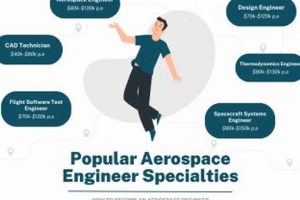
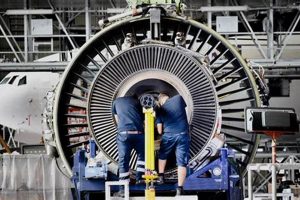
The potential for engineers trained in aerospace principles to transition into roles traditionally held by those with a mechanical engineering background is a common consideration within the engineering profession. This cross-disciplinary application of skills stems from the shared foundational knowledge in areas like thermodynamics, fluid mechanics, structural analysis, and materials science. For example, an aerospace engineer’s expertise in designing lightweight, high-strength structures for aircraft can be directly applicable to the design of automotive components or robotic systems, which are areas typically associated with mechanical engineering.
The adaptability of aerospace engineers to mechanical engineering roles offers significant benefits to both the individual and the hiring organization. It expands career opportunities for aerospace graduates facing fluctuations in the aerospace industry and provides companies with a workforce possessing a broad skillset. Historically, this type of engineering crossover has been observed during periods of economic change or technological advancement, as industries seek professionals capable of applying established engineering principles to new and evolving challenges.
Understanding the specific skills and knowledge that facilitate this transition, the potential challenges involved, and the strategies for successfully navigating this career path is crucial. This exploration involves analyzing the similarities and differences in curriculum, the importance of professional certifications, and the value of gaining practical experience in mechanical engineering applications.
Tips for Aerospace Engineers Transitioning to Mechanical Engineering Roles
Successful navigation of a career shift from aerospace to mechanical engineering requires a strategic approach. Several key considerations can significantly improve the likelihood of a smooth and effective transition.
Tip 1: Emphasize Foundational Knowledge: Highlight mastery of core engineering principles common to both disciplines, such as thermodynamics, fluid mechanics, and materials science, in resumes and interviews.
Tip 2: Showcase Transferable Skills: Draw specific connections between aerospace engineering experiences and mechanical engineering applications. For example, expertise in finite element analysis (FEA) used for aircraft design is directly relevant to stress analysis in mechanical systems.
Tip 3: Acquire Relevant Software Proficiency: Gain familiarity with software packages commonly used in mechanical engineering, such as SolidWorks, ANSYS, or AutoCAD, depending on the specific role and industry.
Tip 4: Pursue Targeted Professional Development: Consider obtaining certifications or completing coursework focused on mechanical engineering topics, such as machine design, manufacturing processes, or robotics.
Tip 5: Seek Opportunities for Cross-Disciplinary Projects: Look for projects, either professionally or personally, that allow the application of aerospace engineering skills to mechanical systems. This provides practical experience and demonstrable expertise.
Tip 6: Network with Mechanical Engineering Professionals: Attend industry events and connect with mechanical engineers to gain insights into the specific challenges and opportunities within the field.
Tip 7: Tailor Resume and Cover Letter: Adjust application materials to directly address the requirements and expectations of mechanical engineering roles, emphasizing relevant skills and experiences.
Successfully transitioning between engineering disciplines requires careful planning and proactive skill development. By highlighting relevant expertise and acquiring targeted knowledge, aerospace engineers can effectively demonstrate their value to potential employers in the mechanical engineering field.
These strategic considerations significantly enhance the prospect of a successful career transition, paving the way for aerospace engineers to contribute their expertise within the mechanical engineering domain.
1. Curriculum Overlap

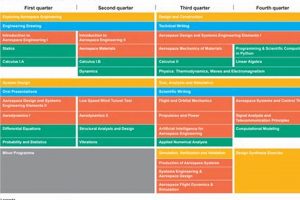
The feasibility of aerospace engineers working as mechanical engineers is significantly influenced by the demonstrable curriculum overlap between the two disciplines. Both aerospace and mechanical engineering curricula share core coursework in mathematics, physics, thermodynamics, fluid mechanics, heat transfer, materials science, and structural analysis. This shared foundation ensures that aerospace engineers possess a fundamental understanding of the principles governing mechanical systems, making a transition into mechanical engineering roles viable. The extent of this overlap determines the degree to which an aerospace engineer can readily apply their existing knowledge to mechanical engineering problems.
The commonality in these fundamental subjects allows aerospace engineers to adapt to mechanical engineering tasks with relative ease. For example, an aerospace engineer trained in designing aircraft wings using computational fluid dynamics (CFD) can apply those same CFD skills to analyze fluid flow in mechanical systems such as pumps or turbines. Similarly, the knowledge of materials science gained through aerospace engineering studies is directly transferable to the selection and application of materials in mechanical engineering designs. This curriculum overlap reduces the learning curve for aerospace engineers entering mechanical engineering positions, enhancing their ability to contribute effectively from the outset.
In conclusion, curriculum overlap is a critical factor enabling aerospace engineers to transition into mechanical engineering roles. The shared foundation in core engineering principles provides a bridge for aerospace engineers to apply their existing expertise to a broader range of engineering challenges. Recognizing and leveraging this curriculum overlap is essential for aerospace engineers seeking career opportunities in the mechanical engineering field, and for employers seeking to benefit from the diverse skillset that aerospace engineers can bring to mechanical engineering projects.
2. Fundamental Principles

The transition of aerospace engineers into mechanical engineering roles is significantly underpinned by the universality of fundamental engineering principles. These principles, forming the bedrock of engineering education, provide a common language and problem-solving framework that transcends specific disciplines. The extent to which aerospace engineers grasp and can apply these principles directly influences their adaptability and effectiveness in mechanical engineering positions.
- Thermodynamics and Heat Transfer
Both aerospace and mechanical engineering rely heavily on thermodynamics and heat transfer principles. Aerospace engineers apply these concepts to aircraft propulsion systems, thermal management of spacecraft, and aerodynamic heating. Mechanical engineers utilize them in the design of engines, power generation systems, HVAC systems, and manufacturing processes. An aerospace engineer’s understanding of thermodynamic cycles and heat exchange mechanisms is directly transferable to the analysis and design of mechanical systems. For instance, the design of a cooling system for a rocket engine shares commonalities with the design of a heat exchanger for a power plant.
- Fluid Mechanics
Fluid mechanics is another fundamental area of overlap. Aerospace engineers use fluid mechanics to analyze airflow around aircraft, design aerodynamic surfaces, and optimize propulsion systems. Mechanical engineers apply it to the design of pumps, turbines, pipelines, and fluid handling systems. The principles of fluid dynamics, boundary layer theory, and computational fluid dynamics (CFD) are equally relevant in both fields. An aerospace engineer’s experience with aerodynamic analysis can be directly applied to the design and optimization of fluid flow in mechanical equipment, such as pumps or compressors.
- Solid Mechanics and Materials Science
Solid mechanics, including stress analysis and structural design, is crucial in both disciplines. Aerospace engineers use it to design lightweight yet strong aircraft structures, analyze the behavior of materials under extreme conditions, and ensure the structural integrity of spacecraft. Mechanical engineers apply these principles to the design of machines, mechanical components, and pressure vessels. Knowledge of material properties, failure criteria, and finite element analysis (FEA) is equally valuable in both fields. An aerospace engineer’s expertise in designing lightweight structures can be applied to the design of automotive components or robotic systems.
- Control Systems
Control systems are essential for ensuring the stable and efficient operation of complex systems in both aerospace and mechanical engineering. Aerospace engineers use control systems to stabilize aircraft, guide spacecraft, and control rocket engines. Mechanical engineers apply them to the control of manufacturing processes, robotics, and automated systems. The principles of feedback control, system modeling, and stability analysis are universally applicable. An aerospace engineer’s experience in designing flight control systems can be adapted to the design of control systems for industrial automation.
In summary, the mastery of fundamental engineering principles enables aerospace engineers to effectively transition into mechanical engineering roles. These principles provide a common foundation that allows aerospace engineers to leverage their existing knowledge and skills to solve a wide range of mechanical engineering problems. The ability to apply these principles, coupled with targeted training and experience, allows for a seamless transition. The fundamental principles enables the aerospace engineers to understand mechanical engineering roles
3. Software Proficiency

Software proficiency represents a critical determinant in the ability of aerospace engineers to successfully transition into mechanical engineering roles. While fundamental engineering principles remain essential, practical application often hinges on expertise with industry-standard software tools. This expertise dictates the efficiency and effectiveness with which engineers can design, analyze, and simulate mechanical systems.
- CAD/CAM Software Expertise
Proficiency in Computer-Aided Design (CAD) and Computer-Aided Manufacturing (CAM) software is paramount. Mechanical engineers routinely use CAD software like SolidWorks, AutoCAD, and CATIA to create 3D models of mechanical components and assemblies. CAM software is then employed to generate instructions for manufacturing these designs. An aerospace engineer seeking to transition must demonstrate competence in these tools to contribute meaningfully to the design and manufacturing process. For instance, creating detailed blueprints for a robotic arm requires mastery of CAD software, while optimizing the machining process necessitates familiarity with CAM software.
- FEA and Simulation Software Skills
Finite Element Analysis (FEA) software, such as ANSYS or Abaqus, is used extensively in both aerospace and mechanical engineering to simulate the behavior of structures under various loads and conditions. While aerospace engineers may be familiar with these tools for analyzing aircraft structures, mechanical engineers apply them to a broader range of systems, including engines, pressure vessels, and consumer products. Demonstrating the ability to perform stress analysis, thermal analysis, and fluid flow simulations using FEA software is crucial for showcasing transferable skills. Simulating the stress distribution in a car chassis during a crash, for example, relies on proficient use of FEA software.
- MATLAB and Numerical Analysis Tools
MATLAB and similar numerical analysis tools are used for a variety of tasks, including data analysis, algorithm development, and system modeling. Both aerospace and mechanical engineers utilize these tools for simulations and analysis. A strong command of MATLAB enables engineers to develop custom solutions and analyze complex data sets. For example, aerospace engineers and mechanical engineers can use MATLAB for designing and implementation of control systems for different domains.
- PLM and Data Management Software
Product Lifecycle Management (PLM) and related data management systems are integral to tracking and managing product information throughout the entire lifecycle, from design and manufacturing to maintenance and disposal. While not always emphasized in traditional aerospace curricula, familiarity with these systems can be beneficial for engineers seeking to work in larger mechanical engineering organizations. PLM software allows teams to collaborate effectively and ensures that all stakeholders have access to the most up-to-date information. For instance, tracking the revision history of a complex machine design requires a robust PLM system.
In summary, software proficiency acts as a vital bridge, enabling aerospace engineers to apply their theoretical knowledge to practical mechanical engineering challenges. Demonstrating expertise in relevant software tools, through certifications, projects, or previous experience, significantly enhances their prospects of a successful transition. Gaining expertise in new software programs is crucial for aerospace engineers transitioning.
4. Transferable Skills

The viability of aerospace engineers transitioning into mechanical engineering roles hinges significantly on the identification and application of transferable skills. The extent to which an aerospace engineer can demonstrate the relevance of their existing skill set directly influences their employability and effectiveness in a mechanical engineering capacity. Foundational analytical abilities, problem-solving methodologies, and specific technical expertise, honed within the context of aerospace applications, often translate effectively into mechanical engineering scenarios. For instance, an aerospace engineer experienced in designing lightweight, high-strength structures for aircraft can leverage that knowledge to optimize the design of automotive components, robotic systems, or pressure vessels, all common applications within mechanical engineering.
A practical demonstration of transferable skills is crucial. Consider the application of Finite Element Analysis (FEA). Aerospace engineers routinely use FEA to simulate stress, strain, and thermal behavior in aircraft components. This same analytical capability is directly applicable to analyzing the structural integrity of mechanical systems, such as bridges, engines, or manufacturing equipment. Similarly, expertise in control systems, essential for flight control and navigation, can be adapted to design and implement automated control systems for manufacturing processes, robotics, or HVAC systems. The ability to articulate these connections and provide tangible examples of prior experience in applying these skills significantly strengthens an aerospace engineer’s candidacy for mechanical engineering positions.
Successfully emphasizing transferable skills requires a strategic approach. Aerospace engineers should tailor their resumes and cover letters to highlight relevant experience, quantify achievements, and articulate the direct applicability of their skills to the specific requirements of the target mechanical engineering role. Professional development activities, such as obtaining certifications or completing coursework in mechanical engineering specialties, can further bolster their credentials and demonstrate a commitment to expanding their skill set. Ultimately, the recognition and effective communication of transferable skills are paramount in facilitating the successful transition of aerospace engineers into the mechanical engineering field, underscoring the synergistic relationship between the two disciplines.
5. Industry Demands

Industry demands significantly influence the feasibility of aerospace engineers working as mechanical engineers. Shifts in economic conditions, technological advancements, and evolving workforce needs can create opportunities for engineers with adaptable skill sets. When the aerospace sector experiences downturns or restructuring, demand for aerospace-specific roles may decrease, leading qualified professionals to seek opportunities in adjacent fields like mechanical engineering. Conversely, growth in industries reliant on mechanical engineering principles, such as automotive, manufacturing, or robotics, can create a corresponding demand for engineers with transferable skills, making aerospace engineers viable candidates. For example, an increased demand for electric vehicle engineers has opened doors for aerospace engineers experienced in battery thermal management and lightweight structural design.
Furthermore, specific skill sets within mechanical engineering are often sought across industries. Expertise in areas like computational fluid dynamics (CFD), finite element analysis (FEA), and control systems, while traditionally associated with aerospace, are also highly valued in mechanical engineering applications. Companies may actively seek candidates with these skills, regardless of their initial specialization. The growing emphasis on interdisciplinary projects and systems engineering further blurs the lines between traditional engineering disciplines, creating more opportunities for engineers with diverse backgrounds. The need for engineers proficient in both design and analysis of lightweight composite structures, for instance, can make an aerospace engineer with relevant experience a compelling candidate for roles in automotive or sporting goods manufacturing.
Ultimately, the interplay between industry demands and the potential for cross-disciplinary application of engineering skills determines the extent to which aerospace engineers can successfully transition into mechanical engineering roles. Understanding these market forces and proactively developing relevant skills can significantly enhance career prospects. Continuous assessment of industry trends and adaptive learning strategies are essential for aerospace engineers seeking to capitalize on evolving demands within the broader engineering landscape. The industry demand affects employment of the aerospace engineers to mechanical engineers field.
6. Certification Relevance
The relevance of professional certifications significantly impacts the ability of aerospace engineers to transition successfully into mechanical engineering roles. While a strong academic background and relevant experience are crucial, professional certifications serve as tangible validation of competence and adherence to industry standards, often influencing hiring decisions and career advancement opportunities. The value and recognition of specific certifications can vary by industry, region, and the specific requirements of the mechanical engineering role in question.
- Professional Engineering (PE) License
A Professional Engineering (PE) license, or its equivalent in various countries, represents the highest level of professional recognition for engineers. Obtaining a PE license typically requires a combination of accredited education, supervised work experience, and passing a rigorous examination. While not always mandatory, holding a PE license can significantly enhance credibility and career prospects, particularly for roles involving design, analysis, and oversight of engineering projects. For an aerospace engineer seeking to work as a mechanical engineer, acquiring a PE license in mechanical engineering demonstrates a commitment to mastering the principles and practices of the new discipline and meeting the stringent requirements for professional competence. The PE license often enhances career progression.
- Industry-Specific Certifications
Various industry-specific certifications exist within mechanical engineering, focused on specific areas of expertise such as manufacturing, HVAC, robotics, or automotive engineering. These certifications, often offered by professional societies or industry organizations, validate specialized knowledge and skills relevant to those particular domains. For example, certifications in lean manufacturing or Six Sigma can be valuable for aerospace engineers seeking to work in manufacturing environments, while certifications in building energy modeling can enhance opportunities in HVAC design. Acquiring relevant industry-specific certifications demonstrates a commitment to specialization and a dedication to continuous professional development, improving an aerospace engineer’s competitiveness in targeted mechanical engineering sectors.
- Software and Tool Certifications
As software proficiency is crucial in modern engineering practice, certifications related to specific software tools can also be valuable. Demonstrating expertise in CAD/CAM software, FEA packages, or simulation tools through vendor-specific certifications can enhance an aerospace engineer’s credibility and marketability. For example, holding a SolidWorks certification or an ANSYS certification validates competence in using these tools for design, analysis, and simulation tasks common in mechanical engineering. These certifications can serve as evidence of practical skills and proficiency, complementing academic qualifications and work experience.
- Importance of Continued Education
Regardless of the specific certifications obtained, continued professional development is essential for engineers seeking to transition between disciplines. The body of knowledge within engineering is constantly evolving, and staying current with the latest technologies, standards, and best practices is crucial for maintaining competence and credibility. Participation in workshops, conferences, and online courses, along with actively seeking opportunities to apply new knowledge and skills in practice, demonstrates a commitment to lifelong learning and enhances the long-term career prospects of engineers navigating career transitions.
In conclusion, while not always a strict requirement, “Certification Relevance” often plays a significant role in how readily “aerospace engineers can work as mechanical engineers”. These certifications supplement existing qualifications and experience, providing potential employers with an objective assessment of competence and a tangible demonstration of commitment to mastering the principles and practices of mechanical engineering. Careful consideration of the value and relevance of specific certifications, coupled with a proactive approach to professional development, can significantly enhance an aerospace engineer’s prospects of a successful transition into the mechanical engineering field.
7. Project Experience
The practical application of theoretical knowledge, encapsulated within project experience, is a critical factor determining whether aerospace engineers can effectively function as mechanical engineers. The demonstrable ability to translate engineering principles into tangible outcomes significantly influences their perceived competence and value to potential employers in the mechanical engineering domain.
- Demonstrated Application of Core Principles
Project experience provides concrete evidence of an engineer’s ability to apply fundamental engineering principles, such as thermodynamics, fluid mechanics, and structural analysis, to real-world challenges. For instance, an aerospace engineer who has designed and analyzed the thermal management system for a satellite can leverage that experience to demonstrate their understanding of heat transfer principles relevant to designing cooling systems for mechanical equipment. This evidence demonstrates competence in mechanical engineering for aerospace engineers.
- Skill Transfer and Adaptation
Successful project completion often necessitates the transfer and adaptation of skills acquired in one domain to another. An aerospace engineer who has utilized finite element analysis (FEA) to optimize the structural integrity of aircraft components can demonstrate the ability to apply similar analytical techniques to assess the performance and reliability of mechanical systems. The transfer and adaptation is key to aerospace engineers understanding of how to work as mechanical engineers.
- Problem-Solving and Innovation
Project experience showcases an engineer’s capacity for problem-solving and innovation. Working on complex engineering projects often requires engineers to overcome technical challenges, develop creative solutions, and implement novel approaches. Aerospace engineers who have successfully tackled complex design or analysis problems in the aerospace sector can leverage that experience to demonstrate their adaptability and ingenuity in addressing mechanical engineering challenges.
- Collaboration and Communication
Engineering projects typically involve collaboration and communication among multidisciplinary teams. Aerospace engineers who have effectively worked with other engineers, technicians, and stakeholders on aerospace projects can demonstrate their ability to collaborate and communicate effectively in mechanical engineering contexts. Effective team work and communication skills are key to aerospace engineers understanding of how to work as mechanical engineers.
The accumulation and articulation of relevant project experience significantly enhance the prospects of aerospace engineers seeking to transition into mechanical engineering roles. The demonstrable ability to apply engineering principles, transfer skills, solve problems, and collaborate effectively strengthens their candidacy and underscores the synergistic relationship between the two disciplines. The hands-on knowledge assists aerospace engineers to move to mechanical engineering jobs.
Frequently Asked Questions
This section addresses common inquiries regarding the feasibility and nuances of aerospace engineers working as mechanical engineers. The objective is to provide clear and concise answers based on industry trends and professional practices.
Question 1: Is the core curriculum sufficiently aligned for aerospace engineers to effectively contribute in mechanical engineering roles?
Both aerospace and mechanical engineering curricula share a substantial foundation in core subjects such as thermodynamics, fluid mechanics, materials science, and structural analysis. This overlap equips aerospace engineers with a foundational understanding applicable to many mechanical engineering tasks. However, specialized mechanical engineering knowledge might require supplemental learning.
Question 2: Which specific skills are most transferable from aerospace engineering to mechanical engineering?
Skills such as Finite Element Analysis (FEA), Computational Fluid Dynamics (CFD), control systems design, and proficiency in CAD/CAM software are highly transferable. These skills are utilized across both disciplines, facilitating a relatively seamless transition.
Question 3: Are there significant differences in industry-standard software that could pose a challenge?
While some software packages are common to both fields (e.g., ANSYS), others may be more specialized within each discipline. Aerospace engineers should be prepared to acquire proficiency in software specific to mechanical engineering applications, such as SolidWorks or specialized manufacturing simulation tools.
Question 4: What professional certifications are most valuable for aerospace engineers seeking mechanical engineering positions?
A Professional Engineering (PE) license in mechanical engineering significantly enhances credibility and demonstrates competency. Additionally, industry-specific certifications related to manufacturing, HVAC, or robotics can be advantageous, depending on the desired specialization.
Question 5: How can aerospace engineers effectively demonstrate the relevance of their project experience to mechanical engineering employers?
It is crucial to articulate the underlying principles and methodologies applied in aerospace projects that are directly relevant to mechanical engineering applications. Highlighting the application of core engineering principles, problem-solving skills, and analytical techniques demonstrates the transferable value of their experience.
Question 6: Are there specific mechanical engineering industries where aerospace engineers are particularly well-suited?
Aerospace engineers often find opportunities in industries requiring lightweight structures, advanced materials, and expertise in fluid dynamics or control systems. Examples include the automotive industry (especially electric vehicle development), robotics, and specialized manufacturing sectors.
In summary, while a transition is possible, it necessitates proactive skill development, targeted professional development, and effective communication of transferable skills to potential employers. Adapting to new demands within this field remains essential.
This information offers insights in bridging the gap between these two domains. It enables you to take the next steps with confidence.
Conclusion
The preceding analysis confirms that transitioning from aerospace engineering to mechanical engineering is feasible, though not without deliberate effort. The applicability hinges on several critical factors: the degree of overlap in foundational knowledge, the proactive acquisition of mechanical engineering-specific skills, strategic development of software proficiency, demonstration of skill transferability, and awareness of prevailing industry demands. The acquisition of relevant professional certifications further strengthens an engineer’s competitive positioning. Project experience remains a crucial factor.
While the theoretical underpinnings of both disciplines share common ground, practical application necessitates targeted preparation. Aspiring to bridge this gap requires a commitment to continuous learning and a strategic approach to career development. A thorough understanding of the factors outlined herein provides a robust foundation for successfully navigating this career transition and contributing effectively within the mechanical engineering domain. Continual growth is required for success.