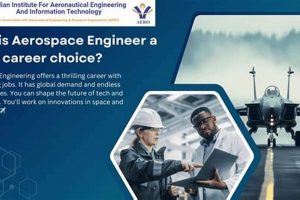
The ability to transition into the aerospace sector with a foundation in mechanical engineering is a common career trajectory. Mechanical engineering provides a strong base in fundamental engineering principles such as thermodynamics, fluid mechanics, structural analysis, and materials science. These principles are highly relevant and directly applicable to the design, analysis, and manufacturing of aerospace vehicles and systems. Examples include designing aircraft engines, analyzing the structural integrity of a spacecraft, or developing control systems for unmanned aerial vehicles.
This adaptability offers significant advantages. Mechanical engineers possess a broad skillset, making them versatile and capable of contributing to various aspects of aerospace projects. This foundational knowledge base allows for easier acquisition of specialized aerospace knowledge through on-the-job training, specialized courses, or advanced studies. Historically, many prominent figures in aerospace have come from mechanical engineering backgrounds, highlighting the compatibility and transferability of the skillsets.
While a mechanical engineering degree provides a solid groundwork, successfully transitioning into aerospace often requires acquiring specific aerospace-related expertise. This may involve focusing on areas such as aerodynamics, propulsion, aerospace structures, or flight dynamics. Supplemental education through graduate programs, specialized certifications, or targeted professional development courses can be beneficial in gaining this specialized knowledge and enhancing career prospects within the aerospace industry.
Tips for Entering Aerospace with a Mechanical Engineering Degree
Individuals seeking to transition from mechanical engineering to aerospace should strategically focus their efforts to acquire relevant knowledge and experience. The following tips provide guidance for a successful transition.
Tip 1: Cultivate a Strong Foundation in Core Engineering Principles: Reinforce understanding of fundamental principles, particularly those related to fluid mechanics, thermodynamics, heat transfer, and structural analysis. These principles form the bedrock of many aerospace applications.
Tip 2: Seek Opportunities for Specialization: Identify specific areas within aerospace that align with interests and career goals, such as propulsion, aerodynamics, or spacecraft design. Focused specialization enhances expertise and marketability.
Tip 3: Pursue Relevant Coursework and Certifications: Consider graduate-level coursework, online programs, or industry-recognized certifications in aerospace-related subjects. These credentials demonstrate commitment and provide targeted skills.
Tip 4: Gain Practical Experience through Internships or Projects: Seek internships or volunteer opportunities with aerospace companies or research institutions. Hands-on experience is invaluable for developing practical skills and building a professional network.
Tip 5: Network with Professionals in the Aerospace Industry: Attend industry conferences, join professional organizations like AIAA, and connect with aerospace engineers on platforms like LinkedIn. Networking opens doors to potential job opportunities and mentorship.
Tip 6: Tailor Resume and Cover Letter to Aerospace Roles: Highlight relevant skills, projects, and experience that align with the requirements of specific aerospace positions. Quantify accomplishments whenever possible to demonstrate impact.
Tip 7: Develop Proficiency in Relevant Software Tools: Acquire proficiency in industry-standard software used in aerospace design and analysis, such as MATLAB, ANSYS, or SolidWorks. This proficiency enhances productivity and employability.
A strategic approach to acquiring specialized knowledge and practical experience significantly increases the likelihood of a successful transition into the aerospace sector. Focusing on these areas enhances competitiveness and positions individuals for fulfilling careers.
By actively pursuing these strategies, mechanical engineers can effectively leverage their existing skills and knowledge to embark on rewarding careers in the dynamic field of aerospace engineering.
1. Fundamental Knowledge Overlap

The feasibility of pursuing a career in aerospace engineering with a mechanical engineering degree is significantly influenced by the extent of fundamental knowledge overlap between the two disciplines. Mechanical engineering curricula typically include core subjects such as thermodynamics, fluid mechanics, heat transfer, solid mechanics, and materials science. These subjects provide a robust foundation that is directly applicable to many areas within aerospace engineering. For example, understanding fluid mechanics is crucial for designing efficient aerodynamic surfaces, while knowledge of materials science is essential for selecting appropriate materials for aerospace structures that can withstand extreme conditions. This existing knowledge base allows mechanical engineers to more readily grasp advanced aerospace concepts. Therefore, fundamental knowledge overlap serves as a crucial enabler, reducing the learning curve associated with transitioning to aerospace engineering.
However, it is essential to acknowledge that while the fundamental principles are shared, the depth of application and specific focus may differ. In aerospace, these principles are often applied to more complex systems and extreme environments. For instance, fluid mechanics might involve studying compressible flows at supersonic speeds, and materials science could require understanding the behavior of composites under high stress and temperature. The practical significance of this overlap is that mechanical engineers possess a strong starting point. They can leverage their existing knowledge to more effectively learn specialized aerospace topics. Without this baseline understanding, the transition to aerospace becomes considerably more challenging, potentially requiring additional foundational coursework.
In conclusion, the degree of fundamental knowledge overlap is a key determinant of the ease and success with which a mechanical engineer can transition into aerospace engineering. While additional specialized training and experience are typically required, the pre-existing understanding of core engineering principles provides a significant advantage. This advantage allows for a more efficient acquisition of specialized aerospace knowledge, ultimately enabling a smoother and more successful career transition. Recognizing the importance of this overlap is paramount for individuals considering this career path, guiding their educational and professional development choices.
2. Specialized Skills Acquisition

The ability to transition from mechanical engineering to aerospace engineering fundamentally hinges on the acquisition of specialized skills. While a mechanical engineering degree provides a robust foundation in core engineering principles, it typically lacks the depth and breadth of knowledge specific to the aerospace domain. Therefore, specialized skills acquisition is not merely beneficial but a necessary condition for successfully pursuing aerospace engineering roles. This acquisition is the direct result of acknowledging that while there is overlap in foundational knowledge, the application of engineering principles to flight vehicles and systems presents unique challenges demanding specific expertise. For example, a mechanical engineer might possess a strong understanding of fluid dynamics. However, without acquiring specialized skills in aerodynamics, particularly concerning compressible flow, airfoil design, and boundary layer control, the engineer would lack the necessary expertise to design an efficient wing for an aircraft.
Specialized skills encompass areas such as aerodynamics, propulsion systems, flight dynamics and control, spacecraft design, orbital mechanics, and aerospace materials. These skills can be acquired through various means, including advanced coursework, professional development programs, and on-the-job training. Consider a mechanical engineer working on turbine design. A move to aerospace might necessitate learning about ramjet or scramjet engines, requiring knowledge of high-speed combustion and nozzle design distinct from typical turbine applications. The practical application involves not only understanding the theory but also utilizing specialized software tools for simulation and analysis, such as computational fluid dynamics (CFD) packages tailored for aerospace applications. Moreover, experience gained through relevant projects or internships is invaluable. For instance, participating in a project involving the design and testing of a rocket engine nozzle provides practical exposure to the challenges of aerospace engineering, complementing theoretical knowledge and fostering skill development.
In summary, the successful transition from mechanical engineering to aerospace engineering is predicated on targeted and effective specialized skills acquisition. The acquisition of such expertise is a critical component, enabling mechanical engineers to apply their foundational knowledge to the unique challenges and requirements of the aerospace sector. This process is not merely about accumulating knowledge but also about developing practical proficiency in applying aerospace-specific tools and techniques. Individuals pursuing this career path should prioritize strategic skill development through formal education, professional training, and hands-on experience to enhance their competitiveness and contribute meaningfully to the aerospace industry.
3. Relevant Project Experience
The feasibility of transitioning from mechanical engineering to aerospace engineering is significantly enhanced by relevant project experience. Such experience serves as a crucial bridge, connecting theoretical knowledge acquired through formal education with the practical demands of the aerospace industry. Active participation in projects directly related to aerospace engineering demonstrates the capacity to apply fundamental engineering principles to real-world problems. This applied knowledge is a significant differentiator for mechanical engineers seeking to enter the aerospace sector. For instance, a mechanical engineering graduate who has contributed to a student rocketry project or an undergraduate research project focusing on wind tunnel testing of airfoil designs showcases tangible skills valued by aerospace employers. This direct experience contrasts sharply with a graduate possessing only theoretical knowledge, highlighting the practical significance of these projects.
The impact of relevant project experience extends beyond demonstrating fundamental skills. It also provides exposure to industry-standard practices, software tools, and project management methodologies common in the aerospace field. Involvement in the design, fabrication, and testing of aerospace components, even at a smaller scale, can provide valuable insights into the complexities and challenges inherent in aerospace projects. For example, participating in the design and construction of an unmanned aerial vehicle (UAV) exposes a mechanical engineer to aspects of aerodynamics, structural design, control systems integration, and systems engineering, all of which are central to aerospace engineering. This kind of involvement distinguishes a candidate in the eyes of employers who seek individuals capable of contributing effectively from the outset. Furthermore, documenting project contributions in a portfolio allows engineers to demonstrate and articulate the knowledge gained and the skills developed.
In conclusion, relevant project experience is a cornerstone for mechanical engineers seeking a career in aerospace engineering. It solidifies theoretical understanding, develops practical skills, and provides a tangible demonstration of competence that resonates with aerospace employers. The integration of such project experience into academic and professional development strategies is crucial for maximizing career opportunities and ensuring a successful transition into the dynamic field of aerospace engineering. While a mechanical engineering degree provides a solid foundation, the addition of relevant project work significantly elevates the candidate’s readiness and attractiveness to potential employers in the aerospace industry.
4. Advanced Education Options

Advanced education options represent a significant pathway for mechanical engineers seeking to transition into aerospace engineering roles. These options provide specialized knowledge and skills that are not typically covered in a standard mechanical engineering curriculum, thereby enhancing an individual’s qualifications and competitiveness within the aerospace industry.
- Master’s Degree in Aerospace Engineering
Pursuing a Master’s degree in Aerospace Engineering is a direct route to acquiring specialized knowledge. These programs delve into topics such as aerodynamics, propulsion, flight dynamics, and spacecraft design. Such focused study equips mechanical engineers with the technical expertise necessary to tackle aerospace-specific challenges. For instance, coursework on computational fluid dynamics allows for the simulation and analysis of airflow around aircraft, a crucial skill in aerodynamic design. A Master’s degree also often includes a research component, providing hands-on experience in aerospace-related projects.
- Specialized Graduate Certificates
Graduate certificates offer a more targeted approach to acquiring specific aerospace skills. These programs typically consist of a focused set of courses in areas such as aerospace structures, control systems, or propulsion. Specialized certificates enable mechanical engineers to gain expertise in a particular niche within aerospace, enhancing their value to employers seeking specific skills. An example would be a certificate in composite materials for aerospace applications, providing in-depth knowledge of the properties, manufacturing, and testing of composite materials used in aircraft and spacecraft structures.
- Doctoral Studies (Ph.D.)
For mechanical engineers seeking to contribute to cutting-edge research and development in aerospace, a Ph.D. is a valuable option. Doctoral programs involve in-depth research on a specific topic, contributing to the advancement of aerospace knowledge. This path is particularly relevant for individuals aiming for research-oriented positions in academia, government laboratories, or aerospace companies. A Ph.D. project might involve developing new algorithms for autonomous flight control or designing novel propulsion systems for future spacecraft.
- Online Courses and Professional Development
Online courses and professional development opportunities provide flexible and accessible avenues for acquiring aerospace knowledge. These options allow mechanical engineers to enhance their skills while maintaining their current employment. Courses on topics such as finite element analysis for aerospace structures or systems engineering for aerospace applications can significantly improve an individual’s understanding of aerospace-specific tools and techniques. Such continuous learning demonstrates a commitment to professional growth and adaptability within the ever-evolving aerospace field.
In summary, advanced education options provide mechanical engineers with the specialized knowledge and skills necessary to successfully transition into aerospace engineering. Whether pursuing a Master’s degree, a specialized certificate, a Ph.D., or engaging in online courses and professional development, these options offer valuable pathways to enhance qualifications and pursue rewarding careers in the aerospace industry. These options fill the gaps left by a general mechanical engineering education, thus enabling the attainment of aerospace focused careers.
5. Industry Networking Importance
The feasibility of transitioning from a mechanical engineering degree into the aerospace sector is significantly influenced by the extent of industry networking. Active engagement within the aerospace community provides access to information, opportunities, and mentorship crucial for a successful career shift. This networking serves as a conduit for understanding the specific skill sets, technologies, and challenges prevalent in the field. For instance, attending industry conferences allows mechanical engineers to learn about emerging trends in aerospace materials or propulsion systems directly from experts. These insights can then inform their professional development choices and project selection, thereby aligning their expertise with industry needs. A lack of networking opportunities is very likely to result in difficulties in the move towards an aerospace career.
Moreover, networking facilitates the identification of job opportunities that may not be publicly advertised. Many aerospace companies rely on referrals and internal networks to fill specialized positions. By building relationships with aerospace professionals, mechanical engineers increase their chances of being considered for such opportunities. A real-world example involves a mechanical engineer attending an AIAA (American Institute of Aeronautics and Astronautics) event who connected with a hiring manager from a space launch company; this connection led to an interview and subsequent employment. Furthermore, mentors within the industry can provide invaluable guidance on career paths, skill development, and navigating the complexities of the aerospace sector. Guidance and recommendations provided through the networking enables the engineer to have advantage towards their career to aerospace engineering.
In summary, industry networking is a critical component for mechanical engineers aiming to transition into aerospace. It provides access to vital information, fosters connections with potential employers, and offers mentorship for career guidance. Actively cultivating and participating in aerospace industry networks significantly enhances the likelihood of a successful transition, allowing mechanical engineers to leverage their foundational knowledge and newly acquired specialized skills within the dynamic and competitive aerospace field. Building these important relationship with the aerospace field will help boost a potential career change from mechanical engineering, while it will be difficult without any connection with the aerospace industry.
6. Adaptability and Learning
The successful transition from mechanical engineering to aerospace engineering is fundamentally linked to adaptability and a commitment to continuous learning. While a mechanical engineering degree provides a solid foundation in engineering principles, the aerospace industry presents unique challenges and specialized knowledge domains. The ability to adapt one’s existing skillset and actively learn new concepts is, therefore, not merely an asset but a necessity for mechanical engineers seeking to thrive in aerospace roles. For instance, a mechanical engineer familiar with finite element analysis might need to adapt that knowledge to analyze composite aerospace structures subjected to extreme temperature gradients. This adaptation requires learning new material properties and failure criteria specific to aerospace applications.
The rapid pace of technological advancement in aerospace further underscores the importance of continuous learning. From the development of new materials to the implementation of advanced control systems and the exploration of novel propulsion methods, the industry is constantly evolving. Mechanical engineers entering the aerospace field must demonstrate a proactive approach to staying current with these advancements. This may involve pursuing additional coursework, attending industry conferences, participating in professional development programs, or engaging in independent research. Consider the shift towards electric propulsion in aviation. Mechanical engineers specializing in traditional combustion engines would need to proactively learn about electric motor design, battery technology, and power electronics to remain competitive in the changing landscape.
In conclusion, adaptability and a commitment to continuous learning are critical determinants of success for mechanical engineers transitioning into aerospace engineering. The ability to leverage existing skills while actively acquiring new knowledge allows engineers to navigate the unique challenges and contribute meaningfully to the dynamic aerospace sector. Without this adaptability and dedication to learning, the transition becomes significantly more difficult, limiting career opportunities and hindering professional growth. The industry, therefore, demands engineers who are not only well-grounded in fundamental principles but also eager and capable of adapting and learning in response to its ever-evolving landscape.
Frequently Asked Questions
The following addresses common inquiries regarding the pursuit of aerospace engineering careers with a foundation in mechanical engineering. It aims to clarify misconceptions and provide informative responses based on industry standards and academic expectations.
Question 1: Is a separate aerospace engineering degree absolutely necessary to work in the aerospace industry?
A dedicated aerospace engineering degree is not always mandatory. Mechanical engineers frequently transition into aerospace roles by acquiring specific, relevant expertise and demonstrating practical competence. However, the absence of an aerospace degree may necessitate a more concerted effort to develop and showcase specialized knowledge.
Question 2: Which mechanical engineering specializations are most beneficial for transitioning into aerospace?
Specializations such as fluid mechanics, thermodynamics, heat transfer, structural analysis, and materials science provide a strong foundation for aerospace applications. These areas form the basis for understanding aerodynamics, propulsion systems, and aerospace structures.
Question 3: What types of entry-level aerospace jobs are commonly accessible to mechanical engineers?
Entry-level positions often include roles in design engineering, analysis, testing, and manufacturing, particularly within areas such as structural design, thermal analysis, and propulsion system component development. These positions allow mechanical engineers to apply their existing skills while learning aerospace-specific techniques.
Question 4: How crucial is professional certification for enhancing career prospects in aerospace?
Professional certifications, such as those offered by organizations like ASME or AIAA, can significantly enhance credibility and demonstrate a commitment to professional development. Certifications relevant to aerospace engineering, such as those in finite element analysis or systems engineering, can be particularly valuable.
Question 5: What role does graduate-level coursework play in facilitating the transition?
Graduate-level coursework in aerospace-related subjects, such as aerodynamics or spacecraft dynamics, provides targeted knowledge and specialized skills that are highly valued in the aerospace industry. Such coursework can significantly enhance a mechanical engineer’s competitiveness for aerospace positions.
Question 6: What are common challenges faced when transitioning into aerospace, and how can they be addressed?
Challenges often include a lack of aerospace-specific knowledge, limited networking opportunities, and difficulty demonstrating relevant experience. These challenges can be addressed through targeted coursework, active participation in industry events, seeking mentorship from aerospace professionals, and pursuing relevant projects or internships.
In summary, while a mechanical engineering degree offers a valuable foundation, targeted efforts to acquire specialized knowledge, gain relevant experience, and network within the aerospace community are crucial for a successful transition.
The next section will explore case studies of mechanical engineers who have successfully transitioned into aerospace engineering careers.
Conclusion
The preceding discussion confirms that entry into the aerospace engineering field with a mechanical engineering degree is achievable, though it requires strategic action. A strong foundation in mechanical engineering principles provides a valuable base, but specialized knowledge acquisition, relevant project experience, active industry networking, and a commitment to continuous learning are essential elements for a successful transition. The degree of effort required is contingent upon the specific role sought within aerospace and the individual’s pre-existing skill set.
Ultimately, the potential for mechanical engineers to contribute significantly to the aerospace industry is substantial. Successful transitions require proactive planning and focused effort. The ongoing demand for skilled engineers in the aerospace sector presents opportunities for those willing to invest in their professional development and cultivate the necessary expertise. Aspiring aerospace engineers from mechanical engineering backgrounds should pursue these opportunities with diligence and a dedication to mastering the intricacies of the aerospace domain.