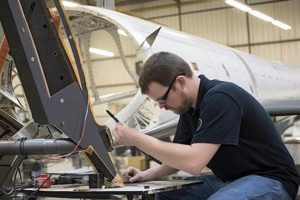
Institutions providing academic programs in aerospace engineering are pivotal in cultivating the next generation of engineers and scientists. These programs encompass a rigorous curriculum focused on the design, development, testing, and production of aircraft, spacecraft, and related systems. Instruction typically includes courses in aerodynamics, propulsion, structures, materials science, and control systems. For example, a university offering a Bachelor of Science in Aerospace Engineering will likely provide specialized coursework in orbital mechanics and flight dynamics.
The significance of educational programs in this field lies in their contribution to technological advancement and national security. Graduates contribute to innovations in air travel, space exploration, and defense systems. Historically, governmental investments in aerospace research and development have driven the establishment and expansion of these academic departments, responding to the need for a skilled workforce capable of addressing complex engineering challenges. These programs directly impact a nation’s capacity for innovation and its competitiveness in the global market.
The subsequent sections will delve into specific institutional offerings, accreditation standards, specializations within the field, and career prospects for graduates. Examination of these factors provides a comprehensive understanding of the landscape of higher education in this critical engineering discipline.
Guidance for Prospective Aerospace Engineering Students
Selecting the appropriate institution for pursuing aerospace engineering studies requires careful consideration. Factors such as program accreditation, research opportunities, and faculty expertise are crucial indicators of educational quality and potential career trajectory.
Tip 1: Research Accreditation Status. Verify that the program holds accreditation from ABET (Accreditation Board for Engineering and Technology). Accreditation ensures that the curriculum meets established quality standards and prepares graduates for professional licensure.
Tip 2: Evaluate Faculty Research Interests. Investigate faculty profiles to identify professors whose research aligns with personal interests. Opportunities to participate in research projects can significantly enhance practical skills and provide valuable networking connections.
Tip 3: Assess Laboratory and Computational Resources. State-of-the-art facilities are essential for hands-on learning. Determine if the institution offers access to wind tunnels, propulsion testing equipment, and advanced computational software for simulations and analysis.
Tip 4: Consider Program Specializations. Some institutions offer specialized tracks within aerospace engineering, such as astrodynamics, propulsion, or structural analysis. Choosing a specialization that aligns with career aspirations can provide a competitive advantage.
Tip 5: Explore Internship and Co-op Opportunities. Practical experience is invaluable. Investigate the availability of internship or cooperative education programs with aerospace companies or government agencies, providing real-world application of theoretical knowledge.
Tip 6: Examine Graduation and Employment Statistics. Review the institution’s publicly available data on graduation rates and post-graduation employment outcomes. This data offers insight into the program’s effectiveness in preparing students for successful careers.
Tip 7: Attend Information Sessions and Campus Tours. Visiting prospective campuses and attending information sessions allows direct interaction with faculty and current students. This provides valuable insights into the program’s culture and learning environment.
Careful consideration of these factors will empower prospective students to make informed decisions, maximizing their potential for academic success and a fulfilling career in the aerospace engineering field.
The following sections will further elaborate on the curriculum structure, career options, and ongoing advancements within the realm of aerospace engineering, building upon the foundational guidance presented here.
1. Accreditation
Accreditation serves as a critical benchmark for evaluating the quality and rigor of aerospace engineering programs. It ensures that programs meet specific standards established by recognized professional bodies, thereby signaling a commitment to providing students with the knowledge and skills necessary for successful careers in the field.
- ABET Accreditation
ABET (Accreditation Board for Engineering and Technology) accreditation is widely recognized as the gold standard for engineering programs in the United States. Programs seeking ABET accreditation must demonstrate compliance with established criteria pertaining to curriculum content, faculty qualifications, facilities, and student outcomes. For instance, an aerospace engineering program at a state university must demonstrate that its graduates can design and conduct experiments, analyze data, and effectively communicate technical information to earn ABET accreditation. This accreditation ensures a program’s adherence to industry-relevant educational standards.
- Quality Assurance and Continuous Improvement
Accreditation processes mandate continuous self-assessment and improvement. Institutions must regularly evaluate their programs, identify areas for enhancement, and implement changes to better meet the evolving needs of the aerospace industry. This commitment to continuous improvement is often demonstrated through updated curricula reflecting advancements in areas such as advanced materials, autonomous systems, and sustainable aviation. The process ensures that students receive up-to-date education, reflective of real-world engineering practices.
- Industry Recognition and Employer Confidence
Accreditation lends credibility to aerospace engineering programs, enhancing their graduates’ prospects in the job market. Employers often prioritize hiring graduates from accredited programs, viewing accreditation as an assurance of the candidate’s competency and preparedness. For example, aerospace companies such as Boeing or Lockheed Martin actively recruit from ABET-accredited institutions, indicating that their curricula aligns with industry expectations and the demands of the workforce.
- Licensure and Professional Advancement
Graduation from an accredited aerospace engineering program is frequently a prerequisite for obtaining professional engineering licensure. Licensure is essential for engineers who offer their services directly to the public, such as consulting engineers or structural designers. Achieving licensure demonstrates competence and ethical responsibility, contributing to enhanced career opportunities and professional advancement within the aerospace sector. Moreover, professional organizations may recognize or require accredited degrees for certifications, adding further incentives for students to prioritize accredited programs.
The facets of accreditation underscore its importance in ensuring the quality and relevance of aerospace engineering education. By adhering to rigorous standards and promoting continuous improvement, accredited programs equip graduates with the skills and knowledge necessary to thrive in the dynamic and demanding aerospace industry, ultimately driving innovation and progress within the field. Conversely, non-accredited programs potentially jeopardize student access to professional opportunities and may lag behind industry standards.
2. Curriculum

The curriculum within aerospace engineering degree programs forms the cornerstone of technical competence and professional readiness. Its design directly influences the knowledge, skills, and problem-solving abilities acquired by students. Institutions offering aerospace engineering degrees must meticulously structure their curricula to address fundamental principles alongside contemporary advancements in the field. A well-defined curriculum ensures graduates possess the theoretical and practical foundation needed to contribute effectively to the aerospace industry. For instance, the inclusion of coursework in computational fluid dynamics is essential for understanding aerodynamic behavior, while courses in control systems engineering are vital for designing stable and efficient flight control systems. Absent a robust curriculum, graduates may lack the necessary skill set to meet industry demands.
Specific curriculum components often include core engineering subjects such as thermodynamics, fluid mechanics, structural analysis, and materials science. In addition, specialized aerospace engineering courses cover topics such as aerodynamics, propulsion, flight dynamics, and spacecraft design. Many programs also incorporate laboratory experiences, design projects, and capstone projects to provide hands-on learning opportunities. For example, a capstone project might involve designing a small-scale unmanned aerial vehicle (UAV), requiring students to integrate knowledge from various courses to solve a complex engineering problem. Furthermore, elective courses allow students to specialize in areas of interest, such as space systems, aircraft design, or autonomous systems. The breadth and depth of the curriculum dictate the versatility of a graduate’s skill set.
In summary, the curriculum is integral to the value of aerospace engineering programs. Its content, structure, and emphasis on practical application determine the quality of education and the preparedness of graduates. Challenges include keeping the curriculum up-to-date with rapid technological advancements and ensuring that students develop both fundamental knowledge and specialized expertise. The effectiveness of the curriculum, therefore, is a primary factor in determining the success of institutions offering aerospace engineering degrees and the future contributions of their graduates to the advancement of aerospace technology.
3. Research

Research activities are integral to institutions offering degrees in aerospace engineering, fostering innovation and shaping the future of the field. Such endeavors cultivate advanced knowledge and develop solutions to complex engineering challenges. A direct correlation exists between the research output of a university’s aerospace engineering department and the quality of its educational programs. For instance, faculty actively engaged in funded research projects often incorporate their findings into classroom instruction, providing students with exposure to cutting-edge technologies and real-world applications. This integration enhances the learning experience and prepares graduates to contribute meaningfully to the industry. Furthermore, research opportunities provide students with hands-on experience in areas such as advanced materials, propulsion systems, and autonomous flight control, solidifying theoretical concepts and fostering critical thinking skills.
Examples of research initiatives at aerospace engineering programs include the development of novel propulsion systems for hypersonic flight, the design of lightweight composite materials for aircraft structures, and the creation of advanced algorithms for autonomous navigation and control. These projects frequently involve collaborations with government agencies, such as NASA and the Department of Defense, as well as partnerships with aerospace companies. Such collaborations expose students to industry best practices and provide access to state-of-the-art facilities and equipment. Additionally, participation in research conferences and publications allows students to disseminate their findings and contribute to the broader scientific community, fostering professional growth and recognition. Institutions emphasizing research in their aerospace engineering programs often attract top faculty and students, creating a dynamic and intellectually stimulating environment.
In conclusion, the presence and quality of research activities are paramount in differentiating and evaluating institutions offering aerospace engineering degrees. Research drives innovation, enhances the educational experience, and prepares graduates for leadership roles in the aerospace industry. Challenges include securing adequate funding for research projects and maintaining a balance between research and teaching responsibilities. Nonetheless, the commitment to research is a defining characteristic of leading aerospace engineering programs and a crucial factor in advancing the state of the art in aerospace technology.
4. Faculty
The quality of the faculty is a paramount determinant of the caliber of any aerospace engineering program. Faculty members serve as educators, mentors, and researchers, shaping the intellectual environment and directly influencing the education and career trajectories of students. Their expertise, experience, and dedication are essential for delivering a comprehensive and rigorous aerospace engineering education.
- Expertise and Credentials
Faculty members in reputable aerospace engineering programs typically hold doctoral degrees in relevant engineering disciplines and possess specialized knowledge in areas such as aerodynamics, propulsion, structures, or space systems. Their expertise is often demonstrated through publications in peer-reviewed journals, presentations at technical conferences, and involvement in professional organizations. For instance, a professor specializing in computational fluid dynamics might hold a PhD in mechanical engineering with a focus on numerical simulation of turbulent flows and have published extensively on the topic. The presence of faculty with deep expertise in diverse areas within aerospace engineering allows for a well-rounded curriculum and specialized learning opportunities for students.
- Research Contributions
Active involvement in research is a hallmark of faculty at leading aerospace engineering programs. Their research contributions not only advance the state of knowledge in the field but also provide students with opportunities to participate in cutting-edge projects and gain practical experience. For example, a faculty member might lead a research team developing novel materials for hypersonic vehicles or designing advanced control systems for unmanned aerial vehicles. Such research activities enhance the reputation of the program and attract talented students and funding from government agencies and industry partners. Furthermore, research findings are often integrated into the curriculum, ensuring that students are exposed to the latest developments in aerospace technology.
- Teaching Effectiveness and Mentorship
Effective teaching and mentorship are critical attributes of faculty members in aerospace engineering programs. Faculty should possess the ability to communicate complex concepts clearly and engage students in the learning process. They should also be accessible to students, providing guidance and support both inside and outside the classroom. For instance, a professor might hold regular office hours to answer student questions or provide advice on career planning. Moreover, faculty can serve as mentors, guiding students in their research endeavors and helping them to develop their professional skills. The quality of teaching and mentorship directly impacts student success and satisfaction within the program.
- Industry Connections and Collaboration
Faculty members often maintain strong connections with industry through consulting, research collaborations, and professional affiliations. These connections provide valuable opportunities for students to gain practical experience through internships, co-op programs, and industry-sponsored projects. For example, a faculty member might collaborate with an aerospace company on the design of a new aircraft wing or work with a government agency on the development of a space exploration mission. Such collaborations expose students to real-world engineering challenges and provide them with networking opportunities that can lead to future employment. Furthermore, faculty with industry connections can bring practical insights and perspectives into the classroom, enhancing the relevance of the curriculum.
In conclusion, the quality and characteristics of the faculty are pivotal in distinguishing among institutions offering aerospace engineering degrees. A faculty comprised of experts in their fields, actively engaged in research, effective teachers and mentors, and well-connected with industry provides students with an unparalleled educational experience and prepares them for successful careers in the aerospace sector. Prospective students should carefully evaluate the faculty profiles of different programs when making their college selection decisions.
5. Location
Geographic location exerts a considerable influence on the efficacy and opportunities associated with institutions offering degrees in aerospace engineering. Proximity to aerospace industry hubs, government research facilities, and military installations can significantly enhance students’ access to internships, research collaborations, and post-graduation employment. For instance, universities situated near NASA centers, such as those in California (near the Jet Propulsion Laboratory) or Florida (near Kennedy Space Center), often provide students with unique opportunities to participate in cutting-edge research and development projects. Similarly, institutions in states with a strong aerospace manufacturing presence, like Washington (Boeing) or Texas (various aerospace companies and defense contractors), offer graduates a competitive advantage in securing employment within those local industries. The concentration of aerospace activity in a given region creates a synergistic relationship between educational institutions and industry, fostering innovation and technological advancement.
Furthermore, location can impact the availability of specialized resources and facilities. Institutions situated in regions with access to wind tunnels, flight test ranges, or advanced materials laboratories may offer students a more comprehensive and hands-on learning experience. The presence of these resources allows for the integration of theoretical knowledge with practical application, better preparing students for the challenges of the aerospace engineering profession. Geographical factors also influence the recruitment of faculty, as leading researchers and industry professionals are often drawn to institutions located in areas with robust aerospace activity. The resulting concentration of expertise further enhances the quality of education and research opportunities available to students.
In summary, location plays a pivotal role in shaping the educational experience and career prospects for students pursuing aerospace engineering degrees. Institutions strategically situated near industry hubs, research facilities, and military installations offer distinct advantages in terms of internship opportunities, research collaborations, and employment prospects. While academic rigor and program quality remain crucial, location serves as a significant factor in evaluating and selecting institutions offering aerospace engineering degrees, contributing to the overall preparedness and success of graduates in this highly specialized and competitive field.
Frequently Asked Questions Regarding Colleges That Offer Degrees in Aerospace Engineering
This section addresses common inquiries pertaining to institutions that provide educational programs in aerospace engineering. The information presented aims to offer clarity and guidance to prospective students and stakeholders.
Question 1: What is the primary distinction between aerospace engineering and aeronautical engineering degrees?
Aerospace engineering encompasses the design, development, and testing of both aircraft and spacecraft. Aeronautical engineering, on the other hand, focuses primarily on aircraft and their operation within the Earth’s atmosphere. Some institutions offer separate degrees in each discipline, while others provide a combined aerospace engineering program with specializations in aeronautics or astronautics.
Question 2: Are all colleges offering degrees in aerospace engineering ABET-accredited?
No. ABET (Accreditation Board for Engineering and Technology) accreditation is a voluntary process. Institutions must actively seek and maintain accreditation for their engineering programs. Prospective students should verify a program’s accreditation status, as ABET accreditation ensures adherence to established quality standards and enhances graduate employability.
Question 3: What are the essential prerequisites for admission into an aerospace engineering program?
Strong foundations in mathematics and physics are critical. Competitive applicants typically possess a high school transcript demonstrating excellence in calculus, differential equations, and physics coursework. Standardized test scores, such as the SAT or ACT, are also frequently considered. Demonstrated interest in aerospace-related activities, such as participation in science clubs or robotics competitions, can further strengthen an application.
Question 4: What types of research opportunities are typically available to aerospace engineering students?
Research opportunities vary depending on the institution. Common areas of research include aerodynamics, propulsion systems, materials science, flight dynamics and control, and space systems engineering. Students may have the opportunity to participate in faculty-led research projects, conduct independent research under the supervision of a professor, or collaborate with industry partners on real-world engineering challenges.
Question 5: What career paths are commonly pursued by graduates with degrees in aerospace engineering?
Graduates find employment in various sectors, including aerospace manufacturing, government agencies, defense contractors, and research institutions. Common job titles include aerospace engineer, design engineer, systems engineer, test engineer, and research scientist. Career paths may involve the design and development of aircraft, spacecraft, satellites, or related systems.
Question 6: How important is location when selecting a college for aerospace engineering?
Location can significantly impact internship opportunities, research collaborations, and post-graduation employment prospects. Institutions situated near aerospace industry hubs, government research facilities, or military installations often provide students with greater access to practical experience and networking opportunities. However, academic rigor, program quality, and faculty expertise should also be primary considerations.
The aforementioned inquiries represent prevalent concerns among individuals seeking to pursue educational opportunities in aerospace engineering. Due diligence in evaluating program accreditation, prerequisites, research opportunities, career paths, and the influence of location is crucial for making informed decisions.
The subsequent discussion will explore the future outlook and potential advancements within the aerospace engineering field.
Conclusion
This exposition has surveyed critical aspects of colleges that offer degrees in aerospace engineering, encompassing accreditation standards, curricular components, research opportunities, faculty qualifications, and the influence of geographic location. Each element significantly shapes the educational experience and professional preparedness of graduates. The selection of an appropriate institution requires a holistic assessment of these factors to ensure optimal alignment with individual career aspirations and industry demands.
Given the evolving landscape of aerospace technology and the increasing complexity of engineering challenges, continued investment in robust academic programs is essential. Prospective students are encouraged to conduct thorough due diligence and prioritize institutions demonstrably committed to excellence in aerospace engineering education. The future of aerospace innovation rests upon the cultivation of highly skilled and knowledgeable engineers prepared to address the technological needs of the coming decades.

![Top Aerospace Engineering Courses in USA [Ranked] | Innovating the Future of Flight with Reliable Aviation Solutions](https://mixaerospace.com/wp-content/uploads/2026/05/th-330-300x200.jpg "Top Aerospace Engineering Courses in USA [Ranked] Innovating the Future of Flight with Reliable Aviation Solutions")