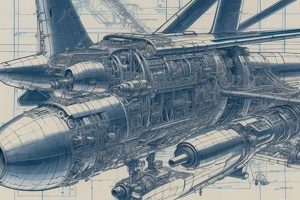
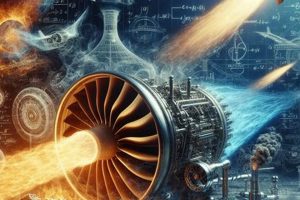
The field encompasses the design, development, testing, and production of aircraft, spacecraft, and related systems. It integrates principles from various engineering disciplines, including aerodynamics, propulsion, structural mechanics, control systems, and materials science, to create efficient and reliable vehicles capable of operating within and beyond Earth’s atmosphere. This endeavor involves rigorous analysis, simulation, and experimentation to ensure optimal performance and safety.
Its importance stems from its contributions to global transportation, national defense, space exploration, and scientific discovery. Advancements in these areas have led to faster travel times, enhanced security measures, and a deeper understanding of the universe. Historically, this discipline has spurred technological innovation, leading to breakthroughs in materials, manufacturing processes, and computational modeling that have benefited numerous other sectors.
The subsequent discussion will delve into specific aspects of this expansive domain, examining key areas such as flight dynamics, propulsion systems, spacecraft design, and the challenges associated with human spaceflight. These areas represent core competencies essential for understanding and contributing to this dynamic and evolving field.
Guidance for Aspiring Practitioners
The following suggestions aim to provide insights for individuals pursuing careers in the field. Emphasis is placed on developing a strong foundation and continually expanding knowledge.
Tip 1: Cultivate a Strong Mathematical and Scientific Foundation: A firm grasp of calculus, differential equations, linear algebra, physics, and chemistry is paramount. These disciplines provide the theoretical framework for understanding the complex phenomena encountered in aircraft and spacecraft design.
Tip 2: Develop Proficiency in Computer-Aided Design (CAD) and Simulation Software: Modern engineering relies heavily on computational tools. Familiarity with software packages such as CATIA, ANSYS, and MATLAB is essential for modeling, analyzing, and simulating performance.
Tip 3: Seek Practical Experience Through Internships and Research Opportunities: Hands-on experience is invaluable. Internships with aerospace companies or research opportunities in university laboratories provide exposure to real-world challenges and solutions.
Tip 4: Focus on a Specialization: The field is broad, encompassing areas such as aerodynamics, propulsion, structures, and control systems. Concentrating on a specific area allows for deeper expertise and greater contributions.
Tip 5: Embrace Lifelong Learning: The industry is constantly evolving. Staying current with technological advancements through continuing education, conferences, and professional publications is critical for maintaining relevance.
Tip 6: Hone Communication and Collaboration Skills: Engineering projects are typically collaborative efforts. Effective communication, teamwork, and the ability to present technical information clearly are crucial for success.
Tip 7: Understand Regulatory Requirements and Safety Standards: Aircraft and spacecraft design is subject to stringent regulations. Familiarity with these standards is essential for ensuring safety and compliance.
These suggestions highlight the importance of a strong academic background, practical experience, and continuous learning. Adhering to these principles will enhance an individual’s prospects for success in this demanding yet rewarding field.
The concluding section will provide a summary of key points and perspectives on the future of the field.
1. Aerodynamics mastery

Aerodynamics, the study of air in motion, is a cornerstone of this field. It dictates how aircraft and spacecraft interact with the atmosphere and space, fundamentally influencing their performance, efficiency, and stability. Achieving mastery in this area is therefore critical to the overall success of aerospace endeavors.
- Lift Generation and Drag Reduction
A primary concern is generating sufficient lift to overcome gravity, while minimizing drag to reduce fuel consumption and increase speed. Airfoil design, boundary layer control, and wingtip devices are crucial techniques. For example, the blended wing body concept aims to reduce drag by seamlessly integrating the wings into the fuselage, improving fuel efficiency and reducing emissions.
- Supersonic and Hypersonic Flow
Understanding the behavior of air at supersonic and hypersonic speeds is essential for designing high-speed aircraft and spacecraft. Shock waves, thermal effects, and changes in air density present significant challenges. The Space Shuttle, for example, required meticulous aerodynamic design to manage the extreme heat and forces encountered during re-entry into the atmosphere.
- Stability and Control
Aerodynamic principles govern the stability and control of aircraft and spacecraft. Control surfaces, such as ailerons, elevators, and rudders, manipulate airflow to adjust attitude and trajectory. Unmanned aerial vehicles (UAVs), for instance, rely on sophisticated control systems and aerodynamic design to maintain stable flight in varying weather conditions.
- Computational Fluid Dynamics (CFD)
CFD is a powerful tool used to simulate and analyze airflow around aircraft and spacecraft. It allows engineers to optimize designs before physical testing, reducing development time and costs. The design of modern jet engines, for example, relies heavily on CFD simulations to optimize airflow through the compressor and turbine stages.
These facets demonstrate how a thorough understanding and application of aerodynamic principles directly impact the design and performance of aerospace vehicles. Continuous advancements in aerodynamic research and technology are essential for pushing the boundaries of flight and space exploration, further solidifying its importance to the overall field.
2. Propulsion innovation
Propulsion innovation directly influences the capabilities and limitations of aerospace vehicles. The effectiveness of an aircraft or spacecraft is intrinsically linked to the efficiency and power of its propulsion system. Improvements in this area drive advancements across the entire field. Consider, for example, the development of high-bypass turbofan engines. These engines dramatically increased fuel efficiency for commercial airliners, leading to longer flight ranges and reduced operating costs. Without this innovation, intercontinental travel would be significantly more expensive and less accessible.
Another illustration of the connection between propulsion innovation and aerospace progress is in the realm of space exploration. The development of more powerful and efficient rocket engines, such as the staged combustion cycle engines used in the Saturn V rocket and later the Space Shuttle, enabled humans to reach the moon and deploy complex satellites into orbit. Ongoing research into advanced propulsion concepts like ion propulsion, nuclear thermal propulsion, and antimatter propulsion holds the potential to drastically reduce travel times for interplanetary missions, opening up new possibilities for scientific discovery and resource utilization. The practical significance of understanding propulsion stems from its ability to extend the boundaries of what is physically possible in aerospace.
In summary, propulsion innovation is a critical driver of progress in the aerospace field. It dictates vehicle performance, range, payload capacity, and the feasibility of advanced missions. Challenges remain in developing propulsion systems that are both powerful and efficient, while also being safe and environmentally responsible. Continuous research and development in this area are essential for realizing the full potential of aerospace technology and addressing future needs in transportation, exploration, and national security.
3. Structural integrity
Structural integrity is an indispensable facet of the aerospace field, ensuring the safety and reliability of aircraft and spacecraft. It directly impacts the lifespan, performance, and operational capabilities of these vehicles. The following discussion outlines key considerations within this domain.
- Material Selection and Testing
The choice of materials is paramount in aerospace design. Lightweight yet strong materials like aluminum alloys, titanium, composites, and advanced ceramics are rigorously tested for tensile strength, fatigue resistance, and resistance to environmental factors such as temperature extremes and corrosion. The Boeing 787 Dreamliner, for example, utilizes a significant amount of composite materials to reduce weight and improve fuel efficiency, but extensive testing was required to validate its structural integrity over its operational lifespan.
- Stress Analysis and Modeling
Sophisticated computer models and simulations are employed to analyze the stress distribution within aerospace structures. Finite element analysis (FEA) is a common technique used to predict how different parts of the structure will respond to various loads and stresses. These analyses are critical for identifying potential weak points and optimizing the design to ensure it can withstand operational stresses. The design of a spacecraft’s heat shield, for example, relies heavily on stress analysis to ensure it can survive the extreme temperatures and pressures encountered during atmospheric re-entry.
- Fatigue and Fracture Mechanics
Aerospace structures are subjected to cyclical loading, leading to fatigue and potentially catastrophic failure. Fatigue analysis involves predicting how many cycles a component can withstand before cracks initiate and propagate. Fracture mechanics studies the behavior of cracks in materials to determine their critical size and growth rate. Regular inspections and non-destructive testing methods, such as ultrasonic testing and X-ray imaging, are used to detect and monitor cracks before they reach a critical stage. The Aloha Airlines Flight 243 incident, where a portion of the aircraft’s fuselage detached in flight due to fatigue, highlights the importance of rigorous fatigue analysis and inspection programs.
- Damage Tolerance and Repair
Even with careful design and rigorous testing, damage can occur during operation due to impacts, corrosion, or manufacturing defects. Damage tolerance design aims to ensure that the structure can withstand a certain level of damage without catastrophic failure. Repair techniques, such as composite patching and metal bonding, are used to restore the structural integrity of damaged components. The ability to repair damaged aircraft and spacecraft is crucial for extending their operational lifespan and reducing maintenance costs. For instance, the International Space Station requires ongoing maintenance and repair, including the replacement of damaged components, to ensure its continued operation.
In summation, the commitment to structural integrity is fundamental to aerospace engineering. These detailed facets of design, analysis, testing, and maintenance contribute to the creation of safer, more reliable, and more durable aircraft and spacecraft. By continually advancing our understanding and application of these principles, progress in aerospace exploration and transportation is enabled.
4. Control systems

Control systems are integral to aerospace engineering, governing the stability, maneuverability, and overall performance of aircraft and spacecraft. These systems manage complex interactions between sensors, actuators, and processing units to maintain desired flight parameters and execute mission objectives.
- Flight Control Surfaces and Actuation Systems
Flight control surfaces, such as ailerons, elevators, and rudders, are manipulated by actuation systems to alter an aircraft’s attitude and trajectory. These systems rely on hydraulic, electric, or mechanical actuators to precisely position the control surfaces based on pilot input or automated commands. The stability and responsiveness of an aircraft are directly dependent on the accuracy and reliability of these systems. For instance, fly-by-wire systems in modern commercial aircraft replace mechanical linkages with electronic signals, enhancing control precision and allowing for advanced flight control laws.
- Guidance, Navigation, and Control (GNC) Systems
GNC systems utilize sensors, such as inertial measurement units (IMUs), GPS receivers, and star trackers, to determine an aircraft or spacecraft’s position, velocity, and orientation. These data are processed by onboard computers to generate control commands that guide the vehicle along a predetermined path or maintain a specific attitude. The accuracy and robustness of GNC systems are critical for autonomous flight, precision landing, and orbital maneuvers. Spacecraft missions to Mars, for example, rely on sophisticated GNC systems to navigate through interplanetary space and execute precise landing sequences.
- Autopilot Systems
Autopilot systems automate various aspects of flight control, reducing pilot workload and improving safety. These systems can maintain altitude, heading, and airspeed, as well as execute complex maneuvers such as climbs, descents, and turns. Autopilots are particularly useful during long-duration flights or in adverse weather conditions. Modern autopilot systems incorporate advanced features such as automatic emergency landing capabilities, enhancing overall flight safety.
- Stability Augmentation Systems
Stability augmentation systems enhance the stability and handling characteristics of aircraft, particularly those with inherent instabilities or operating in turbulent conditions. These systems use sensors to detect deviations from desired flight parameters and automatically apply corrective control inputs. Stability augmentation systems are crucial for military aircraft and high-performance aerobatic aircraft, enabling pilots to maintain control during extreme maneuvers.
The facets outlined underscore the critical role of control systems within aerospace engineering. Continual advancements in sensor technology, control algorithms, and actuation systems drive improvements in aircraft and spacecraft performance, safety, and autonomy. These innovations are essential for enabling future advancements in air transportation, space exploration, and national defense.
5. Materials science

Materials science plays a pivotal role in aerospace engineering. The selection, development, and application of materials directly influence the performance, safety, and longevity of aircraft and spacecraft. This connection represents a fundamental cause-and-effect relationship: material properties dictate design possibilities, and design requirements drive material innovation. The ability of an aircraft to withstand extreme temperatures, high stress, and corrosive environments is a direct consequence of the materials used in its construction. For example, the development of high-temperature alloys was essential for the creation of jet engines capable of operating at increased efficiencies. Similarly, the use of lightweight composite materials in modern aircraft has resulted in significant fuel savings and improved aerodynamic performance.
The importance of materials science extends beyond simply selecting existing materials. It involves the continuous research and development of new materials with tailored properties to meet the ever-increasing demands of aerospace applications. This includes the creation of materials with enhanced strength-to-weight ratios, improved resistance to fatigue and fracture, and the ability to withstand radiation exposure in space environments. The Space Shuttle, for instance, relied on a thermal protection system comprised of specialized ceramic tiles to protect it from the extreme heat generated during re-entry. These tiles represented a significant advancement in materials science and were crucial for the success of the Space Shuttle program. Nanomaterials are another area of active research, with potential applications ranging from stronger and lighter structural components to more efficient energy storage devices.
In conclusion, materials science is not merely a supporting discipline within aerospace engineering; it is an integral and enabling component. Its ongoing advancements drive innovation in aircraft and spacecraft design, directly impacting performance, safety, and mission capabilities. The challenges associated with developing materials that can withstand the extreme conditions encountered in aerospace environments necessitate continued investment in materials science research and development. The practical significance of this understanding is that future progress in aerospace exploration and transportation hinges on the ability to create and utilize materials with properties that were previously considered unattainable.
6. System integration

System integration, within the context of describing aerospace engineering, constitutes a critical process. It involves the cohesive assembly and functional synchronization of disparate components and subsystems into a unified, operational aircraft or spacecraft. The process is not merely an aggregation of individual elements but rather a carefully orchestrated effort to ensure seamless interaction and optimal performance across all domains. This integration phase has a direct effect on the overall effectiveness, reliability, and safety of the final product. Consider, for example, the development of a modern commercial airliner. Numerous systems, including avionics, propulsion, hydraulics, electrical, and environmental control, must function harmoniously. A failure in one area can have cascading effects throughout the entire aircraft. Proper system integration minimizes these risks through rigorous testing, verification, and validation procedures.
The practical implications of system integration extend to various facets of aerospace engineering. In spacecraft design, for instance, the integration of communication, power, thermal control, and attitude control systems is essential for mission success. The International Space Station (ISS) stands as a testament to the complexities of system integration. As a multi-national project involving numerous modules and subsystems contributed by different countries, the seamless integration of these elements was crucial for the station’s continued operation. Furthermore, system integration addresses the inherent challenges of complexity, interoperability, and redundancy. Modern aerospace systems are often highly complex, involving intricate networks of interconnected components. Successful integration requires careful consideration of interfaces, protocols, and data exchange formats. Interoperability ensures that different systems can communicate and work together effectively, while redundancy provides backup mechanisms in case of component failure.
In summary, system integration is a foundational element. Addressing challenges such as complexity, interoperability, and redundancy is paramount. System integration provides the necessary framework for ensuring the overall success and reliability of aerospace ventures, and its evolution continues to shape the future of aerospace capabilities.
Frequently Asked Questions About the Aerospace Field
The following section addresses common inquiries regarding this field, offering concise and informative responses to clarify its scope, requirements, and career prospects.
Question 1: What distinguishes aeronautical engineering from astronautical engineering?
Aeronautical engineering primarily deals with aircraft that operate within Earth’s atmosphere. Astronautical engineering focuses on spacecraft and related technologies intended for operation beyond Earth’s atmosphere.
Question 2: What core skills are essential for success in this discipline?
Strong analytical, problem-solving, and mathematical skills are paramount. Proficiency in computer-aided design (CAD) software and a deep understanding of physics and engineering principles are also critical.
Question 3: What are the typical career paths within the field?
Career options include roles in design and development, research and testing, manufacturing, maintenance, and project management within aerospace companies, government agencies, and research institutions.
Question 4: What level of education is generally required?
A bachelor’s degree in this subject area or a closely related engineering discipline is generally the minimum requirement. Advanced degrees, such as a master’s or doctorate, may be necessary for research-oriented or specialized positions.
Question 5: What are the key ethical considerations in aerospace engineering?
Ethical considerations include ensuring safety and reliability, adhering to regulatory standards, and promoting responsible environmental practices in the design and operation of aircraft and spacecraft.
Question 6: What are the emerging trends shaping the future of the field?
Emerging trends include the development of sustainable aviation technologies, autonomous aircraft systems, reusable spacecraft, and advanced materials for high-performance vehicles.
The responses provided offer a concise overview of frequently asked questions, shedding light on various aspects of this demanding yet rewarding profession.
The subsequent section will provide a comprehensive summary of the information presented, consolidating key insights and offering final perspectives.
Conclusion
This exploration of describe aerospace engineering has illuminated its multifaceted nature, highlighting the integral roles of aerodynamics mastery, propulsion innovation, structural integrity, control systems, materials science, and system integration. Understanding these elements provides a comprehensive framework for comprehending the complexities inherent in the design, development, and operation of aircraft and spacecraft. The insights provided offer guidance for aspiring practitioners and shed light on frequently asked questions, fostering a deeper understanding of the discipline’s scope and potential.
Continued advancement in this field is essential for addressing global challenges in transportation, exploration, and security. Further research and innovation are necessary to develop sustainable aviation technologies, advance space exploration capabilities, and ensure the safety and reliability of aerospace systems. The pursuit of excellence is crucial for unlocking the full potential of this area, fostering technological advancements that will shape the future of air and space travel.