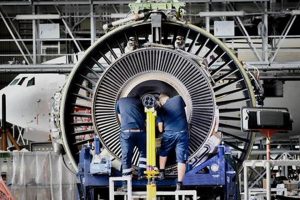
The realm of aerospace engineering encompasses a diverse array of specializations, each addressing distinct challenges in the design, development, and operation of aircraft and spacecraft. These areas include, but are not limited to, aerodynamics, propulsion, structures, flight mechanics, and control systems. For example, an engineer specializing in aerodynamics focuses on the study of air flow around objects, crucial for optimizing aircraft lift and drag.
The breadth of expertise within this discipline is critical for advancing aviation and space exploration. A deep understanding of its multiple facets facilitates innovation in areas such as fuel efficiency, safety, and mission capabilities. Historically, advancements in one area, such as materials science for stronger, lighter structures, have often driven progress in others, leading to more capable and efficient aerospace vehicles.
Understanding these specific areas within the broader discipline provides a clearer perspective on the multifaceted nature of aerospace vehicle design and the diverse opportunities available within the profession. Subsequent sections will delve into the characteristics and contributions of selected sub-disciplines.
Individuals considering a career or advanced studies within aerospace engineering should thoughtfully assess their interests and aptitudes to identify a suitable sub-discipline.
Tip 1: Conduct thorough research. Investigate the specific focus of each area, such as propulsion, controls, or materials. Consult professional resources and academic publications to gain a comprehensive understanding.
Tip 2: Evaluate personal strengths. Assess your skills and interests in mathematics, physics, and computer science to determine which area aligns with your aptitudes. Those strong in fluid dynamics might consider aerodynamics, while those with a knack for mechanics may find structures appealing.
Tip 3: Seek practical experience. Internships or research opportunities within different specializations offer valuable hands-on experience and a better understanding of daily tasks and required skills.
Tip 4: Network with professionals. Engage with engineers in various sub-disciplines through professional organizations or industry events. Their insights can provide valuable guidance on career paths and industry trends.
Tip 5: Consider future trends. Explore emerging areas like autonomous systems, space resource utilization, and advanced materials to identify fields with significant growth potential. This allows for strategic career planning.
Tip 6: Tailor academic coursework. Select elective courses and research projects that align with your chosen area of specialization. This focused approach enhances your expertise and marketability.
Tip 7: Pursue advanced certifications. Obtaining certifications specific to your chosen specialization can demonstrate your expertise and commitment to professional development, enhancing career prospects.
Thoughtful consideration of these points will facilitate a more informed and strategic approach to selecting a specialization within aerospace engineering, leading to greater professional satisfaction and success.
The following concluding remarks summarize key considerations for those interested in pursuing any of these technical paths.
1. Aerodynamics

Aerodynamics, the study of air in motion and its interaction with solid objects, is a fundamental discipline within the broader spectrum of aerospace engineering. Its principles are integral to the design and performance optimization of aircraft, spacecraft, and other aerospace vehicles, influencing their efficiency, stability, and overall operational capabilities.
- Lift Generation
Lift, the force that opposes gravity, is primarily generated by the aerodynamic shape of an aircraft’s wings. Wing design, incorporating aspects such as airfoil selection and wing geometry, is meticulously crafted to create a pressure differential between the upper and lower surfaces, resulting in lift. This is vital for flight stability and altitude control within different fields in aerospace engineering.
- Drag Reduction
Drag, the force that opposes motion through the air, directly impacts fuel consumption and overall performance. Aerodynamic design aims to minimize drag through streamlining, boundary layer control, and the implementation of advanced materials and surface finishes. Efficient drag reduction contributes to operational cost savings across various fields in aerospace engineering.
- Stability and Control
Aerodynamic considerations are crucial for ensuring the stability and controllability of aerospace vehicles. Control surfaces, such as ailerons, elevators, and rudders, manipulate airflow to effect changes in attitude and direction. Accurate aerodynamic modeling is essential for designing stable flight control systems used in different fields in aerospace engineering.
- Supersonic and Hypersonic Flight
At supersonic and hypersonic speeds, the behavior of air becomes significantly more complex, requiring specialized aerodynamic expertise. Shockwaves, wave drag, and thermal effects become dominant concerns. Designing vehicles capable of operating at these speeds necessitates advanced computational fluid dynamics and wind tunnel testing, driving innovation within related fields in aerospace engineering.
These examples highlight the pervasive influence of aerodynamics across diverse aspects of aerospace engineering. From the fundamental principles governing lift and drag to the complexities of supersonic flight, a thorough understanding of aerodynamic principles is essential for designing safe, efficient, and high-performing aerospace vehicles and their diverse applications within different fields in aerospace engineering.
2. Propulsion

Propulsion, the system responsible for generating thrust to move an aircraft or spacecraft, is inextricably linked to various aspects of aerospace engineering. Its design and optimization require expertise from multiple disciplines, highlighting its central role.
- Thermodynamics and Gas Dynamics
The performance of propulsion systems, particularly jet engines and rockets, is governed by thermodynamic principles and gas dynamics. Understanding these principles is essential for designing efficient combustion chambers, turbines, and nozzles that maximize thrust while minimizing fuel consumption. These designs must also comply with fields in aerospace engineering, such as safety regulations.
- Fluid Mechanics and Aerodynamics
The intake and exhaust of air in air-breathing engines, as well as the flow of exhaust gases from rockets, are governed by fluid mechanics and aerodynamics. The shape of engine inlets, nozzles, and even the overall aircraft fuselage must be carefully designed to minimize drag and maximize thrust. The design process may span over different fields in aerospace engineering.
- Materials Science and Engineering
Propulsion systems operate at high temperatures and pressures, demanding materials that can withstand extreme conditions. Turbine blades, combustion chamber liners, and rocket nozzles require advanced materials with high strength, creep resistance, and thermal stability. The development and selection of these materials are crucial for engine reliability and performance within different fields in aerospace engineering.
- Control Systems and Instrumentation
Precise control of fuel flow, air intake, and nozzle geometry is essential for efficient and stable engine operation. Control systems, including sensors, actuators, and electronic control units, are used to regulate engine performance based on flight conditions and pilot demands. These systems require integration with other elements from different fields in aerospace engineering.
In summary, the design, development, and operation of propulsion systems necessitate a multifaceted approach involving diverse areas of expertise within aerospace engineering. The efficiency and safety of these systems are crucial for advancing aviation and space exploration, driving continuous innovation across these interconnected fields.
3. Structures

Aerospace structures, the load-bearing components of aircraft and spacecraft, are critical in various facets of aerospace engineering. Structural integrity directly influences safety, performance, and lifespan. A failure in structural design can have catastrophic consequences, underscoring the importance of rigorous analysis and testing. For example, the Comet airliner disasters of the 1950s highlighted the dangers of metal fatigue and inadequate understanding of stress concentrations around pressurized cabins, leading to advancements in structural analysis methods across aerospace engineering.
The design of aerospace structures involves a multidisciplinary approach, integrating knowledge from materials science, aerodynamics, and control systems. Material selection dictates weight, strength, and resistance to environmental factors. Aerodynamic loads, determined by flight conditions, exert significant forces on the structure. Control systems must account for structural flexibility to prevent instability, a phenomenon known as aeroelasticity. A contemporary example is the development of lightweight composite materials for aircraft wings, improving fuel efficiency while maintaining structural strength. This advancement demonstrates the synergy between materials science and structural engineering.
In summary, the field of aerospace structures serves as a foundational pillar within the broader aerospace engineering discipline. Continuous advancements in structural analysis, materials, and design methodologies are essential for ensuring the safety and performance of future aerospace vehicles. Addressing challenges such as extreme temperatures, high stresses, and the need for lightweight designs will continue to drive innovation in aerospace structural engineering.
4. Control Systems

Control systems are fundamental to the operation of aerospace vehicles, providing the means to govern flight path, stability, and overall performance. These systems are not isolated entities but rather integral components that interact with and rely upon other areas of aerospace engineering. Aerodynamic characteristics, structural dynamics, and propulsion system behavior all directly influence control system design and effectiveness. For instance, the stability augmentation systems found in modern aircraft compensate for inherent aerodynamic instabilities, requiring a thorough understanding of aerodynamic principles. In spacecraft, attitude control systems rely on precise knowledge of orbital mechanics and the vehicle’s mass properties to maintain desired orientations.
The evolution of control systems has significantly impacted the capabilities of aerospace vehicles. Fly-by-wire technology, enabled by advanced control algorithms and sensors, has allowed for the design of aircraft with enhanced maneuverability and improved safety. These systems depend on reliable data from inertial measurement units and air data sensors to provide accurate feedback for control laws. Autonomous flight control systems, increasingly prevalent in unmanned aerial vehicles, integrate artificial intelligence and machine learning techniques to enable independent decision-making and mission execution. A historical example of an earlier adoption of control systems, the autopilot functionality of aircrafts, has enabled pilot to rest during long and non-critical mission.
In conclusion, control systems represent a critical intersection point within aerospace engineering, drawing upon knowledge from diverse sub-disciplines to achieve safe and efficient operation. The ongoing development of advanced control strategies, coupled with improvements in sensor technology and computational power, continues to expand the performance envelope of aerospace vehicles. Understanding the interdependencies between control systems and other engineering domains is essential for addressing future challenges in aerospace technology.
5. Materials Science

Materials science plays a foundational role in aerospace engineering, directly impacting performance, safety, and the economic viability of aircraft and spacecraft. The properties of materials dictate the structural integrity, weight, and thermal resistance of vehicles, thus influencing factors such as fuel efficiency, payload capacity, and operational lifespan. Selection of appropriate materials is a critical decision-making process that requires a deep understanding of mechanical behavior, environmental effects, and manufacturing processes. For instance, the transition from aluminum alloys to carbon fiber composites in aircraft structures has enabled significant weight reductions, leading to improved fuel efficiency and increased range.
The relationship between materials science and other aerospace engineering disciplines is symbiotic. Aerodynamic designs that minimize drag often necessitate complex geometries achievable only with specific materials. Propulsion systems demand high-temperature materials capable of withstanding extreme conditions within combustion chambers and turbine sections. Control systems rely on materials with specific electrical and magnetic properties for sensors and actuators. One practical application is the development of thermal protection systems for spacecraft re-entering the Earth’s atmosphere, where materials with high ablation resistance are crucial for dissipating heat and preventing structural damage. The space shuttle’s tiles are a notable example, illustrating the criticality of tailored materials in enabling complex missions.
In conclusion, materials science is an enabling discipline within aerospace engineering, driving innovation and pushing the boundaries of what is possible. The development of new materials, coupled with advanced manufacturing techniques, will be essential for addressing future challenges in areas such as hypersonic flight, space exploration, and sustainable aviation. The need for lighter, stronger, and more durable materials will continue to be a central theme in aerospace research and development, ensuring that materials science remains an indispensable component of aerospace engineering.
6. Flight Mechanics

Flight mechanics, a branch of aerospace engineering, analyzes aircraft and spacecraft motion through the atmosphere and space. Its connection to the broader engineering field manifests through dependencies on and contributions to other specialties. Aerodynamics provides the foundation for understanding forces acting on a vehicle, directly influencing flight stability and control. Propulsion delivers the thrust that overcomes drag and enables maneuvers analyzed within flight mechanics. For example, accurate modeling of aerodynamic coefficients, derived from wind tunnel testing or computational fluid dynamics, is essential for predicting aircraft performance during take-off, landing, and cruise. Similarly, knowledge of engine thrust characteristics is needed for determining climb rates and acceleration capabilities. Therefore, flight mechanics serves as the integrator of these individual effects, predicting the overall motion of the vehicle.
The practical application of flight mechanics is evident in aircraft and spacecraft design and operation. In aircraft design, stability derivatives calculated within flight mechanics determine the size and placement of control surfaces. Simulation tools, based on flight mechanics principles, predict aircraft handling qualities and performance throughout the flight envelope. For spacecraft, orbital mechanics, a subset of flight mechanics, is critical for mission planning, trajectory optimization, and attitude control. The design of a satellite’s orbit, ensuring coverage and minimizing fuel consumption, is directly rooted in flight mechanics principles. Moreover, flight mechanics contributes to safety assessments. Analyzing potential failure scenarios, such as engine loss or control surface malfunction, allows for the development of mitigation strategies, reducing the risk of accidents. A historical example shows how the study of dutch roll (a coupled roll-yaw oscillation) in early jet aircraft led to the development of yaw dampers, enhancing stability and safety.
In conclusion, flight mechanics is an essential component of aerospace engineering, linking aerodynamic forces, propulsion characteristics, and vehicle dynamics to predict and control motion. It underpins aircraft and spacecraft design, performance analysis, mission planning, and safety assessments. While challenges remain in accurately modeling complex phenomena such as turbulence and aeroelasticity, ongoing advancements in computational methods and sensor technology continue to improve the predictive capabilities of flight mechanics, contributing to safer and more efficient aerospace operations.
Frequently Asked Questions About Specializations Within Aerospace Engineering
The following questions and answers address common inquiries concerning the various sub-disciplines encompassed by aerospace engineering. The information is intended to provide clarity and guidance for those seeking a deeper understanding of this multifaceted field.
Question 1: What are the primary specializations available within aerospace engineering?
The main branches include aerodynamics, propulsion, structures, control systems, materials science, and flight mechanics. These specializations often overlap, requiring engineers to possess a broad understanding of the field.
Question 2: How does aerodynamics impact aircraft design?
Aerodynamics governs the interaction of air with aircraft surfaces, directly influencing lift, drag, and stability. Optimal aerodynamic design is critical for fuel efficiency, maneuverability, and overall performance.
Question 3: What is the role of propulsion systems in aerospace engineering?
Propulsion systems generate the thrust necessary for flight. This includes jet engines, rocket engines, and other advanced propulsion concepts. Engine design is concerned with efficiency, reliability, and environmental impact.
Question 4: Why is structural integrity so important in aerospace engineering?
Structural integrity ensures that an aircraft or spacecraft can withstand the loads and stresses experienced during flight. Structural failures can have catastrophic consequences, necessitating rigorous design and testing.
Question 5: How do control systems contribute to aerospace vehicle operation?
Control systems manage the stability, navigation, and maneuvering of aerospace vehicles. These systems rely on sensors, actuators, and sophisticated algorithms to maintain desired flight paths and orientations.
Question 6: Why are materials science considerations crucial in aerospace engineering?
Material selection impacts the weight, strength, and thermal resistance of aerospace vehicles. Advanced materials, such as composites and high-temperature alloys, enable improvements in performance and durability.
The understanding of these diverse areas requires a holistic view of aerospace engineering principles and practices. Collaboration and knowledge sharing is critical.
The next section will summarize key considerations for anyone seeking to pursue a technical path.
Different Fields in Aerospace Engineering
This exploration has detailed the breadth of specializations within aerospace engineering, emphasizing the significance of aerodynamics, propulsion, structures, control systems, materials science, and flight mechanics. Each discipline presents unique challenges and opportunities, contributing to the advancement of flight and space exploration. These technical areas necessitate specialized expertise and underscore the multidisciplinary nature of the broader profession.
Continued progress in aerospace technology requires a commitment to research, innovation, and interdisciplinary collaboration. As new challenges arise, such as sustainable aviation and deep space exploration, the diverse expertise found within these disciplines will be critical for developing effective and transformative solutions. The future of aerospace engineering depends on a thorough understanding of these varied fields and their interconnectedness.
![Is a Masters in Aerospace Engineering Worth It? [Guide] | Innovating the Future of Flight with Reliable Aviation Solutions](https://mixaerospace.com/wp-content/uploads/2026/05/th-66-300x200.jpg "Is a Masters in Aerospace Engineering Worth It? [Guide] Innovating the Future of Flight with Reliable Aviation Solutions")