The inquiry centers on whether professionals in the field of aerospace engineering routinely pilot aircraft as part of their job duties. The core activities of these engineers are generally focused on the design, development, testing, and production of aircraft, spacecraft, and related systems. For example, an aerospace engineer might work on improving the aerodynamic efficiency of a new aircraft wing design or developing guidance systems for a satellite.
Understanding the roles within aerospace engineering clarifies the scope of their responsibilities. While not typically required, flight experience can provide valuable insight into aircraft performance and handling characteristics. Historically, some engineers have pursued pilot licenses to enhance their understanding of the systems they design. This practical knowledge can contribute to better, more user-friendly, and safer designs.
Therefore, the following will explore the common tasks undertaken by aerospace engineers, the instances where flight experience might be beneficial, and the overall relationship between engineering and piloting within the aerospace industry.
Guidance for Aspiring Aerospace Engineers
This section offers targeted advice regarding the connection between aerospace engineering careers and the operation of aircraft. While piloting is not a standard requirement, certain strategies can enhance an engineer’s expertise and career prospects.
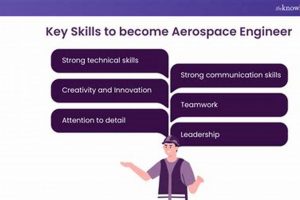
Tip 1: Prioritize Engineering Fundamentals: A strong foundation in mathematics, physics, and computer science is paramount. The core curriculum of aerospace engineering heavily relies on these principles, and mastery is essential for success in design, analysis, and problem-solving.
Tip 2: Seek Relevant Internships: Participate in internships or co-op programs within the aerospace industry. Practical experience gained through these opportunities is invaluable and provides exposure to real-world engineering challenges. Look for roles that involve design, testing, or analysis of aircraft systems.
Tip 3: Consider Pilot Training as Supplemental Education: While not mandatory, obtaining a pilot’s license or taking flight lessons can provide engineers with a practical understanding of aircraft operation, control, and performance characteristics. This knowledge can inform their design decisions and improve their ability to develop user-centric solutions.
Tip 4: Engage in Hands-on Projects: Participate in projects such as building and flying model aircraft, designing drones, or working on amateur rocketry projects. These activities provide practical experience in applying engineering principles and can enhance understanding of aerodynamic concepts.
Tip 5: Network with Professionals: Attend industry conferences, join professional organizations such as the American Institute of Aeronautics and Astronautics (AIAA), and network with experienced aerospace engineers. Learning from seasoned professionals can provide valuable insights and guidance.
Tip 6: Specialize in a Relevant Area: Consider specializing in a specific area of aerospace engineering, such as aerodynamics, propulsion, structures, or control systems. Focused expertise can make an engineer more valuable to potential employers and allow for deeper engagement with particular aspects of aircraft or spacecraft design.
The key takeaway is that while flight proficiency is not a universal expectation, supplementing engineering knowledge with practical aviation experience can offer a distinct advantage in understanding the real-world applications of aerospace engineering principles.
The subsequent sections will provide a broader perspective on career paths and opportunities within the aerospace engineering sector.
1. Design and Analysis

Design and analysis form the foundational cornerstone of aerospace engineering, representing the intellectual processes by which engineers create and refine aircraft and spacecraft. These processes significantly influence the eventual flight characteristics of a vehicle. Cause and effect are directly linked: superior design and meticulous analysis lead to optimized flight performance, enhanced safety, and improved efficiency. The question of whether aerospace engineers directly operate aircraft underscores the importance of design and analysis as a compensatory skillset. Since their primary role is not piloting, their expertise in these analytical areas becomes crucial for ensuring flight worthiness. For instance, an engineer designing a new wing must conduct extensive aerodynamic analysis to predict lift, drag, and stall characteristics, directly impacting how the aircraft will behave in flight. Similarly, structural analysis ensures the aircraft can withstand the stresses encountered during flight, a critical factor for safety.
The practical significance of design and analysis extends to various domains within aerospace. Consider the design of a spacecraft’s heat shield. Engineers must analyze the thermal stresses generated during atmospheric re-entry to ensure the shield can protect the vehicle. This directly informs the choice of materials, the shield’s geometry, and its layering. Moreover, computational fluid dynamics (CFD) plays a critical role in analyzing airflow around complex aircraft shapes, allowing engineers to optimize designs for reduced drag and improved fuel efficiency. This is relevant not only for commercial aircraft, but also for military aircraft where performance is paramount. Ultimately, these analytical tools and processes supplant the direct need for flight experience in many aspects of aircraft development.
In summary, design and analysis are crucial components of aerospace engineering that directly impact the performance and safety of aircraft. While most aerospace engineers do not pilot the aircraft they design, their analytical expertise is paramount in ensuring that these vehicles are capable of safe and efficient flight. Challenges remain in accurately predicting real-world flight conditions through simulation, highlighting the continuous need for improvement in design and analysis techniques. These techniques tie directly into the broader theme of how engineers contribute to aerospace advancements, even if they are not actively involved in the cockpit.
2. Testing and Simulation

Testing and simulation constitute vital processes within aerospace engineering, substituting direct flight experience in many scenarios and providing critical validation of designs and systems prior to real-world operation. This approach directly addresses the question of whether aerospace engineers are required to fly, underscoring how simulated environments and rigorous testing protocols mitigate the need for firsthand piloting in many aspects of the engineering lifecycle.
- Wind Tunnel Testing
Wind tunnels allow engineers to study aerodynamic characteristics of aircraft and components by simulating airflow conditions. Models are placed in the tunnel, and various parameters such as lift, drag, and pressure distribution are measured. This testing is crucial for validating aerodynamic designs and identifying potential issues before actual flight. Without wind tunnel data, aerospace designs would involve far greater risk, potentially necessitating more direct involvement of engineers in flight testing.
- Computational Fluid Dynamics (CFD)
CFD uses numerical methods to simulate fluid flows, enabling engineers to analyze complex aerodynamic phenomena and optimize designs. This is a cost-effective method for analyzing many design iterations without physical prototypes or wind tunnels. The ability to simulate complex flow phenomena allows engineers to evaluate designs under a range of conditions, significantly reducing the reliance on flight testing.
- Hardware-in-the-Loop (HIL) Simulation
HIL simulation integrates physical hardware components with simulated environments to test system performance. For example, an aircraft’s flight control system can be connected to a flight simulator to assess its behavior under various conditions. This type of testing allows engineers to validate the integration of hardware and software before actual flight, reducing the likelihood of unexpected issues.
- Flight Simulators
Advanced flight simulators provide a realistic environment for pilots to train and engineers to evaluate aircraft performance. They allow engineers to model aircraft dynamics and test new control laws or flight management systems. Flight simulators are an alternative to conducting actual flight tests with a human pilot in the loop, greatly reducing costs and risk. The use of simulators in both training and design underscores the shift away from the necessity for engineers to personally fly.
Collectively, these testing and simulation methods provide robust alternatives to direct flight experience for aerospace engineers. By employing these tools, engineers can design, analyze, and validate aircraft systems without requiring extensive personal flight hours. Testing and simulation enhance efficiency and safety in the development process, thereby shaping the role of aerospace engineers to be more analytical and design-focused, rather than pilot-centric, with no requirement to “do aerospace engineers fly.”
3. Regulations and Safety

Regulations and safety standards form the bedrock of the aerospace industry, directly impacting the design, manufacture, and operation of aircraft and spacecraft. These frameworks, dictated by governing bodies, dictate the operational constraints within which aerospace engineers work, and indirectly influence the extent to which “do aerospace engineers fly” becomes a consideration within the profession.
- Certification Standards
Aviation authorities establish stringent certification standards that aircraft must meet before being deemed airworthy. These standards cover various aspects, including structural integrity, aerodynamic performance, and system reliability. Aerospace engineers must ensure their designs adhere to these certifications, employing simulation, testing, and analysis to demonstrate compliance. These standards do not generally require the engineer to be a pilot, but rather to demonstrate the aircraft’s performance metrics under conditions stipulated by the regulations.
- Safety Management Systems (SMS)
Aerospace organizations implement SMS to proactively manage safety risks. These systems involve hazard identification, risk assessment, and implementation of mitigation strategies. Aerospace engineers contribute to SMS by designing systems with safety features, analyzing potential failure modes, and developing procedures to minimize risk. This is done analytically and through design, not through direct aircraft operation or demonstration of piloting skills.
- Human Factors Engineering
Regulations emphasize the importance of human factors engineering in aircraft design. Aerospace engineers must consider how pilots and operators interact with aircraft systems to minimize errors and enhance safety. This involves designing intuitive interfaces, implementing clear warning systems, and optimizing cockpit ergonomics. While some engineers might benefit from understanding cockpit procedures through flight experience, the primary emphasis is on designing systems that are inherently safe and user-friendly, irrespective of whether the engineer possesses piloting expertise.
- Accident Investigation and Analysis
Accident investigation and analysis are crucial for identifying the root causes of aviation incidents and preventing future occurrences. Aerospace engineers play a role in analyzing accident data, identifying design flaws, and recommending corrective actions. This contributes to the continuous improvement of aircraft safety and informs future designs. Post-incident, the focus of aerospace engineers is root-cause-analysis of system and component failure which in no circumstances require “do aerospace engineers fly” to commence the investigation.
The regulatory and safety landscape dictates that aerospace engineers prioritize design, analysis, and risk mitigation to ensure the safe operation of aircraft. While piloting experience can offer benefits, it is not a regulatory requirement, and the emphasis remains on demonstrating compliance through robust engineering practices.
4. Research and Development
Research and Development (R&D) within aerospace engineering fundamentally shapes the future of flight, influencing whether or not active piloting experience becomes a necessary skill for its practitioners. R&D efforts focus on innovation across multiple domains, from novel aircraft designs to advanced materials and propulsion systems. The nature of these activities, particularly those involving autonomous systems and advanced simulation, increasingly distances the engineer’s role from direct aircraft operation. For example, the development of unmanned aerial vehicles (UAVs) necessitates engineers to design and test flight control algorithms, navigation systems, and sensor integration tasks accomplished primarily through simulation and ground testing, not in-flight piloting. The effect of these efforts is that the traditional piloting skills are less relevant than an understanding of system architecture and data analysis.
Significant emphasis in aerospace R&D is placed on creating increasingly sophisticated simulation environments. These simulations allow engineers to model flight characteristics, environmental conditions, and potential failure scenarios with a high degree of fidelity. As simulation technology advances, the need for engineers to validate designs through actual flight testing diminishes. The development of new airframes, control systems, and even entire flight strategies can be tested, iterated, and refined within these simulated environments. For example, research into hypersonic flight relies heavily on computational fluid dynamics and wind tunnel testing, tools that enable engineers to predict aircraft behavior at extreme speeds without the inherent risks of manned flight testing. The use of rapid prototyping and 3D printing allows for quick design iterations that are then tested primarily in labs and through simulations, prior to any manned flight even being considered. This further underlines the diminishing connection between aerospace engineering R&D and the imperative that “do aerospace engineers fly.”
In conclusion, aerospace R&D is continuously evolving, pushing the boundaries of what is possible in flight. As technologies advance, the direct operation of aircraft becomes less integral to the core activities of many aerospace engineers. The focus shifts to analytical skills, simulation proficiency, and systems-level understanding. This transition presents challenges in ensuring that engineers retain a practical understanding of flight dynamics, which can be addressed through enhanced simulation fidelity, rigorous testing protocols, and multidisciplinary collaboration with experienced pilots and flight test engineers. While “do aerospace engineers fly” may remain a pertinent question, the future of aerospace engineering suggests that expertise in design, analysis, and R&D will be increasingly crucial, and direct piloting experience less of a prerequisite, for driving innovation in the field.
5. Systems Integration

Systems integration in aerospace engineering is the process of combining individual components and subsystems into a cohesive, functional whole, ensuring that each element operates effectively within the overall system architecture. This process has a complex, indirect relationship with the premise of whether aerospace engineers are required to have piloting experience. While direct operation of aircraft is typically not a part of the integration process, a thorough understanding of flight dynamics and operational considerations can be highly beneficial.
- Subsystem Compatibility and Interface Management
Ensuring compatibility between diverse subsystems (e.g., avionics, propulsion, control systems) is a core aspect of systems integration. Engineers must define and manage interfaces to facilitate seamless communication and data exchange. This involves rigorous testing and verification to identify and resolve integration issues early in the development cycle. The focus is on the functionality and interaction of systems, not necessarily on piloting the aircraft. For example, an engineer integrating a new autopilot system must ensure it interacts properly with the existing flight control surfaces and navigation systems, but the engineer isn’t required to pilot the test flight; specialized test pilots usually perform these functions.
- Testing and Validation of Integrated Systems
Once subsystems are integrated, comprehensive testing is required to validate the performance of the complete system under various operational conditions. This includes simulations, ground testing, and potentially flight testing. Flight testing, when necessary, is typically conducted by specialized test pilots in close collaboration with the engineering team. The engineers’ role is to analyze test data, identify anomalies, and implement design changes to improve system performance. They are present to observe and analyze, not necessarily to operate the aircraft.
- Optimization of System Performance
Systems integration often involves optimizing the performance of the entire aircraft by adjusting the interaction between subsystems. For instance, engineers may need to fine-tune the flight control system to improve handling characteristics or reduce fuel consumption. This optimization process is driven by performance metrics and simulation results, not by the personal piloting preferences of the engineers. While an understanding of pilot workload and control inputs can be useful, it is not a prerequisite for performing this optimization work.
- Troubleshooting and Problem Resolution
During systems integration, unexpected problems and issues may arise. Engineers must be able to diagnose the root causes of these problems and implement effective solutions. This requires a deep understanding of the system architecture and the interaction between different components. Resolving these issues is based on engineering principles, data analysis, and systematic problem-solving, independent of direct piloting experience. For example, diagnosing an issue with the navigation system requires understanding the system’s design and operation, rather than firsthand piloting experience.
In summary, systems integration in aerospace engineering focuses on ensuring that all components of an aircraft work together effectively. Although practical knowledge of piloting can provide an advantage, the core tasks are centered on analysis, testing, and problem resolution rather than operating the aircraft. The integration process is governed by engineering principles and regulatory requirements, with test pilots playing a crucial role in evaluating the final integrated system.
6. Performance Evaluation

Performance evaluation in aerospace engineering critically assesses aircraft and spacecraft capabilities against predefined design specifications and operational requirements. The necessity for aerospace engineers themselves to pilot aircraft within this evaluation process is nuanced. Direct flight experience can provide valuable context, but is not always a mandatory component of performance assessment.
- Simulation Validation
Engineers utilize flight simulators and computational models to predict and evaluate aircraft performance metrics, such as lift, drag, fuel efficiency, and stability. Simulation results are compared to real-world flight data, often gathered by test pilots. The engineers’ role is to refine simulation models to accurately reflect actual flight characteristics. This validation process heavily relies on data analysis and model refinement, diminishing the need for engineers to personally fly the aircraft. For example, an engineer evaluating the performance of a new wing design would analyze simulator data and compare it with wind tunnel results, relying on test pilots for in-flight data.
- Flight Testing and Data Analysis
Flight testing, conducted by specialized test pilots, generates critical data for performance evaluation. Engineers analyze this data to assess whether the aircraft meets design specifications. This involves examining parameters like airspeed, altitude, engine performance, and control surface deflections. Data analysis, statistical modeling, and signal processing techniques are used to extract meaningful insights from the flight test data. The engineers focus on analyzing and interpreting test results rather than directly operating the aircraft, though they may be present during tests to monitor and gather data.
- System Integration Testing
Engineers assess how well various systems integrate and function together to achieve overall performance goals. This includes evaluating the performance of avionics, propulsion, and control systems under different operating conditions. The evaluation is driven by pre-defined performance criteria and regulatory requirements. The system-level evaluation often involves the collection and analysis of large datasets from interconnected systems, making data science and analysis more critical skills than direct piloting expertise. For example, evaluating a new automated landing system involves analyzing data from multiple sensors and actuators, rather than the engineer manually landing the aircraft.
- Human-in-the-Loop Simulation
Human-in-the-loop (HITL) simulations involve pilots operating simulated aircraft to evaluate human-machine interfaces, workload, and overall usability. Engineers use HITL simulations to refine cockpit designs and optimize control systems. The engineer’s role is to collect and analyze pilot performance data, identify potential issues, and improve the aircraft’s design based on human factors considerations. While pilots provide feedback on handling qualities and ease of use, engineers focus on quantitative data analysis and design optimization.
In conclusion, performance evaluation in aerospace engineering relies heavily on data analysis, simulation, and flight testing conducted by specialized test pilots. While flight experience can provide valuable context, the primary role of engineers is to analyze and interpret data to ensure that aircraft meet performance specifications and regulatory requirements. The increasing reliance on sophisticated simulation tools and data analysis techniques further diminishes the need for “do aerospace engineers fly” to contribute effectively to performance evaluation.
Frequently Asked Questions
This section addresses common inquiries regarding the relationship between aerospace engineering and piloting, providing clarity on the typical roles and responsibilities within the field.
Question 1: Is it a requirement for aerospace engineers to hold a pilot’s license?
Holding a pilot’s license is generally not a prerequisite for employment as an aerospace engineer. The core responsibilities revolve around design, analysis, testing, and development, rather than direct aircraft operation.
Question 2: Does practical flight experience benefit aerospace engineers?
Practical flight experience can provide valuable insights into aircraft behavior and handling characteristics. This understanding can inform design decisions and contribute to the development of safer and more user-friendly aircraft.
Question 3: In what scenarios might an aerospace engineer pilot an aircraft?
Aerospace engineers may occasionally participate in flight testing, often in collaboration with test pilots. In these instances, engineers may fly as observers or systems operators, but are rarely the primary pilot. Furthermore, smaller companies may require engineers to preform testing on drones, which they would be operating.
Question 4: How do aerospace engineers without flight experience gain practical understanding of aircraft operation?
Aerospace engineers gain practical understanding through simulations, wind tunnel testing, data analysis, and collaboration with experienced pilots and flight test engineers. These methods provide critical insights into aircraft behavior without requiring personal flight time.
Question 5: Does specializing in certain areas of aerospace engineering increase the likelihood of needing to fly?
Specializing in areas such as flight controls or human factors may increase the relevance of piloting knowledge. However, even in these specializations, the emphasis remains on design, analysis, and testing, rather than direct aircraft operation.
Question 6: Are there alternative ways to gain aviation experience besides obtaining a pilot’s license?
Alternative ways to gain aviation experience include building and flying model aircraft, participating in amateur rocketry, working on drone projects, and engaging with flight simulators. These activities provide practical exposure to aviation principles and can enhance an engineer’s understanding of flight dynamics.
In summary, while piloting experience can be a valuable asset for aerospace engineers, it is not a universal requirement. The core responsibilities of aerospace engineers are primarily focused on design, analysis, and testing. Alternative means of gaining aviation knowledge are readily available and can complement an engineer’s skillset.
The following sections will delve into career prospects and required skills for aerospace engineers.
Do Aerospace Engineers Fly
The preceding discussion has comprehensively explored the relationship between aerospace engineers and the act of piloting aircraft. It is established that while not a universal requirement, practical aviation knowledge can augment an engineer’s skill set. The emphasis, however, remains firmly on analytical and design expertise, simulation proficiency, and a deep understanding of aerospace systems. Modern tools and techniques, such as advanced simulation and computational fluid dynamics, often mitigate the necessity for direct flight experience.
Aspiring aerospace engineers should prioritize a robust foundation in core engineering principles and consider aviation experience as a supplemental, albeit valuable, addition. Continuous advancements in technology will likely further redefine the roles within the aerospace industry, shifting the focus toward innovative design and sophisticated analysis. Therefore, the significance of “do aerospace engineers fly” is not as a prerequisite, but rather as a potential enhancement to a multifaceted and evolving profession.