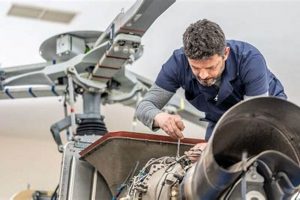
Mathematical principles form the bedrock of aerospace engineering. They provide the tools to describe, analyze, and predict the behavior of aircraft, spacecraft, and related systems. For instance, calculus is fundamental in determining the trajectory of a rocket, while linear algebra is used to model the stability and control of an aircraft’s flight dynamics.
The application of these techniques is vital for ensuring safety, efficiency, and optimal performance in the design and operation of aerospace vehicles. Historically, advancements in the field have been directly linked to the development and refinement of mathematical models capable of accurately representing complex physical phenomena. This enables engineers to simulate and test designs virtually, reducing the need for costly and potentially dangerous physical prototypes.
Specific areas where these mathematical tools are extensively utilized include aerodynamics, propulsion systems, structural analysis, and navigation and control. Each of these disciplines relies on sophisticated equations and algorithms to achieve its objectives, further reinforcing the critical role of mathematical proficiency in aerospace engineering.
Practical Guidance for Aerospace Engineers
The following recommendations highlight strategies for effectively integrating mathematical principles into various facets of aerospace engineering practice.
Tip 1: Emphasize Computational Proficiency: Develop expertise in numerical methods and software packages such as MATLAB and Python. These tools enable efficient solutions to complex problems encountered in areas like computational fluid dynamics and finite element analysis.
Tip 2: Master Differential Equations: Gain a solid understanding of ordinary and partial differential equations. These are essential for modeling dynamic systems, heat transfer, and fluid flow, all critical in aerospace applications.
Tip 3: Utilize Linear Algebra for System Analysis: Employ linear algebra techniques for analyzing structural integrity, control systems, and optimization problems. Eigenvalue analysis, for example, is crucial in determining structural stability.
Tip 4: Apply Statistical Analysis for Data Interpretation: Implement statistical methods for analyzing experimental data and assessing the reliability of designs. Statistical process control can improve manufacturing precision and ensure quality.
Tip 5: Prioritize Modeling and Simulation: Leverage simulation software to predict the performance of aerospace systems under various conditions. This approach reduces the need for extensive physical testing and allows for rapid prototyping.
Tip 6: Understand Optimization Techniques: Acquire knowledge of optimization algorithms to enhance the performance of aerospace designs. Gradient-based methods, for example, can be used to minimize drag or maximize fuel efficiency.
Tip 7: Stay Current with Mathematical Advancements: Continuously update your understanding of mathematical techniques relevant to aerospace engineering. New developments in areas like machine learning and artificial intelligence are transforming the field.
Proficient application of these strategies enhances the ability to design, analyze, and optimize aerospace systems effectively, contributing to improved safety, performance, and innovation.
This guidance underscores the imperative for continuous learning and practical application of mathematics within aerospace engineering.
1. Aerodynamics Modeling

Aerodynamics modeling is a critical area within aerospace engineering where mathematical principles are rigorously applied to understand and predict the behavior of air flowing around vehicles. This understanding is fundamental to designing efficient and stable aircraft and spacecraft.
- Governing Equations and Numerical Methods
Aerodynamics modeling relies heavily on the Navier-Stokes equations, which describe the motion of viscous fluids. These are partial differential equations often solved numerically using techniques like Finite Volume Method (FVM) or Finite Element Method (FEM). These methods discretize the flow domain and approximate solutions at discrete points, requiring substantial computational power and mathematical sophistication.
- Boundary Layer Theory
The boundary layer, a thin layer of air close to the surface of a vehicle, significantly impacts drag and lift. Mathematical models, often involving simplified forms of the Navier-Stokes equations, are used to analyze the boundary layer. Understanding boundary layer behavior is critical for optimizing aircraft shape and preventing flow separation, which can lead to stall.
- Computational Fluid Dynamics (CFD)
CFD simulations are integral to modern aerodynamics modeling. These simulations utilize algorithms based on mathematical models to predict airflow characteristics around complex geometries. CFD results inform design decisions by providing detailed insights into pressure distributions, velocity fields, and turbulence intensities, allowing engineers to refine aerodynamic performance without extensive wind tunnel testing.
- Airfoil Design and Optimization
The design of airfoils, the cross-sectional shape of a wing, is heavily dependent on mathematical optimization techniques. Aerodynamic coefficients, such as lift and drag, are mathematically related to airfoil geometry. Optimization algorithms are used to find airfoil shapes that maximize lift-to-drag ratios, improving aircraft efficiency. These algorithms often involve iterative calculations based on computational models and experimental data.
The complexities of aerodynamics modeling necessitate a deep understanding of mathematical principles. The ability to translate physical phenomena into mathematical representations, solve complex equations numerically, and interpret the results critically is paramount for aerospace engineers aiming to design high-performance, efficient, and safe vehicles. The accuracy and reliability of these models directly impact the success of aerospace projects.
2. Trajectory Calculation

Trajectory calculation, a fundamental element of aerospace engineering, relies extensively on mathematical methods to determine the path of an object through space and time. This process is critical for mission planning, spacecraft navigation, and launch vehicle design, directly impacting the success and safety of aerospace operations. Without precise trajectory calculation, achieving mission objectives, such as placing a satellite into a specific orbit or guiding a spacecraft to a target planet, would be impossible. The reliance on mathematical models allows engineers to predict and adjust for gravitational forces, atmospheric drag, and other perturbing factors influencing a vehicle’s flight path. For example, the trajectory of the Apollo missions to the Moon required meticulous calculation, accounting for the gravitational influences of Earth, the Moon, and the Sun to ensure a successful landing and return.
The mathematical techniques employed in trajectory calculation span a wide range, including classical mechanics, calculus, and numerical analysis. Classical mechanics provides the foundational laws governing motion, while calculus is used to model continuous changes in position and velocity. Numerical methods, such as Runge-Kutta integration, are essential for solving the complex differential equations that describe orbital motion. In real-time applications, such as missile guidance systems, Kalman filtering, a sophisticated mathematical algorithm, is used to estimate the state of a system by combining noisy sensor measurements with a dynamic model of the vehicle. These methods are continually refined to improve accuracy and efficiency, particularly in the face of increasing computational demands and the complexity of modern aerospace missions.
In summary, trajectory calculation is inextricably linked to the application of mathematics in aerospace engineering. Its importance is underscored by its direct impact on mission success, vehicle safety, and operational efficiency. Challenges remain in developing more robust and computationally efficient algorithms for complex trajectory scenarios, especially in the context of deep-space exploration and orbital debris management. However, continued advancements in mathematical modeling and computational techniques will undoubtedly lead to more sophisticated and reliable trajectory calculation capabilities, furthering the progress of aerospace engineering.
3. Structural Analysis

Structural analysis within aerospace engineering is intrinsically linked to mathematical methodologies. This dependency stems from the need to ascertain the integrity of aerospace structures under various loading conditions. The ability to accurately predict stress, strain, and deformation is paramount for ensuring flight safety and optimizing material usage. Mathematical models, derived from principles of mechanics and materials, form the foundation upon which structural analyses are conducted. These models, often expressed as systems of equations, allow engineers to simulate the behavior of complex structures under static and dynamic loads. For example, finite element analysis (FEA), a widely employed numerical technique, divides a structure into discrete elements, solving equations to approximate the behavior of each element and subsequently assembling them to represent the entire structure. Without mathematical precision, structural failures could occur, leading to catastrophic consequences. The design of aircraft wings, for instance, necessitates rigorous structural analysis to ensure they can withstand aerodynamic forces experienced during flight.
The application of mathematical techniques in structural analysis extends beyond basic stress calculations. Eigenvalue analysis is utilized to determine the natural frequencies and mode shapes of a structure, which is critical for preventing resonance and flutter. Buckling analysis employs eigenvalue solutions to predict the critical loads at which a structure becomes unstable. Additionally, optimization algorithms, informed by mathematical models, can be used to minimize structural weight while satisfying strength and stiffness requirements. This is crucial in aerospace applications where minimizing weight directly translates to improved performance and fuel efficiency. For instance, mathematical optimization plays a critical role in designing lightweight composite structures for aircraft fuselages and wings.
In conclusion, structural analysis is an indispensable component of aerospace engineering, fundamentally dependent on a diverse range of mathematical tools and techniques. The precision and reliability of structural analysis are directly tied to the sophistication and accuracy of the mathematical models employed. As aerospace structures become increasingly complex and performance demands intensify, the integration of advanced mathematical methods will become even more critical for ensuring the safety, efficiency, and longevity of aerospace vehicles.
4. Control Systems

Control systems are a cornerstone of aerospace engineering, critically dependent on mathematical frameworks for their design, analysis, and implementation. The effective functioning of aircraft, spacecraft, and unmanned aerial vehicles (UAVs) hinges on the ability of these systems to maintain stability, execute precise maneuvers, and respond accurately to external disturbances. These capabilities are realized through the application of mathematical models and control algorithms that govern the behavior of actuators, sensors, and computational elements. For example, autopilots in commercial aircraft use feedback control loops based on differential equations and linear algebra to maintain desired altitude, heading, and airspeed, significantly reducing pilot workload and enhancing flight safety. Similarly, attitude control systems in satellites rely on quaternion algebra and Kalman filtering to precisely orient spacecraft in orbit, enabling accurate data collection and communication.
The mathematical foundations of control systems in aerospace include linear systems theory, nonlinear control techniques, optimal control, and adaptive control. Linear systems theory, based on Laplace transforms and transfer functions, provides a powerful framework for analyzing and designing control systems for linear time-invariant systems. Nonlinear control techniques, such as feedback linearization and sliding mode control, address the complexities of nonlinear systems encountered in flight dynamics and robotics. Optimal control utilizes calculus of variations and Pontryagin’s maximum principle to determine control strategies that minimize fuel consumption or maximize performance. Adaptive control algorithms adjust control parameters in real-time to compensate for uncertainties and variations in system dynamics, enhancing robustness and adaptability. Examples include the control of hypersonic vehicles, where airframe flexibility and aerodynamic uncertainties necessitate adaptive control strategies. The development of robust control algorithms is crucial for mitigating the impact of atmospheric turbulence on aircraft stability and control, thereby improving ride quality and reducing structural fatigue.
In summary, the connection between control systems and mathematical applications in aerospace engineering is inextricable. The development and deployment of effective control strategies rely on a deep understanding of mathematical principles and their application to modeling, analysis, and design. Continued research into advanced control techniques, such as model predictive control and learning-based control, will be essential for addressing the challenges posed by increasingly complex aerospace systems and operational environments. The effective application of mathematics in control systems engineering is paramount to ensuring the safety, performance, and autonomy of aerospace vehicles, furthering the advancement of the field.
5. Propulsion Design

Propulsion design in aerospace engineering relies heavily on mathematical principles to achieve efficient and reliable thrust generation. The entire process, from initial concept to final implementation, involves intricate calculations and simulations informed by physics and advanced mathematical techniques. The performance of a propulsion system, be it a jet engine, rocket motor, or electric propulsion device, is fundamentally governed by thermodynamic laws, fluid dynamics, and heat transfer, all expressible in mathematical form. For instance, the thrust produced by a rocket engine is directly related to the nozzle exit velocity and mass flow rate, as determined by the rocket equation, a fundamental principle of rocket propulsion. The proper selection and sizing of components, such as compressors, turbines, and combustion chambers, depend on mathematically derived relationships that optimize efficiency and minimize weight. Improper application of these principles can lead to reduced performance, structural failures, or even catastrophic accidents.
Mathematical modeling is essential for simulating the complex processes occurring within propulsion systems. Computational fluid dynamics (CFD) simulations, for example, are used to analyze the flow of gases through engine components, predicting pressure distributions, temperature profiles, and combustion characteristics. These simulations rely on numerical methods to solve the Navier-Stokes equations, which govern fluid motion. Similarly, finite element analysis (FEA) is employed to assess the structural integrity of engine components under extreme temperature and pressure conditions. Turbine blades, subject to high centrifugal forces and thermal stresses, require meticulous FEA to ensure they can withstand these conditions without failure. The design of fuel injectors and combustion systems relies on complex mathematical models to optimize fuel-air mixing and combustion efficiency, minimizing emissions and maximizing thrust. A specific case is the development of scramjet engines for hypersonic vehicles, where precise control of combustion processes at supersonic speeds requires sophisticated mathematical modeling and control algorithms.
In summary, propulsion design is inextricably linked to the application of mathematics in aerospace engineering. The ability to translate physical phenomena into mathematical representations, solve complex equations numerically, and interpret the results critically is paramount for aerospace engineers aiming to design high-performance and reliable propulsion systems. Challenges remain in developing more accurate and computationally efficient models for complex combustion processes and turbulent flows. However, continued advances in mathematical modeling and computational techniques will undoubtedly lead to more efficient and innovative propulsion designs, enabling future advancements in aerospace transportation and exploration.
6. Data Analysis
Data analysis plays a pivotal role in aerospace engineering, transforming raw information into actionable insights. It is the process through which empirical measurements and computational results are interpreted, validated, and ultimately used to improve the design, performance, and safety of aerospace systems. This analytical process is deeply rooted in mathematical and statistical methodologies, without which the vast amounts of data generated during testing and operation would remain largely incomprehensible.
- Flight Test Data Interpretation
Aerospace engineers collect extensive data during flight tests to assess aircraft performance, stability, and control characteristics. This data, encompassing parameters such as airspeed, altitude, attitude, and engine performance, is subjected to statistical analysis to determine trends, identify anomalies, and validate theoretical models. Mathematical techniques, including regression analysis and Fourier transforms, are applied to extract meaningful information from the noisy and complex data sets. The accuracy and reliability of flight test data interpretation are critical for certification and continuous improvement of aircraft designs.
- Structural Health Monitoring
Structural health monitoring (SHM) systems are increasingly used in aerospace applications to detect damage and predict structural failures. These systems employ sensors to monitor structural vibrations, strain, and temperature, generating large volumes of data. Statistical signal processing techniques, such as wavelet transforms and time-frequency analysis, are used to identify subtle changes in the data that may indicate structural degradation. Machine learning algorithms are also employed to classify damage types and predict remaining useful life. The implementation of SHM systems reduces maintenance costs and enhances the safety of aircraft by enabling proactive repairs.
- Propulsion System Performance Evaluation
The evaluation of propulsion system performance involves analyzing data from engine tests and operational flights. This data includes parameters such as fuel consumption, thrust output, exhaust gas temperature, and vibration levels. Mathematical models of engine performance are used to compare measured data with theoretical predictions, identifying areas for improvement. Statistical process control methods are applied to monitor engine performance over time, detecting deviations from normal operating conditions and preventing potential failures. The optimization of engine control parameters relies on data-driven techniques, such as response surface methodology, to maximize efficiency and minimize emissions.
- Satellite Telemetry Analysis
Satellite telemetry data provides valuable information about the health and performance of spacecraft in orbit. This data includes parameters such as battery voltage, solar panel output, temperature of critical components, and attitude control system performance. Statistical analysis is used to monitor trends in telemetry data, detecting anomalies that may indicate system malfunctions. Kalman filtering techniques are employed to estimate the state of the spacecraft and predict its future behavior. The analysis of telemetry data is essential for ensuring the long-term reliability and operational effectiveness of satellites.
In each of these examples, data analysis serves as a bridge between raw empirical measurements and actionable insights. Aerospace engineers use mathematical and statistical tools to extract meaningful information from data, validate models, and improve the design and operation of aerospace systems. The increasing availability of data, coupled with advances in computing power and analytical techniques, is transforming aerospace engineering, enabling more data-driven decision-making and leading to safer, more efficient, and more reliable aerospace systems.
7. Optimization

Optimization, a critical field in aerospace engineering, relies extensively on mathematical techniques to achieve the best possible design or operational parameters under given constraints. The efficient allocation of resources and the maximization of performance metrics demand sophisticated mathematical models and algorithms, solidifying its relevance to how professionals in this field employ mathematics.
- Aerodynamic Shape Optimization
Aerodynamic shape optimization uses computational fluid dynamics (CFD) coupled with optimization algorithms to minimize drag, maximize lift, or enhance stability. For instance, airfoil shapes are iteratively modified, and CFD simulations are run to evaluate the aerodynamic performance of each iteration. Mathematical techniques, such as gradient-based optimization or genetic algorithms, guide the search for the optimal shape. This process directly influences fuel efficiency and overall aircraft performance, showcasing how specific mathematical tools are used to improve tangible design outcomes.
- Trajectory Optimization
Trajectory optimization aims to find the most fuel-efficient or time-optimal path for a spacecraft or aircraft to follow. This involves solving complex equations of motion, subject to constraints such as engine capabilities and orbital mechanics. Mathematical methods, including calculus of variations and optimal control theory, are used to formulate and solve these optimization problems. The optimal trajectory of a satellite transfer, minimizing propellant consumption, illustrates the practical benefit of this mathematical application.
- Structural Weight Optimization
Structural weight optimization seeks to minimize the weight of aerospace structures while satisfying constraints on strength, stiffness, and stability. Finite element analysis (FEA) is often used to evaluate the structural performance of different designs. Optimization algorithms, such as gradient-based methods or genetic algorithms, are then applied to adjust structural parameters, such as material thickness or component placement, to minimize weight. The design of lightweight composite structures for aircraft wings, achieving strength while minimizing weight, exemplifies the effectiveness of this mathematical approach.
- Control System Optimization
Control system optimization focuses on designing control laws that provide optimal performance in terms of stability, tracking accuracy, and disturbance rejection. Mathematical techniques, such as linear quadratic regulator (LQR) control or model predictive control (MPC), are used to synthesize optimal control gains. These techniques involve solving Riccati equations or constrained optimization problems. The autopilot system in an aircraft, maintaining desired altitude and heading while minimizing control effort, demonstrates the practical application of mathematical optimization in control systems.
These facets highlight how optimization, a discipline deeply embedded in mathematics, is integral to aerospace engineering. The ability to formulate problems mathematically and apply appropriate optimization techniques is crucial for achieving high-performance, efficient, and safe aerospace systems. The examples provided underscore that the direct application of mathematical principles contributes to tangible improvements in design and operational outcomes.
Frequently Asked Questions
This section addresses common inquiries regarding the integration of mathematical principles into the practice of aerospace engineering, providing clarity on its significance and diverse applications.
Question 1: What specific branches of mathematics are most relevant to aerospace engineers?
Aerospace engineers draw upon a broad spectrum of mathematical disciplines. Calculus, including differential equations, is crucial for modeling dynamic systems and fluid flow. Linear algebra is vital for structural analysis and control systems. Numerical methods are essential for computational simulations, while statistics is used for data analysis and uncertainty quantification.
Question 2: How does the use of math impact the safety of aerospace vehicles?
Mathematical models enable engineers to simulate and analyze the behavior of aerospace vehicles under various conditions, predicting potential failure modes and optimizing designs for structural integrity. Rigorous application of mathematical principles contributes to the mitigation of risks associated with flight and space travel.
Question 3: In what ways does mathematics contribute to the efficiency of aircraft and spacecraft?
Mathematical optimization techniques are employed to minimize drag, maximize lift, and reduce structural weight, thereby enhancing fuel efficiency and overall performance. Trajectory optimization, based on mathematical models, determines the most efficient flight paths, further reducing fuel consumption.
Question 4: How are complex mathematical equations solved in practical aerospace engineering scenarios?
Aerospace engineers utilize numerical methods and software packages, such as MATLAB and Python, to solve complex equations that arise in areas like computational fluid dynamics and finite element analysis. These tools enable efficient solutions to problems that are intractable using analytical methods.
Question 5: What is the role of mathematical modeling in propulsion system design?
Mathematical models are used to simulate the thermodynamic and fluid dynamic processes occurring within propulsion systems, optimizing engine performance and minimizing emissions. Computational fluid dynamics simulations, based on numerical solutions of the Navier-Stokes equations, are crucial for understanding and improving combustion processes.
Question 6: How is mathematical data analysis used to improve aerospace systems?
Statistical analysis of flight test data, structural health monitoring data, and satellite telemetry data allows engineers to identify trends, detect anomalies, and validate theoretical models. Data-driven techniques are employed to optimize system performance, predict failures, and improve overall reliability.
In summary, mathematical proficiency is indispensable for aerospace engineers, enabling them to design, analyze, and optimize aerospace systems effectively. The rigorous application of mathematical principles contributes to enhanced safety, efficiency, and innovation.
The following section delves into practical examples of mathematical applications within specific aerospace disciplines.
Conclusion
This exploration has demonstrated that mathematical principles are not merely theoretical underpinnings, but rather indispensable tools for aerospace engineers. From trajectory calculation to structural analysis, the application of mathematical methods ensures the safety, efficiency, and reliability of aerospace vehicles. The ability to translate physical phenomena into mathematical models and solve complex equations is fundamental to the advancement of the field.
As aerospace systems become increasingly complex, the demand for engineers with strong mathematical skills will only intensify. Continued innovation and progress in aerospace engineering rely on the rigorous and creative application of mathematical techniques to overcome current challenges and push the boundaries of what is possible. The future of aerospace engineering is inextricably linked to the ongoing development and implementation of sophisticated mathematical solutions.