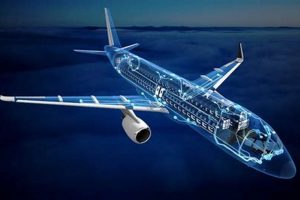
Aerospace engineering, at its core, is the branch of engineering concerned with the design, development, testing, and production of aircraft and spacecraft. This field encompasses a broad range of disciplines, including aerodynamics, propulsion, materials science, and control systems. A readily observable result is the creation of airplanes that facilitate global travel and cargo transport, connecting people and economies across vast distances.
The advancements stemming from this engineering discipline yield numerous societal advantages. It fosters economic growth through job creation in manufacturing, research, and related service sectors. It enhances national security through the development of advanced defense systems. Furthermore, it drives technological innovation in areas such as materials, computing, and communication, which then often find applications in other industries. Historically, innovations developed for space exploration, like advanced materials and satellite technology, have had profound impacts on fields like medicine and telecommunications.
The subsequent sections will explore specific domains where aerospace engineering’s contributions are most keenly felt, ranging from the practical applications in air travel and satellite communications to the less visible, yet equally significant, contributions to scientific discovery and technological advancement.
Understanding the Societal Value of Aerospace Engineering
To fully appreciate the pervasive impact of aerospace engineering, consider the following aspects of its contribution to modern society.
Tip 1: Global Connectivity: Aerospace engineering enables rapid and efficient air travel, facilitating international business, tourism, and cultural exchange. The design and construction of modern aircraft drastically reduce travel times and costs, connecting distant regions and promoting global interconnectedness.
Tip 2: Communication Infrastructure: Satellite technology, a core component of aerospace engineering, underpins global communication networks. These satellites facilitate television broadcasting, internet access, and mobile communication, connecting individuals and communities worldwide.
Tip 3: Scientific Discovery: Space exploration, driven by aerospace engineering, allows for the study of the universe and the Earth from a unique vantage point. Satellites provide invaluable data for climate monitoring, weather forecasting, and understanding environmental changes.
Tip 4: National Security: The development of advanced defense systems, including military aircraft, missiles, and surveillance satellites, relies heavily on aerospace engineering expertise. These systems contribute to national security and defense capabilities.
Tip 5: Technological Innovation: Aerospace projects often require the development of new materials, sensors, and control systems. These technological advancements often find applications in other industries, driving innovation across various sectors, including medicine, transportation, and energy.
Tip 6: Economic Growth: The aerospace industry is a significant contributor to economic growth, generating jobs in manufacturing, research, and related service sectors. The development and production of aircraft and spacecraft stimulate economic activity and create high-skilled employment opportunities.
Tip 7: Disaster Management: Satellites and aircraft equipped with remote sensing technology aid in disaster management efforts. They provide real-time information for monitoring natural disasters, coordinating relief efforts, and assessing damage after events such as earthquakes, hurricanes, and floods.
In summary, aerospace engineerings influence extends far beyond air and space travel, permeating numerous facets of modern life and enhancing societal well-being.
The following sections will delve further into the specific technological breakthroughs and future possibilities arising from continued advancements in this vital engineering field.
1. Global Connectivity

Global connectivity, significantly enhanced by aerospace engineering, plays a crucial role in facilitating international interactions and exchanges. It allows for efficient transportation, communication, and collaboration across geographical boundaries, with aerospace advancements directly enabling these capabilities.
- Rapid Air Travel
Aerospace engineering enables the design and production of commercial aircraft that drastically reduce travel times between distant locations. This facilitates international business meetings, tourism, and personal connections, fostering global integration and understanding. The development of fuel-efficient aircraft also contributes to sustainability in air travel.
- International Trade & Logistics
Aircraft engineered for cargo transport facilitate the swift and efficient movement of goods across international borders. This supports global supply chains, allows businesses to access wider markets, and ensures the timely delivery of essential products, contributing significantly to economic growth and stability on a global scale.
- Satellite Communication Networks
Aerospace engineering is responsible for the design, launch, and operation of communication satellites that provide global internet access, television broadcasting, and mobile communication services. This connectivity allows individuals and communities in remote or underserved areas to access information, education, and opportunities previously unavailable to them.
- Disaster Relief and Humanitarian Aid
Aircraft and satellite technologies developed through aerospace engineering support global disaster relief efforts. Aircraft can transport aid and personnel to affected areas quickly, while satellites provide crucial communication and remote sensing capabilities to assess damage, coordinate relief efforts, and monitor the affected population’s needs.
In summation, global connectivity, driven by advancements in aerospace engineering, significantly enhances international relationships, fosters economic prosperity, and provides crucial support during times of crisis. It is an essential component of the interconnected modern world, facilitating collaboration, understanding, and mutual support on a global scale.
2. Communication Advancement

Aerospace engineering’s role in communication advancement is pivotal to the modern interconnected world. The development, deployment, and operation of satellite communication systems, a direct result of aerospace innovation, underpin a vast array of services that society relies upon daily. These systems provide global coverage for internet access, mobile communication, television broadcasting, and data transfer, connecting individuals and communities across geographical barriers. The significance of this contribution lies in its ability to bridge communication gaps, facilitate information dissemination, and support economic activities on a global scale. For instance, remote areas with limited terrestrial infrastructure benefit immensely from satellite-based internet access, enabling education, healthcare, and business opportunities.
The practical applications of aerospace-enabled communication extend beyond basic connectivity. Satellite-based navigation systems, like GPS, provide precise location data for various applications, including transportation, logistics, and emergency services. Earth observation satellites equipped with advanced imaging technologies play a crucial role in environmental monitoring, disaster management, and resource management. Furthermore, advancements in satellite communication technologies are continually improving the efficiency, bandwidth, and security of data transmission, supporting the growing demand for high-speed internet and reliable communication channels. Examples include the development of smaller, more cost-effective satellites and the implementation of advanced modulation techniques to maximize data throughput.
In conclusion, communication advancement is a tangible and essential benefit accruing to society because of aerospace engineering. While challenges remain in ensuring equitable access to communication technologies and addressing issues like space debris, the field’s continued innovation promises to further enhance global connectivity, support critical infrastructure, and improve the lives of individuals worldwide. The ongoing development of more efficient and resilient communication systems is a testament to the vital role aerospace engineering plays in shaping a more connected and informed society.
3. Scientific Discovery

Scientific discovery, significantly propelled by aerospace engineering, fundamentally advances human understanding of the universe and Earth’s place within it. The technologies and platforms developed for space exploration and atmospheric research provide invaluable data and insights that would otherwise be unattainable. This knowledge expands the frontiers of science and technology, impacting various aspects of life.
- Earth Observation and Climate Monitoring
Satellites engineered for Earth observation collect data on climate patterns, environmental changes, and natural disasters. This information is crucial for understanding global warming, predicting weather events, monitoring deforestation, and assessing the impact of human activities on the environment. The data allows for informed policy decisions and proactive measures to mitigate environmental risks.
- Space Exploration and Astronomical Research
Aerospace engineering enables the design and construction of spacecraft, telescopes, and probes that explore distant planets, galaxies, and cosmic phenomena. These missions provide insights into the origins of the universe, the formation of planetary systems, and the potential for life beyond Earth. The resulting discoveries contribute to our understanding of fundamental scientific principles and expand the scope of human knowledge.
- Microgravity Research and Materials Science
The unique environment of space, characterized by microgravity, offers opportunities to conduct scientific experiments that are impossible on Earth. Research in microgravity allows scientists to study the behavior of fluids, materials, and biological systems in the absence of gravity, leading to new discoveries in materials science, medicine, and biotechnology. These findings can have applications in developing advanced materials, improving drug delivery systems, and understanding human physiology in space.
- Planetary Science and Resource Exploration
Robotic missions to other planets and celestial bodies, facilitated by aerospace engineering, enable the study of their geology, atmosphere, and potential resources. These missions contribute to our understanding of planetary evolution, the distribution of resources in the solar system, and the possibilities for future space colonization and resource utilization. The data collected can inform strategies for sustainable resource management and the development of new technologies for space-based resource extraction.
In conclusion, scientific discovery, driven by the capabilities of aerospace engineering, yields profound benefits for society. The knowledge gained from space exploration and atmospheric research enhances our understanding of the universe, informs policy decisions related to climate change and environmental protection, and drives innovation in various scientific and technological fields. The continued investment in aerospace research and development is essential for advancing the frontiers of human knowledge and addressing global challenges.
4. National Security

National security, intrinsically linked to technological advancement, relies heavily on the capabilities developed within aerospace engineering. This field provides critical assets and expertise that directly contribute to a nation’s defense and strategic advantage, thus forming a crucial component of societal protection.
- Advanced Surveillance Systems
Aerospace engineering facilitates the design and deployment of sophisticated surveillance systems, including reconnaissance satellites and unmanned aerial vehicles (UAVs). These systems provide continuous monitoring of potential threats, border security, and intelligence gathering capabilities. Real-time data collection and analysis enable proactive responses to security challenges, enhancing a nation’s ability to safeguard its interests.
- Defense Systems Development
The development of advanced defense systems, such as interceptor missiles and advanced fighter aircraft, depends on aerospace engineering expertise. These systems serve as deterrents against potential aggression and provide a means of defense in the event of conflict. Continuous advancements in aerospace technology ensure that defense systems remain effective and adaptable to evolving threats.
- Secure Communication Networks
Aerospace engineers design and maintain secure communication networks that are essential for military operations and government communications. Satellite communication systems provide reliable and secure channels for transmitting critical information, even in remote or contested environments. These networks ensure that defense forces can coordinate effectively and maintain situational awareness.
- Hypersonic Technology and Strategic Advantage
Ongoing research and development in hypersonic technology, a key area of aerospace engineering, aim to create advanced weapons systems and rapid-response capabilities. Hypersonic vehicles can travel at speeds exceeding Mach 5, presenting significant challenges for existing defense systems. The development and deployment of hypersonic technology can provide a nation with a strategic advantage in terms of response time and offensive capabilities.
In summary, aerospace engineering’s contributions to national security are indispensable for safeguarding a nation’s sovereignty, protecting its citizens, and maintaining its strategic advantage. From surveillance and defense systems to secure communication networks and hypersonic technologies, the field provides the essential tools and expertise necessary to address evolving security challenges and ensure national stability.
5. Technological Spin-offs

Technological spin-offs, resulting from aerospace engineering endeavors, represent a significant mechanism through which the field benefits society. Innovations initially developed for space exploration or aircraft design often find applications in diverse sectors, enhancing existing technologies and creating entirely new industries. This transfer of knowledge and technology underscores the broader societal impact of investments in aerospace research and development.
- Advanced Materials
Aerospace applications demand materials that are lightweight, strong, and resistant to extreme temperatures and pressures. The development of such materials, including advanced composites, alloys, and ceramics, has led to their adoption in industries like automotive manufacturing (lighter, more fuel-efficient vehicles), sports equipment (stronger, lighter designs), and medicine (biocompatible implants and prosthetics). These spin-offs enhance product performance, improve safety, and reduce environmental impact.
- Software and Computing
Complex calculations and simulations are integral to aerospace engineering, necessitating the development of sophisticated software and high-performance computing systems. These technologies have found applications in various fields, including weather forecasting (more accurate models), financial modeling (risk assessment and prediction), and medical imaging (enhanced diagnostics). The increased processing power and improved algorithms contribute to more efficient problem-solving and decision-making across diverse sectors.
- Sensor Technology
Aerospace systems require highly sensitive and reliable sensors for monitoring various parameters, such as temperature, pressure, and acceleration. These sensor technologies have been adapted for use in environmental monitoring (detecting pollutants and measuring air quality), medical diagnostics (non-invasive monitoring of vital signs), and industrial automation (precision control and quality assurance). The enhanced sensing capabilities contribute to improved safety, efficiency, and data-driven decision-making.
- Communication Systems
Reliable communication systems are vital for aerospace operations, including satellite communication and air traffic control. The technologies developed for these applications, such as advanced modulation techniques and error correction codes, have been adapted for use in wireless communication networks (faster and more reliable data transmission), remote sensing (environmental monitoring and disaster management), and satellite-based navigation systems (precise location tracking). These advancements contribute to improved connectivity, enhanced situational awareness, and more efficient resource management.
In conclusion, technological spin-offs originating from aerospace engineering represent a substantial and multifaceted benefit to society. These innovations, ranging from advanced materials to sophisticated software and sensor technologies, have far-reaching applications across diverse sectors, enhancing product performance, improving safety, and driving economic growth. The continued investment in aerospace research and development fosters a cycle of innovation that benefits society far beyond the immediate objectives of space exploration and aviation.
6. Economic Stimulation
Aerospace engineering acts as a powerful catalyst for economic stimulation, demonstrably benefiting society through multiple channels. The sector generates high-skilled employment opportunities in research and development, manufacturing, and related service industries. These jobs, often requiring advanced education and specialized training, contribute significantly to the tax base and overall economic prosperity of regions where aerospace companies are located. Furthermore, the complexity and scale of aerospace projects necessitate collaboration across multiple industries, creating a ripple effect that stimulates growth in supporting sectors, such as materials science, electronics, and software development.
The economic stimulus stemming from aerospace extends beyond direct job creation. The development and production of aircraft and spacecraft require substantial investment in infrastructure, including manufacturing facilities, testing equipment, and research laboratories. These investments not only create construction jobs but also enhance the technological capabilities of the host regions, attracting further investment and fostering innovation. Consider, for example, the impact of NASA’s Kennedy Space Center on the economy of Florida, or the role of Boeing in the economic development of the Pacific Northwest. These examples highlight the significant and sustained economic impact that aerospace activities can have on local and regional economies.
In conclusion, the economic stimulation resulting from aerospace engineering is a tangible and crucial societal benefit. By creating high-skilled jobs, fostering technological innovation, and driving investment in infrastructure, the sector contributes significantly to economic growth and prosperity. Recognizing and promoting the economic potential of aerospace engineering is essential for maximizing its societal benefits and ensuring sustainable economic development.
7. Disaster Mitigation

Aerospace engineering plays a critical role in disaster mitigation, employing advanced technologies to predict, monitor, and respond to natural and human-induced disasters. The capabilities derived from this field provide essential tools for enhancing societal resilience and minimizing the impact of catastrophic events.
- Satellite-Based Earth Observation
Earth observation satellites, designed and engineered using aerospace principles, provide continuous monitoring of weather patterns, deforestation, and other environmental factors that contribute to natural disasters. For example, satellites equipped with synthetic aperture radar (SAR) can penetrate cloud cover and provide imagery of flood zones, enabling timely evacuation and resource allocation. Data from these satellites inform predictive models that forecast the intensity and trajectory of hurricanes, allowing for early warnings and proactive disaster preparedness measures.
- Aerial Surveying and Damage Assessment
Aircraft, including manned and unmanned aerial vehicles (UAVs), equipped with advanced sensors and imaging systems, are used for aerial surveying and damage assessment following a disaster. UAVs can quickly survey affected areas, providing high-resolution imagery and data on infrastructure damage, displaced populations, and environmental hazards. This information is crucial for coordinating relief efforts, allocating resources effectively, and planning reconstruction activities. For instance, after an earthquake, UAVs can assess the structural integrity of buildings, identifying those that are unsafe for occupancy and guiding search and rescue operations.
- Communication and Coordination Systems
Satellite communication systems, a cornerstone of aerospace engineering, provide reliable communication channels for disaster response teams and affected populations, even when terrestrial communication infrastructure is damaged or overwhelmed. These systems enable coordination among relief agencies, government authorities, and local communities, ensuring that aid reaches those who need it most. Satellite phones and emergency communication beacons facilitate communication in remote or isolated areas, enabling rescue operations and the delivery of essential supplies.
- Search and Rescue Technologies
Aerospace technologies also contribute to search and rescue efforts following disasters. Satellite-based search and rescue systems, such as COSPAS-SARSAT, use satellites to detect and locate emergency beacons activated by individuals in distress. This system has been instrumental in locating survivors of plane crashes, maritime accidents, and other emergencies. In addition, advanced radar systems and thermal imaging technologies developed for aerospace applications are used to locate victims trapped under debris or in remote areas.
The multifaceted contributions of aerospace engineering to disaster mitigation enhance societal resilience by providing the tools and technologies necessary for prediction, monitoring, response, and recovery. Continued investment in aerospace research and development is essential for improving disaster preparedness and minimizing the impact of catastrophic events on communities worldwide.
Frequently Asked Questions
This section addresses common inquiries regarding the ways in which aerospace engineering contributes to societal well-being. The answers provided aim to clarify misconceptions and highlight the diverse positive impacts of this engineering discipline.
Question 1: How does aerospace engineering contribute to everyday life beyond air travel?
Beyond facilitating air travel, aerospace engineering’s innovations often extend to other sectors. Advanced materials, sensor technologies, and communication systems initially developed for aerospace applications find use in medicine, transportation, and environmental monitoring, enhancing quality of life.
Question 2: In what ways does aerospace engineering impact global communication?
Aerospace engineering enables the development and deployment of satellite communication systems, which provide global coverage for internet access, mobile communication, and television broadcasting. This enhances connectivity and facilitates information dissemination worldwide.
Question 3: How does aerospace engineering contribute to national security?
Aerospace engineering is crucial for developing advanced surveillance systems, defense technologies, and secure communication networks. These technologies enhance a nation’s ability to monitor potential threats, protect its borders, and respond effectively to security challenges.
Question 4: What is the role of aerospace engineering in addressing climate change?
Earth observation satellites, designed and engineered using aerospace principles, provide critical data for monitoring climate patterns, deforestation, and other environmental factors. This information informs policy decisions and enables proactive measures to mitigate climate change impacts.
Question 5: How does aerospace engineering contribute to economic growth?
The aerospace industry generates high-skilled employment opportunities in research and development, manufacturing, and related service sectors. These activities stimulate economic growth and foster innovation across diverse industries.
Question 6: How does aerospace engineering aid in disaster management?
Aerospace technologies, including Earth observation satellites and aerial surveying systems, provide essential information for predicting, monitoring, and responding to natural disasters. This enables timely evacuation, resource allocation, and coordination of relief efforts.
In summary, aerospace engineering contributes significantly to societal well-being through various avenues, including enhanced communication, improved national security, climate monitoring, economic stimulation, and disaster mitigation. The field’s innovations extend far beyond air travel, impacting diverse sectors and enhancing the quality of life for individuals worldwide.
The subsequent section will explore future trends and emerging technologies in aerospace engineering, highlighting potential advancements that may further benefit society.
Conclusion
The preceding exploration of aerospace engineering’s influence reveals a multifaceted and critical contribution to societal advancement. From enabling global connectivity and fostering scientific discovery to bolstering national security and stimulating economic growth, the benefits are pervasive and far-reaching. The technologies and expertise derived from this field have transformed numerous aspects of modern life, extending well beyond the realm of air and space travel.
Continued investment and innovation in aerospace engineering are essential to address future challenges and unlock new possibilities. The field holds immense potential for enhancing societal well-being, from developing sustainable transportation solutions to advancing our understanding of the universe. Recognizing and supporting the ongoing development of aerospace technology is vital to ensuring a more secure, connected, and prosperous future for all.