



The typical duration of a formal education in the field dedicated to designing, developing, and testing aircraft and spacecraft is a significant consideration for aspiring professionals. This time commitment encompasses the knowledge and skills necessary for success in a demanding and rapidly evolving industry.
Investing in a robust foundation offers significant benefits. A thorough understanding of aerodynamics, propulsion, structures, and control systems prepares individuals for impactful careers. Furthermore, the historical progression of this discipline highlights the continuing need for qualified experts to advance technology and exploration.
Therefore, it is pertinent to examine the specific degree programs, the pathways to specialization, and the impact of advanced studies on career trajectory within the aviation and space sectors.
Tips Regarding the Duration of Aerospace Engineering Studies
Prospective students should consider several key factors when planning their educational journey in this complex field. Prudent planning ensures the efficient acquisition of necessary expertise.
Tip 1: Select the Appropriate Degree Level: Bachelor’s programs typically require four years of full-time study. Master’s degrees can add an additional one to three years, while doctoral programs may extend the total commitment to five or more years beyond the bachelor’s level. Carefully evaluate career goals to determine the necessary level of education.
Tip 2: Consider Program Accreditation: Ensure that chosen programs are accredited by recognized bodies such as ABET. Accreditation signifies that the curriculum meets established quality standards and enhances employability.
Tip 3: Explore Accelerated Programs: Some institutions offer accelerated degree programs that allow students to complete their studies in a compressed timeframe. This option may be suitable for highly motivated individuals with strong academic backgrounds.
Tip 4: Factor in Internship and Co-op Opportunities: Internships and co-operative education experiences can significantly extend the overall time invested, but provide invaluable practical experience and industry connections. The additional months contribute to a well-rounded skill set.
Tip 5: Plan for Potential Remedial Coursework: Students lacking sufficient preparation in mathematics or physics may need to complete preparatory coursework before entering the core curriculum. This adds to the total duration of the program.
Tip 6: Account for Research Requirements: Advanced degrees often require a substantial research component, including thesis or dissertation writing. These projects demand considerable time and effort, impacting the overall program length.
Tip 7: Optimize Course Load: Balancing a manageable course load each semester is crucial for academic success and timely graduation. Overloading can lead to burnout and delays in program completion.
Careful consideration of these factors enables prospective students to estimate the investment accurately and tailor their academic plans to achieve their professional aspirations. Prior planning helps facilitate a more efficient educational process.
Understanding the typical time commitment is essential for making informed decisions about pursuing a career in aviation and space technology. The following sections will provide further details on career paths and opportunities in the field.
1. Bachelor's duration

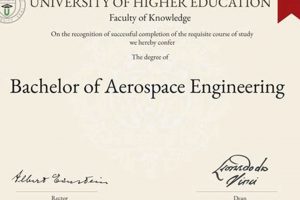
The “Bachelor’s duration” is a fundamental component of “how long is aerospace engineering.” A Bachelor of Science in Aerospace Engineering, typically a four-year program, represents the initial and often essential stage of formal education in this field. The curriculum encompasses core engineering principles, mathematics, physics, and specialized aerospace subjects such as aerodynamics, propulsion, and structural mechanics. Successful completion of a bachelor’s program is frequently a prerequisite for entry-level positions in the aerospace industry or for pursuing advanced degrees.
The impact of the bachelor’s degree on the overall duration is significant. For instance, an aspiring aerospace engineer who aims to work in design and analysis may find that a bachelor’s degree is sufficient to secure a position. However, those seeking roles in research and development or project management may need to augment the bachelor’s education with a master’s or doctoral degree, extending the total time commitment. This initial four-year period builds the crucial foundation upon which subsequent specialized training and professional development are built. Failing to dedicate adequate time and effort during the bachelor’s study could lead to a deficiency in foundational knowledge, potentially delaying or hindering progress in advanced studies or professional practice.
In summary, the four-year “Bachelor’s duration” forms the cornerstone of an aerospace engineer’s education, dictating the minimum formal training required for many career paths and influencing the length and nature of subsequent advanced studies. Understanding the demands and rigors of a bachelor’s program is essential for planning a successful and timely progression within the aerospace engineering field. The bachelor’s degree is therefore intrinsically linked to “how long is aerospace engineering,” serving as its foundational time component.
2. Master's extension

The “Master’s extension” is a critical determinant of “how long is aerospace engineering,” representing a phase of advanced study that significantly adds to the overall time investment beyond the foundational bachelor’s degree. This extension is not uniform; it varies based on program structure, research requirements, and individual progress.
- Program Structure and Duration
The most direct impact on the “Master’s extension” stems from the program’s design. Master’s programs in aerospace engineering generally range from one to three years of full-time study. Course-based programs with minimal research components tend toward the shorter end, while those emphasizing thesis research or project work will necessitate a longer duration. The choice between a thesis-based or non-thesis-based program directly influences how much additional time is required.
- Research Involvement and Thesis Requirements
The level of research involvement exerts a considerable influence on the “Master’s extension.” A thesis-based master’s degree requires students to conduct original research, analyze data, and write a comprehensive thesis document. This process can easily add a year or more to the program’s duration compared to a non-thesis option. The complexity of the research topic, the availability of resources, and the student’s individual progress contribute to the variability in the research timeline.
- Full-Time vs. Part-Time Enrollment
The enrollment status significantly affects the “Master’s extension.” Full-time students typically complete a master’s program in one to two years, depending on the factors outlined above. Part-time students, often working professionals, may take three years or longer to finish their degree. The reduced course load and potential conflicts with work responsibilities inherently extend the overall time investment. The “Master’s extension” therefore scales proportionally with the intensity of enrollment.
- Specialization and Course Selection
The chosen specialization within aerospace engineering can influence the “Master’s extension.” Certain specializations, such as astrodynamics or advanced materials, may require a more extensive and specialized curriculum, potentially adding to the overall program duration. Additionally, the student’s choices regarding elective courses and independent study opportunities can either accelerate or decelerate their progress, affecting the total length of the master’s study.
In conclusion, the “Master’s extension” is a variable time commitment that significantly contributes to “how long is aerospace engineering.” Program structure, research intensity, enrollment status, and specialization all interact to determine the overall duration of the master’s degree, influencing the preparedness and career trajectory of the aerospace engineer.
3. Doctoral commitment

The “Doctoral commitment” represents the most extensive phase of formal education, significantly influencing “how long is aerospace engineering.” This commitment involves in-depth research, scholarly activity, and the creation of new knowledge, demanding substantial time and dedication beyond the bachelor’s and master’s levels.
- Research Scope and Complexity
The breadth and depth of the doctoral research project directly impact the time required for completion. Highly complex research topics, particularly those requiring novel experimental setups or extensive computational modeling, necessitate a greater time investment. Examples include developing new propulsion systems or designing advanced materials for hypersonic vehicles. The need for iterative refinement of experimental designs and analytical models invariably extends the “Doctoral commitment.”
- Funding Availability and Resource Access
Access to adequate funding and resources significantly influences the efficiency and duration of doctoral research. Insufficient funding can delay progress due to limitations in equipment, software, or personnel support. Similarly, limited access to necessary facilities, such as wind tunnels or computational clusters, can prolong the research timeline. The availability of resources determines the speed at which experiments can be conducted and data analyzed, directly affecting “how long is aerospace engineering” at the doctoral level.
- Publication Record and Scholarly Output
Doctoral programs typically require candidates to publish their research findings in peer-reviewed journals and present at conferences. The process of preparing manuscripts, submitting them for review, and revising them based on feedback can be time-consuming. The number and quality of publications expected by the program also contribute to the overall “Doctoral commitment.” A strong publication record is often seen as a measure of research productivity and academic rigor, but achieving this requires considerable effort and time.
- Dissertation Writing and Defense
The culmination of the doctoral program is the writing and defense of a dissertation, a comprehensive document detailing the research undertaken and its contributions to the field. The writing process can be lengthy and demanding, requiring careful organization, clear articulation of findings, and rigorous adherence to academic standards. The subsequent dissertation defense involves presenting the research to a committee of experts and answering their questions. Successful completion of the dissertation and defense is a critical milestone in determining “how long is aerospace engineering” through doctoral studies.
The “Doctoral commitment,” therefore, is a multifaceted endeavor that significantly extends the overall duration of aerospace engineering education. Factors such as research scope, funding, publication requirements, and the dissertation process all contribute to the time investment required to achieve a doctoral degree and make a substantial contribution to the field.
4. Accreditation impact
Accreditation’s impact on “how long is aerospace engineering” is multifaceted, primarily affecting the curriculum structure and the potential for program extensions. Accreditation bodies, such as ABET (Accreditation Board for Engineering and Technology), establish rigorous standards that educational programs must meet. These standards dictate the core competencies students must acquire, often mandating specific course content and laboratory experiences. To satisfy these requirements, institutions may need to incorporate additional coursework or extend the duration of existing courses, thus influencing the total time commitment. For example, an aerospace engineering program seeking ABET accreditation may add a mandatory course on ethical considerations in engineering practice, increasing the overall credit hours and potentially extending the program by a semester. This ensures graduates possess not only technical skills but also a strong understanding of professional responsibilities. The absence of accreditation may result in a shorter program, but it could also hinder graduates’ career prospects and eligibility for professional licensure.
Furthermore, accreditation standards often require continuous program improvement based on student outcomes and feedback from industry advisory boards. This process can lead to curricular revisions, such as integrating new technologies or emphasizing specific skill sets demanded by the aerospace sector. These revisions might necessitate the creation of new courses or the modification of existing ones, potentially affecting the program’s length. For instance, the increasing importance of cybersecurity in aerospace systems could prompt accredited programs to incorporate dedicated modules on secure communication protocols and vulnerability assessment. This enhancement, while beneficial for students, could extend the time required to complete the program. Another example is the need for increased practical experience. To meet accreditation criteria, programs might require extended internship periods. While internships are valuable for skill development, they add time to the overall educational process.
In summary, accreditation significantly shapes “how long is aerospace engineering” by influencing curriculum content, structure, and the incorporation of practical experiences. While adherence to accreditation standards may lead to longer programs, it ensures that graduates possess the necessary knowledge, skills, and ethical grounding to succeed in the highly regulated and technically demanding aerospace industry. Therefore, while the duration may increase due to “Accreditation impact,” the benefits of a well-structured, accredited program far outweigh the additional time commitment for both individual engineers and the broader aerospace community.
5. Internship influence
Internship influence directly affects “how long is aerospace engineering” through its potential to extend or enhance the traditional academic timeline. Internships, while not always mandatory, are increasingly recognized as vital components of aerospace engineering education, providing practical experience and industry connections. The inclusion of one or more internships can add several months, or even a year, to the overall program duration, depending on the internship’s length and the program’s structure. This extension arises from the need to either complete the internship during academic breaks, potentially delaying graduation, or integrate it as a formal part of the curriculum, requiring a leave of absence from regular coursework. The decision to pursue an internship therefore necessitates careful planning to mitigate potential delays in program completion.
The impact of internship experience on “how long is aerospace engineering” is not limited to time extension alone. The skills and knowledge gained during internships can lead to a more focused approach to subsequent coursework, potentially accelerating progress in specific areas. For example, a student who interns at NASA’s Jet Propulsion Laboratory working on spacecraft navigation might develop a deeper understanding of orbital mechanics, enabling them to grasp related concepts more quickly in advanced coursework. Furthermore, the practical application of theoretical knowledge during an internship can solidify understanding and reduce the need for extensive review or remediation, thus streamlining the educational process. Examples abound of students securing post-graduation employment directly attributable to internship performance and networking, reducing the time spent searching for jobs after graduation.
In conclusion, internship influence constitutes a significant, albeit variable, component of “how long is aerospace engineering.” While internships often extend the overall duration of study, they also offer invaluable practical experience, industry connections, and the potential to accelerate learning in specific areas. Understanding the trade-offs between the time investment and the benefits of internship experience is crucial for aspiring aerospace engineers seeking to maximize their educational and career prospects. Ignoring the opportunity will likely affect post-graduation opportunities, prolonging the actual career-establishing path.
6. Research time

The element of “Research time” is inextricably linked to “how long is aerospace engineering,” particularly at the graduate level. Research represents a core component of master’s and doctoral programs, directly influencing the duration of study. The time dedicated to research activitiesincluding literature reviews, experimental design, data collection, analysis, and thesis or dissertation writingconstitutes a substantial portion of the overall program length. A complex research topic, demanding extensive experimentation or computational modeling, will invariably extend the duration of studies. For instance, a doctoral candidate investigating novel materials for hypersonic vehicles may require several years to synthesize materials, conduct mechanical testing, and analyze the results, significantly affecting the “Research time” component and, consequently, the total program length.
The availability of resources and funding also plays a critical role in determining “Research time.” Limited access to specialized equipment, computational resources, or adequate funding can introduce delays and prolong the research process. A student lacking the necessary resources to conduct experiments efficiently may require more time to collect sufficient data or validate their findings. Furthermore, the need to secure funding through grant proposals can add to the overall duration, as the proposal writing and review process itself is time-consuming. Therefore, adequate support is essential for minimizing delays and ensuring the timely completion of research-based degrees.
In conclusion, “Research time” is a significant determinant of “how long is aerospace engineering,” especially for graduate students. The complexity of the research topic, the availability of resources, and the requirements for thesis or dissertation writing all contribute to the overall time commitment. Understanding this relationship is crucial for prospective aerospace engineers when planning their educational path, as it allows them to realistically assess the time investment required for achieving advanced degrees and making meaningful contributions to the field.
Frequently Asked Questions Regarding the Duration of Aerospace Engineering Studies
The following questions address common inquiries concerning the length of time required to complete various aerospace engineering programs. Understanding these factors is crucial for effective career planning.
Question 1: What is the typical timeframe for completing a Bachelor of Science in Aerospace Engineering?
A Bachelor of Science in Aerospace Engineering generally requires four years of full-time study. This timeframe may be extended if a student attends part-time, needs remedial coursework, or participates in co-operative education programs.
Question 2: How long does it take to earn a Master of Science in Aerospace Engineering?
A Master of Science in Aerospace Engineering typically requires one to three years of full-time study beyond the bachelor’s degree. The exact duration depends on the program structure, the research component (thesis vs. non-thesis), and the student’s pace of progress.
Question 3: What is the estimated duration for a Doctor of Philosophy (Ph.D.) in Aerospace Engineering?
A Doctor of Philosophy in Aerospace Engineering usually requires four to seven years of study beyond the bachelor’s degree, or two to five years beyond the master’s degree. The timeline is highly dependent on the complexity of the research, funding availability, and publication requirements.
Question 4: Does program accreditation influence the duration of aerospace engineering studies?
Program accreditation, particularly by ABET, can indirectly influence the duration. Accredited programs adhere to specific curriculum standards and may require additional coursework or practical experiences to meet these standards, potentially extending the program length compared to non-accredited programs.
Question 5: How do internships and co-op experiences impact the total time required for an aerospace engineering degree?
Internships and co-operative education experiences usually extend the total time to graduation. While providing valuable practical experience, these opportunities require a temporary departure from full-time coursework, adding months or even a year to the overall duration.
Question 6: Can an aerospace engineering degree be completed faster through accelerated programs?
Some institutions offer accelerated degree programs that allow highly motivated students to complete their studies in a condensed timeframe. These programs typically require a heavier course load and may involve summer coursework, thereby reducing the overall time to graduation, but demanding a higher level of commitment.
These answers provide a general overview of the typical time commitments associated with aerospace engineering education. Specific program requirements and individual student progress can influence the actual duration of studies.
The subsequent sections will delve into the various career opportunities available upon completion of aerospace engineering programs.
Concluding Remarks on Program Length
The preceding analysis has detailed the various factors impacting “how long is aerospace engineering” education. From bachelor’s degrees to doctoral studies, the duration is influenced by curriculum structure, research involvement, accreditation requirements, and practical experience opportunities. The pursuit of advanced knowledge within this field represents a substantial investment of time and resources.
Understanding the scope and demands of the field is crucial for prospective students. A considered evaluation of personal goals, academic strengths, and career aspirations should inform the decision-making process. Successfully navigating this educational path demands dedication, perseverance, and a clear understanding of the long-term commitment involved.
![Is a Masters in Aerospace Engineering Worth It? [Guide] | Innovating the Future of Flight with Reliable Aviation Solutions](https://mixaerospace.com/wp-content/uploads/2026/05/th-66-300x200.jpg "Is a Masters in Aerospace Engineering Worth It? [Guide] Innovating the Future of Flight with Reliable Aviation Solutions")