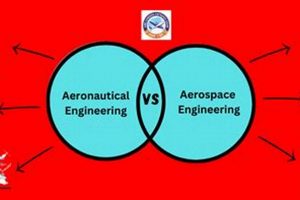
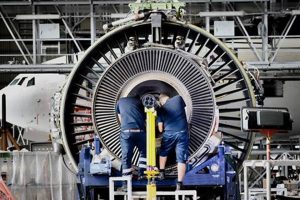
Aerospace engineering and mechanical engineering are distinct yet related engineering disciplines. Mechanical engineering encompasses a broad range of topics, including mechanics, thermodynamics, materials science, and manufacturing. It focuses on the design, analysis, and manufacturing of mechanical systems. Aerospace engineering, on the other hand, specializes in the design, construction, and testing of aircraft and spacecraft. It builds upon fundamental mechanical engineering principles but incorporates additional specialized knowledge in areas such as aerodynamics, propulsion, and flight control.
The relationship between the two fields is significant. Aerospace engineering often leverages core mechanical engineering principles. For example, understanding fluid dynamics, a key area in mechanical engineering, is crucial for designing efficient aircraft wings. Similarly, materials science knowledge, common to both disciplines, informs the selection of appropriate materials for aerospace structures. Historically, mechanical engineering served as a foundational discipline from which aerospace engineering emerged as a specialized field due to the increasing complexity and specific demands of flight technology.
While a solid understanding of mechanical engineering principles provides a strong base for aerospace engineers, the specific focus on atmospheric and space environments, specialized materials, and unique operational requirements differentiates the two fields. The curriculum and specialized knowledge required for each career path diverge significantly beyond the foundational principles. Therefore, while related, each represents a distinct area of engineering specialization.
Key Considerations Regarding the Relationship Between Aerospace and Mechanical Engineering
The following points highlight crucial aspects when considering the interplay between aerospace and mechanical engineering disciplines.
Tip 1: Understand Foundational Principles: A robust understanding of fundamental mechanical engineering principles, such as thermodynamics, fluid mechanics, and materials science, is essential for aspiring aerospace engineers. These principles form the basis for many aerospace applications.
Tip 2: Recognize Specialization: While foundational principles overlap, aerospace engineering necessitates specialized knowledge in areas like aerodynamics, propulsion systems, orbital mechanics, and spacecraft design. A focused understanding of these areas is critical.
Tip 3: Curriculum Differentiation: Engineering curricula reflect the differences in specialization. Aerospace engineering programs incorporate courses specific to flight and space vehicles, while mechanical engineering programs maintain a broader focus.
Tip 4: Career Path Considerations: Mechanical engineers may find opportunities in industries related to aerospace, but positions requiring in-depth knowledge of aircraft or spacecraft design typically require specialized aerospace engineering qualifications.
Tip 5: Industry Focus: The aerospace industry demands expertise in areas such as aircraft manufacturing, satellite technology, and defense systems. Understanding the specific requirements of these sectors is crucial for career advancement.
Tip 6: Continuing Education: Given the rapid advancements in aerospace technology, ongoing professional development and continuing education are essential for staying current in the field. Specialized certifications and advanced degrees can enhance career prospects.
Tip 7: Interdisciplinary Collaboration: Aerospace projects often involve interdisciplinary teams. The ability to collaborate effectively with professionals from diverse engineering backgrounds, including mechanical, electrical, and software engineering, is vital.
The fundamental takeaway is that while shared principles exist, aerospace engineering represents a focused and specialized branch that requires distinct expertise beyond the scope of general mechanical engineering.
Consider these factors when evaluating educational pathways and career options within the broader engineering landscape.
1. Foundation in Mechanics

The grounding in fundamental mechanics represents a critical link between aerospace and mechanical engineering. Mechanics, encompassing statics, dynamics, and solid mechanics, provides the essential analytical tools necessary for understanding the behavior of physical systems. Its relevance to both disciplines stems from the need to analyze forces, motion, and structural integrity in engineering designs. The extent to which aerospace engineering depends on this foundation clarifies the relationship between the two fields.
- Statics and Equilibrium
Statics, the study of bodies at rest under the action of forces, is fundamental to analyzing the structural integrity of aircraft and spacecraft. Engineers apply principles of statics to ensure that a vehicle’s structure can withstand the loads imposed during flight or space travel without deformation or failure. For example, static analysis is crucial in designing the wing structure of an aircraft to ensure it can support the weight of the aircraft and the aerodynamic forces acting upon it during flight. This application highlights the direct reliance of aerospace engineering on the foundational principles of statics, a core component of mechanical engineering.
- Dynamics and Motion Analysis
Dynamics, dealing with the motion of bodies under the influence of forces, is essential for understanding the flight dynamics and trajectory of aerospace vehicles. The analysis of aircraft motion, including lift, drag, and thrust, requires a thorough understanding of dynamic principles. Similarly, spacecraft trajectory planning relies heavily on dynamic analysis to calculate orbital maneuvers and ensure accurate positioning. This facet demonstrates how the ability to predict and control the motion of aerospace vehicles is fundamentally based on the principles of dynamics, which originate within the broader field of mechanical engineering.
- Solid Mechanics and Material Behavior
Solid mechanics, which studies the behavior of solid materials under stress and strain, is critical for designing aerospace structures that can withstand extreme conditions. The selection of appropriate materials for aircraft and spacecraft requires a deep understanding of their mechanical properties, such as strength, stiffness, and fatigue resistance. For instance, understanding the stress-strain relationship of aluminum alloys is vital for designing aircraft fuselages that are both lightweight and structurally sound. This dependence on solid mechanics and material behavior further illustrates how aerospace engineering draws upon a foundational area within mechanical engineering.
- Vibration Analysis
Vibration analysis, a subset of dynamics, is crucial in aerospace engineering for preventing structural failures due to resonance or excessive vibration. Aircraft and spacecraft are subjected to various sources of vibration, including engine vibrations, aerodynamic turbulence, and acoustic noise. Engineers use vibration analysis techniques to identify potential resonance frequencies and design structures that can withstand these vibrations. This application shows the importance of understanding and mitigating vibrations, a direct application of mechanics principles, to ensure the safety and reliability of aerospace vehicles.
In conclusion, the principles of mechanics, encompassing statics, dynamics, solid mechanics, and vibration analysis, are indispensable to aerospace engineering. These principles provide the analytical foundation for designing safe, reliable, and efficient aerospace vehicles. While aerospace engineering applies these principles within a specialized context, the reliance on this core foundation illustrates a significant link between aerospace and mechanical engineering, affirming the importance of mechanics as a shared and crucial element.
2. Specialized Aerodynamics

Aerodynamics, a crucial subset of fluid mechanics, plays a pivotal role in aerospace engineering, differentiating it from the broader field of mechanical engineering. While both disciplines address fluid flow, aerospace engineering necessitates a highly specialized understanding of aerodynamic principles to address the unique challenges of flight within Earth’s atmosphere and beyond. The application of aerodynamics within aerospace engineering extends far beyond the general principles found in mechanical engineering curricula.
- Supersonic and Hypersonic Flow
Aerospace engineering requires a deep understanding of supersonic and hypersonic flow regimes. These flow regimes, characterized by speeds exceeding the speed of sound, present complex phenomena such as shock waves and thermal effects. The design of high-speed aircraft, missiles, and spacecraft necessitates the ability to accurately predict and manage these phenomena. For example, the design of a scramjet engine, which operates at hypersonic speeds, demands precise control over shock wave formation and combustion processes, an area of specialization not typically addressed in mechanical engineering curricula. This specialized knowledge highlights a key divergence between the two fields.
- Aerodynamic Shape Optimization
Aerospace engineers employ sophisticated techniques for aerodynamic shape optimization to minimize drag, maximize lift, and enhance overall vehicle performance. This involves using computational fluid dynamics (CFD) and wind tunnel testing to iteratively refine the shape of aircraft wings, fuselages, and other aerodynamic surfaces. The intricate geometries of modern aircraft, such as blended wing bodies, are a testament to the advanced optimization techniques employed. While mechanical engineers may utilize CFD for various applications, the specific focus on aerodynamic performance and flight characteristics is a distinguishing feature of aerospace engineering.
- Atmospheric Entry Aerodynamics
The design of spacecraft for atmospheric entry presents unique aerodynamic challenges. During re-entry, spacecraft experience extreme heating due to atmospheric friction. Aerospace engineers must design heat shields and control systems that can withstand these extreme conditions and ensure safe deceleration. The Apollo command module, for example, utilized an ablative heat shield to dissipate the intense heat generated during re-entry. This specialized area of aerodynamics, concerned with the interaction of high-speed vehicles with planetary atmospheres, is a defining characteristic of aerospace engineering.
- Unsteady Aerodynamics and Aeroelasticity
Aerospace engineers must consider the effects of unsteady aerodynamic forces and aeroelastic phenomena on aircraft structures. Unsteady aerodynamics involves the analysis of time-varying flows, such as those encountered during gust encounters or maneuvers. Aeroelasticity, the interaction between aerodynamic forces and structural deformations, can lead to potentially catastrophic instabilities such as flutter. Understanding and mitigating these effects requires specialized knowledge of structural dynamics, fluid-structure interaction, and control systems, further demonstrating the specialized nature of aerodynamics within aerospace engineering.
The specialized nature of aerodynamics within aerospace engineering underscores the distinction between the two disciplines. While mechanical engineers receive a foundation in fluid mechanics, aerospace engineers delve into the complexities of high-speed flow, aerodynamic optimization, atmospheric entry, and aeroelasticity, reflecting the unique demands of designing and operating vehicles in the aerospace environment. This specialization supports the conclusion that aerospace engineering, while related to mechanical engineering through shared fundamental principles, is a distinct field with a specialized body of knowledge.
3. Distinct Curriculum

The divergence in curriculum between aerospace and mechanical engineering programs provides a key indicator regarding whether aerospace engineering is a subset of mechanical engineering. While both disciplines share foundational coursework in mathematics, physics, and basic engineering principles, the specialized nature of aerospace engineering necessitates a curriculum tailored to the unique challenges of flight and space exploration.
- Aerospace Vehicle Design
Aerospace engineering curricula include dedicated courses on the design of aircraft and spacecraft, encompassing topics such as aerodynamics, structural analysis, propulsion systems, and flight control. These courses focus on the specific considerations and trade-offs involved in designing vehicles that operate in the aerospace environment. For instance, aerospace vehicle design courses address the optimization of wing shapes for subsonic and supersonic flight, the selection of materials for extreme temperature environments, and the integration of complex propulsion systems. Mechanical engineering programs, in contrast, typically offer broader design courses that cover a wider range of mechanical systems but lack the depth of specialization found in aerospace vehicle design.
- Orbital Mechanics and Spacecraft Dynamics
A distinctive aspect of aerospace engineering curricula is the inclusion of courses on orbital mechanics and spacecraft dynamics. These courses cover topics such as orbital trajectories, spacecraft attitude control, and interplanetary mission design. The principles of celestial mechanics and astrodynamics are applied to calculate orbital maneuvers, predict spacecraft motion, and design communication links with ground stations. Mechanical engineering programs generally do not include these specialized courses, as their focus lies primarily on terrestrial systems. The presence of orbital mechanics and spacecraft dynamics in aerospace curricula demonstrates a significant departure from the scope of mechanical engineering.
- Aerospace Propulsion Systems
Aerospace engineering programs feature specialized coursework in aerospace propulsion systems, covering the design, analysis, and testing of various engine types, including gas turbines, rocket engines, and ramjets. These courses delve into the thermodynamic cycles, combustion processes, and fluid dynamics specific to aerospace propulsion. Students learn to analyze engine performance, design engine components, and optimize propulsion systems for different flight regimes. While mechanical engineering curricula may include some coverage of internal combustion engines, the depth and breadth of aerospace propulsion systems are unique to aerospace engineering.
- Flight Control Systems
Courses on flight control systems are integral to aerospace engineering curricula, focusing on the design and implementation of systems that stabilize and control aircraft and spacecraft. These courses cover topics such as feedback control theory, sensor integration, actuator design, and autopilot development. Students learn to design control laws, analyze system stability, and implement control algorithms on embedded systems. The specific application of control theory to aerospace vehicles, considering aerodynamic forces, sensor noise, and actuator limitations, distinguishes flight control systems courses from general control systems courses offered in mechanical engineering programs.
The presence of specialized courses in aerospace vehicle design, orbital mechanics, aerospace propulsion systems, and flight control systems within aerospace engineering curricula underscores the distinct nature of the discipline. These courses address the unique challenges and considerations specific to the aerospace environment, highlighting a significant divergence from the broader scope of mechanical engineering. Therefore, the distinct curriculum serves as strong evidence that aerospace engineering is not merely a sub-discipline of mechanical engineering but a separate and specialized engineering field.

Materials science provides a critical nexus between aerospace and mechanical engineering, shaping the design and performance of systems in both domains. The selection, analysis, and application of materials are fundamental to ensuring structural integrity, optimizing efficiency, and withstanding extreme conditions. While both disciplines rely on materials science principles, the specific demands of aerospace applications often require a deeper and more specialized understanding.
- High-Strength, Lightweight Materials
Both aerospace and mechanical engineering utilize high-strength, lightweight materials such as aluminum alloys, titanium alloys, and composite materials. However, aerospace applications often demand more stringent performance requirements due to the need to minimize weight and maximize structural integrity in flight. For example, carbon fiber reinforced polymers (CFRPs) are extensively used in aircraft structures to reduce weight and improve fuel efficiency. While mechanical engineers may use CFRPs in automotive or industrial applications, the aerospace industry’s focus is on optimizing these materials for flight-critical components that must withstand extreme stresses and temperatures, making the specific application and research within aerospace more specialized.
- Thermal Management Materials
Materials that can effectively manage heat are crucial in both fields, though the challenges differ. In mechanical engineering, thermal management might involve heat sinks for electronics or insulation for industrial processes. In aerospace engineering, thermal management is critical for spacecraft re-entry, hypersonic flight, and engine performance. Materials such as ceramic matrix composites (CMCs) and ablative materials are used in heat shields to protect spacecraft from extreme heat during atmospheric entry. The development and application of these specialized thermal protection systems represent a distinct area of focus within aerospace materials science, requiring a higher level of specialization compared to typical mechanical engineering applications.
- Corrosion and Environmental Degradation
Both disciplines must address corrosion and environmental degradation of materials. However, the aerospace environment presents unique challenges, including exposure to extreme temperatures, high altitudes, and radiation. Materials used in aircraft and spacecraft must be resistant to corrosion from salt water, jet fuel, and other chemicals. Additionally, they must withstand the effects of atomic oxygen and ultraviolet radiation in space. For instance, protective coatings and surface treatments are essential to prevent corrosion of aluminum alloys in aircraft structures. The specific focus on the long-term durability of materials in harsh aerospace environments requires specialized knowledge and testing methodologies beyond the scope of many mechanical engineering applications.
- Advanced Manufacturing Techniques
Advanced manufacturing techniques such as additive manufacturing (3D printing) are increasingly used in both aerospace and mechanical engineering to create complex parts with customized properties. However, the aerospace industry often pushes the boundaries of these techniques to produce highly optimized components with intricate geometries and superior performance characteristics. For example, 3D printing is used to create lightweight titanium engine components with complex internal cooling channels. The stringent requirements for aerospace components, including high strength, low weight, and dimensional accuracy, necessitate advanced process control and quality assurance, differentiating the application of these manufacturing techniques in aerospace from their use in general mechanical engineering.
The reliance on shared materials science principles does not equate to aerospace engineering being a subset of mechanical engineering. Instead, aerospace applications frequently demand a more specialized and rigorous application of materials science, addressing unique challenges related to flight, space, and extreme environments. The development, testing, and application of advanced materials in aerospace engineering represent a distinct area of expertise that extends beyond the typical scope of mechanical engineering, reinforcing the conclusion that the fields are related but distinct.
5. Propulsion Focus

The specialization in propulsion systems represents a critical differentiator between aerospace and mechanical engineering. While both disciplines involve the study and application of thermodynamics and fluid mechanics, the unique demands of flight and space travel necessitate a highly specialized focus on propulsion within aerospace engineering. The depth and breadth of propulsion-related topics in aerospace curricula significantly exceed that typically found in mechanical engineering programs.
- Gas Turbine Engines
Aerospace engineers dedicate substantial study to gas turbine engines, which are the mainstay of commercial and military aircraft propulsion. The design, analysis, and optimization of these engines require a deep understanding of compressor and turbine aerodynamics, combustion processes, and materials science. Aerospace engineers are involved in developing advanced engine technologies, such as improved blade designs and fuel-efficient combustion systems, to enhance performance and reduce emissions. While mechanical engineers may study thermodynamics and fluid mechanics relevant to gas turbines, the specific focus on aircraft engine performance, altitude effects, and aviation fuel characteristics is primarily within the domain of aerospace engineering. For instance, the design of a high-bypass turbofan engine for a large commercial airliner requires expertise in fan aerodynamics, core engine performance, and noise reduction techniques specific to the aerospace environment. Mechanical engineers work on gas turbines used in power generation on land, so the applications are where their expertise differs.
- Rocket Propulsion
Rocket propulsion is a defining characteristic of aerospace engineering, addressing the unique challenges of generating thrust in the vacuum of space. Aerospace engineers study various rocket engine types, including chemical rockets, solid-propellant rockets, and electric propulsion systems. The analysis of rocket engine performance involves understanding combustion chemistry, nozzle design, and propellant management. Aerospace engineers also work on developing advanced rocket technologies, such as reusable rocket engines and high-efficiency electric thrusters, for space exploration and satellite propulsion. While mechanical engineers may have some exposure to combustion processes, the specific expertise in rocket engine design, performance analysis, and space mission applications is almost exclusively within the realm of aerospace engineering. The development of the Space Shuttle’s main engines, which required advanced combustion technology and materials science, showcases the expertise needed for rocket design.
- Hypersonic Propulsion
Hypersonic propulsion, enabling flight at speeds exceeding Mach 5, represents a cutting-edge area of research and development in aerospace engineering. Scramjet and ramjet engines, which use supersonic airflow for combustion, require specialized knowledge of high-speed aerodynamics, combustion kinetics, and thermal management. Aerospace engineers are involved in developing and testing hypersonic propulsion systems for advanced missiles, hypersonic aircraft, and future space access vehicles. The design of a scramjet engine, which relies on precise control of shock waves and combustion processes at extreme speeds, demands expertise that goes beyond the typical scope of mechanical engineering education. The X-43A, an experimental unmanned scramjet aircraft, showcases the focus on hypersonic propulsion.
- Electric Propulsion
Electric propulsion systems, which use electrical energy to accelerate propellant, are increasingly used for satellite station-keeping and deep-space missions. Aerospace engineers study various electric thruster types, including ion thrusters, Hall-effect thrusters, and pulsed plasma thrusters. The analysis of electric propulsion systems involves understanding plasma physics, electromagnetics, and ion optics. Aerospace engineers also work on developing high-power electric propulsion systems for future interplanetary missions. While mechanical engineers may study electromagnetics and plasma physics, the specific application to spacecraft propulsion, including considerations of power management and mission duration, is unique to aerospace engineering. NASA’s Dawn mission, which used ion propulsion to explore the asteroid belt, exemplifies the expertise required for electric propulsion.
In summary, the specialized focus on gas turbine engines, rocket propulsion, hypersonic propulsion, and electric propulsion systems within aerospace engineering curricula underscores the distinction between the two disciplines. While mechanical engineering provides a foundation in thermodynamics and fluid mechanics, the depth and breadth of propulsion-related topics in aerospace engineering, coupled with their specific application to flight and space travel, highlight the unique expertise required. This specialization in propulsion supports the assertion that aerospace engineering is a distinct field, separate from but related to mechanical engineering.
6. Control Systems
Control systems represent a critical link between aerospace and mechanical engineering, yet their application and specialization within aerospace significantly differentiate the fields. While mechanical engineering provides a foundational understanding of control theory, aerospace engineering necessitates a specialized application to the unique challenges of flight and space travel. This specialization demonstrates how aerospace engineering, though related, extends beyond the scope of general mechanical engineering.
- Flight Control Systems
Flight control systems are integral to the operation of aircraft and spacecraft, enabling stable and controlled flight. These systems use sensors, actuators, and control algorithms to maintain desired flight paths, altitudes, and orientations. For example, an autopilot system in a commercial airliner uses feedback control to automatically maintain a specified heading and altitude, reducing pilot workload and improving fuel efficiency. The design of flight control systems requires expertise in aerodynamics, stability analysis, and control theory, with a focus on compensating for the complex and often unpredictable aerodynamic forces acting on the aircraft. Mechanical engineers may study control systems in general, but the specific application to flight vehicles and the consideration of aerodynamic effects are unique to aerospace engineering.
- Guidance, Navigation, and Control (GNC)
Guidance, navigation, and control (GNC) systems are essential for spacecraft and missiles, enabling autonomous navigation and precise trajectory control. GNC systems use inertial measurement units (IMUs), GPS receivers, and star trackers to determine the vehicle’s position and orientation. Control algorithms then use this information to guide the vehicle along a desired trajectory, correcting for deviations caused by disturbances such as atmospheric drag or gravitational forces. For example, a GNC system in a satellite uses reaction wheels or thrusters to maintain its orientation in space, ensuring that its antennas are pointed towards Earth for communication. Mechanical engineers typically do not delve into the complexities of orbital mechanics and space environment, which are crucial aspects of GNC systems.
- Adaptive Control Systems
Adaptive control systems are used in aerospace applications to compensate for uncertainties and variations in vehicle dynamics. These systems continuously adjust their control parameters to maintain optimal performance in the face of changing conditions, such as variations in air density or engine performance. For example, an adaptive flight control system in a high-performance aircraft can adjust its control gains to compensate for changes in aerodynamic characteristics at different speeds and altitudes. This robustness is particularly important in aerospace, where conditions can change rapidly and unpredictably. While adaptive control algorithms are used in numerous domains, their applications and challenges differ greatly from non-aerospace engineering tasks.
- Fault-Tolerant Control Systems
Fault-tolerant control systems are designed to maintain safe and stable operation in the presence of component failures. These systems use redundancy and fault detection algorithms to identify and isolate failed components, and then reconfigure the control system to compensate for the loss of functionality. For example, a fault-tolerant flight control system in a commercial airliner can automatically switch to backup actuators or sensors if a primary component fails, ensuring continued safe flight. The stringent safety requirements in aerospace necessitate a high degree of reliability and fault tolerance in control systems, which drives specialized design and verification techniques. Mechanical engineers are not generally exposed to failure analysis techniques, so the expertise level is significantly different.
The specialized applications of control systems in aerospace, including flight control, GNC, adaptive control, and fault-tolerant control, demonstrate the distinct expertise required in this field. While mechanical engineers receive a foundation in control theory, the depth and breadth of aerospace-specific control applications highlight the unique challenges and requirements of designing and operating vehicles in the aerospace environment. This specialization reinforces the conclusion that aerospace engineering is a distinct field, related to but separate from mechanical engineering.
7. Interdisciplinary Nature
Aerospace engineering’s inherent interdisciplinary nature significantly complicates any simple classification of it as a subset of mechanical engineering. The design, construction, and operation of aircraft and spacecraft demand the integration of principles and techniques from diverse fields, including but not limited to mechanical, electrical, chemical, materials science, and computer engineering. The effectiveness with which these disciplines are synthesized directly impacts the performance, safety, and economic viability of aerospace systems. A failure to properly integrate knowledge from these areas can result in catastrophic failures, highlighting the critical importance of a holistic approach. For example, the development of a modern jet engine necessitates not only mechanical design for structural integrity and fluid dynamics for efficient airflow but also materials science for high-temperature alloys and control systems engineering for optimal engine performance and stability. This synergistic requirement extends far beyond the traditional boundaries of mechanical engineering.
The practical application of this interdisciplinary integration is evident in numerous aerospace projects. Consider the design of a satellite. Its structure requires mechanical engineering principles for load-bearing capabilities. Electrical engineering is essential for power generation, communication, and sensor operation. Computer engineering plays a vital role in onboard data processing and control. Chemical engineering might be involved in propulsion systems and life support (for manned missions). Materials science informs the selection of radiation-resistant and temperature-stable components. Each field is crucial, and their combined contribution is indispensable. The successful deployment and operation of a satellite relies on the harmonious interaction of these diverse engineering domains, illustrating a complexity that surpasses the scope of any single discipline, including mechanical engineering.
In summary, while mechanical engineering principles undoubtedly form a core foundation for aerospace engineering, the latter’s dependence on a wide array of other engineering and scientific disciplines renders any subsumption highly problematic. The interdisciplinary nature of aerospace engineering is not merely an additive feature; it is a fundamental characteristic that defines its problem-solving approach, its design methodologies, and its operational requirements. The successful execution of aerospace projects hinges on the effective orchestration of diverse expertise, making it a distinct and complex field of engineering that transcends the boundaries of any single discipline, including mechanical engineering, therefore aerospace engineering is not completely a part of mechanical engineering, they are correlated to each other.
Frequently Asked Questions
The following frequently asked questions address common points of confusion regarding the relationship between aerospace engineering and mechanical engineering. These answers aim to provide clarity and dispel misconceptions about the scope and specialization of each field.
Question 1: Is aerospace engineering simply a specialized subset of mechanical engineering?
Aerospace engineering draws upon fundamental principles of mechanical engineering, but its specialized focus on the design, construction, and operation of aircraft and spacecraft distinguishes it as a separate field. While a solid understanding of mechanical engineering provides a strong foundation, aerospace engineering necessitates additional expertise in areas such as aerodynamics, propulsion, and flight control that extend beyond the typical scope of mechanical engineering curricula.
Question 2: Can a mechanical engineer easily transition into an aerospace engineering role?
A mechanical engineer with relevant experience and a willingness to acquire specialized knowledge can potentially transition into certain aerospace engineering roles. However, positions requiring in-depth expertise in areas such as aircraft design, orbital mechanics, or spacecraft propulsion typically necessitate formal aerospace engineering qualifications or significant relevant experience within the aerospace industry.
Question 3: Do aerospace engineering and mechanical engineering curricula cover the same topics?
While both curricula share foundational coursework in mathematics, physics, and basic engineering principles, aerospace engineering curricula include specialized courses on topics such as aerospace vehicle design, orbital mechanics, spacecraft propulsion, and flight control systems. These specialized courses are not typically found in mechanical engineering curricula, reflecting the distinct focus of each discipline.
Question 4: Is it possible to work in the aerospace industry with a mechanical engineering degree?
Yes, it is possible to work in the aerospace industry with a mechanical engineering degree. Mechanical engineers can find opportunities in areas such as manufacturing, structural analysis, and thermal management within aerospace companies. However, roles requiring specialized knowledge of aircraft or spacecraft design are generally better suited for aerospace engineers.
Question 5: Does aerospace engineering require more advanced mathematics than mechanical engineering?
Both aerospace and mechanical engineering require a strong foundation in mathematics, including calculus, differential equations, and linear algebra. However, aerospace engineering often involves more advanced mathematical concepts related to fluid dynamics, orbital mechanics, and control theory, reflecting the complexities of flight and space travel.
Question 6: How does the emphasis on materials science differ between aerospace and mechanical engineering?
Both disciplines rely on materials science principles, but aerospace engineering often requires a more specialized understanding of materials that can withstand extreme temperatures, radiation, and stresses. The selection and testing of materials for aircraft and spacecraft necessitate expertise in areas such as high-temperature alloys, composites, and thermal protection systems, often pushing the boundaries of material science knowledge.
In conclusion, while aerospace engineering shares foundational principles with mechanical engineering, its specialized focus, distinct curriculum, and unique industry demands differentiate it as a separate and complex engineering field.
Consider further exploration of specific aerospace engineering specializations to gain a more in-depth understanding of the field.
Conclusion
This examination of the relationship between aerospace engineering and mechanical engineering reveals a complex interplay. While aerospace engineering utilizes core mechanical engineering principles as a foundation, its specialized focus on flight, space, and extreme environments necessitates distinct knowledge domains and skill sets. Curriculum differentiation, specialized application of materials science, and a propulsion focus all underscore the distinct nature of aerospace engineering.
Therefore, the assertion that aerospace engineering is a mere subset of mechanical engineering is inaccurate. The interdisciplinary character and unique demands of aerospace engineering warrant its recognition as a separate and complex engineering discipline. Further research and specialized training remain crucial for continued advancement within both fields.

![[Guide] How to Get an Aerospace Engineering Internship + Tips! | Innovating the Future of Flight with Reliable Aviation Solutions](https://mixaerospace.com/wp-content/uploads/2026/04/th-268-300x200.jpg "[Guide] How to Get an Aerospace Engineering Internship + Tips! Innovating the Future of Flight with Reliable Aviation Solutions")