Aerospace engineering encompasses a broad spectrum of activities centered around the design, development, testing, and production of aircraft and spacecraft. The work involves applying scientific and technological principles to create efficient, safe, and effective aerial and space-bound vehicles and systems. For example, professionals in this field might design a new wing for a commercial airliner, develop guidance systems for satellites, or oversee the construction of rocket engines.
These endeavors are vital for national defense, space exploration, and global transportation. Advancements stemming from this discipline have historically led to significant economic growth, improved communication technologies, and a greater understanding of the universe. Moreover, the pursuit of aerospace innovation fosters breakthroughs in related fields, such as materials science and computer engineering, benefiting society at large.
The following sections will elaborate on specific areas of focus within this multifaceted field, providing a deeper understanding of the diverse roles and responsibilities involved in bringing aerospace concepts to fruition.
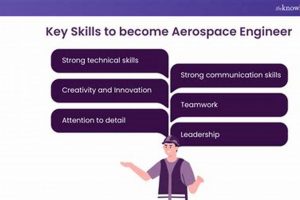
A career in aerospace engineering demands a blend of technical expertise, problem-solving skills, and a commitment to precision. The following insights can provide guidance for aspiring and current professionals within this field.
Tip 1: Cultivate a Strong Foundation in Mathematics and Physics: A thorough understanding of calculus, differential equations, linear algebra, and classical mechanics is essential. These principles underpin the analysis and design of aerospace systems. Examples include calculating aerodynamic forces on an aircraft wing or modeling the trajectory of a spacecraft.
Tip 2: Develop Proficiency in Computer-Aided Design (CAD) and Simulation Software: Modern aerospace engineering relies heavily on digital tools for design, analysis, and testing. Familiarity with software packages such as CATIA, SolidWorks, ANSYS, and MATLAB is highly valuable. These tools enable engineers to create detailed models, simulate performance under various conditions, and optimize designs for efficiency and safety.
Tip 3: Seek Opportunities for Hands-On Experience: Theoretical knowledge should be complemented by practical experience. Internships, research projects, and participation in student engineering competitions (e.g., AIAA Design/Build/Fly) provide valuable opportunities to apply classroom learning to real-world challenges. Such experiences demonstrate a candidate’s ability to translate concepts into tangible results.
Tip 4: Master Programming Skills: Proficiency in programming languages such as Python, C++, or FORTRAN is increasingly important. These languages are used for developing software for flight control systems, data analysis, and simulation modeling. The ability to write and debug code is crucial for automating tasks, analyzing large datasets, and developing custom solutions.
Tip 5: Prioritize Effective Communication Skills: Aerospace engineers must be able to communicate technical information clearly and concisely, both verbally and in writing. This includes preparing detailed reports, presenting design reviews, and collaborating effectively with interdisciplinary teams. Strong communication skills ensure that ideas are understood and that projects are executed efficiently.
Tip 6: Remain Informed of Industry Trends and Advancements: The aerospace industry is constantly evolving. Staying abreast of new technologies, materials, and design methodologies is essential for career advancement. This can be achieved through attending conferences, reading industry publications, and pursuing continuing education opportunities. Examples include advances in composite materials, additive manufacturing, and autonomous systems.
Tip 7: Network with Professionals in the Field: Building a professional network can provide valuable opportunities for mentorship, collaboration, and career advancement. Attending industry events, joining professional organizations (e.g., AIAA), and connecting with engineers on platforms like LinkedIn can facilitate networking. Mentors can offer guidance and insights, while collaborations can lead to innovative solutions.
By focusing on these key areas, individuals can enhance their capabilities within the aerospace engineering field, contributing to the development of innovative and impactful technologies. A commitment to continuous learning and professional development is crucial for long-term success.
The following sections will delve into specific areas within the field, expanding upon the core principles outlined above and providing a more comprehensive understanding of the work involved.
1. Design Aircraft

The design of aircraft constitutes a fundamental aspect of aerospace engineering. It encompasses a complex process involving the application of scientific principles and engineering methodologies to create safe, efficient, and effective airborne vehicles. This process integrates various disciplines within aerospace engineering to realize functional and optimized aircraft designs.
- Aerodynamic Design
Aerodynamic design focuses on shaping the aircraft to minimize drag and maximize lift. This involves Computational Fluid Dynamics (CFD) simulations and wind tunnel testing to optimize wing profiles, fuselage shapes, and control surfaces. The Boeing 787 Dreamliner, for example, incorporates advanced wing designs aimed at reducing fuel consumption through improved aerodynamic efficiency.
- Structural Analysis
Structural analysis ensures that the aircraft can withstand the forces encountered during flight. Finite Element Analysis (FEA) is employed to model the aircraft structure and predict its response to stress and strain. Materials selection, such as aluminum alloys or composite materials, is critical for achieving strength and weight requirements. Consider the Airbus A350, where the extensive use of carbon fiber reinforced polymer reduces weight while maintaining structural integrity.
- Propulsion System Integration
The integration of propulsion systems involves selecting and integrating engines to provide the necessary thrust for takeoff, cruise, and landing. This includes considerations for engine placement, airflow management, and noise reduction. The design of modern jet engines, like those used in the Airbus A320neo, aims to improve fuel efficiency and reduce emissions.
- Flight Control Systems
Flight control systems enable pilots to control the aircraft safely and effectively. These systems include control surfaces, actuators, and sophisticated software that manages stability and maneuverability. Fly-by-wire systems, such as those found in the Lockheed Martin F-35, use electronic signals to transmit pilot commands, enhancing precision and reducing pilot workload.
The successful integration of these elements exemplifies the holistic nature of aircraft design as a central component. Further innovations in areas such as autonomous flight and sustainable aviation fuel continue to shape the future development of aviation, demonstrating ongoing refinement of the field.
2. Develop Spacecraft

The development of spacecraft represents a significant component of aerospace engineering activities. It encompasses the design, construction, and testing of vehicles intended for operation in space. This activity is driven by diverse objectives, including scientific research, communication, national security, and resource exploration. The complex nature of spacecraft development necessitates the integration of multiple engineering disciplines. For example, the design of a satellite requires considerations related to orbital mechanics, power generation, thermal management, and communications systems. The performance of each element must be carefully analyzed and optimized to ensure mission success. Failures can result in costly setbacks and mission failure, underscoring the necessity for rigor and precision.
Real-world examples underscore the importance and practical applications of spacecraft development. The James Webb Space Telescope, for instance, represents a significant achievement in space-based astronomy. Its development involved overcoming numerous engineering challenges, including the design and deployment of a large sunshield and the integration of sensitive infrared detectors. The International Space Station serves as a platform for conducting research in microgravity, contributing to advancements in medicine, materials science, and other fields. The design and maintenance of the ISS require continuous engineering support to ensure its safe and reliable operation. Furthermore, commercial ventures such as SpaceX have demonstrated the potential for private sector innovation in spacecraft development, reducing launch costs and enabling new space-based applications.
In conclusion, spacecraft development is a critical aspect of aerospace engineering, demanding a comprehensive understanding of scientific principles, engineering methodologies, and project management. The increasing demand for space-based services and the ongoing exploration of space ensure that spacecraft development will remain a vital area of focus within the field. Challenges associated with the cost and complexity of space missions continue to drive innovation in spacecraft design and operation, necessitating a continued commitment to research and development in this area.
3. Test Prototypes

Rigorous testing of prototypes is an indispensable element of aerospace engineering, directly influencing the safety, reliability, and performance of aircraft and spacecraft. This process validates design concepts and identifies potential flaws before full-scale production, mitigating risks associated with flight and space operations.
- Wind Tunnel Testing
Wind tunnel testing simulates aerodynamic conditions encountered during flight to assess lift, drag, and stability characteristics. Scale models of aircraft and spacecraft are subjected to controlled airflow to measure forces and observe flow patterns. Data obtained informs design modifications aimed at optimizing aerodynamic efficiency and ensuring stable flight. For example, the development of a new wing design necessitates extensive wind tunnel testing to validate its performance across a range of speeds and angles of attack.
- Structural Testing
Structural testing evaluates the ability of prototype components and assemblies to withstand mechanical loads and environmental stresses. This may involve subjecting structures to extreme temperatures, pressures, and vibrations to simulate conditions experienced during flight or in space. Such tests identify potential weaknesses and ensure that the structure can meet design requirements. For example, a prototype spacecraft component might undergo vibration testing to simulate the stresses of launch, identifying potential points of failure.
- Systems Integration Testing
Systems integration testing verifies that all components of a prototype operate together as intended. This includes testing the integration of avionics, propulsion systems, and control systems to ensure proper communication and functionality. Issues identified during this phase can be addressed before the system is deployed. An example involves testing the integration of flight control software with the aircraft’s hydraulic actuators to ensure precise and responsive control.
- Flight Testing
Flight testing involves operating a prototype aircraft or spacecraft under real-world conditions to evaluate its performance and identify any unforeseen issues. This phase allows engineers to assess handling qualities, fuel efficiency, and system reliability in a dynamic environment. Data collected during flight testing is crucial for refining the design and ensuring the safety and effectiveness of the final product. For example, flight testing of a new aircraft design allows pilots and engineers to assess its handling characteristics and identify any areas for improvement.
The systematic testing of prototypes, encompassing wind tunnel evaluations, structural assessments, systems integration checks, and flight trials, constitutes an essential phase in the cycle of development, contributing directly to the advancement of aerospace technologies and the enhancement of operational safety. The iterative process of testing and refinement underpins the core principles of aerospace engineering, ensuring the creation of efficient and dependable flight vehicles.
4. Analyze Performance

The analysis of performance represents a critical facet of aerospace engineering. It provides quantitative assessments of aircraft and spacecraft behavior, enabling engineers to optimize designs and operational parameters. This analytical process relies on data collected from simulations, ground tests, and flight operations. By scrutinizing performance metrics, such as fuel efficiency, maneuverability, structural integrity, and system reliability, engineers can identify areas for improvement. For instance, aerodynamic analysis of a new aircraft wing profile, using Computational Fluid Dynamics, informs design refinements to minimize drag and enhance lift. This iterative process is essential for ensuring that aerospace systems meet stringent performance requirements.
The significance of performance analysis is evident in numerous aerospace applications. Consider the development of a satellite constellation for global internet access. Performance analysis would encompass evaluating the communication link budgets, orbital stability, and power consumption of individual satellites. Furthermore, the analysis would extend to assessing the overall network performance, including data latency and bandwidth capacity. These evaluations inform decisions related to satellite design, orbital placement, and network management. Similarly, in the context of commercial aviation, performance analysis contributes to optimizing flight routes, reducing fuel consumption, and enhancing passenger comfort. Data collected from flight data recorders are analyzed to identify potential safety hazards and improve operational efficiency.
In conclusion, the analysis of performance is integral to aerospace engineering. It provides the means to objectively assess the capabilities of aircraft and spacecraft, facilitating continuous improvement and ensuring operational success. The ability to analyze performance accurately and effectively is paramount to achieving engineering objectives, maintaining safety standards, and driving innovation in aerospace technologies. The challenges of increasingly complex systems and demanding mission requirements necessitate ongoing advancements in performance analysis methodologies.
5. Manage Projects

Effective project management is inextricably linked to the successful execution of aerospace engineering endeavors. Given the complexity and interdisciplinary nature of developing aircraft, spacecraft, and related systems, organized and efficient project execution is critical. Delays, cost overruns, and performance shortfalls are often directly attributable to deficient project management practices. The ability to define project scope, allocate resources, establish timelines, and mitigate risks is thus not merely an administrative function, but a core competency for professionals in this field. In essence, “Manage Projects” dictates how effectively “things aerospace engineers do” translate from concept to tangible reality.
Consider the development of a new commercial aircraft. Such a project involves numerous engineering disciplines, including aerodynamics, structural analysis, propulsion, and avionics. Each of these areas requires specialized teams, each with its own tasks, schedules, and budgets. Project managers are responsible for coordinating these teams, ensuring that their efforts are aligned and that potential conflicts are resolved efficiently. Furthermore, they must track progress against established milestones, identify potential risks, and implement corrective actions to keep the project on track. A real-world example would be the development of the Boeing 787 Dreamliner, a project that encountered significant delays due to supply chain issues and integration challenges. Effective project management techniques, such as critical path analysis and earned value management, can help to mitigate these types of risks.
In conclusion, competent project management is indispensable to the successful completion of aerospace engineering initiatives. Its importance stems from the inherently complex and multidisciplinary nature of these projects, which demand meticulous coordination and control. Without robust project management practices, even the most innovative engineering designs may fail to materialize. Therefore, expertise in project management is a vital attribute for aerospace engineers, enabling them to navigate the complexities of modern aerospace development and deliver successful outcomes. This competence ensures project elements are completed on-time and within budget.
6. Conduct Research

Research forms a cornerstone of aerospace engineering, driving innovation and enabling advancements in flight and space technologies. The ongoing pursuit of new knowledge and capabilities is essential for addressing the challenges of flight, space exploration, and national security. Consequently, “Conduct Research” is central to the suite of “things aerospace engineers do,” directly influencing the design, development, and operation of aerospace systems.
- Aerodynamics and Fluid Mechanics Research
This area focuses on understanding the behavior of air and other fluids around aircraft and spacecraft. Research activities include developing new airfoil designs, investigating turbulent flow phenomena, and optimizing aerodynamic performance. For example, NASA’s fundamental research on supercritical airfoils in the 1960s and 1970s significantly improved the fuel efficiency of commercial airliners. Continued advancements in computational fluid dynamics (CFD) enable aerospace engineers to simulate complex flow fields and optimize designs more effectively.
- Materials Science and Structures Research
This research domain centers on developing new materials and structural concepts for aerospace applications. Activities encompass investigating composite materials, high-temperature alloys, and lightweight structures. For example, research on carbon fiber reinforced polymers (CFRP) has led to their widespread use in aircraft fuselages and wings, reducing weight and improving fuel efficiency. Furthermore, research into advanced joining techniques is essential for creating reliable and durable aerospace structures.
- Propulsion Systems Research
This area concentrates on developing more efficient and powerful engines for aircraft and spacecraft. Research activities include investigating advanced combustion techniques, developing new engine cycles, and optimizing engine components. For example, research on scramjet engines has the potential to enable hypersonic flight, while research on electric propulsion systems is crucial for long-duration space missions. The development of more fuel-efficient turbofan engines continues to be a major area of focus for reducing emissions and improving airline profitability.
- Guidance, Navigation, and Control Research
This research domain focuses on developing advanced algorithms and systems for guiding and controlling aircraft and spacecraft. Activities encompass investigating autonomous flight control systems, developing new navigation techniques, and improving the accuracy and reliability of guidance systems. For example, research on GPS-based navigation systems has revolutionized air traffic management and enabled precise satellite orbit determination. Furthermore, research on artificial intelligence and machine learning is being applied to develop more autonomous and adaptive control systems.
These facets of research underscore the pivotal role of “Conduct Research” within the broader spectrum of “things aerospace engineers do”. The insights and innovations generated through research directly translate into improved aircraft performance, enhanced spacecraft capabilities, and increased safety for aerospace operations. Continued investment in research and development is essential for maintaining technological leadership and addressing future challenges in aerospace engineering. The pursuit of cutting-edge technologies ensures continued advancement of the field.
7. Ensure Safety
The imperative to “Ensure Safety” constitutes a fundamental and non-negotiable aspect of “things aerospace engineers do.” All activities, from initial design conceptions to final operational procedures, are intrinsically linked to minimizing risk and protecting human life and assets. This commitment permeates every stage of the engineering process, demanding a rigorous and systematic approach to hazard identification, risk assessment, and mitigation. The potential consequences of failure in the aerospace domain, whether involving aircraft or spacecraft, necessitate a culture of proactive safety management and continuous improvement. The effectiveness with which safety is ensured directly influences public trust, regulatory compliance, and the overall viability of aerospace operations. Thus, it functions not as a separate task but as an overarching principle guiding all engineering decisions.
The practical application of safety principles is evident in various aspects of aerospace engineering. For example, the design of aircraft flight control systems incorporates multiple redundancies to mitigate the risk of system failure. Similarly, spacecraft are designed with radiation shielding and thermal management systems to protect sensitive components from the harsh environment of space. Thorough testing and certification processes are implemented to verify that aerospace systems meet stringent safety standards before being deployed. Furthermore, accident investigation and analysis play a critical role in identifying the root causes of incidents and implementing corrective actions to prevent future occurrences. The lessons learned from past accidents are meticulously documented and incorporated into design and operational procedures, creating a cycle of continuous improvement in safety performance. Cases like the Challenger and Columbia disasters highlight the critical importance of a robust safety culture and the potential consequences of complacency or negligence.
In conclusion, “Ensure Safety” is not merely a peripheral consideration but rather an integral component of “things aerospace engineers do.” It is a fundamental responsibility that underpins all engineering decisions and operational procedures. The commitment to safety demands a proactive, systematic, and continuously evolving approach, driven by a culture of vigilance and a willingness to learn from past experiences. As aerospace technologies continue to advance and become more complex, the challenge of ensuring safety will only increase, requiring ongoing innovation and a steadfast dedication to the highest standards of engineering practice. The effectiveness of safety measures profoundly impacts the success and sustainability of aerospace activities.
Frequently Asked Questions Regarding Activities Undertaken by Aerospace Engineers
The following section addresses common inquiries concerning the diverse range of responsibilities assumed by professionals in the field of aerospace engineering. These answers aim to provide clarity on the scope and nature of these activities.
Question 1: How much of an aerospace engineer’s time is spent designing versus other tasks?
The allocation of time varies significantly depending on the specific role and project phase. Design work may constitute a substantial portion during the initial stages of a project, but other responsibilities, such as testing, analysis, project management, and research, also demand considerable attention throughout the project lifecycle.
Question 2: What level of mathematical proficiency is truly necessary for an aerospace engineer?
A strong foundation in mathematics, encompassing calculus, differential equations, linear algebra, and numerical methods, is essential. These mathematical principles underpin the analysis and design of aerospace systems and are indispensable for solving complex engineering problems.
Question 3: Is a background in aeronautics required to work on spacecraft development?
While a background in aeronautics can be beneficial, it is not strictly required. The fundamental principles of engineering, physics, and mathematics are applicable to both aeronautics and astronautics. However, specialized knowledge in areas such as orbital mechanics, propulsion systems, and thermal management is crucial for spacecraft development.
Question 4: What is the typical career path for an aerospace engineer?
A typical career path may involve starting in an entry-level engineering role, such as a design engineer or a test engineer, and progressing to more senior positions, such as project manager, engineering lead, or technical specialist. Opportunities for advancement are often based on experience, technical expertise, and leadership skills.
Question 5: How much does regulatory compliance impact the workflow of an aerospace engineer?
Regulatory compliance has a significant impact on the workflow of an aerospace engineer. Adherence to safety standards, airworthiness regulations, and environmental guidelines is paramount. Compliance activities may involve documenting design decisions, conducting safety analyses, and participating in audits.
Question 6: What role does computer simulation play in the daily work of an aerospace engineer?
Computer simulation plays a crucial role in the daily work of an aerospace engineer. Simulation tools are used for aerodynamic analysis, structural analysis, thermal analysis, and system modeling. These simulations enable engineers to evaluate design concepts, optimize performance, and identify potential problems before physical prototypes are built.
The core takeaway from these answers is that the field is diverse. Proficiency in multiple tools is crucial.
The following sections will delve into specific areas within the field, expanding upon the core principles outlined above and providing a more comprehensive understanding of the work involved.
Concluding Remarks on Core Responsibilities
This article has explored the diverse array of activities undertaken by aerospace engineers. From conceptual design and rigorous testing to meticulous analysis and project oversight, the profession demands a broad skillset and a commitment to precision. The overarching emphasis on safety underscores the critical nature of the work performed.
The continued advancement of aerospace technology hinges on the dedication and expertise of these professionals. As the demand for innovative solutions in air and space travel continues to grow, the contributions of those engaged in these complex engineering challenges will remain vital to progress. Further exploration into specific sub-disciplines is encouraged to deepen understanding and foster innovation within this impactful field.