The pursuit of a bachelor’s degree focused on the design, development, testing, and production of aircraft and spacecraft constitutes a specialized field of study. These curricula provide a foundational understanding of aerodynamics, propulsion, materials science, structural analysis, and control systems, preparing students for careers in the aerospace industry. Curricula typically include core engineering principles alongside specialized aerospace coursework. As an illustration, these degrees cover topics like fluid mechanics and orbital mechanics.
Acquiring a thorough comprehension of these engineering principles is vitally important for innovation and advancement within the aerospace sector. Students gain the skills necessary to address critical challenges related to flight, space exploration, and related technologies. Historically, these programs have played a crucial role in driving advancements in aviation, space travel, and national defense, contributing significantly to technological progress and economic growth.
The following sections will delve into specific aspects of these educational paths, including program structures, curriculum details, research opportunities, career prospects for graduates, and important considerations for selecting the right academic institution. This exploration offers a comprehensive overview for prospective students considering entry into this demanding but rewarding field.
Guidance for Aspiring Aerospace Engineers
The selection and successful completion of undergraduate studies in aerospace engineering require careful consideration and strategic planning. The following guidance is intended to assist prospective students in navigating this rigorous academic path.
Tip 1: Emphasize a Strong Foundation in Mathematics and Physics: Success in aerospace engineering relies heavily on a solid understanding of calculus, differential equations, linear algebra, and physics principles, particularly mechanics, thermodynamics, and electromagnetism. Prioritize developing proficiency in these areas during secondary education.
Tip 2: Explore Specialization Options Early: Aerospace engineering encompasses diverse areas such as aerodynamics, propulsion, structures, and control systems. Research these specializations to identify areas of interest and tailor coursework and extracurricular activities accordingly. For example, an interest in propulsion might lead to involvement in rocketry clubs.
Tip 3: Seek Research Opportunities: Participating in undergraduate research projects provides invaluable experience in applying theoretical knowledge to practical problems. Inquire about research opportunities with faculty members or at nearby research institutions. This can enhance understanding and provide a competitive advantage for future employment or graduate studies.
Tip 4: Cultivate Programming and Software Proficiency: Modern aerospace engineering relies extensively on computational tools for design, analysis, and simulation. Develop proficiency in programming languages such as Python, MATLAB, or C++, and familiarize yourself with industry-standard software such as CAD and CFD packages.
Tip 5: Build Practical Skills Through Hands-On Projects: Participate in engineering design competitions, build model aircraft, or contribute to student-led aerospace projects. These activities provide opportunities to apply theoretical knowledge, develop teamwork skills, and gain practical experience in design, manufacturing, and testing.
Tip 6: Network and Engage with Industry Professionals: Attend aerospace conferences, career fairs, and industry events to network with professionals in the field. Join professional organizations such as the American Institute of Aeronautics and Astronautics (AIAA) to access resources, connect with peers, and learn about industry trends.
Tip 7: Consider Accreditation and Program Reputation: When selecting a program, verify that it is accredited by ABET (Accreditation Board for Engineering and Technology). Research the faculty’s expertise, research facilities, and industry connections to ensure the program aligns with career goals.
Adhering to these recommendations increases the likelihood of a successful and rewarding academic journey in the field of aerospace engineering. A proactive and strategic approach to education significantly contributes to the development of the skills and knowledge necessary for a career in this dynamic field.
The subsequent sections will explore various facets of career opportunities and continued education paths after completing these rigorous, specialized programs.
1. Accreditation Standards

Accreditation standards represent a crucial element in the evaluation and validation of undergraduate aerospace engineering programs. These standards, primarily set by organizations such as ABET (Accreditation Board for Engineering and Technology), ensure a baseline level of quality and rigor, directly impacting the educational experience and career prospects of graduates.
- Curriculum Content and Structure
Accreditation standards dictate the core subjects that must be included within the aerospace engineering curriculum. This encompasses areas such as aerodynamics, structural analysis, propulsion, flight dynamics, and control systems. These standards ensure a comprehensive understanding of fundamental principles necessary for competent practice. For example, programs must demonstrate coverage of computational methods and experimental techniques in these core areas.
- Faculty Qualifications and Expertise
Accreditation requires that faculty members possess adequate qualifications and expertise in their respective fields. This often translates to holding advanced degrees (Ph.D.) and having relevant experience in aerospace engineering or related disciplines. The number of faculty, their scholarly activities, and their involvement in professional organizations are also scrutinized. A well-qualified faculty enhances the quality of instruction and research opportunities available to students.
- Facilities and Resources
Accreditation assesses the adequacy of laboratory facilities, computational resources, and library holdings. Programs must demonstrate access to modern equipment and software necessary for conducting experiments, simulations, and design projects. For instance, access to wind tunnels, flight simulators, and advanced CAD/CAM software are often critical components of an accredited program. These resources are essential for hands-on learning and the development of practical skills.
- Continuous Improvement and Assessment
Accreditation mandates a system of continuous improvement, requiring programs to regularly assess student learning outcomes and implement changes to enhance the educational experience. This involves setting specific learning objectives, measuring student performance against those objectives, and using the results to refine the curriculum and teaching methods. This cycle of assessment and improvement ensures that programs remain relevant and effective in preparing graduates for the evolving demands of the aerospace industry.
In conclusion, accreditation standards provide a framework for ensuring the quality and consistency of undergraduate aerospace engineering programs. Compliance with these standards offers assurance to students, employers, and the public that graduates have acquired the knowledge, skills, and competencies necessary for successful careers in the aerospace field. Furthermore, accreditation promotes continuous improvement, leading to enhanced educational outcomes and greater contributions to the advancement of aerospace technology.
2. Curriculum Breadth

Curriculum breadth within undergraduate aerospace engineering programs refers to the scope and diversity of subjects covered, extending beyond core aerospace topics to encompass foundational sciences, mathematics, and complementary engineering disciplines. This breadth is critical for producing well-rounded engineers capable of addressing complex, multidisciplinary challenges.
- Foundational Sciences and Mathematics
A robust grounding in physics, chemistry, calculus, differential equations, and linear algebra forms the bedrock of aerospace engineering knowledge. For example, a deep understanding of fluid dynamics requires a strong foundation in calculus and differential equations to model fluid flow accurately. Insufficient grounding in these areas hinders the ability to comprehend and apply advanced aerospace concepts.
- Core Aerospace Engineering Disciplines
Curriculum breadth mandates coverage of fundamental aerospace areas: aerodynamics (the study of airflow), propulsion (engine design and performance), structures (aircraft and spacecraft design for strength and stability), flight dynamics (the study of aircraft motion and control), and control systems (automatic systems for maintaining stability and direction). A program deficient in any of these areas leaves graduates unprepared for diverse roles within the industry.
- Complementary Engineering Disciplines
Exposure to disciplines such as electrical engineering (avionics, control systems), mechanical engineering (thermodynamics, heat transfer), and materials science (selection and behavior of aerospace materials) enhances problem-solving capabilities. Modern aircraft and spacecraft are complex systems integrating mechanical, electrical, and electronic components. Familiarity with these interconnected systems improves graduates’ adaptability in design, manufacturing, and testing.
- Design and Systems Engineering
Curriculum breadth includes aspects of the design process, from requirements definition to prototyping and testing. Exposure to systems engineering principles ensures graduates understand how individual components interact within a larger system. For example, students might participate in capstone projects that require designing and building a small aircraft or spacecraft, integrating their knowledge of aerodynamics, propulsion, structures, and control systems to meet specified performance requirements.
The extent to which a program incorporates these facets into its curriculum defines its breadth and influences the preparedness of graduates for diverse career paths in research, design, development, and operation of aerospace systems. Programs that strategically balance depth within aerospace specialties with a broad foundation across related fields produce engineers who are both highly specialized and adaptable.
3. Research opportunities
Research opportunities within undergraduate aerospace engineering programs represent a critical avenue for students to gain practical experience, apply theoretical knowledge, and contribute to the advancement of the field. These opportunities serve as a bridge between classroom learning and real-world engineering challenges, fostering innovation and preparing students for advanced studies or careers in research and development.
- Faculty-Led Research Projects
Faculty-led research projects offer undergraduates the chance to work alongside experienced researchers on cutting-edge investigations. These projects span diverse areas, including aerodynamics, propulsion, materials science, and autonomous systems. Students might assist in designing and conducting experiments, analyzing data, and presenting findings at conferences or in publications. For example, an undergraduate could contribute to a project focused on developing more efficient airfoil designs for aircraft wings, gaining hands-on experience in wind tunnel testing and computational fluid dynamics simulations. Such involvement strengthens analytical skills and provides exposure to the scientific method.
- Undergraduate Research Programs (URPs)
Many universities offer formal undergraduate research programs (URPs) that provide funding and support for students to conduct independent research projects. These programs often include mentorship from faculty members and opportunities to present research findings at university-wide symposiums. An undergraduate participating in a URP might investigate the feasibility of using novel composite materials in spacecraft structures, independently designing experiments and analyzing data to assess the material’s performance under extreme conditions. These experiences cultivate independent research skills and foster intellectual curiosity.
- Industry-Sponsored Research
Some aerospace engineering programs partner with industry to provide students with opportunities to work on research projects directly relevant to current industry challenges. This exposure offers valuable insights into the practical applications of aerospace engineering principles and provides networking opportunities with potential employers. For example, an undergraduate could contribute to a project sponsored by a commercial airline focused on optimizing aircraft maintenance schedules using data analytics, gaining experience in data analysis and predictive modeling while interacting with industry professionals.
- Design-Build-Test Projects
Design-Build-Test projects, such as participation in aerospace engineering competitions, provide undergraduates with hands-on experience in the complete engineering design cycle. These projects often involve designing, building, and testing aircraft, rockets, or unmanned aerial vehicles (UAVs). Students gain experience in teamwork, project management, and problem-solving while applying their knowledge of aerospace engineering principles to create functional prototypes. This comprehensive experience prepares students for the challenges of real-world engineering design and development.
These diverse research opportunities are integral to undergraduate aerospace engineering programs, enhancing students’ technical skills, fostering innovation, and preparing them for successful careers in aerospace research, development, and engineering. The knowledge and skills gained through these experiences significantly augment classroom learning and provide a competitive advantage in the job market or in pursuit of graduate studies.
4. Faculty Expertise

The quality of undergraduate aerospace engineering programs is intrinsically linked to the expertise of its faculty. The faculty members serve as the primary conduits of knowledge, skills, and professional perspectives necessary for success in the aerospace field. Their qualifications, experience, and dedication directly influence the depth and breadth of the educational experience, shaping students’ understanding of fundamental principles and their ability to address complex engineering challenges. For instance, a professor with extensive experience in spacecraft propulsion systems can provide students with invaluable insights into the design, analysis, and testing of rocket engines, enhancing their practical knowledge beyond theoretical concepts learned in textbooks. The presence of faculty actively engaged in research also allows students to participate in cutting-edge projects, providing hands-on experience and fostering innovation.
Faculty expertise contributes significantly to the curriculum design and the availability of specialized courses. A faculty comprised of specialists in areas like aerodynamics, structural mechanics, and control systems ensures a comprehensive curriculum that covers the breadth of the aerospace engineering field. Moreover, faculty expertise enables the offering of advanced electives that reflect current industry trends and research advancements. For example, a program with faculty specializing in composite materials may offer courses on advanced composite structures, preparing students for the growing use of these materials in aircraft and spacecraft design. This specialized knowledge also facilitates mentorship opportunities, guiding students toward specific career paths and facilitating their professional development through research guidance and networking.
Ultimately, the expertise of faculty directly correlates to the quality and reputation of undergraduate aerospace engineering programs. Institutions with renowned faculty members attract high-caliber students and secure research funding, creating a virtuous cycle of academic excellence. The guidance and mentorship provided by expert faculty can significantly impact students’ career trajectories, shaping their ability to contribute to the aerospace industry and advance the field. The absence of qualified and experienced faculty, conversely, can lead to deficiencies in curriculum content, limited research opportunities, and inadequate preparation for the demands of the aerospace profession, underscoring the crucial role of faculty expertise in the success of undergraduate aerospace engineering programs.
5. Industry Partnerships
Industry partnerships form a critical component of comprehensive undergraduate aerospace engineering programs. These collaborations provide students with invaluable opportunities to bridge the gap between theoretical knowledge acquired in the classroom and the practical realities of the aerospace sector. A direct consequence of strong industry ties is the enhanced relevance of the curriculum, which can be tailored to meet the evolving needs of aerospace employers. For instance, a partnership with a major aircraft manufacturer may result in incorporating advanced materials science and composite design into the core curriculum, reflecting the industry’s increasing reliance on these technologies. The absence of such partnerships can leave graduates with a theoretical understanding that lacks practical applicability, diminishing their competitiveness in the job market.
These partnerships often manifest in several forms, including internship programs, sponsored research projects, and guest lectures from industry professionals. Internships offer students hands-on experience within aerospace companies, allowing them to apply their knowledge to real-world problems and develop essential professional skills. Sponsored research projects provide opportunities to work alongside industry experts on cutting-edge research, fostering innovation and contributing to the advancement of aerospace technology. Guest lectures offer students insights into current industry trends, challenges, and opportunities. For example, a collaboration with a space exploration company may lead to a student project focused on designing a lunar rover, providing practical experience in robotics, autonomous systems, and space environment engineering. These interactions allow students to network with potential employers and gain a realistic understanding of the aerospace career landscape.
In summary, industry partnerships are indispensable to the success of undergraduate aerospace engineering programs. They ensure that curricula remain relevant, provide students with valuable hands-on experience, and facilitate career opportunities within the aerospace sector. A robust network of industry partnerships elevates the educational experience, preparing graduates to contribute meaningfully to the field and fostering innovation within the aerospace industry. The strength and depth of these partnerships serve as an important indicator of program quality and its commitment to preparing students for successful careers.
6. Career Pathways
Career pathways, in the context of undergraduate aerospace engineering programs, represent the diverse professional trajectories graduates may pursue upon completion of their studies. These pathways are shaped by the curriculum, research opportunities, and industry connections available within the program, directly influencing the skills and knowledge acquired by students and their subsequent employment prospects.
- Aerospace Design Engineer
Aerospace design engineers focus on the conceptualization, development, and testing of aircraft, spacecraft, and related components. This role requires a strong understanding of aerodynamics, structural analysis, and materials science. For example, graduates may work on designing more fuel-efficient aircraft wings or developing lightweight composite structures for spacecraft, contributing to advancements in aerospace technology. The nature of these programs provides the foundational knowledge and practical skills necessary to tackle complex design challenges.
- Propulsion Engineer
Propulsion engineers specialize in the design, development, and testing of propulsion systems, including jet engines, rocket engines, and other advanced propulsion technologies. A solid grasp of thermodynamics, fluid mechanics, and combustion is essential for this role. Graduates may contribute to the development of more efficient and environmentally friendly aircraft engines or the design of advanced propulsion systems for space exploration, driving innovation in the field of propulsion. The specialized course work within these programs provides the expertise needed for complex engineering tasks.
- Avionics Engineer
Avionics engineers concentrate on the design, development, and integration of electronic systems used in aircraft and spacecraft, including navigation systems, flight control systems, and communication systems. A comprehensive understanding of electrical engineering, computer science, and control systems is critical for this role. Graduates may work on developing advanced autonomous flight control systems or designing more reliable and secure communication systems for spacecraft, ensuring the safe and efficient operation of aerospace vehicles. The core tenets of these programs provide grounding and training in electrical and computer systems.
- Research and Development Scientist
Research and development scientists conduct research to advance the state-of-the-art in aerospace technology, exploring new materials, propulsion systems, and flight control methods. This career path requires a strong background in mathematics, physics, and engineering principles, along with the ability to conduct independent research and analyze data. Graduates may work in government laboratories, research institutions, or private companies, contributing to fundamental advancements in aerospace science and technology. These programs prepare aspiring scientists for independent and advanced experimentation.
The breadth of career pathways available to graduates underscores the value of undergraduate aerospace engineering programs. These programs provide a solid foundation in engineering principles, enabling graduates to pursue diverse roles within the aerospace industry or further their education through advanced studies. The specific career path chosen often depends on individual interests, skills, and the opportunities available within the industry, highlighting the importance of a well-rounded educational experience.
7. Program cost

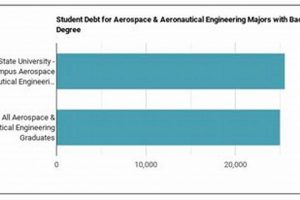
The cost associated with undergraduate aerospace engineering programs represents a significant factor influencing accessibility and student outcomes. Tuition fees, living expenses, books, and other related costs can create a substantial financial burden, potentially deterring qualified students from pursuing this field of study. For example, the high cost of attendance at prestigious universities with renowned aerospace programs may limit enrollment to students from privileged socioeconomic backgrounds, potentially hindering diversity within the field. The correlation between program cost and student debt further complicates this issue, as graduates may face considerable financial pressure to secure high-paying jobs immediately after graduation, potentially steering them away from lower-paying research positions or advanced studies.
The financial resources allocated to aerospace engineering programs can also influence the quality of education and research opportunities available to students. Programs with larger budgets may be able to invest in state-of-the-art laboratory equipment, attract highly qualified faculty, and offer more extensive research grants, thereby enhancing the learning experience and fostering innovation. For instance, universities with strong industry partnerships and philanthropic support may be able to provide students with access to cutting-edge wind tunnels or advanced computational facilities, enabling them to conduct more sophisticated experiments and simulations. Conversely, programs with limited funding may struggle to maintain adequate facilities and resources, potentially compromising the quality of education and research opportunities available to students. The varying investment levels between public and private institutions often create disparities in program quality and accessibility.
In conclusion, the cost of undergraduate aerospace engineering programs is a critical determinant of both access and quality. Strategies to mitigate the financial burden, such as scholarships, grants, and loan forgiveness programs, are essential to promoting diversity and ensuring that qualified students from all socioeconomic backgrounds have the opportunity to pursue careers in this vital field. Moreover, continued investment in aerospace engineering programs is necessary to maintain high standards of education and research, fostering innovation and ensuring the future competitiveness of the aerospace industry. The financial dynamics surrounding these programs ultimately shape the future workforce and technological advancements within the aerospace sector.
Frequently Asked Questions About Undergraduate Aerospace Engineering Programs
The following section addresses common inquiries regarding undergraduate studies focused on the design, development, and application of aerospace vehicles and systems.
Question 1: What foundational knowledge is crucial prior to entering an undergraduate aerospace engineering program?
A strong grounding in mathematics, particularly calculus, differential equations, and linear algebra, is essential. Proficiency in physics, specifically mechanics, thermodynamics, and electromagnetism, is also critically important. These disciplines provide the fundamental principles upon which aerospace engineering concepts are built.
Question 2: What are the primary specializations typically offered within these programs?
Common specializations include aerodynamics, propulsion, structural analysis, flight dynamics and control, and astronautics. Some programs may also offer concentrations in areas such as autonomous systems, space systems engineering, or computational engineering. Specialization often occurs in the later years of the program through elective course selection and research opportunities.
Question 3: Is accreditation important when selecting an undergraduate aerospace engineering program?
Yes, accreditation from organizations such as ABET (Accreditation Board for Engineering and Technology) is highly important. Accreditation ensures that the program meets established quality standards and that graduates are adequately prepared for professional practice or graduate studies. Employers often prioritize hiring graduates from accredited programs.
Question 4: What types of research opportunities are typically available to undergraduates in these programs?
Research opportunities may include assisting faculty members with ongoing research projects, participating in undergraduate research programs with dedicated funding, engaging in industry-sponsored research collaborations, or participating in design-build-test projects and engineering competitions. These experiences provide invaluable practical skills and enhance career prospects.
Question 5: What are the typical career paths for graduates with an undergraduate degree in aerospace engineering?
Common career paths include aerospace design engineer, propulsion engineer, avionics engineer, structural engineer, flight test engineer, and research and development scientist. Graduates may find employment in aerospace companies, government agencies, research laboratories, or consulting firms. Some graduates may also pursue advanced degrees in aerospace engineering or related fields.
Question 6: What is the typical cost of these programs, and what financial aid options are available?
The cost of undergraduate aerospace engineering programs varies widely depending on the institution, location, and public versus private status. Tuition fees, living expenses, and other related costs can range from several thousand dollars per year to upwards of tens of thousands. Financial aid options may include scholarships, grants, loans, and work-study programs. Prospective students should research available financial aid opportunities and plan accordingly.
These answers represent frequently encountered questions regarding these specialized programs, and further investigation is recommended for individual circumstances.
The subsequent discussion shifts to examining the future trends in aerospace engineering education and the skills required to succeed in the evolving aerospace industry.
Conclusion
The preceding analysis has presented a comprehensive overview of undergraduate aerospace engineering programs, emphasizing their structure, curriculum, research opportunities, faculty expertise, industry partnerships, career pathways, and associated costs. A careful examination of these elements reveals the complex interplay of factors that shape the quality and accessibility of these programs. Accreditation standards serve as a benchmark, while curriculum breadth equips graduates with a foundational understanding. Research and faculty expertise facilitate innovation and prepare students for advanced studies. Finally, program cost presents a significant consideration for prospective students.
Given the ever-evolving landscape of aerospace technology, prospective students should rigorously evaluate programs, considering their individual goals and financial resources. The pursuit of knowledge within undergraduate aerospace engineering programs represents an investment in the future of the field, demanding a commitment to excellence and a dedication to addressing the challenges of flight and space exploration. Continued advancement hinges on the cultivation of talent and the accessibility of quality education in this critical domain.
![Is a Masters in Aerospace Engineering Worth It? [Guide] | Innovating the Future of Flight with Reliable Aviation Solutions](https://mixaerospace.com/wp-content/uploads/2026/05/th-66-300x200.jpg "Is a Masters in Aerospace Engineering Worth It? [Guide] Innovating the Future of Flight with Reliable Aviation Solutions")