The selection of appropriate academic subjects is fundamental for individuals aspiring to a career focused on the design, development, and testing of aircraft and spacecraft. A well-structured curriculum provides the necessary foundational knowledge and specialized skills required for success in this demanding field. For example, a prospective student might choose differential equations, thermodynamics, and fluid mechanics to build a strong base.
A carefully considered course of study provides future aerospace engineers with a competitive advantage. It equips them with problem-solving abilities, analytical thinking skills, and the technical proficiency needed to contribute meaningfully to the advancement of aerospace technology. Historically, a strong background in mathematics and physics has been considered essential; however, contemporary programs increasingly integrate computational skills and interdisciplinary approaches.
Therefore, a prospective aerospace engineer should carefully consider the following subject areas to build a strong foundation for future advanced study and professional practice. This includes examining foundational science and math, core engineering disciplines, and potential areas for specialization.
Guidance for Aerospace Engineering Course Selection
Careful selection of relevant coursework is paramount for students aspiring to careers in aerospace engineering. The following guidelines are intended to assist in making informed decisions about academic pathways.
Tip 1: Prioritize Foundational Mathematics: A strong grounding in calculus, differential equations, linear algebra, and statistics is indispensable. These mathematical tools are essential for modeling and analyzing aerospace systems.
Tip 2: Emphasize Physics Fundamentals: Mechanics, thermodynamics, electromagnetism, and optics provide the scientific underpinnings for understanding physical phenomena relevant to aerospace engineering. Rigorous study of these principles is crucial.
Tip 3: Develop Proficiency in Computer Science: Programming skills in languages such as Python, MATLAB, or C++ are increasingly vital for simulations, data analysis, and control systems development.
Tip 4: Master Core Engineering Disciplines: Fluid mechanics, heat transfer, structural analysis, and control theory form the backbone of aerospace engineering. These subjects provide the analytical frameworks for designing aerospace vehicles.
Tip 5: Consider Materials Science and Engineering: Understanding the properties and behavior of materials is essential for selecting appropriate materials for aerospace structures and components. Knowledge of composite materials is particularly valuable.
Tip 6: Explore Aerospace-Specific Subjects: Aerodynamics, propulsion, orbital mechanics, and spacecraft design provide specialized knowledge critical for aerospace applications. Early exposure to these areas can help refine career interests.
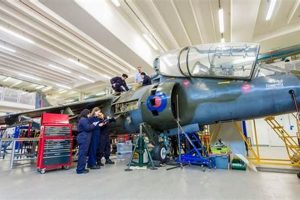
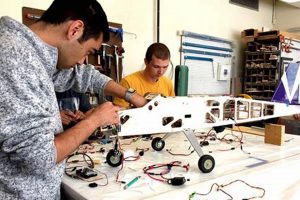
Tip 7: Seek Hands-On Experience: Laboratory courses, design projects, and internships provide practical application of theoretical knowledge. Participation in these activities enhances problem-solving skills and professional development.
A strategic approach to course selection, emphasizing fundamental principles and practical application, will significantly enhance preparedness for advanced studies and future professional endeavors in aerospace engineering.
The ensuing section will address common misconceptions about curricular paths and offer insights into navigating the demands of an aerospace engineering education.
1. Calculus and Differential Equations

Calculus and Differential Equations are foundational mathematical disciplines integral to an aerospace engineering curriculum. Proficiency in these areas is crucial for modeling, analyzing, and predicting the behavior of complex aerospace systems and phenomena. Their application pervades almost every sub-discipline within the field.
- Modeling Physical Systems
Calculus provides the tools for describing continuous change, essential for modeling the motion of aircraft and spacecraft. Differential equations, specifically, enable the representation of dynamic systems, such as the response of an aircraft to control inputs or the trajectory of a satellite in orbit. These equations allow engineers to simulate system performance before physical prototypes are constructed, saving time and resources.
- Optimization and Design
Calculus is instrumental in optimization problems, such as designing aircraft wings for maximum lift or minimizing fuel consumption. Techniques like Lagrange multipliers and variational calculus are used to find optimal designs that meet specific performance criteria. This ensures that aerospace vehicles are not only functional but also efficient and cost-effective.
- Fluid Dynamics and Aerodynamics
The Navier-Stokes equations, fundamental to fluid dynamics and aerodynamics, are partial differential equations. Solving these equations, either analytically or numerically, allows engineers to predict airflow around aircraft, calculate lift and drag forces, and design efficient aerodynamic surfaces. Understanding these principles is essential for optimizing aircraft performance and stability.
- Control Systems Analysis
Differential equations are used extensively in the design and analysis of control systems. The behavior of feedback control loops, which regulate the attitude and trajectory of aircraft and spacecraft, is described by differential equations. Understanding the stability and performance characteristics of these systems requires a strong foundation in calculus and differential equations. This understanding is critical for ensuring safe and reliable operation.
Mastery of calculus and differential equations is thus an indispensable component of any aerospace engineering education. These mathematical tools empower engineers to design, analyze, and optimize the complex systems that define the aerospace industry, making them critical in determining recommended academic choices for aspiring professionals.
2. Thermodynamics and Fluid Mechanics

Thermodynamics and Fluid Mechanics are critical components in aerospace engineering curricula due to their direct impact on the design and performance of aircraft and spacecraft. Thermodynamics governs energy transfer and conversion, vital for understanding propulsion systems and thermal management. Fluid mechanics describes the behavior of air and other fluids, essential for aerodynamics and the study of flight. A deficiency in these areas limits an engineer’s ability to optimize designs for efficiency, safety, and performance. For instance, the design of a jet engine relies heavily on thermodynamic principles to maximize thrust while minimizing fuel consumption. Similarly, the shape of an aircraft wing is dictated by fluid mechanics, ensuring optimal lift and reduced drag.
The practical application of these principles extends to numerous areas within aerospace engineering. Thermal management systems in spacecraft, which regulate temperature to protect sensitive components, are designed based on thermodynamic analysis. The aerodynamic characteristics of a rocket, crucial for stable flight during atmospheric ascent, are determined through computational fluid dynamics (CFD) simulations based on fluid mechanics. Moreover, the performance of hypersonic vehicles, which experience extreme temperatures and pressures, necessitates a deep understanding of both thermodynamics and fluid mechanics to mitigate potential structural failures and ensure operational safety.
Consequently, a solid foundation in Thermodynamics and Fluid Mechanics is not merely academic but fundamentally necessary for aerospace engineers to contribute effectively to the field. Challenges often arise in mastering the complex mathematical models and applying them to real-world scenarios. However, the practical significance of these disciplines cannot be overstated. They form the basis for innovation and advancement in aerospace technology, highlighting their importance in determining appropriate academic paths for future aerospace professionals.
3. Structural Analysis

Structural analysis is a critical discipline in aerospace engineering, ensuring the integrity and safety of aircraft and spacecraft. Its integration into the curriculum dictates specific coursework, directly influencing recommended academic paths for aspiring professionals. Understanding this subject is vital for designing vehicles capable of withstanding the extreme loads and environmental conditions encountered during flight.
- Finite Element Analysis (FEA)
FEA is a computational technique used to simulate the behavior of complex structures under various loading conditions. Courses covering FEA equip students with the skills to model aerospace components, predict stress distributions, and identify potential failure points. This knowledge is essential for optimizing structural designs and ensuring they meet stringent safety requirements. For instance, FEA is used to analyze the wing structure of an aircraft under aerodynamic loads, ensuring it can withstand the stresses of flight without failure.
- Mechanics of Materials
Mechanics of materials provides the fundamental principles for understanding how materials deform and fail under stress. Courses in this area cover topics such as stress-strain relationships, bending of beams, torsion of shafts, and buckling of columns. These concepts are essential for selecting appropriate materials and designing structural components that can withstand the expected loads. Knowledge of mechanics of materials is crucial for determining the dimensions of a spacecraft’s pressure vessel to ensure it can withstand the internal pressure without rupturing.
- Structural Dynamics
Structural dynamics focuses on the behavior of structures under dynamic loads, such as vibrations, shocks, and impacts. Courses in this area cover topics such as modal analysis, frequency response, and transient analysis. This knowledge is essential for designing structures that can withstand dynamic loads without experiencing excessive vibrations or fatigue. For example, structural dynamics is used to analyze the vibrations of an aircraft’s engine nacelle, ensuring that it does not experience resonance that could lead to structural failure.
- Composite Materials Analysis
Aerospace structures increasingly utilize composite materials due to their high strength-to-weight ratio. Courses in composite materials analysis cover the unique properties and behavior of these materials, as well as the methods for designing and analyzing composite structures. This knowledge is critical for developing lightweight and high-performance aerospace vehicles. For example, the fuselage of the Boeing 787 Dreamliner is made of composite materials, which significantly reduces its weight and improves fuel efficiency; understanding composite analysis is therefore vital.
The knowledge and skills acquired in structural analysis courses are indispensable for aerospace engineers. These courses equip them with the tools to design safe, efficient, and reliable aerospace structures. Thus, a strong foundation in structural analysis is a critical determinant for those considering academic pathways in this demanding field.
4. Aerodynamics and Propulsion

The integration of aerodynamics and propulsion into an aerospace engineering curriculum dictates fundamental course selections for aspiring professionals. These disciplines are intrinsically linked, influencing aircraft and spacecraft design, performance, and efficiency. A thorough understanding of these areas is paramount for success in the aerospace field.
- Aerodynamic Principles and Aircraft Design
Courses covering aerodynamic principles, such as lift, drag, and stability, are essential for understanding aircraft design. The shape of an aircraft wing, for example, is directly determined by aerodynamic considerations to maximize lift and minimize drag. Curriculum includes subsonic, transonic, supersonic, and hypersonic aerodynamics. Choosing courses that emphasize computational fluid dynamics (CFD) further enhances comprehension and design capabilities.
- Propulsion Systems and Engine Design
Propulsion systems courses explore various engine types, including turbojets, turbofans, ramjets, and rocket engines. These courses cover thermodynamic cycles, combustion processes, and nozzle design, all critical for understanding engine performance. Coursework will also address chemical rocket engines, hybrid rocket engines, and electric propulsion systems. The efficient design and operation of these engines are fundamental to aircraft and spacecraft performance, influencing course selections focused on thermodynamics and heat transfer.
- Fluid-Structure Interaction (FSI)
FSI courses examine the interaction between aerodynamic forces and structural deformation. This is crucial for understanding how airflow affects the structural integrity of aircraft and spacecraft components, particularly wings and control surfaces. Coursework entails the simulation of these interactions using computational methods, informing design decisions that ensure structural stability under aerodynamic loads. FSI analyses are critical to high-speed applications.
- Hypersonic Aerothermodynamics
Hypersonic aerothermodynamics combines the principles of aerodynamics and thermodynamics at very high speeds, where aerodynamic heating becomes significant. Courses in this area cover topics such as shock waves, boundary layers, and heat transfer at hypersonic speeds. This knowledge is critical for designing hypersonic vehicles, such as spaceplanes and missiles, that can withstand the extreme temperatures and pressures encountered during high-speed flight. Coursework should therefore include radiation heat transfer and high-temperature materials.
The integration of these areas highlights the symbiotic relationship between aerodynamics and propulsion, necessitating a curriculum that provides a comprehensive understanding of both. Selecting appropriate coursework in these fields equips aerospace engineers with the expertise to design and optimize aircraft and spacecraft for enhanced performance and efficiency. These design skills are highly valued.
5. Control Systems

Control systems engineering is an indispensable facet of aerospace engineering, ensuring stable and efficient operation of aircraft and spacecraft. Its principles dictate core elements of a prospective aerospace engineer’s education, impacting the selection of relevant coursework to develop proficiency in designing, analyzing, and implementing control systems. A strong foundation in this area directly translates to the ability to create safer, more reliable, and higher-performing aerospace vehicles.
- Linear Systems and Signals
This foundational area covers the mathematical representation and analysis of linear, time-invariant (LTI) systems. Key concepts include Laplace transforms, transfer functions, frequency response, and stability analysis using techniques like Bode plots and Nyquist criteria. A thorough understanding of these tools is essential for modeling and controlling aircraft dynamics, satellite attitude, and engine performance. For example, the autopilot system in a commercial airliner relies on linear control principles to maintain stable flight. Coursework should emphasize mathematical modeling and simulation techniques, providing students with the tools to analyze and design control systems for aerospace applications.
- Feedback Control Design
Feedback control is a cornerstone of aerospace engineering, enabling precise and robust control of aircraft and spacecraft. This area involves the design of controllers that use feedback to minimize errors and maintain desired performance, even in the presence of disturbances and uncertainties. Techniques such as PID control, lead-lag compensation, and state-space control are commonly employed. An example is the attitude control system of a satellite, which uses feedback to maintain its orientation in space. Coursework should focus on the application of these techniques to aerospace-specific problems, such as trajectory tracking and vibration suppression.
- Nonlinear Control Systems
Many aerospace systems exhibit nonlinear behavior, requiring the use of advanced control techniques. This area explores methods for analyzing and controlling nonlinear systems, including Lyapunov stability analysis, feedback linearization, and sliding mode control. These techniques are crucial for controlling highly maneuverable aircraft, hypersonic vehicles, and robotic systems. For instance, the control system of a fighter jet relies on nonlinear control to execute aggressive maneuvers. Courses should emphasize practical applications and simulations, enabling students to design robust controllers for complex aerospace systems.
- Optimal and Adaptive Control
Optimal control aims to find the control strategy that minimizes a specified cost function, such as fuel consumption or trajectory error. Adaptive control, on the other hand, adjusts the controller parameters in real-time to compensate for changing system dynamics or uncertainties. These advanced techniques are employed in applications such as spacecraft trajectory optimization and autonomous flight control. For example, an adaptive controller can adjust the flight parameters of an aircraft to compensate for wind gusts or changes in weight. Coursework should provide students with the theoretical background and computational tools to design and implement optimal and adaptive control systems.
A comprehensive education in control systems is vital for aerospace engineers, enabling them to design and implement sophisticated control strategies for a wide range of applications. Course selections should prioritize a strong foundation in linear systems, feedback control, nonlinear control, and optimal/adaptive control. This foundation will equip aerospace engineers with the skills necessary to develop innovative solutions to complex control challenges in the aerospace industry. Furthermore, laboratory experiences and design projects are essential for translating theoretical knowledge into practical skills, preparing students for real-world engineering challenges.
Frequently Asked Questions
The following addresses common inquiries regarding which courses provide the best foundation for a career in aerospace engineering. These questions are answered with the intent of providing clarity and guidance for prospective students.
Question 1: What foundational mathematics courses are essential?
Calculus, differential equations, linear algebra, and statistics are indispensable. These provide the mathematical framework for modeling and analyzing complex aerospace systems. A strong command of these subjects is critical for success in upper-level engineering courses.
Question 2: How important is physics in an aerospace engineering curriculum?
Physics is fundamental. Mechanics, thermodynamics, electromagnetism, and optics provide the scientific principles underlying aerospace phenomena. A thorough understanding of these areas is essential for comprehending the behavior of aircraft and spacecraft.
Question 3: Is computer programming a necessary skill for aerospace engineers?
Yes. Proficiency in programming languages such as Python, MATLAB, or C++ is increasingly vital. These skills are used for simulations, data analysis, and control systems development. Familiarity with numerical methods is also highly advantageous.
Question 4: What core engineering disciplines should students prioritize?
Fluid mechanics, heat transfer, structural analysis, and control theory are essential. These subjects provide the analytical frameworks for designing aerospace vehicles and systems. A strong grasp of these areas is crucial for practical application.
Question 5: What specialized courses are beneficial for an aerospace engineering student?
Aerodynamics, propulsion, orbital mechanics, and spacecraft design are highly recommended. These courses provide specialized knowledge critical for aerospace applications. Exposure to these areas can help refine career interests and provide a competitive edge.
Question 6: How important are hands-on experiences, such as laboratory courses and design projects?
Hands-on experiences are invaluable. Laboratory courses, design projects, and internships provide practical application of theoretical knowledge. Participation in these activities enhances problem-solving skills and facilitates professional development.
The thoughtful selection of coursework, emphasizing fundamental principles and practical application, will significantly enhance preparation for advanced studies and future professional endeavors in aerospace engineering. Prioritize a balance between theoretical knowledge and practical experience.
The following section will delve into resources and strategies for students to efficiently manage their academic workload and excel in the rigorous aerospace engineering curriculum.
In Conclusion
This exploration of suitable academic subjects for aerospace engineering has emphasized the importance of a well-structured curriculum. Foundational mathematics, physics, computer science, core engineering disciplines, and specialized aerospace subjects contribute to a comprehensive understanding. Strategic course selection enhances preparedness for both advanced studies and professional practice.
Prospective aerospace engineers must prioritize a rigorous academic path to contribute effectively to the field’s advancement. Consistent effort in mastering core principles and seeking practical application of knowledge is essential for future success. The future of aerospace innovation relies on a commitment to academic excellence and a dedication to continuous learning.