The necessary academic qualification for pursuing a career focused on designing, developing, testing, and supervising the manufacture of aircraft, spacecraft, and missiles is typically a bachelor’s degree in aerospace engineering. This specialized program provides a foundational understanding of aerodynamics, propulsion, materials science, structural analysis, and control systems, equipping individuals with the core competencies required for the profession.
Obtaining this educational credential is a fundamental step. It ensures individuals possess the requisite technical knowledge and problem-solving skills to tackle the complexities inherent in the aerospace field. This degree provides access to entry-level positions and serves as a stepping stone to advanced studies and specialization. Historically, formal education in engineering principles has been paramount to the advancement and safety of air and space travel.
Further exploration will reveal the specific coursework involved in this course of study, the potential for advanced degrees and specializations, and the alternative pathways, if any, that may lead to a fulfilling career in this demanding yet rewarding engineering discipline. The subsequent sections will delve into each of these aspects, providing a comprehensive overview of the academic preparation expected of professionals in this sector.
Tips Regarding Academic Preparation for Aerospace Engineering
The following guidance aims to provide insight into optimizing the academic path toward a successful career in aerospace engineering. Careful consideration of these points can enhance preparedness and increase opportunities within this competitive field.
Tip 1: Focus on Foundational Science and Mathematics: A strong foundation in physics, calculus, differential equations, and linear algebra is crucial. Mastery of these subjects is essential for understanding and applying core aerospace engineering principles.
Tip 2: Select Relevant Electives: Choose elective courses that complement aerospace engineering, such as computer programming (especially languages like MATLAB or Python), advanced mathematics, or specialized engineering topics like fluid dynamics or control theory.
Tip 3: Pursue Internships or Research Opportunities: Gain practical experience through internships at aerospace companies or research opportunities with university faculty. These experiences provide invaluable hands-on training and networking possibilities.
Tip 4: Join Relevant Student Organizations: Participate in organizations such as the American Institute of Aeronautics and Astronautics (AIAA) to connect with peers, attend conferences, and engage in design competitions, which demonstrate practical application of knowledge.
Tip 5: Consider a Minor in a Complementary Field: A minor in computer science, materials science, or business administration can broaden skill sets and enhance marketability in the job market.
Tip 6: Maintain a Strong GPA: A high grade point average reflects academic proficiency and dedication, crucial for acceptance into competitive graduate programs or desirable entry-level positions.
Tip 7: Develop Strong Communication Skills: Cultivate effective written and oral communication abilities. Aerospace engineers must be able to clearly convey technical information to colleagues, clients, and stakeholders.
Consistent application of these strategies throughout the academic journey will significantly contribute to a robust understanding of aerospace engineering principles and a competitive edge in the professional realm. The skills and experience gained will serve as a solid foundation for a successful and fulfilling career.
The subsequent sections will explore specific degree program requirements and potential career paths available to those who successfully complete the necessary academic qualification.
1. Bachelor's Degree

A bachelor’s degree in aerospace engineering constitutes the foundational academic requirement for individuals seeking to enter this field. It provides the fundamental knowledge and skills necessary for subsequent professional development and specialization.
- Core Curriculum
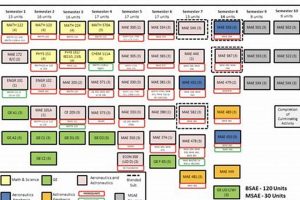
The curriculum typically includes courses in aerodynamics, propulsion, structural analysis, materials science, and control systems. These courses furnish a comprehensive understanding of the principles governing aircraft and spacecraft design and operation. For instance, the study of aerodynamics elucidates the forces acting on an aircraft in flight, while propulsion courses cover the design and operation of jet engines and rocket motors. Mastery of these concepts is crucial for engineers involved in the design and development of aerospace vehicles.
- Hands-on Experience
Many programs incorporate laboratory work, design projects, and computer simulations, providing practical experience in applying theoretical concepts to real-world problems. Students may design and test airfoil shapes in wind tunnels or conduct structural analyses of aircraft components using finite element analysis software. This hands-on experience is invaluable in preparing graduates for the challenges of engineering practice.
- Accreditation
Graduating from an ABET-accredited program is essential for professional licensure and recognition. Accreditation ensures that the program meets rigorous standards for curriculum content, faculty qualifications, and facilities. Employers often prioritize graduates from accredited programs, as it signifies that they have received a high-quality education that meets industry needs. In many jurisdictions, licensure as a professional engineer requires graduation from an accredited program.
- Career Entry
A bachelor’s degree typically qualifies graduates for entry-level positions in aerospace companies, government agencies, and research institutions. These positions may involve design, testing, analysis, or manufacturing of aerospace vehicles and related systems. The degree also serves as a stepping stone for further education, such as a master’s or doctoral degree, which can lead to advanced research or leadership roles.
In summation, obtaining a bachelor’s degree is a non-negotiable first step for a career in aerospace engineering. The knowledge, skills, and credentials gained from this degree are indispensable for success in this technologically advanced and highly regulated field. Furthermore, successful completion opens doors to specialized pathways, ensuring professionals remain at the forefront of innovation and development.
2. Accredited Program

An accredited program forms a crucial component of the academic qualifications required for a career in aerospace engineering. The connection stems from the assurance of quality and relevance that accreditation provides. Agencies like ABET (Accreditation Board for Engineering and Technology) evaluate aerospace engineering programs against established standards, confirming that the curriculum adequately prepares students for the profession. Graduation from a non-accredited program can significantly hinder career prospects, limiting eligibility for licensure and certain employment opportunities. This is because employers and licensing boards often use accreditation as a benchmark for assessing a candidate’s educational background. For example, many government positions within organizations such as NASA or the Department of Defense specifically require a degree from an ABET-accredited institution.
The practical significance of attending an accredited program is multifaceted. The curriculum is designed to align with industry needs, ensuring that graduates possess the necessary technical skills and knowledge to contribute effectively from day one. Accredited programs undergo periodic reviews to maintain their status, compelling them to continuously update their curriculum and teaching methods to reflect advances in the field. Furthermore, these programs often have strong ties to industry, facilitating internships, research opportunities, and networking events that provide invaluable real-world experience. The practical application of classroom learning to real-world scenarios is a hallmark of an accredited program, and greatly benefits the preparation of aerospace engineers.
In summary, the connection between accredited programs and the degrees needed to become an aerospace engineer is intrinsic. Accreditation serves as a validation of program quality, ensuring that graduates are well-prepared for the demands of the profession. Choosing an accredited program is a strategic decision that can significantly enhance career prospects and provide a solid foundation for lifelong learning and professional growth within the aerospace industry. While alternative pathways may exist, the challenges associated with bypassing accreditation are considerable, making it a cornerstone of a successful career in aerospace engineering.
3. Core Coursework

Core coursework forms an indispensable element of the curriculum required for an aerospace engineering degree. The degree’s value derives significantly from the mastery of fundamental concepts embedded within these core subjects. This mandatory coursework imparts the foundational knowledge necessary for the subsequent application of engineering principles to the design, development, and testing of aerospace vehicles and systems. For instance, studies in thermodynamics provide the basis for understanding propulsion systems, while coursework in fluid mechanics is crucial for analyzing aerodynamic forces on aircraft. These subjects, being universally required, ensure that all graduates possess a baseline level of competence in the most critical areas of aerospace engineering. Without a strong grasp of this fundamental coursework, it becomes exceedingly difficult to advance to specialized areas or contribute meaningfully to practical engineering projects.
The practical significance of these courses becomes evident in real-world scenarios. Consider the design of a new aircraft wing: engineers must apply principles learned in aerodynamics, structural analysis, and materials science to ensure the wing provides adequate lift, can withstand flight loads, and minimizes weight. Similarly, the development of a satellite requires a thorough understanding of orbital mechanics, control systems, and communications to ensure the satellite operates correctly in space. Aerospace engineers also work in flight testing, where knowledge from core coursework is vital to interpret data and recommend changes in the vehicle’s design. These examples illustrate how a thorough grasp of the foundational principles taught in these courses is directly applicable to the everyday tasks of an aerospace engineer.
In summary, core coursework provides the essential foundation upon which all other aspects of aerospace engineering knowledge are built. It equips students with the theoretical and practical understanding necessary to tackle complex engineering problems. Mastery of core concepts is not merely a requirement for graduation but also a crucial determinant of an aerospace engineer’s effectiveness and ability to contribute to the advancement of the field. The challenges in aerospace engineering demand a firm grasp of these fundamentals, making core coursework an inseparable part of what an aerospace engineering degree entails.
4. Specialization Options
Specialization options within aerospace engineering curricula represent a crucial facet of advanced academic preparation. While a bachelor’s degree provides the foundational knowledge, concentrated study in specific areas allows students to develop expertise aligned with particular career trajectories.
- Aerodynamics and Fluid Mechanics
This specialization focuses on the study of air and gas flow, essential for designing efficient and stable aircraft. Students delve into computational fluid dynamics (CFD), wind tunnel testing, and boundary layer theory. This knowledge is directly applicable to improving aircraft fuel efficiency, reducing drag, and enhancing overall aerodynamic performance. For instance, an aerospace engineer specializing in this area might work on optimizing the wing design of a new commercial airliner to minimize fuel consumption, ultimately decreasing operational costs and environmental impact.
- Structures and Materials
Concentrating on the mechanical behavior of aerospace vehicles, this specialization involves the analysis and design of airframes, spacecraft components, and propulsion systems. Students study materials science, finite element analysis, and structural dynamics. Real-world applications include developing lightweight, high-strength composite materials for aircraft fuselages and ensuring the structural integrity of spacecraft during launch and operation. A structures specialist might be involved in designing the heat shield of a reentry vehicle to withstand extreme temperatures during atmospheric entry.
- Propulsion
This area focuses on the design and analysis of engines and propulsion systems for both aircraft and spacecraft. Students study thermodynamics, combustion, and turbomachinery. Propulsion specialists are essential for developing more efficient jet engines, designing rocket motors for space launch vehicles, and exploring alternative propulsion technologies such as electric propulsion. For example, an engineer specializing in propulsion might work on improving the thrust-to-weight ratio of a rocket engine to increase payload capacity or designing a more fuel-efficient turbofan engine for a passenger jet.
- Control Systems
This specialization involves the design and implementation of systems that control the behavior of aerospace vehicles. Students study feedback control theory, robotics, and avionics. Control systems engineers are critical for developing autopilot systems for aircraft, guidance and navigation systems for spacecraft, and flight control systems that enhance aircraft stability and maneuverability. A control systems specialist might work on designing the flight control algorithms for a new unmanned aerial vehicle (UAV) to improve its autonomous navigation capabilities.
The availability of these specialization options underscores the depth and breadth of aerospace engineering as a discipline. The choice of specialization often influences career paths, with certain areas aligning more closely with specific industries or research fields. These focused areas of study complement the core knowledge obtained through the general aerospace engineering degree, providing graduates with a competitive edge in a rapidly evolving field. This specialization directly correlates with advancements and innovation as specialized engineers are more apt to engage in the growth of the Aerospace industries.
5. Advanced Degrees
While a bachelor’s degree in aerospace engineering is generally considered the entry-level academic qualification, the pursuit of advanced degrees, such as a Master of Science (MS) or Doctor of Philosophy (PhD), represents a significant expansion of knowledge and expertise within specialized areas. These advanced qualifications influence career trajectories and opportunities available within the aerospace sector.
- Enhanced Specialization
Advanced degrees allow for deeper specialization in niche areas of aerospace engineering, beyond the breadth covered in a bachelor’s program. For example, an MS degree might focus on computational fluid dynamics, while a PhD could involve original research in advanced materials for hypersonic flight. This level of specialization prepares individuals for highly technical roles that require in-depth knowledge and analytical skills.
- Research and Development Roles
Positions in research and development (R&D) often necessitate an advanced degree, particularly for roles involving theoretical work, experimental design, and data analysis. Organizations such as NASA, research universities, and aerospace companies actively seek individuals with advanced degrees to lead and contribute to cutting-edge research initiatives. A PhD is frequently a prerequisite for leading research teams or securing tenure-track faculty positions at universities.
- Leadership and Management Opportunities
While not always a direct requirement, an advanced degree can provide a competitive advantage for leadership and management roles within aerospace organizations. The critical thinking, problem-solving, and project management skills honed during advanced studies are highly valued in supervisory and executive positions. An MS or PhD demonstrates a commitment to professional development and a capacity for handling complex challenges.
- Increased Earning Potential
Generally, individuals with advanced degrees in aerospace engineering experience higher earning potential compared to those with only a bachelor’s degree. The increased expertise and specialized skills associated with advanced qualifications command higher salaries in the job market. Furthermore, advanced degrees can open doors to positions that offer greater long-term career growth and advancement opportunities.
In conclusion, while a bachelor’s degree serves as the foundational academic qualification, the pursuit of advanced degrees can significantly enhance career prospects within aerospace engineering. The specialized knowledge, research experience, and leadership skills cultivated during advanced studies open doors to a wider range of opportunities and contribute to the advancement of the field. The decision to pursue an advanced degree depends on individual career goals and aspirations, but it represents a viable pathway for those seeking to excel in this competitive and rapidly evolving industry.
Frequently Asked Questions
The following addresses common inquiries concerning academic qualifications for pursuing a career in aerospace engineering. The information presented is intended to provide clarity and guidance for prospective students.
Question 1: Is a specific type of bachelor’s degree required?
A Bachelor of Science (BSc) in Aerospace Engineering is the most direct and commonly pursued path. However, a BSc in a closely related engineering discipline, such as Mechanical Engineering or Engineering Physics, coupled with relevant coursework, may also be acceptable.
Question 2: Is it possible to become an aerospace engineer with a two-year associate’s degree?
While an associate’s degree can provide a foundation in engineering principles, it is generally insufficient for direct entry into aerospace engineering positions. An associate’s degree can serve as a stepping stone to a bachelor’s degree through transfer programs.
Question 3: Are online aerospace engineering degrees recognized by employers?
Online degrees from accredited institutions are generally recognized. The key factor is accreditation by a reputable organization, such as ABET. Employers prioritize candidates with degrees from accredited programs, regardless of the delivery method.
Question 4: Does the specific university attended significantly impact career prospects?
While the reputation of the university can play a role, accreditation, curriculum quality, and practical experience gained through internships are more influential factors. Graduates from lesser-known but accredited programs can be competitive if they possess strong technical skills and relevant experience.
Question 5: Is a master’s degree necessary for career advancement in aerospace engineering?
A master’s degree is not always mandatory for career advancement, but it can significantly enhance prospects for specialized roles, research positions, and leadership opportunities. Many aerospace engineers pursue master’s degrees after gaining several years of industry experience.
Question 6: Can work experience substitute for a formal degree in aerospace engineering?
While relevant work experience is valuable, it cannot typically substitute for a formal degree. Aerospace engineering is a highly technical field that requires a strong foundation in mathematics, science, and engineering principles, which are typically acquired through formal education.
In summary, a bachelor’s degree in aerospace engineering, or a closely related field, from an accredited institution is the standard academic qualification. Advanced degrees and practical experience further enhance career prospects within this demanding yet rewarding engineering discipline.
The subsequent section will present alternative paths to an aerospace engineering career and considerations for those who may not initially possess the conventional academic background.
What Degree Do You Need to Become an Aerospace Engineer
This exploration has delineated the essential academic qualifications necessary for entry into the field of aerospace engineering. A Bachelor of Science in Aerospace Engineering from an accredited program constitutes the foundational requirement. This degree provides a comprehensive understanding of aerodynamics, propulsion, structures, and control systems, all critical for the design and development of aircraft and spacecraft. While specialization options and advanced degrees can further enhance career prospects, a solid undergraduate education remains the cornerstone of professional competence.
The aerospace industry’s demands for skilled professionals necessitates rigorous academic preparation. Aspiring engineers should prioritize accreditation, hands-on experience, and a strong grasp of core coursework. The path to becoming an aerospace engineer requires dedication and focused effort, but the potential to contribute to the advancement of air and space technology is a significant reward. Professionals in the field are urged to maintain an unwavering commitment to excellence as they shape the future of aerospace innovation.

![[IIT Aero Expert] Abhay Singh: Aerospace Engineering Insights | Innovating the Future of Flight with Reliable Aviation Solutions](https://mixaerospace.com/wp-content/uploads/2026/05/th-139-300x200.jpg "[IIT Aero Expert] Abhay Singh: Aerospace Engineering Insights Innovating the Future of Flight with Reliable Aviation Solutions")