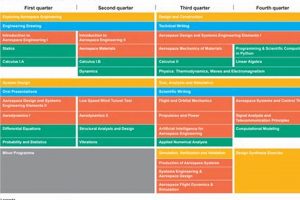
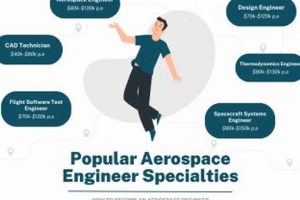
The field encompasses the design, development, testing, and production of aircraft, spacecraft, and related systems. Professionals in this area apply principles of physics, engineering, and mathematics to create innovative solutions for atmospheric and space-based challenges. Examples of their work include designing more efficient aircraft wings, developing propulsion systems for rockets, and creating satellites for communication and observation.
This discipline is critical for advancements in air travel, space exploration, national defense, and scientific research. Historically, it has driven significant technological breakthroughs, leading to safer, faster, and more fuel-efficient transportation, as well as a deeper understanding of the universe. Contributions from this sector have profound implications for economic growth and global connectivity.
The ensuing discussion will delve into specific specializations, required skills, career paths, and the future outlook for individuals contributing to this vital segment of engineering. Further exploration will reveal the multifaceted nature of the work and its ongoing impact on society.
Guidance for Aspiring Professionals
This section offers essential guidance to individuals seeking a career in the field. Adhering to these recommendations can enhance academic preparation and professional prospects.
Tip 1: Strengthen Foundational Knowledge: A robust understanding of mathematics, physics, and computer science is paramount. Focus on excelling in related coursework and seek opportunities for advanced learning. For example, delve into computational fluid dynamics or structural analysis during undergraduate studies.
Tip 2: Gain Practical Experience: Internships and research opportunities provide invaluable real-world experience. Actively pursue placements at aerospace companies, government agencies, or university research labs. Participation in projects such as designing and building unmanned aerial vehicles can be particularly beneficial.
Tip 3: Develop Specialized Skills: Identify a specific area of interest within the discipline and cultivate expertise in that domain. This could involve specializing in propulsion systems, aerodynamics, structural mechanics, or avionics. Certification or focused training can further enhance specialization.
Tip 4: Hone Problem-Solving Abilities: The field demands strong analytical and problem-solving skills. Engage in challenging projects and exercises that require critical thinking and innovative solutions. Consider participating in engineering competitions or design challenges to test and refine these abilities.
Tip 5: Cultivate Communication Skills: Effectively conveying technical information is crucial for success. Practice writing technical reports, delivering presentations, and participating in team discussions. Strong communication skills facilitate collaboration and knowledge sharing.
Tip 6: Embrace Lifelong Learning: The field is constantly evolving, requiring continuous learning and adaptation. Stay abreast of the latest technological advancements by reading industry publications, attending conferences, and pursuing continuing education opportunities.
By adhering to these recommendations, aspiring professionals can build a strong foundation for a successful and fulfilling career. Proactive engagement in academic and professional development significantly enhances long-term prospects.
The subsequent section will explore emerging trends and future challenges within the aerospace industry, highlighting opportunities for innovation and advancement.
1. Design Aircraft

Aircraft design is a fundamental component of what aerospace engineers do. It encompasses the application of scientific and engineering principles to create airworthy vehicles capable of fulfilling specific operational requirements. This process necessitates a comprehensive understanding of aerodynamics, structural mechanics, propulsion systems, materials science, and avionics. The correlation is causative: design specifications directly influence the aircraft’s performance, safety, and efficiency. For instance, wing geometry designed by aerospace engineers dictates lift and drag characteristics, thereby affecting fuel consumption and flight range. This is a primary aspect of what they do.
The importance of aircraft design within the broader field is underscored by its direct impact on air transportation, national defense, and commercial aviation. Consider the Boeing 787 Dreamliner; its design, spearheaded by aerospace engineers, incorporated lightweight composite materials and efficient engine technology to significantly reduce fuel consumption. Similarly, the design of military aircraft, such as the F-35 fighter jet, prioritizes stealth, maneuverability, and advanced sensor integration, all products of intensive engineering design and testing. These represent what aerospace engineers do.
Understanding aircraft design is practically significant because it enables the development of safer, more efficient, and more capable aircraft. Challenges within this field include balancing competing performance requirements, mitigating environmental impact, and adapting to rapidly evolving technologies. As air travel continues to grow and new aviation technologies emerge, the expertise of aerospace engineers in aircraft design will remain essential for advancing the field and ensuring the continued safety and sustainability of air transportation. This is a central part of what they do.
2. Develop Spacecraft

Spacecraft development is a critical function performed by aerospace engineers, integral to what the profession encompasses. It involves designing, constructing, testing, and deploying vehicles for operation in the vacuum of space, under extreme thermal conditions, and subject to unique radiation environments. The process demands rigorous application of physics, materials science, and control systems engineering.
- Orbital Mechanics and Trajectory Design
Aerospace engineers specializing in spacecraft development calculate orbital trajectories, plan mission profiles, and design guidance systems to ensure accurate positioning and navigation. This may include Hohmann transfers for efficient orbit changes or gravity assists for interplanetary missions. The accurate calculation of orbital parameters directly influences mission success and fuel efficiency, vital in what aerospace engineers do.
- Environmental Control and Life Support Systems (ECLSS)
For manned spacecraft, aerospace engineers design ECLSS to maintain habitable conditions, including temperature regulation, air purification, and water recycling. These systems must function reliably under extreme conditions, ensuring astronaut survival and mission duration. Failures in ECLSS can have catastrophic consequences, underlining the critical role these engineers play.
- Radiation Shielding and Thermal Management
Spacecraft must withstand intense radiation and extreme temperature fluctuations. Aerospace engineers develop materials and thermal control systems to protect sensitive electronic components and maintain optimal operating temperatures. Multi-layer insulation, heat pipes, and specialized coatings are utilized to mitigate these effects. The effectiveness of these systems directly affects the lifespan and functionality of the spacecraft, a critical aspect of the work.
- Communication and Data Handling Systems
Reliable communication is crucial for spacecraft operation. Aerospace engineers design communication systems to transmit data between the spacecraft and ground stations, ensuring timely reception of scientific data and transmission of commands. High-gain antennas, transponders, and error-correcting codes are employed to overcome the challenges of long-distance communication. The design of these systems is essential for successful mission operations.
The multifaceted nature of spacecraft development highlights the breadth of expertise required of aerospace engineers. Their contributions are essential not only for scientific exploration and satellite deployment, but also for advancing fundamental knowledge of the universe and improving life on Earth through satellite-based technologies. The ongoing advancements in spacecraft technologies are a direct result of their expertise and dedication.
3. Propulsion Systems

Propulsion systems are integral to aerospace engineering, representing the core technology that enables both atmospheric and spaceflight. The design, analysis, and development of these systems are central activities, directly determining the performance capabilities and mission parameters of aircraft and spacecraft.
- Rocket Engines
Rocket engine development is a critical aspect. This includes designing engines using liquid or solid propellants to generate thrust for orbital maneuvers, interplanetary travel, and satellite launch. Engineers optimize combustion processes, nozzle geometry, and fuel injection systems to maximize specific impulse and thrust-to-weight ratios. Examples include the development of the Space Shuttle Main Engines (SSME) and the Merlin engines used by SpaceX, both achievements dependent on aerospace engineering expertise.
- Gas Turbine Engines
Gas turbine engines power the vast majority of commercial and military aircraft. Aerospace engineers design these engines to maximize efficiency and power while minimizing emissions and noise. This involves compressor design, turbine blade optimization, and advanced combustion strategies. Examples include the General Electric GE90 engine used on the Boeing 777 and the Pratt & Whitney F119 engine used on the F-22 Raptor, each showcasing significant design breakthroughs that require specialized engineering skill.
- Electric Propulsion
Electric propulsion offers high efficiency and is commonly used for satellite station-keeping and deep-space missions. Aerospace engineers develop ion thrusters and Hall-effect thrusters that use electric fields to accelerate ionized propellant. These systems provide low thrust but can operate continuously for extended periods. Examples include the NEXT ion propulsion system used on NASA’s Dawn spacecraft and various Hall-effect thrusters employed on communication satellites, highlighting the expanding role of these systems in what they do.
- Hypersonic Propulsion
Hypersonic propulsion systems, such as scramjets and ramjets, are designed for flight at speeds exceeding Mach 5. Aerospace engineers are actively developing these engines for future hypersonic aircraft and missiles. Challenges include managing high temperatures, achieving stable combustion at supersonic airflow, and integrating the engine into the airframe. The X-43A and X-51A test vehicles represent significant milestones in the development of hypersonic technology, signifying ongoing advancements driven by engineering research.
The progression in propulsion technology is constantly shaping the capabilities of flight. With the need for fuel efficient transport systems, along with the need for exploring and harnessing space, the role of propulsion systems for flight is undeniable.
4. Materials Science

Materials science is an indispensable discipline within aerospace engineering. The selection, development, and application of materials are critical to the performance, safety, and longevity of aircraft and spacecraft. The properties of materials, such as strength, weight, thermal resistance, and corrosion resistance, directly influence design decisions and operational capabilities. The discipline is central to addressing the multifaceted challenges of aerospace applications.
- Lightweight Alloys and Composites
The need to reduce weight while maintaining structural integrity has driven the development of advanced materials. Aluminum alloys, titanium alloys, and carbon fiber reinforced polymers are commonly used. These materials offer high strength-to-weight ratios, improving fuel efficiency and payload capacity. The Boeing 787 Dreamliner, for instance, extensively uses composite materials, reducing its overall weight and improving fuel consumption. This use of advanced materials is a direct result of materials science applied to aerospace engineering challenges.
- High-Temperature Materials
Components within aircraft and spacecraft propulsion systems, such as turbine blades and rocket nozzles, are exposed to extremely high temperatures. Materials like nickel-based superalloys, ceramics, and refractory metals are designed to withstand these conditions. These materials maintain their strength and resist oxidation at elevated temperatures, ensuring reliable engine performance. The development of these high-temperature materials has been critical for advancing jet engine and rocket engine technology.
- Radiation-Resistant Materials
Spacecraft operating in Earth orbit or deep space are exposed to harmful radiation. Materials are engineered to shield sensitive electronic components and protect astronauts from radiation exposure. Aluminum, titanium, and specialized polymers with radiation-absorbing additives are utilized. Understanding radiation damage mechanisms and developing effective shielding strategies are crucial for long-duration space missions. The selection of appropriate shielding materials is a key aspect of spacecraft design.
- Smart Materials
Smart materials, such as shape memory alloys and piezoelectric materials, offer the potential to enhance aircraft and spacecraft performance. Shape memory alloys can change shape in response to temperature changes, enabling adaptive wing designs or self-deploying structures. Piezoelectric materials generate electricity when subjected to mechanical stress, enabling energy harvesting or active vibration control. These materials are being explored for various aerospace applications, including morphing wings and structural health monitoring. These advanced materials signify the expanding possibilities of materials science in aerospace engineering.
The ongoing research and development in materials science continue to drive advancements in aerospace technology. The ability to design and utilize materials with specific properties is essential for creating more efficient, safer, and more capable aircraft and spacecraft. The field will remain central to meeting the challenges of future aerospace missions and exploration endeavors.
5. Avionics Integration
Avionics integration constitutes a critical aspect of aerospace engineering. It involves the seamless combination of electronic systems that control, navigate, communicate, and monitor the performance of aircraft and spacecraft. This integration demands a thorough understanding of electrical engineering, computer science, and aerospace principles. A failure in avionics integration can directly compromise flight safety and mission success, thereby underscoring its central role.
The importance of avionics integration is exemplified by modern aircraft systems, such as fly-by-wire controls, which replace mechanical linkages with electronic interfaces. These systems rely on sophisticated sensors, computers, and actuators to maintain stability and execute pilot commands. The development of integrated flight management systems (FMS), which optimize flight paths, fuel consumption, and aircraft performance, provides another example of the pivotal role played. Furthermore, spacecraft increasingly rely on complex avionics to manage power, communications, thermal control, and scientific instruments. A properly integrated avionics suite is fundamental to achieving desired performance parameters. The design and implementation of these complex systems are intrinsically part of what aerospace engineers do.
The ongoing advancements are central to future progress. Challenges persist in ensuring cybersecurity, reliability, and scalability of avionics systems. As autonomous flight and space exploration become more prevalent, these integration-related issues assume greater importance. In summary, it is essential for achieving reliable, safe, and high-performance flight. Without skillful integration of avionics, progress is halted and the potential within aerial and space travel is at risk.
6. Testing and Analysis
Testing and analysis constitute a cornerstone of aerospace engineering, functioning as a rigorous process to validate designs, identify potential failures, and ensure the safety and reliability of aircraft and spacecraft. These processes are directly linked to what aerospace engineers do, forming an essential iterative loop in the development cycle. The results from testing and analysis dictate design modifications and material selection, thereby exerting a causal influence on the final product. Without comprehensive testing and analysis, the risks associated with flight increase exponentially, undermining mission objectives and endangering human lives.
The importance of testing and analysis is readily apparent in numerous examples. Wind tunnel testing, for instance, allows engineers to assess the aerodynamic performance of aircraft designs under controlled conditions, identifying areas of high drag or instability. Structural testing, which involves subjecting aircraft components to simulated flight loads, detects weaknesses and potential failure points. Similar testing methodologies are applied to spacecraft components to ensure their ability to withstand the extreme conditions of space, including radiation exposure and thermal cycling. The Space Shuttle program, despite its successes, suffered from failures traced back to inadequate testing and analysis of critical components, thereby reinforcing the need for meticulous and comprehensive evaluation protocols. This is often associated with the actions aerospace engineers take.
Understanding the role of testing and analysis is practically significant for engineers aiming to contribute to the aerospace field. It fosters a culture of rigorous scrutiny and data-driven decision-making. Challenges remain in accurately simulating real-world conditions and developing advanced testing techniques for novel materials and designs. Nevertheless, a commitment to thorough testing and analysis is indispensable for ensuring the safety, reliability, and performance of aerospace vehicles, directly embodying the core principles of what aerospace engineers do.
Frequently Asked Questions
This section addresses common inquiries regarding the scope, responsibilities, and impact of aerospace engineering. The information provided aims to clarify misconceptions and offer a comprehensive overview of the field.
Question 1: What are the primary disciplines encompassed by aerospace engineering?
Aerospace engineering primarily includes two overlapping branches: aeronautical engineering, which focuses on aircraft operating within Earth’s atmosphere, and astronautical engineering, which deals with spacecraft and related technologies operating in outer space. Both disciplines require a strong foundation in mathematics, physics, and engineering principles.
Question 2: What specific tasks are performed by professionals in this field?
Professionals design, develop, test, and supervise the manufacturing of aircraft, spacecraft, satellites, and missiles. Responsibilities extend to propulsion systems, aerodynamics, structural analysis, materials science, and avionics. Tasks may also include mission planning, orbital mechanics, and systems integration.
Question 3: What distinguishes it from other engineering disciplines?
Aerospace engineering distinguishes itself through its specialized focus on flight vehicles and systems. It uniquely addresses challenges related to atmospheric flight, space environments, and the extreme conditions encountered by aircraft and spacecraft. The application of advanced materials, propulsion systems, and control mechanisms sets it apart from other fields.
Question 4: What are the typical career paths available to graduates with an aerospace engineering degree?
Graduates can pursue careers in aircraft manufacturing, space exploration, satellite development, research and development, government agencies, and consulting firms. Opportunities also exist in defense, aviation, and related industries. Specific roles may include design engineer, test engineer, systems engineer, or project manager.
Question 5: How does it contribute to technological advancements and societal benefits?
It drives innovation in aerodynamics, propulsion, materials science, and control systems, leading to safer, more efficient, and more capable aircraft and spacecraft. These advancements have broad societal benefits, including improved air transportation, expanded space exploration, enhanced national defense, and increased understanding of the universe.
Question 6: What future trends and challenges are anticipated in the field?
Future trends include the development of autonomous aircraft, hypersonic flight vehicles, sustainable aviation technologies, and advanced space exploration missions. Challenges involve mitigating environmental impact, ensuring cybersecurity, and addressing the complexities of long-duration space travel.
In summary, aerospace engineering is a complex and multifaceted discipline that plays a crucial role in advancing technology and benefiting society. Its contributions are essential for the continued progress of aviation, space exploration, and related industries.
The next section will examine the educational requirements and recommended skills for aspiring professionals in this dynamic field.
Conclusion
This exploration has detailed the multifaceted nature of what do aerospace engineering do, highlighting its crucial role in the design, development, testing, and production of aircraft, spacecraft, and related systems. The integration of disciplines like aerodynamics, propulsion, materials science, and avionics has been emphasized as essential for innovation and advancement within the field. The importance of continuous learning and adaptation to emerging technologies has also been underscored.
Given its impact on air travel, space exploration, national defense, and scientific discovery, continued investment in and support of aerospace engineering are paramount. Further research and development, coupled with a commitment to ethical and sustainable practices, will ensure that this field remains a driving force for progress, shaping the future of transportation and our understanding of the universe.