The field of aerospace engineering encompasses the design, development, and testing of aircraft and spacecraft. Resulting from this work are numerous technological advancements that have profoundly impacted both aviation and space exploration. For instance, the creation of lighter, stronger materials has enabled the construction of more efficient aircraft, while innovations in propulsion systems have made space travel more feasible.
These inventions are critical for national defense, scientific discovery, and commercial endeavors. Historically, progress in this sector has driven economic growth and spurred innovations in other fields. From improved weather forecasting to advanced communication satellites, the benefits of advancements in this field extend far beyond the realm of flight.
Therefore, a detailed examination of specific contributions, from the development of the jet engine to the creation of advanced control systems, is warranted to fully appreciate the breadth and depth of progress driven by experts in this field. The following sections will delve into notable examples of their innovative work and their impact on society.
Innovations from Aerospace Engineering
Understanding the advancements stemming from aerospace engineering requires a focus on practicality, impact, and future potential. The following points highlight essential areas where these innovations have significantly contributed to societal progress.
Tip 1: Materials Science: Advancements in lightweight, high-strength materials are paramount. These materials, such as carbon fiber composites and advanced alloys, enable more efficient aircraft and spacecraft, reducing fuel consumption and increasing payload capacity. An example is the use of titanium alloys in jet engine components, allowing for higher operating temperatures and improved performance.
Tip 2: Propulsion Systems: The development of advanced propulsion systems, including jet engines, rocket engines, and electric propulsion, is critical. Each system serves a unique purpose, from enabling commercial air travel to facilitating deep-space exploration. Consider the evolution of turbofan engines, which have dramatically improved fuel efficiency in modern aircraft.
Tip 3: Aerodynamics and Fluid Dynamics: Innovative designs based on a deep understanding of aerodynamics and fluid dynamics are crucial. These designs optimize aircraft and spacecraft for specific performance characteristics, such as speed, maneuverability, and stability. The implementation of winglets on aircraft wings is a prime example of aerodynamic optimization, reducing drag and improving fuel economy.
Tip 4: Navigation and Control Systems: Sophisticated navigation and control systems are essential for safe and efficient operation. These systems rely on advanced sensors, algorithms, and software to guide aircraft and spacecraft through complex environments. GPS and inertial navigation systems are critical components in ensuring accurate positioning and control.
Tip 5: Satellite Technology: The development and deployment of satellites for communication, observation, and research have revolutionized numerous industries. From weather forecasting to global communication networks, satellite technology has become indispensable. The evolution of satellite communication systems has enabled real-time communication across the globe.
Tip 6: Avionics and Electronics: Advanced avionics and electronic systems are essential for integrating various functions within aircraft and spacecraft. These systems manage everything from engine control to flight management, ensuring seamless operation. Fly-by-wire systems, which replace mechanical controls with electronic interfaces, are a testament to the advancements in avionics.
These advances are driven by the need for safer, more efficient, and more capable air and space vehicles. Continuous research and development in these areas are essential to maintaining technological leadership and addressing future challenges.
By acknowledging these aspects, a more holistic understanding of the significance and impact of aerospace engineering innovations is achieved. Further exploration into these specific fields can unlock even greater benefits for society.
1. Aircraft

The connection between aircraft and advancements achieved by aerospace engineers is fundamental. Aircraft represent tangible outcomes of applying aerospace engineering principles. Design, testing, and manufacturing processes within the aerospace engineering discipline directly influence aircraft performance, safety, and efficiency. Historical examples demonstrate the cause-and-effect relationship. The introduction of the jet engine, a product of aerospace innovation, radically altered air travel, enabling faster speeds and longer distances. Similarly, the development of aerodynamic wing designs improves fuel economy and maneuverability.
Aircraft are not merely end products; they are platforms for further advancements. Each new generation of aircraft incorporates improvements in materials science, propulsion systems, and avionics. For example, the Boeing 787 Dreamliner showcases the application of composite materials, reducing weight and increasing fuel efficiency. The Airbus A380, the world’s largest passenger aircraft, demonstrates the integration of advanced aerodynamics and flight control systems to manage its size and complexity. Unmanned aerial vehicles (UAVs) highlight the ongoing development of autonomous flight control systems and their increasing application in various fields.
The practical significance of understanding this connection lies in its ability to drive further innovation. By analyzing the performance of existing aircraft, engineers can identify areas for improvement and develop new technologies. Addressing challenges such as reducing emissions, increasing fuel efficiency, and enhancing safety requires continuous research and development. Aircraft serve as a testing ground for emerging technologies, linking theoretical advancements with real-world applications and pushing the boundaries of what is possible in aviation.
2. Satellites
Satellites exemplify the direct result of the expertise of aerospace engineers. The design, construction, and deployment of these orbiting platforms are entirely dependent on the principles and practices established within the field. The functionality of a satellite, whether for communication, observation, or navigation, stems directly from advancements pioneered by specialists in this area. The development of materials able to withstand the harsh conditions of space, the creation of efficient power systems to sustain operations, and the refinement of propulsion mechanisms to achieve and maintain orbit are all demonstrable effects of innovation within aerospace engineering.
Satellites serve as critical infrastructure for global communication networks, weather monitoring systems, and scientific research initiatives. GPS satellites, for example, provide precise positioning data utilized across various sectors, from transportation to agriculture. Earth observation satellites deliver valuable data for environmental monitoring and disaster response. Communication satellites facilitate international connectivity, enabling television broadcasting and internet access. These applications underscore the practical significance of satellites in modern society, highlighting the tangible benefits derived from the expertise of aerospace engineers. The ongoing development of smaller, more cost-effective satellites, such as CubeSats, demonstrates the continuous innovation within this field.
Challenges remain in extending satellite lifespan, reducing orbital debris, and enhancing data processing capabilities. Addressing these issues requires continued collaboration between aerospace engineers, scientists, and policymakers. Satellites represent a fundamental component of modern infrastructure, and ongoing investment in research and development is crucial for maintaining their effectiveness and expanding their capabilities, therefore, contributing directly to the overarching theme of advancement driven by the expertise within aerospace engineering.
3. Engines

The advancement of engines stands as a central achievement of aerospace engineering. Engines, in this context, are not merely mechanical components but sophisticated systems representing a culmination of aerodynamic principles, thermodynamics, materials science, and control systems engineering. Their evolution directly mirrors progress in aerospace capabilities, enabling flight at higher altitudes, faster speeds, and with greater efficiency.
- Jet Engine Development
The development of the jet engine, particularly the turbojet and turbofan variants, revolutionized air travel. These engines enabled sustained supersonic flight and drastically reduced flight times compared to piston engines. The continuous refinement of jet engine technology, including improved compressor and turbine blade designs, has resulted in significant fuel efficiency gains and reduced emissions. This technological leap has directly enabled the modern air transport industry.
- Rocket Engine Technology
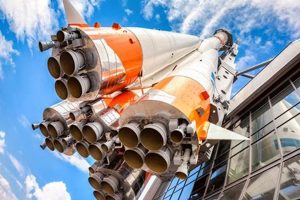
Rocket engines represent a distinct category of engines crucial for space exploration. Aerospace engineers have innovated in areas such as liquid-propellant rocket engines, solid-propellant rocket motors, and more recently, electric propulsion systems. Advancements in rocket engine technology have allowed for heavier payloads to be launched into orbit, longer-duration space missions, and the exploration of distant celestial bodies. The development of reusable rocket engine technology, such as that used in the Space Shuttle and more recently SpaceX’s Falcon rockets, has significantly reduced the cost of space access.
- Hypersonic Propulsion
The pursuit of hypersonic flight has driven research into advanced engine concepts such as scramjets and ramjets. These engines are designed to operate at speeds exceeding Mach 5, presenting significant engineering challenges related to combustion stability and thermal management. Successful development of hypersonic propulsion systems would enable ultra-fast long-range transportation and access to space. Active research and development are focused on overcoming these challenges and demonstrating practical hypersonic engine designs.
- Engine Materials and Manufacturing
The performance and durability of aerospace engines are heavily dependent on the materials used in their construction. Aerospace engineers have developed advanced materials such as nickel-based superalloys, titanium alloys, and ceramic matrix composites capable of withstanding extreme temperatures and stresses. Innovative manufacturing techniques, such as additive manufacturing (3D printing), are being employed to create complex engine components with improved performance characteristics. These advancements enable the development of lighter, more efficient, and more durable engines.
The continued innovation in engine technology remains a critical focus for aerospace engineering. Future advancements will likely involve further improvements in fuel efficiency, reduced emissions, and the development of entirely new propulsion concepts. Engines are a cornerstone of aerospace systems, and their ongoing development directly contributes to the broader advancement of air and space technology.
4. Materials

The development of advanced materials is inextricably linked to advancements attributed to aerospace engineers. The performance characteristics of aircraft and spacecraft are fundamentally limited by the properties of the materials used in their construction. Lighter, stronger, and more heat-resistant materials directly enable improved fuel efficiency, higher speeds, greater payload capacity, and enhanced structural integrity. The invention and application of novel materials are thus critical components of progress in this field. For example, the transition from aluminum alloys to carbon fiber composites in aircraft fuselage construction allows for significant weight reduction without compromising structural strength, leading to reduced fuel consumption and increased range. The development of high-temperature alloys, such as nickel-based superalloys, has been essential for the creation of more efficient jet engines, allowing them to operate at higher temperatures and generate greater thrust.
Furthermore, the harsh operating environments of aerospace vehicles necessitate materials with specialized properties. Spacecraft materials must withstand extreme temperature fluctuations, radiation exposure, and micrometeoroid impacts. The development of ceramic tiles for the Space Shuttle’s thermal protection system demonstrates the necessity of advanced materials for protecting spacecraft during atmospheric re-entry. Similarly, satellite components require materials that maintain their properties in a vacuum environment for extended periods. The continuous pursuit of improved materials drives innovation in various fields, including materials science, chemistry, and manufacturing. Research into nanomaterials, shape-memory alloys, and self-healing composites holds promise for future aerospace applications.
In conclusion, the intimate relationship between materials science and aerospace engineering cannot be overstated. Progress in aerospace technology relies heavily on the invention and application of novel materials. Addressing challenges related to cost, manufacturing scalability, and material durability remains crucial for realizing the full potential of these advancements. The continued exploration of new materials and manufacturing processes is essential for pushing the boundaries of what is possible in air and space exploration.
5. Avionics

Avionics, an abbreviation for aviation electronics, represents a critical domain within aerospace engineering. The integration of electronic systems into aircraft and spacecraft has fundamentally transformed navigation, control, communication, and overall operational capabilities. These systems, the result of dedicated research and development efforts, are essential components of modern air and space vehicles.
- Flight Management Systems (FMS)
FMS are sophisticated computer systems that automate and optimize flight planning and navigation. These systems integrate data from various sensors, including GPS, inertial navigation systems (INS), and air data computers, to provide accurate position information and guidance. FMS enable aircraft to fly precise routes, optimize fuel consumption, and navigate complex airspace. Examples include the systems used in commercial airliners to automate flight paths and manage engine performance.
- Automatic Flight Control Systems (AFCS)
AFCS, also known as autopilots, automate aircraft control and provide stability augmentation. These systems use feedback from sensors to maintain desired altitude, heading, and airspeed. AFCS reduce pilot workload, improve safety, and enable precision approaches. Modern airliners rely heavily on AFCS for routine flight operations, particularly during long-duration flights. They also facilitate automatic landing systems, enabling aircraft to land safely in low-visibility conditions.
- Communication and Navigation Systems
Aerospace engineers have designed increasingly sophisticated communication and navigation systems for reliable and secure air-to-ground and air-to-air communication. Modern systems often incorporate satellite communication (SATCOM) and advanced radio technologies. Similarly, navigation systems have evolved from basic radio navigation aids to GPS-based systems and integrated multi-sensor navigation systems. These improvements enhance situational awareness and enable seamless communication across vast distances.
- Electronic Warfare Systems
Military aircraft often incorporate electronic warfare (EW) systems designed to detect, identify, and counter enemy radar and communication systems. EW systems employ advanced signal processing techniques and electronic countermeasures to protect aircraft from threats. These systems are critical for ensuring the survivability of military aircraft in contested environments and represent a significant area of innovation within aerospace engineering.
The advancements in avionics directly correlate with improvements in aircraft safety, efficiency, and operational capabilities. Continuous research and development in this domain are essential for addressing emerging challenges and pushing the boundaries of air and space technology. Avionics are an indispensable aspect of modern aerospace systems, highlighting the crucial contributions of specialists in this field.
6. Systems
Within the framework of accomplishments attributable to aerospace engineers, the concept of “systems” assumes paramount significance. It transcends individual components, encompassing the integration and interaction of numerous elements to achieve complex functional objectives. This holistic approach represents a cornerstone of aerospace engineering’s innovative capabilities.
- Integrated Aircraft Health Management Systems
These systems monitor the performance and condition of various aircraft components in real-time. Utilizing sensors and data analysis algorithms, they detect anomalies, predict potential failures, and schedule maintenance proactively. This enhances safety, reduces downtime, and optimizes maintenance costs. Commercial airlines routinely employ such systems to ensure the airworthiness of their fleets. The development of these integrated systems exemplifies how aerospace engineers combine sensors, data analytics, and communication technologies to improve operational efficiency and safety.
- Satellite Communication Systems
Satellite communication systems are complex networks involving orbiting satellites, ground stations, and user terminals. Aerospace engineers design and integrate these systems to provide global communication services. The design involves optimizing satellite orbits, developing efficient communication protocols, and ensuring reliable signal transmission. From enabling global telephone networks to facilitating satellite television broadcasting, these systems demonstrate the ability of aerospace engineers to create complex infrastructures for global connectivity.
- Air Traffic Management Systems
Air traffic management systems are designed to ensure the safe and efficient flow of air traffic. These systems integrate radar data, communication networks, and decision-support tools to provide air traffic controllers with real-time information and decision-making support. Advanced systems incorporate automated conflict detection and resolution capabilities, enhancing safety and reducing air traffic congestion. The Federal Aviation Administration (FAA) uses such systems to manage air traffic across the United States, highlighting the critical role of aerospace engineers in ensuring the safety and efficiency of air transportation.
- Space Mission Systems
Space mission systems encompass all aspects of a space mission, from spacecraft design and launch operations to mission control and data analysis. These systems require the integration of various technologies, including propulsion systems, communication systems, and life support systems. The success of a space mission depends on the seamless coordination of these elements. Missions to Mars, such as those undertaken by NASA, demonstrate the ability of aerospace engineers to design and execute complex space exploration initiatives.
The design and implementation of these systems represent a hallmark of what aerospace engineers have invented. The ability to integrate diverse technologies and manage complex interactions is crucial for achieving advancements in air and space. Ongoing developments focus on increasing automation, enhancing reliability, and reducing costs, thereby furthering the impact of aerospace engineering on society.
Frequently Asked Questions
This section addresses common inquiries regarding the technological advancements attributed to aerospace engineers. Clarification is provided on the nature, scope, and impact of these contributions.
Question 1: What constitutes an “invention” in the context of aerospace engineering?
In the context of aerospace engineering, an “invention” encompasses novel devices, systems, or processes that significantly advance air and space technology. This includes but is not limited to, new designs for aircraft, spacecraft, engines, materials, avionics, and associated control systems.
Question 2: Beyond aircraft and spacecraft, what other sectors benefit from aerospace engineering innovations?
Aerospace engineering innovations frequently find applications in various other sectors. For example, advanced materials developed for aircraft construction can be adapted for use in automotive engineering, civil engineering, and medical devices. Similarly, computational fluid dynamics techniques developed for aircraft design can be applied to optimize wind turbine performance.
Question 3: How does aerospace engineering contribute to environmental sustainability?
Aerospace engineering plays a role in enhancing environmental sustainability through the development of more fuel-efficient aircraft, alternative propulsion systems, and satellite-based monitoring technologies. Research into biofuels, electric propulsion, and lightweight materials aims to reduce the environmental impact of air travel. Satellite data is also used to monitor deforestation, pollution levels, and climate change.
Question 4: What are some of the biggest challenges currently facing aerospace engineers?
Aerospace engineers face numerous challenges, including reducing the cost of space access, developing sustainable aviation fuels, mitigating orbital debris, and creating more resilient spacecraft for long-duration missions. Further challenges involve managing the increasing complexity of air traffic and adapting to the evolving landscape of autonomous aerial vehicles.
Question 5: How does aerospace engineering contribute to national security?
Aerospace engineering is critical for national security through the development of advanced military aircraft, missile defense systems, and satellite-based surveillance technologies. These innovations enhance defense capabilities and provide strategic advantages in a constantly evolving geopolitical environment.
Question 6: What are the educational pathways for aspiring aerospace engineers?
Aspiring aerospace engineers typically pursue a bachelor’s degree in aerospace engineering or a related field such as mechanical engineering. Advanced degrees, such as master’s or doctoral degrees, are often pursued for specialized research and development roles. A strong foundation in mathematics, physics, and computer science is essential for success in this field.
The advancements fostered by aerospace engineering have a multifaceted impact, ranging from transforming transportation to enabling scientific discoveries. Addressing these fundamental inquiries provides a comprehensive understanding of the field’s influence.
The following section will conclude the examination of “what aerospace engineers have invented” by summarizing the findings.
Conclusion
This exploration has elucidated the extensive array of advancements attributable to the ingenuity of aerospace engineers. From the fundamental design and development of aircraft and spacecraft to the creation of sophisticated propulsion systems, advanced materials, and intricate avionics, their contributions have profoundly shaped both air travel and space exploration. The comprehensive overview, encompassing key innovations and addressing frequently asked questions, underscores the integral role aerospace engineering plays in societal progress and technological advancement.
As aerospace technology continues to evolve, sustained investment in research and development is crucial. The ongoing pursuit of innovation will undoubtedly yield further breakthroughs, addressing future challenges and expanding the horizons of human endeavor in the realms of aviation and space. Continued dedication to this field is essential for maintaining technological leadership and unlocking new possibilities for the benefit of society.