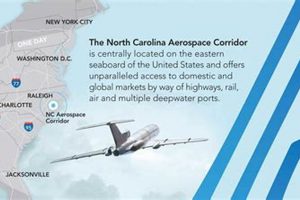
An entity in this field designs, develops, manufactures, tests, and maintains aircraft, spacecraft, missiles, and related systems. This includes diverse activities from conceptual design to the final assembly and support of products operating within and beyond Earth’s atmosphere. A prominent example is a manufacturer of commercial airliners or a firm specializing in satellite technology.
The significance of these organizations lies in their contributions to transportation, communication, defense, and scientific exploration. They drive technological innovation, leading to advancements in materials science, propulsion systems, and electronic components. Historically, these enterprises have played a crucial role in national security and economic growth, fostering skilled employment and technological leadership.
Subsequent sections will delve into the specific areas of activity encompassed by such businesses, including engineering disciplines, manufacturing processes, regulatory frameworks, and future trends shaping their evolution.
Essential Considerations for Engaging with an Aerospace Manufacturer
The following points outline critical considerations when interacting with entities within the aerospace sector. These are intended to guide professionals and stakeholders in navigating complex projects and partnerships.
Tip 1: Prioritize Stringent Quality Assurance: Given the critical nature of aerospace applications, rigorous quality control is paramount. Comprehensive testing and adherence to industry standards are essential throughout the development and production lifecycle.
Tip 2: Emphasize Regulatory Compliance: This sector operates under strict regulations from agencies such as the FAA and EASA. Verifying compliance with all applicable standards is non-negotiable.
Tip 3: Secure Intellectual Property: Protecting proprietary designs, processes, and technologies is vital. Implement robust measures to safeguard intellectual property rights through contracts and security protocols.
Tip 4: Foster Clear Communication Channels: Effective communication between all parties is crucial for project success. Establish well-defined communication channels and protocols to ensure transparency and prompt resolution of issues.
Tip 5: Implement Robust Risk Management Strategies: Evaluate and mitigate potential risks associated with material selection, manufacturing processes, and operational environments. Proactive risk management is key to minimizing potential failures.
Tip 6: Focus on Materials Science and Engineering: This industry relies on advanced materials with specific performance characteristics. Material selection, processing, and testing are vital to product integrity and performance.
Adherence to these guidelines promotes successful collaborations and ensures the delivery of reliable, safe, and high-performance solutions. The insights offered here are pivotal for stakeholders navigating this specialized field.
The article will now conclude with closing remarks regarding the future of enterprises within the aerospace domain.
1. Design and Development
The design and development phase constitutes a foundational element in the operations of an aerospace entity. This phase encompasses conceptualization, detailed engineering, prototyping, and testing of aircraft, spacecraft, and related systems. Without a robust design and development capability, the organization cannot introduce new products, improve existing ones, or adapt to evolving market demands or technological advancements. The efficacy of this stage directly influences the subsequent manufacturing processes, operational performance, and overall competitiveness of the enterprise. For instance, the development of new fuel-efficient engine designs by companies directly impacts fuel consumption and emissions, factors critical to airline profitability and environmental compliance.
An example of the practical application of design and development is seen in the creation of advanced composite materials for aircraft structures. These materials, lighter and stronger than traditional aluminum alloys, require extensive research, testing, and validation before being integrated into aircraft design. These material advancements lead to improved fuel efficiency, increased payload capacity, and enhanced structural integrity. Also vital is the design of flight control systems that contribute significantly to aviation safety and operational capabilities. This phase is inseparable from the function of such a business.
In summary, the design and development phase is integral to the survival and success of an entity in the aerospace domain. Its efficacy in pushing boundaries, embracing innovation, and creating practical engineering solutions underpins the entire operation. Challenges include managing complex engineering challenges, mitigating risks associated with untested technologies, and ensuring compliance with stringent regulatory requirements. The following section will examine the crucial role of manufacturing expertise.
2. Manufacturing Expertise
Manufacturing expertise represents a critical facet of what constitutes an aerospace company. The capacity to translate complex designs into tangible, high-precision components and systems dictates the feasibility and success of aerospace projects. This encompasses a spectrum of processes, from the fabrication of intricate engine parts to the assembly of entire aircraft or spacecraft structures. The required precision, material science knowledge, and quality control protocols are exceptionally demanding, far exceeding those in many other manufacturing sectors. An inability to execute manufacturing processes to exacting specifications results in compromised safety, performance, and reliability. A practical example is seen in the manufacturing of turbine blades for jet engines; these components must withstand extreme temperatures and stresses while maintaining precise aerodynamic profiles. Imperfections or deviations from specifications can lead to catastrophic engine failure.
The significance of manufacturing expertise is further exemplified by the use of advanced materials such as carbon fiber composites in modern aircraft. The manufacturing processes for these materials, including layup, curing, and inspection, require specialized equipment, skilled personnel, and stringent process control. Effective manufacturing ensures structural integrity, weight reduction, and improved fuel efficiency. Furthermore, it influences the cost-effectiveness and scalability of production. A manufacturer that has mastered efficient production techniques gains a competitive edge through reduced manufacturing costs and the ability to meet market demands. An instance of this is seen in mass production of satellite constellations, requiring streamlined manufacturing processes and advanced automation to achieve cost-effectiveness and rapid deployment.
In summary, manufacturing expertise is not merely a supporting function but an integral element of an aerospace enterprise’s identity and capabilities. Mastery of advanced manufacturing techniques is essential for translating designs into functional realities while ensuring safety, performance, and cost-effectiveness. Challenges include managing complex supply chains, implementing stringent quality control measures, and adapting to evolving technological advancements. The following section will address the critical aspect of regulatory compliance.
3. Regulatory Compliance
Regulatory compliance constitutes a non-negotiable cornerstone for any entity identifying as an aerospace company. Strict adherence to national and international regulations is not merely a legal obligation but a prerequisite for operational viability and public safety. Governing bodies such as the Federal Aviation Administration (FAA) in the United States, the European Union Aviation Safety Agency (EASA), and other similar organizations worldwide establish comprehensive standards covering design, manufacturing, maintenance, and operation of aircraft and spacecraft. Violation of these regulations can lead to severe penalties, including fines, operational restrictions, and, in extreme cases, grounding of aircraft or revocation of certifications. An example of this is the rigorous certification process for new aircraft models, where manufacturers must demonstrate compliance with airworthiness directives through extensive testing and documentation. Failure to meet these requirements prevents the aircraft from entering commercial service.
The practical significance of regulatory compliance extends beyond mere adherence to legal mandates. It fosters a culture of safety, reliability, and accountability within the organization. Compliance frameworks necessitate robust quality management systems, rigorous testing protocols, and comprehensive documentation practices. These measures, in turn, minimize the risk of accidents, enhance operational efficiency, and build trust with stakeholders, including airlines, passengers, and investors. The implementation of safety management systems (SMS), mandated by many regulatory agencies, exemplifies this proactive approach. SMS requires aerospace companies to identify potential hazards, assess risks, and implement mitigation strategies throughout their operations. The regulatory framework also encompasses environmental regulations, such as those aimed at reducing aircraft noise and emissions. Compliance with these regulations is essential for maintaining public acceptance and minimizing environmental impact.
In conclusion, regulatory compliance is inseparable from the essence of what constitutes an aerospace company. It is not simply a bureaucratic burden but an integral component of operational excellence, safety management, and responsible corporate citizenship. Challenges include navigating complex and evolving regulatory landscapes, maintaining up-to-date knowledge of applicable standards, and effectively integrating compliance requirements into all aspects of the business. Succeeding in this environment requires a dedicated compliance team, robust training programs, and a commitment to continuous improvement. The subsequent section will address the crucial role of technological innovation.
4. Technological Innovation

Technological innovation serves as the lifeblood of any entity operating within the aerospace domain. It is the driving force behind advancements in aircraft performance, safety, and efficiency, as well as the exploration and utilization of space. An aerospace company’s commitment to, and success in, technological innovation directly impacts its competitiveness, sustainability, and contributions to societal progress. This connection is not merely correlational; rather, an active pursuit of technological breakthroughs is intrinsic to the very definition of an aerospace enterprise. For example, the development of new propulsion systems, like electric or hybrid-electric engines, dramatically reduces reliance on fossil fuels, diminishing environmental impact and potentially revolutionizing air travel. Similarly, advancements in autonomous flight control systems lead to increased safety, efficiency, and capabilities for both manned and unmanned aircraft.
The practical significance of technological innovation within this sector manifests in numerous ways. New materials, such as lightweight composites and advanced alloys, enable the construction of aircraft with improved structural integrity and fuel efficiency. Cutting-edge sensor technologies enhance situational awareness for pilots and autonomous systems, further improving safety and operational effectiveness. Investment in areas like artificial intelligence and machine learning facilitates the development of advanced analytics capabilities for predictive maintenance, flight optimization, and air traffic management. These innovations contribute not only to improved performance and safety but also to cost reductions, increased accessibility, and the creation of new markets.
In summary, technological innovation is fundamental to what an aerospace company represents and achieves. It necessitates a culture of research, experimentation, and continuous improvement. Challenges include managing the high costs and risks associated with research and development, protecting intellectual property, and adapting to rapidly evolving technological landscapes. However, these challenges are unavoidable for those businesses committed to remaining at the forefront of the aerospace industry and driving future advancements. The subsequent section will address the aspect of global operations.
5. Global Operations
The concept of global operations is integral to the modern definition of an aerospace company. It reflects the interconnected nature of the industry and its dependence on international collaborations, supply chains, and markets. The ability to effectively manage and coordinate activities across geographical boundaries is not merely an operational advantage but a defining characteristic of a successful aerospace entity.
- International Supply Chains
Aerospace companies often rely on globally distributed supply chains to source components, materials, and specialized services. This necessitates managing complex logistics, regulatory compliance in multiple jurisdictions, and potential geopolitical risks. An example is the sourcing of rare earth elements from various countries for use in avionics systems, highlighting the dependence on international trade.
- Global Manufacturing and Assembly
The manufacturing and assembly of aircraft or spacecraft may involve facilities located in different countries, each specializing in specific processes. This requires meticulous coordination and standardization of quality control procedures across geographically dispersed locations. Airbus, for instance, has manufacturing facilities in multiple European countries, as well as China and the United States, demonstrating a globally distributed manufacturing footprint.
- International Sales and Marketing
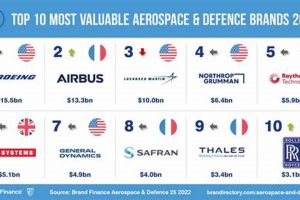
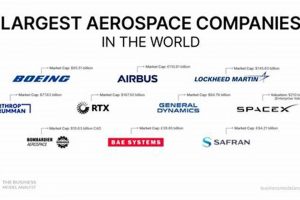
Aerospace companies typically target a global customer base, requiring tailored sales and marketing strategies for different regions and cultures. Understanding local market dynamics, regulatory requirements, and customer preferences is essential for success. Boeing and Airbus compete fiercely for aircraft orders from airlines around the world, showcasing the global nature of the aerospace market.
- International Research and Development
Collaborative research and development initiatives often span multiple countries, leveraging diverse expertise and resources. International partnerships enable aerospace companies to share knowledge, accelerate innovation, and reduce development costs. The International Space Station (ISS), a collaborative project involving multiple countries and aerospace entities, illustrates the importance of global collaboration in aerospace research and development.
The facets of global operations outlined above collectively underscore the increasingly interconnected nature of the aerospace industry. Aerospace companies must navigate international complexities and build strategic partnerships to maintain competitiveness. The integration of global operations into core strategies represents a key attribute defining such organizations in the contemporary landscape.
Frequently Asked Questions
The following addresses frequently asked questions concerning entities engaged in aerospace activities. Clarifications are offered to enhance understanding of the scope and nature of such organizations.
Question 1: What distinguishes an aerospace company from other engineering firms?
An aerospace company focuses specifically on the design, development, and manufacture of vehicles and systems operating within or beyond Earth’s atmosphere. Other engineering firms may encompass broader domains, such as civil or mechanical engineering, without specific emphasis on aerospace applications.
Question 2: Does an aerospace company solely manufacture aircraft?
No, the scope extends beyond aircraft manufacturing. These businesses also develop spacecraft, satellites, missiles, propulsion systems, and related technologies. Their activities encompass design, engineering, testing, and maintenance across these diverse product lines.
Question 3: Is regulatory compliance a significant concern for aerospace companies?
Regulatory compliance is paramount. Aerospace operations are subject to rigorous oversight by national and international agencies, such as the FAA and EASA. Adherence to safety standards, airworthiness directives, and environmental regulations is crucial for continued operation.
Question 4: What are the primary engineering disciplines involved in the operation of an aerospace company?
Numerous engineering disciplines are essential. These include aerospace engineering, mechanical engineering, electrical engineering, materials science, and software engineering. Each discipline contributes specialized expertise to the design, development, and testing processes.
Question 5: Do these organizations engage in research and development activities?
Research and development (R&D) are core functions. Aerospace companies invest heavily in R&D to develop new technologies, improve existing products, and maintain a competitive edge. This may involve exploring advanced materials, propulsion systems, or autonomous flight technologies.
Question 6: How do global operations impact the activities of an aerospace company?
Global operations are increasingly prevalent. Aerospace companies often rely on international supply chains, manufacturing facilities in multiple countries, and sales networks that span the globe. Effective management of these international activities is crucial for success.
This FAQ section provides a concise overview of fundamental aspects related to organizations involved in aerospace activities. Further exploration of specific topics may yield deeper insights into the intricacies of this field.
The following section will provide a glossary of terms.
What is an Aerospace Company
The preceding exploration of “what is an aerospace company” has elucidated its multifaceted nature. These entities are characterized by their focus on design, manufacturing, and operational support for vehicles and systems in atmospheric and exoatmospheric environments. Critical elements such as manufacturing expertise, stringent regulatory adherence, technological advancement, and global operational reach define their function and significance.
The continued evolution of the aerospace domain warrants ongoing examination of these defining attributes. Future assessments may consider the impact of emerging technologies, shifting global partnerships, and evolving regulatory landscapes. A comprehensive understanding of the aerospace entity remains crucial for stakeholders navigating this complex and vital sector.


![Top Anaheim Aerospace Companies: [City] Aviation Leaders | Innovating the Future of Flight with Reliable Aviation Solutions](https://mixaerospace.com/wp-content/uploads/2026/03/th-768-300x200.jpg "Top Anaheim Aerospace Companies: [City] Aviation Leaders Innovating the Future of Flight with Reliable Aviation Solutions")