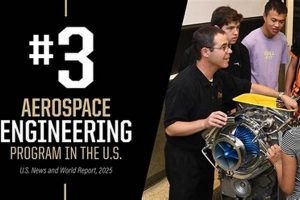
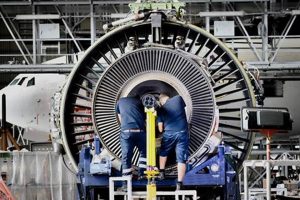
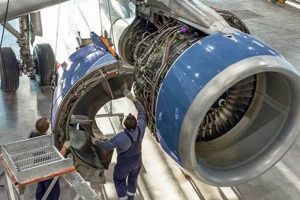
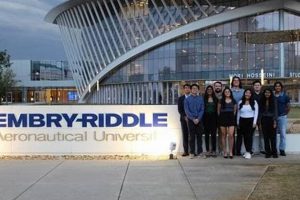
The typical setting for professionals in this field encompasses a range of locations, from office environments dedicated to design and analysis, to laboratories housing advanced testing equipment, and even manufacturing floors where aircraft or spacecraft components are assembled. The specific location often depends on the engineer’s role within a project, with some focusing on theoretical aspects and others on practical implementation. Consequently, collaborative spaces for team meetings are common, as is access to specialized software and hardware resources.
A conducive atmosphere is essential for innovation and problem-solving. It fosters teamwork, allowing experts from different areas to coordinate effectively. Historical examples demonstrate that advancements in flight and space exploration were frequently the result of scientists and engineers working closely together, sharing insights, and integrating disparate knowledge bases. This dynamic encourages continuous learning and adaptability, vital characteristics given the ever-evolving nature of aerospace technology.
Therefore, understanding the demands and opportunities inherent in typical locations, work schedules, collaboration levels, and industry-specific constraints provides a clearer picture of the professional journey. Further exploration of these key elements will illuminate the facets of this career path.
Success in this career path necessitates an understanding of the challenges and opportunities presented by typical working conditions. The following tips provide insights into maximizing productivity and well-being within the profession.
Tip 1: Prioritize Ergonomics: Extended periods at a computer are common. Investment in an ergonomic workstation is vital for preventing physical strain and promoting long-term health.
Tip 2: Embrace Continuous Learning: The aerospace field is characterized by rapid technological advancement. Regular professional development, including attending conferences and workshops, ensures one remains at the forefront of innovation.
Tip 3: Cultivate Strong Communication Skills: Effective communication is crucial, given the collaborative nature of projects. Clear and concise articulation of ideas, both verbally and in writing, facilitates seamless teamwork.
Tip 4: Master Project Management Principles: Aerospace projects are often complex and involve numerous stakeholders. Proficiency in project management methodologies enhances efficiency and minimizes delays.
Tip 5: Develop Adaptability: Unforeseen issues are inherent in engineering endeavors. The ability to adapt to changing circumstances and devise alternative solutions is essential for overcoming obstacles.
Tip 6: Seek Mentorship: Guidance from experienced professionals offers invaluable insights into navigating workplace dynamics and career progression. Proactively seek out mentors within the organization.
Tip 7: Understand Industry Regulations: Compliance with safety standards and governmental regulations is paramount. A thorough understanding of these requirements ensures adherence to best practices and mitigates potential risks.
Adopting these strategies fosters professional growth and enhances the ability to thrive within the environment. They prepare individuals for the rigors and rewards associated with the profession.
Consideration of these practical suggestions offers a valuable framework for individuals seeking to excel in this demanding and rewarding field. Further exploration of specific career paths and specializations will provide a more tailored understanding.
1. Collaboration

Collaboration is a cornerstone of the professional setting for individuals in this discipline. Given the multifaceted nature of aerospace projects, no single engineer possesses the complete skill set required for successful execution. Effective teamwork, therefore, becomes essential for integrating diverse expertise and achieving common objectives.
- Interdisciplinary Teams
Aerospace projects routinely involve experts from various fields, including aerodynamics, propulsion, materials science, control systems, and software engineering. The success of a project hinges on the seamless integration of these distinct disciplines. For example, the design of a new aircraft wing requires close coordination between aerodynamicists, structural engineers, and manufacturing specialists to ensure optimal performance, structural integrity, and manufacturability.
- Communication Channels
Open and efficient communication channels are vital for facilitating collaboration. This includes regular meetings, shared documentation repositories, and the utilization of collaborative software platforms. Clear communication minimizes misunderstandings, prevents duplication of effort, and ensures that all team members are aligned on project goals and progress. Real-time updates, shared documents, and virtual meetings help bridge physical and temporal distances.
- Conflict Resolution
Disagreements and conflicting viewpoints are inevitable in collaborative endeavors. A well-defined conflict resolution process is essential for addressing these issues constructively and preventing them from escalating into major roadblocks. This often involves establishing clear decision-making hierarchies, encouraging open dialogue, and fostering a culture of mutual respect and understanding.
- Knowledge Sharing
The collective knowledge of the team is a valuable asset. Effective collaboration promotes the sharing of knowledge and best practices, enabling team members to learn from each other’s experiences and avoid repeating mistakes. This can be achieved through mentorship programs, knowledge-sharing sessions, and the creation of comprehensive documentation resources.
The ability to collaborate effectively directly impacts project outcomes, innovation, and the overall performance of the enterprise. The work atmosphere often necessitates a high degree of interdependence, making teamwork a critical determinant of professional success. Without proficiency in collaborative practices, even the most technically skilled individuals may struggle to navigate complex projects and contribute meaningfully.
2. Problem-solving
Problem-solving is intrinsically linked to the professional setting. This environment necessitates the consistent application of analytical and creative thinking to overcome technical challenges. The design, development, and testing of aircraft and spacecraft are inherently complex processes, fraught with potential issues. From aerodynamic inefficiencies to structural weaknesses and control system malfunctions, engineers must possess the ability to identify, analyze, and resolve a wide range of technical obstacles. The ability to approach issues methodically, using a combination of theoretical knowledge, computational tools, and experimental data, is critical. For example, the unexpected failure of a composite material during stress testing requires careful investigation to determine the root cause, whether it be a manufacturing defect, an inaccurate design calculation, or an unforeseen environmental factor.
The significance of adeptness in this area extends beyond mere technical proficiency. The ability to devise innovative solutions to complex challenges often determines the success or failure of aerospace projects. Consider the development of heat shields for re-entry vehicles. Engineers faced the challenge of protecting spacecraft from extreme temperatures generated during atmospheric entry. The solution involved the development of advanced materials and thermal protection systems that could dissipate heat effectively. This involved collaborative efforts across multiple disciplines, encompassing material science, thermodynamics, and aerodynamics. Furthermore, this also includes continuous iteration cycles based on computer simulations and flight tests.
In conclusion, problem-solving is not merely a component; it is a defining characteristic of the aerospace engineering landscape. A proactive, analytical mindset coupled with strong technical skills and collaborative spirit enables individuals to navigate the complexities inherent in aerospace projects. The application of sound engineering principles, data-driven analysis, and innovative thinking ensures that challenges are effectively addressed, contributing to the advancement of flight and space exploration. Therefore, the capacity for effective problem-solving significantly influences individual career trajectory and overall industrial progress.
3. Regulations

Regulations are integral to the professional setting of aerospace engineers. These guidelines, established by governmental bodies and industry organizations, significantly shape design processes, manufacturing practices, and operational procedures. The adherence to rigorous standards is not merely a matter of compliance; it is fundamental to ensuring the safety, reliability, and performance of aircraft and spacecraft. These stipulations directly impact the engineers daily tasks, from selecting appropriate materials and designing structural components to conducting simulations and performing tests. The complexity of air and space travel necessitates stringent oversights to mitigate potential hazards and uphold public trust. This framework directly impacts the work culture, emphasizing precision, documentation, and risk assessment at all project phases.
The Federal Aviation Administration (FAA) in the United States, the European Union Aviation Safety Agency (EASA), and similar bodies worldwide impose a comprehensive set of rules governing aircraft design, production, and maintenance. For instance, regulations dictate the minimum allowable stress levels for critical aircraft components, forcing engineers to perform detailed stress analyses and utilize certified materials. Similarly, environmental regulations constrain the emission levels of aircraft engines, spurring innovation in engine design and fuel efficiency. Furthermore, the International Traffic in Arms Regulations (ITAR) impact the transfer of aerospace technology, limiting collaboration with certain foreign entities. These regulations act as external constraints, driving innovation and influencing design choices throughout the industry. Non-compliance can result in severe penalties, including fines, project delays, and reputational damage, reinforcing the importance of diligence among professionals.
In summary, regulations are a pervasive influence in the activities. These standards are not optional addenda; they are intrinsic to the entire undertaking. The demand for meticulous adherence, comprehensive documentation, and unwavering commitment to safety creates a work environment where precision and accountability are paramount. Overcoming these challenges requires not only technical expertise but also a deep understanding of regulatory requirements and a commitment to ethical engineering practices. The work is thereby governed as much by technical skill as by compliance awareness, underscoring the inseparable link between regulatory standards and this work context.
4. Technology
Technology permeates every facet of the aerospace engineering sphere, fundamentally shaping methodologies and innovations. The rapid advancement of computational tools, simulation software, and materials science dictates the capabilities and limitations within this discipline. Consequently, the professional setting is characterized by constant engagement with cutting-edge tools and a relentless pursuit of technological mastery.
- Computational Fluid Dynamics (CFD)
CFD software simulates fluid flow around aircraft and spacecraft, providing critical data for aerodynamic design and performance optimization. Engineers utilize CFD to predict lift, drag, and stability characteristics, enabling them to refine designs before physical prototypes are constructed. The insights gained from CFD analyses significantly reduce development time and improve overall efficiency. This is essential for assessing aircraft behavior at different speeds and altitudes.
- Computer-Aided Design (CAD) and Computer-Aided Manufacturing (CAM)
CAD software allows engineers to create detailed 3D models of aerospace components and systems. CAM software then translates these models into instructions for automated manufacturing equipment. This integrated CAD/CAM workflow streamlines the design-to-manufacturing process, enabling precise and efficient production of complex parts. Real-world examples include aircraft fuselages, engine components, and satellite structures. The integration of CAD/CAM also facilitates rapid prototyping and iterative design improvements.
- Materials Science and Engineering
Advancements in materials science have enabled the development of lightweight, high-strength materials, such as carbon fiber composites and titanium alloys. These materials are essential for reducing aircraft weight, improving fuel efficiency, and enhancing structural performance. Engineers must be proficient in selecting and characterizing these materials, ensuring they meet the stringent requirements of aerospace applications. Recent developments include self-healing materials and metamaterials, which offer unprecedented capabilities.
- Simulation and Modeling Software
Beyond CFD, a range of simulation tools is utilized to model various aspects of aerospace systems, including structural dynamics, control systems, and thermal behavior. These simulations allow engineers to predict the performance of systems under different operating conditions, identify potential failure modes, and optimize designs for robustness and reliability. These predictive technologies are essential in scenarios where real world testing is not possible.
The integration of these technologies is not merely a matter of convenience; it is a fundamental requirement for success. The capacity to leverage these tools effectively directly impacts the ability to design innovative aircraft and spacecraft. As technology continues to evolve, ongoing training and skill development will be crucial for ensuring that remain at the forefront of aerospace engineering.
5. Deadlines

The imposition of fixed deadlines is a defining characteristic of the work atmosphere. Project timelines, often driven by contractual obligations, funding cycles, or strategic market windows, exert significant pressure on engineering teams. The consequences of missing these benchmarks can range from financial penalties and reputational damage to the cancellation of entire projects. Consequently, managing time effectively and adhering to schedules are paramount skills. These professionals routinely navigate complex projects with numerous interdependent tasks, each subject to strict time constraints. This pressure shapes organizational culture, emphasizing planning, prioritization, and efficient resource allocation. Missed benchmarks can have a ripple effect, impacting subsequent phases and potentially compromising overall project success.
A practical example is the development of a new commercial aircraft. Airlines often place orders years in advance, with specified delivery dates. Meeting these deadlines requires meticulous coordination across multiple departments, including design, manufacturing, testing, and certification. Delays in one area, such as engine development or avionics integration, can cascade through the entire program, pushing back the delivery date and incurring substantial financial losses. The launch of a satellite presents another case study. The launch windows, dictated by orbital mechanics and celestial alignments, are often narrow and inflexible. Failure to meet these launch windows can result in delays of months or even years, disrupting scientific missions or commercial services. Therefore, project management skills, efficient communication, and proactive risk mitigation strategies become essential for navigating these complex and time-sensitive endeavors. Engineering teams must be adept at managing workload, prioritizing tasks, and identifying potential bottlenecks to stay on schedule.
In summary, deadlines are not merely arbitrary constraints; they are integral drivers of the aerospace engineering sphere. The need to meet demanding schedules shapes daily operations, emphasizing structured workflows and optimized resource utilization. The ability to navigate this environment successfully requires technical prowess as well as strong project management abilities and proactive problem-solving skills. While creating a demanding atmosphere, the adherence to time-sensitive schedules ensures accountability, promotes efficiency, and ultimately drives innovation within the aviation and space sectors.
6. Safety

Safety is a paramount consideration that permeates all aspects of the professional setting. Given the inherent risks associated with flight and space exploration, a culture of safety is not merely desirable, but essential for protecting human life, preserving assets, and maintaining public trust. Engineers in this field are tasked with designing, developing, and testing systems that must operate reliably under extreme conditions. Consequently, safety protocols, risk assessments, and stringent quality control measures are integrated into every stage of the engineering process.
- Design for Safety
Safety is a primary driver in aerospace design. Engineers must incorporate redundancy, fail-safe mechanisms, and robust materials to minimize the risk of system failures. For instance, aircraft control systems often feature multiple layers of redundancy, ensuring that a single point failure does not lead to catastrophic consequences. Furthermore, designs must account for a wide range of potential hazards, including extreme temperatures, high altitudes, and exposure to radiation. The selection of appropriate materials and manufacturing processes plays a crucial role in ensuring the structural integrity and reliability of aerospace components. Design choices must always prioritize human life, and system safeguards are built around this need.
- Risk Assessment and Mitigation
Comprehensive risk assessments are conducted to identify potential hazards and evaluate their likelihood and severity. Engineers employ various techniques, such as fault tree analysis and failure modes and effects analysis (FMEA), to systematically identify potential risks and develop mitigation strategies. These strategies may include design modifications, operational procedures, or emergency response plans. For example, the potential for bird strikes during takeoff and landing is a well-known hazard in aviation. Mitigation strategies include using bird-resistant engine designs, implementing bird control measures at airports, and developing procedures for pilots to respond to bird strikes safely. Thorough safety investigations are a high priority when a risk is identified, and data is collected from real world scenarios for computer modeling.
- Testing and Validation
Rigorous testing and validation are essential for verifying the safety and reliability of aerospace systems. Components, subsystems, and entire vehicles undergo extensive testing under simulated operating conditions. This includes wind tunnel tests, structural load tests, engine performance tests, and flight tests. The data collected from these tests is used to validate design models, identify potential weaknesses, and ensure that systems meet stringent safety requirements. For example, before a new aircraft is certified for commercial service, it must undergo hundreds of hours of flight testing to demonstrate its airworthiness and safety under various conditions. Testing must include edge case scenarios.
- Safety Culture and Training
A strong safety culture is promoted throughout the organization. This involves creating an environment where safety is valued above all else, and where employees are encouraged to report potential hazards without fear of reprisal. Comprehensive training programs are implemented to ensure that all personnel are knowledgeable about safety procedures and best practices. Engineers receive specialized training in areas such as human factors, safety management systems, and accident investigation. Promoting a safety culture includes continuous education for all employees.
The emphasis on safety permeates all activities, shaping operational protocols, quality assurance measures, and the overall culture. The integration of robust safety practices ensures a high level of reliability in aviation and space exploration. From the drawing board to the launchpad, safety is a core element that defines this specific kind of work.
Frequently Asked Questions
This section addresses common inquiries regarding the elements impacting professional life.
Question 1: What are the common physical locations?
Common locations encompass design offices, research laboratories, and manufacturing facilities. The specific setting often correlates with an engineers role within a project, impacting daily routines and interactions.
Question 2: How much collaboration is typical?
Collaboration is substantial. Projects frequently require teamwork across disciplines such as aerodynamics, propulsion, materials science, and control systems. The work is often conducted in a team setting for the most part.
Question 3: What regulatory bodies influence design?
Organizations such as the FAA (in the United States) and EASA (in Europe) exert considerable influence. Their regulations shape design processes, material selections, and safety protocols. Compliance is essential.
Question 4: What technologies are commonly utilized?
Commonly utilized technologies include CFD software, CAD/CAM systems, and advanced materials. Expertise in these tools is essential for effective design, analysis, and manufacturing.
Question 5: How strict are the project timelines?
Project timelines are typically demanding. The work is dictated by contractual obligations, funding cycles, and market opportunities. Efficient time management is critical for project success.
Question 6: How important is safety awareness?
Safety awareness is paramount. The field emphasizes safety protocols, risk assessments, and quality control measures at every stage of design, development, and testing. All employees are expected to put safety first.
This FAQ has outlined key characteristics, which are the places and how they are managed. The ability to be adept is one of the requirements for any new coming aerospace engineers.
Consideration of these common questions provides a valuable foundation for individuals seeking a career in this demanding, exciting work.
What is the Work Environment of an Aerospace Engineer
This exposition has explored the critical facets defining what is the work environment of an aerospace engineer. From collaborative teamwork and stringent regulatory compliance to the pervasive influence of advanced technology, adherence to demanding deadlines, and an unwavering commitment to safety, these elements collectively shape the professional experience. The ability to navigate this complex environment effectively is essential for success. It requires both technical expertise and a proficiency in skills related to project management, communication, and problem-solving.
The challenges are considerable, but so are the rewards. The continued advancement of air and space exploration relies on the expertise and dedication of engineers who can thrive in such setting. Continued exploration and development in the aerospace field require a workforce prepared to meet its demands, and committed to its ideals.