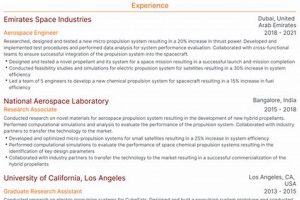
The career paths available to individuals trained in aerospace engineering are diverse, spanning both the public and private sectors. Opportunities exist in organizations that design, develop, test, and manufacture aircraft, spacecraft, satellites, and related systems. Examples include roles focusing on structural design, propulsion systems, avionics, and flight control.
The demand for skilled professionals in this field stems from the ongoing need for innovation in air travel, space exploration, and defense technologies. Furthermore, expertise in this area is increasingly relevant to emerging fields such as drone technology and advanced air mobility. A historical perspective reveals that governmental investments in space programs and military aviation have consistently driven growth in this sector.
The following sections will detail specific industries and organizations that commonly employ aerospace engineers, highlighting the types of roles available and the skills that are most valued by employers.
This section provides guidance for individuals exploring employment opportunities after acquiring an aerospace engineering education. Successful navigation of the job market requires strategic planning and targeted skill development.
Tip 1: Government Agencies: Consider employment within governmental organizations such as NASA, the Department of Defense, and national laboratories. These entities offer positions focused on research, development, and testing of advanced aerospace technologies.
Tip 2: Aerospace Manufacturers: Explore roles at major aerospace manufacturers like Boeing, Airbus, and Lockheed Martin. These companies provide opportunities in design, manufacturing, and project management across a wide range of aerospace systems.
Tip 3: Defense Contractors: Investigate opportunities within defense contracting firms. These companies often specialize in specific areas of aerospace engineering, such as missile systems, radar technology, and electronic warfare.
Tip 4: Space Exploration Companies: Seek employment with private space exploration companies that are increasingly playing a significant role in space travel and satellite technology. Companies like SpaceX, Blue Origin, and Virgin Galactic are examples.
Tip 5: Research and Development: Focus on research and development roles. These opportunities typically involve advanced engineering principles and offer significant intellectual challenges.
Tip 6: Networking: Engage in extensive networking. Attending industry conferences, joining professional organizations, and connecting with engineers on professional platforms can greatly increase visibility and open doors to potential opportunities.
Tip 7: Internships: Pursue internships early in one’s academic career. Practical experience significantly enhances employability by providing real-world skills and connections within the industry.
Successfully navigating the job market after an aerospace engineering education requires a proactive approach, strategic skill development, and targeted networking within the industry.
The following section provides a summary of the most salient points, reinforcing the core message of this article.
1. Government Agencies

Government agencies represent a significant sector for aerospace engineers, offering opportunities in research, development, regulation, and oversight of aerospace activities. These roles are typically characterized by long-term projects, focus on public benefit, and contribution to national objectives.
- NASA (National Aeronautics and Space Administration)
NASA employs aerospace engineers in a wide array of roles related to space exploration, aeronautics research, and Earth science. Engineers contribute to the design, development, and operation of spacecraft, launch vehicles, and research aircraft. Examples include engineers working on the James Webb Space Telescope or the Artemis program, which aims to return humans to the Moon.
- Department of Defense (DoD)
Within the DoD, aerospace engineers are involved in the development and maintenance of military aircraft, missiles, and satellite systems. They may work for agencies like the Air Force Research Laboratory or Naval Air Systems Command. Projects can range from designing next-generation fighter jets to developing advanced missile defense systems.
- Federal Aviation Administration (FAA)
The FAA employs aerospace engineers in roles related to air traffic control, aircraft certification, and aviation safety. These engineers ensure that aircraft meet safety standards, develop air traffic management systems, and investigate aviation accidents. Their work directly impacts the safety and efficiency of air travel.
- National Transportation Safety Board (NTSB)
The NTSB uses aerospace engineers as accident investigators. Their primary responsibility is to determine the cause of transportation accidents, including aviation incidents, and to make safety recommendations to prevent future accidents. They apply their engineering knowledge to analyze wreckage, flight data recorders, and other evidence.
Government agencies offer aerospace engineers a pathway to contribute to national goals in space exploration, defense, and air safety. These positions provide stability, opportunities for advanced research, and the chance to work on projects with significant societal impact. Consequently, employment within these organizations constitutes a core component of the broader landscape of potential career options for aerospace engineers.
2. Private Manufacturers

Private manufacturers constitute a substantial segment of the employment landscape for aerospace engineers. These organizations are pivotal in the design, development, production, and maintenance of aircraft, spacecraft, and related systems. The sector offers diverse roles spanning research and development, manufacturing, testing, and management.
- Aircraft Design and Development
Private manufacturers employ aerospace engineers to design and develop new aircraft models, improve existing designs, and integrate advanced technologies. This facet involves aerodynamics, structural analysis, propulsion systems, and avionics. Companies like Boeing and Airbus rely on these engineers to innovate and maintain competitiveness in the commercial and military aviation sectors.
- Spacecraft and Satellite Manufacturing
This involves the design, construction, and testing of satellites, spacecraft, and launch vehicles. Aerospace engineers in this area work on systems engineering, thermal management, orbital mechanics, and communication systems. Companies such as SpaceX and Lockheed Martin Space are key players, driving advancements in space exploration and satellite technology.
- Component Manufacturing and Supply Chain
The aerospace industry relies on a complex supply chain of component manufacturers. Aerospace engineers find opportunities within these companies, working on the design, testing, and production of specialized components such as engines, landing gear, and avionics systems. This facet emphasizes precision engineering and quality control.
- Testing and Certification
Aerospace engineers are involved in rigorous testing and certification processes to ensure aircraft and spacecraft meet safety and performance standards. These engineers conduct flight tests, structural tests, and environmental tests. Their work is crucial for regulatory compliance and ensuring the reliability of aerospace products.
Private manufacturers represent a dynamic and innovative sector for aerospace engineers. Opportunities extend across a wide range of roles, from conceptual design to manufacturing and testing. Their contribution is vital for advancing the capabilities and safety of air and space transportation.
3. Research Facilities

Research facilities constitute a vital component of the aerospace engineering employment landscape. These institutions, spanning academic, governmental, and private sectors, are dedicated to advancing scientific knowledge and developing innovative technologies. Consequently, they provide numerous avenues for aerospace engineers to engage in cutting-edge research and contribute to the evolution of the field.
- University Research Laboratories
Universities frequently house aerospace engineering research laboratories. Engineers employed here conduct fundamental and applied research in areas such as aerodynamics, propulsion, materials science, and control systems. Examples include the MIT Gas Turbine Laboratory and the Stanford Center for Turbulence Research. Such positions often involve collaboration with graduate students and faculty members, fostering an environment of intellectual exploration.
- Government Research Centers
Government-funded research centers, such as NASA’s research centers (e.g., Langley, Glenn, Ames), employ aerospace engineers to conduct research directly relevant to national priorities in space exploration, aeronautics, and defense. These centers provide access to advanced facilities and opportunities to work on large-scale projects. Engineers may contribute to the development of new spacecraft technologies, hypersonic aircraft designs, or advanced propulsion systems.
- Private Industry Research and Development
Many private aerospace companies maintain research and development divisions focused on creating new products and improving existing technologies. Aerospace engineers working in these environments engage in proprietary research aimed at gaining a competitive advantage. Examples include research efforts related to electric propulsion systems for urban air mobility or the development of advanced materials for aircraft structures.
- Independent Research Institutions
Certain independent research institutions are dedicated to aerospace-related research. These organizations offer engineers opportunities to contribute to specialized areas of study, often with a focus on specific challenges or emerging technologies. Examples may include research on sustainable aviation fuels or the development of novel satellite communication systems.
In summation, research facilities offer aerospace engineers opportunities to engage in a spectrum of research activities, from fundamental scientific inquiry to the development of practical technologies. Positions within these institutions provide avenues for intellectual growth, collaboration with leading experts, and contributions to the advancement of aerospace engineering knowledge and capabilities. Therefore, research facilities represent a core pathway within the diverse employment options available to aerospace engineers.
4. Defense Contractors
Defense contractors represent a significant employer of aerospace engineers. These companies, often specializing in military applications of aerospace technology, design, develop, and manufacture a range of systems, including aircraft, missiles, unmanned aerial vehicles (UAVs), and satellite systems. The connection to “where can you work as an aerospace engineer” is direct, as these firms actively recruit and employ engineers with expertise in aerodynamics, propulsion, structural analysis, control systems, and other related fields. The demand for skilled engineers is driven by ongoing defense spending and the constant pursuit of technological superiority. For instance, Lockheed Martin, a prominent defense contractor, employs numerous aerospace engineers in the design and production of the F-35 fighter jet, requiring expertise in advanced aerodynamics and stealth technology.
Furthermore, the work conducted by defense contractors often involves highly specialized and classified projects, requiring engineers to possess security clearances and adhere to strict protocols. This environment fosters a focus on precision, reliability, and innovation. The engineers may be involved in simulating flight characteristics, analyzing structural integrity under extreme conditions, or developing advanced guidance systems for missiles. For example, Raytheon Technologies employs aerospace engineers in the development of missile defense systems, requiring a deep understanding of trajectory analysis and intercept algorithms. The importance of these roles stems from the need to maintain a strong national defense posture and to protect against evolving threats.
In conclusion, defense contractors constitute a key component of the aerospace engineering job market, offering opportunities in research, design, development, and manufacturing of advanced military systems. Understanding the role of these companies and the specific skills they require is crucial for aerospace engineers seeking employment in this sector. While the work can be demanding and often subject to security restrictions, it provides the chance to contribute to national security and advance technological capabilities. The challenges often involve balancing cost, performance, and security requirements in a highly competitive environment, linking directly to the broader theme of career opportunities and specialization within aerospace engineering.
5. Space Exploration

Space exploration represents a continually expanding frontier for aerospace engineers, encompassing both government-funded initiatives and a burgeoning private sector. This domain demands engineers with expertise in a diverse array of disciplines, including spacecraft design, propulsion systems, orbital mechanics, and life support systems. The correlation between space exploration and career opportunities for these engineers is direct: advancements in space exploration rely heavily on the skills and innovation of trained aerospace professionals. Real-world examples include the Artemis program, requiring engineers to develop new lunar landers and habitation modules, and the ongoing operations of the International Space Station, necessitating continuous maintenance and upgrades overseen by engineers.
Further opportunities arise in the private sector, exemplified by companies such as SpaceX, Blue Origin, and Virgin Galactic. These entities are driving innovation in reusable launch systems, space tourism, and satellite deployment. Engineers in these roles might be involved in designing rocket engines, developing autonomous navigation systems, or creating the infrastructure for future space habitats. The practical application of this understanding lies in recognizing that the future of space exploration depends on a workforce equipped with cutting-edge skills and a passion for advancing human presence beyond Earth. Such engineers contribute to the reduction of launch costs, increase the reliability of space-bound systems, and enhance the safety of space travel.
In summary, space exploration offers an array of compelling career pathways for aerospace engineers. The challenges inherent in this field, such as radiation shielding, extreme temperature management, and the development of sustainable life support systems, demand creative solutions and rigorous engineering expertise. Understanding the multifaceted nature of space exploration, coupled with the requisite technical skills, enables aerospace engineers to contribute meaningfully to humanity’s ongoing quest to explore and utilize the vast resources of space, reinforcing the role that space exploration will play on where an aerospace engineer can work.
Frequently Asked Questions
The following questions and answers address common inquiries regarding employment opportunities for aerospace engineers across various industries and sectors.
Question 1: What is the typical starting salary for an aerospace engineer?
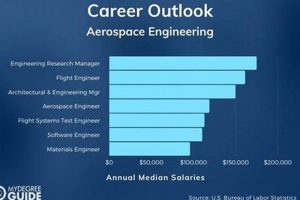
Starting salaries for aerospace engineers vary depending on factors such as education level, experience, location, and employer. Entry-level positions typically command a salary range reflective of the demand for qualified engineers and the cost of living in specific regions.
Question 2: Are advanced degrees necessary for career advancement in aerospace engineering?
While not always mandatory for entry-level positions, advanced degrees, such as a Master’s or Ph.D., can significantly enhance career prospects and open doors to research-oriented roles and leadership positions. Certain specializations within aerospace engineering may require advanced study.
Question 3: What specific skills are most valued by employers in the aerospace industry?
Employers prioritize skills such as proficiency in CAD software, knowledge of aerospace materials, understanding of aerodynamics and propulsion principles, expertise in control systems, and strong analytical and problem-solving abilities. Effective communication and teamwork skills are also essential.
Question 4: Is it possible to work as an aerospace engineer without a formal aerospace engineering degree?
While a formal aerospace engineering degree is typically preferred, individuals with degrees in related fields such as mechanical engineering, electrical engineering, or physics may be considered for certain roles, particularly if they possess relevant experience or specialized skills.
Question 5: What are the primary differences between working for a government agency versus a private aerospace company?
Government agencies often focus on long-term research and development projects with a focus on national interests, while private companies tend to prioritize innovation, profitability, and shorter development cycles. Government positions may offer greater job security, while private companies can provide opportunities for rapid career advancement.
Question 6: How important are internships and co-op programs for aerospace engineering students?
Internships and co-op programs are highly valuable for aerospace engineering students, providing practical experience, networking opportunities, and exposure to real-world engineering challenges. These experiences significantly enhance employability upon graduation.
These FAQs provide a foundational understanding of key aspects related to aerospace engineering employment. Further research and networking are encouraged for a more comprehensive understanding of the job market.
The concluding section of this article will summarize the key findings and provide a final perspective on the career landscape for aerospace engineers.
Conclusion
This article has comprehensively explored where can you work as an aerospace engineer, detailing opportunities within government agencies, private manufacturers, research facilities, defense contractors, and the space exploration sector. It emphasizes the diverse roles and skill sets required within each of these areas, ranging from design and development to research and testing. The information presented illustrates the breadth of potential career paths available to qualified individuals.
Ultimately, the aerospace engineering field presents significant opportunities for those with the necessary skills and dedication. Continued advancements in technology and the expansion of both governmental and private initiatives ensure a sustained demand for qualified engineers. Prospective aerospace engineers are encouraged to strategically cultivate their skills, seek relevant experience, and proactively engage with the industry to maximize their career prospects and contribute to future innovations in aerospace technology.