Determining the relative difficulty between two engineering disciplines, mechanical and aerospace, involves subjective assessment. Both fields demand strong analytical skills, mathematical proficiency, and problem-solving capabilities. The perception of challenge varies based on individual strengths, interests, and the specific curriculum of the educational institution.
The significance of addressing this comparison lies in guiding prospective engineering students toward a field that aligns with their aptitude and career aspirations. Understanding the core principles, specializations, and industry applications of each discipline can empower students to make informed decisions. Historically, both mechanical and aerospace engineering have contributed significantly to technological advancements, driving innovation in diverse sectors.
This article will delve into the fundamental concepts, specialized coursework, and typical career paths associated with both mechanical and aerospace engineering. It will explore the degree of mathematical complexity, the level of abstraction in problem-solving, and the practical application of theoretical knowledge within each field. Ultimately, readers will gain a broader perspective to assess which engineering path resonates most effectively with their abilities and ambitions.
Selecting an engineering discipline requires careful consideration of individual strengths and career goals. A direct comparison of the difficulty between mechanical and aerospace engineering reveals nuanced aspects that students should evaluate. The following tips aim to provide guidance in this decision-making process.
Tip 1: Assess Foundational Skills. Evaluate proficiency in mathematics and physics. Both fields require a strong understanding of calculus, differential equations, and mechanics. However, the emphasis and application of these principles may differ.
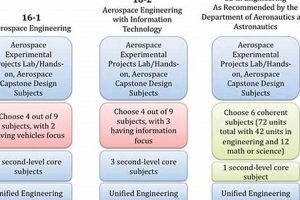
Tip 2: Explore Curriculum Content. Review the specific coursework for each discipline at different universities. Mechanical engineering curricula often include thermodynamics, fluid mechanics, and manufacturing processes. Aerospace engineering typically focuses on aerodynamics, propulsion, and structural analysis.
Tip 3: Consider Specialization Interests. Mechanical engineering offers broad specializations, including automotive, robotics, and energy systems. Aerospace engineering typically includes areas such as aircraft design, spacecraft engineering, and propulsion systems.
Tip 4: Analyze Career Prospects. Research the job market for mechanical and aerospace engineers. Consider the types of industries that employ graduates from each discipline, such as automotive, manufacturing, aviation, and space exploration.
Tip 5: Evaluate Problem-Solving Styles. Reflect on preferred problem-solving approaches. Mechanical engineering often involves tangible, hands-on design and implementation. Aerospace engineering can encompass more abstract simulations and theoretical modeling.
Tip 6: Investigate Industry Applications. Explore real-world applications of mechanical and aerospace engineering. Understanding how theoretical knowledge translates into practical solutions can clarify which field is more appealing.
Tip 7: Consider Program Reputations. Investigate the ranking and accreditation of mechanical and aerospace engineering programs. Reputable programs generally provide a rigorous education and strong industry connections.
Careful assessment of foundational skills, curriculum content, career prospects, and personal interests is crucial. There is no definitive answer to which field presents greater difficulty, as individual aptitudes and preferences significantly influence this perception. The best approach involves thorough research and self-reflection.
The information provided above should help prospective engineering students make a more informed decision, aligning their academic path with their strengths and future aspirations.
1. Mathematical Abstraction

Mathematical abstraction plays a pivotal role in differentiating the challenges presented by mechanical and aerospace engineering. In aerospace engineering, intricate mathematical models simulate aerodynamic forces, propulsion systems, and orbital mechanics. These models, often involving partial differential equations and computational fluid dynamics, demand a high degree of abstract reasoning. For example, accurately predicting airflow over a wing requires complex algorithms that approximate solutions to the Navier-Stokes equations. Conversely, mechanical engineering, while also requiring strong mathematical skills, often emphasizes the application of established principles to tangible designs. Examples include designing mechanical systems like engines and turbines, where mathematical models are employed but tend to be more closely linked to physical intuition and empirical data.
The significance of mathematical abstraction lies in its capacity to predict and optimize performance in scenarios where direct physical experimentation is either impractical or prohibitively expensive. Consider the design of a spacecraft heat shield. Simulating the extreme temperatures and pressures encountered during atmospheric re-entry necessitates sophisticated computational models, requiring engineers to manipulate abstract mathematical constructs to ensure structural integrity and thermal protection. While mechanical engineers also engage in simulation and modeling, their focus often centers on physical prototypes and experimental validation, reducing the reliance on purely abstract mathematical constructs.
Ultimately, the perceived difficulty associated with mathematical abstraction impacts the choice between mechanical and aerospace engineering. Students with a strong aptitude for abstract reasoning and a preference for theoretical analysis may find aerospace engineering more stimulating. Conversely, those who thrive on hands-on experimentation and the direct application of mathematical principles to physical systems may gravitate toward mechanical engineering. The degree of mathematical abstraction, therefore, acts as a critical determinant in shaping the individual challenges and rewards inherent in each discipline.
2. Design Complexity

Design complexity significantly influences the perceived difficulty between mechanical and aerospace engineering. The nature and scope of design challenges in each field differ, affecting the skill sets and approaches required for successful outcomes.
- System Integration
Aerospace engineering often involves integrating numerous complex systems, such as propulsion, avionics, and life support, into a single cohesive design. Each system has stringent performance requirements and must function reliably under extreme conditions. Mechanical engineering, while also dealing with system integration, often focuses on individual machine components or smaller-scale systems, reducing the overall integration challenge.
- Material Constraints
Both disciplines face material constraints, but aerospace engineering typically involves stricter requirements for lightweight and high-strength materials. Aerospace designs must withstand extreme temperatures, pressures, and vibrations while minimizing weight to optimize performance. Mechanical engineering designs may have more flexibility in material selection, allowing for cost-effectiveness and ease of manufacturing.
- Regulatory Compliance
Aerospace engineering operates under stringent regulatory frameworks established by agencies such as the FAA and NASA. Designs must adhere to rigorous safety standards and undergo extensive testing and certification processes. Mechanical engineering designs also require regulatory compliance, but the complexity and stringency may vary depending on the specific application, potentially impacting the design complexity.
- Optimization Requirements
Aerospace designs often require aggressive optimization for performance metrics such as lift, drag, and fuel efficiency. Small improvements can have significant impacts on overall mission success. Mechanical engineering designs may prioritize factors such as cost, reliability, and ease of maintenance, leading to different optimization criteria and design trade-offs.
The heightened emphasis on system integration, material constraints, regulatory compliance, and optimization requirements contributes to the perception that aerospace engineering designs are generally more complex. This complexity demands a holistic understanding of interrelated systems and a meticulous approach to design and analysis. However, the specific difficulty remains subjective, dependent on the individual’s aptitude for managing complexity and navigating stringent constraints.
3. Specialized Knowledge

The attainment of specialized knowledge distinguishes the academic and professional trajectories of mechanical and aerospace engineers, subsequently influencing the perceived difficulty of each discipline. Aerospace engineering necessitates a deep understanding of subjects directly related to flight and space, such as aerodynamics, astrodynamics, propulsion systems, and aerospace materials. Mastery in these areas is crucial for designing aircraft, spacecraft, and related technologies. Conversely, mechanical engineering encompasses a broader range of specializations, including thermodynamics, heat transfer, manufacturing processes, and robotics. While both fields require a strong foundation in mathematics and physics, the depth and focus of specialized knowledge differ significantly. For instance, a mechanical engineer might specialize in designing automotive engines, requiring in-depth knowledge of combustion and fluid dynamics within that specific context. An aerospace engineer, however, might specialize in designing control systems for unmanned aerial vehicles, necessitating expertise in aerodynamics, control theory, and embedded systems.
The importance of specialized knowledge as a component of relative difficulty arises from the cognitive load associated with mastering distinct subject matter. The breadth of mechanical engineering can be perceived as challenging due to the vast array of potential specializations, demanding versatility and adaptability. Aerospace engineering, with its narrower focus, demands greater depth within its specific domains. Consider the design of a jet engine turbine blade. This task requires specialized knowledge of high-temperature materials, aerodynamic design, and heat transfer principles. Failure to adequately understand these specialized areas can lead to catastrophic engine failure. The level of expertise required in such a scenario underscores the significance of specialized knowledge in aerospace engineering. Similarly, a mechanical engineer designing a robotic arm for a manufacturing plant must possess specialized knowledge of kinematics, control systems, and materials science to ensure precise and reliable operation. These examples highlight the practical significance of specialized knowledge in both fields, albeit with different areas of emphasis.
Ultimately, the perception of difficulty, related to specialized knowledge, is influenced by individual aptitude and interests. Students drawn to the complexities of flight and space may find the specialized knowledge of aerospace engineering more engaging and manageable. Those with a broader interest in machines and mechanical systems might find the diversity of mechanical engineering more appealing. The challenge lies in identifying the specialized area that best aligns with one’s intellectual curiosity and career aspirations. Both fields demand continuous learning and adaptation to emerging technologies, underscoring the need for a strong foundation in fundamental principles and a commitment to lifelong learning. Therefore, while aerospace engineering might demand greater depth in specific aerospace-related domains, and mechanical engineering requires breadth across multiple mechanical systems, the degree of difficulty is subjective and heavily influenced by the individuals learning style, intellectual curiosity, and personal preferences.
4. Practical Application
The application of theoretical knowledge significantly impacts the perceived difficulty of engineering disciplines. Comparing mechanical and aerospace engineering reveals distinct differences in how theoretical concepts translate into tangible, real-world applications, influencing the skill sets and approaches required for success.
- Prototyping and Testing
Mechanical engineering often involves the design, fabrication, and testing of physical prototypes. This hands-on approach allows engineers to directly observe and refine their designs based on empirical data. For example, designing a new type of engine would involve building a prototype, testing its performance under various conditions, and making iterative improvements. Aerospace engineering, while also utilizing prototypes, frequently relies on simulations and computational models due to the scale and complexity of aerospace systems. Simulating the flight characteristics of an aircraft, for instance, often requires sophisticated computational fluid dynamics software, limiting the direct physical prototyping. The ability to physically interact with and modify prototypes may be considered easier by some, while others may be more comfortable with computational models.
- System Integration and Troubleshooting
Both fields require system integration, but the complexity and scale often differ. In aerospace engineering, integrating propulsion, avionics, and control systems into a functioning aircraft or spacecraft requires a deep understanding of interconnected systems. Troubleshooting issues often involves complex diagnostics and simulations. Mechanical engineering, while also involving system integration, may focus on more discrete components or systems. For example, integrating a robotic arm into a manufacturing process requires understanding the interactions between the arm, the control system, and the manufacturing process. The narrower scope of some mechanical engineering projects may simplify the integration and troubleshooting process, potentially lowering the perceived difficulty for some individuals.
- Design Constraints and Optimization
Practical application is heavily influenced by design constraints. Aerospace engineering often faces stringent constraints related to weight, performance, and safety. Optimizing designs to meet these constraints requires a deep understanding of aerodynamics, materials science, and structural analysis. Mechanical engineering also involves design constraints, but they may be more flexible, allowing for trade-offs between performance, cost, and manufacturability. For example, designing a car suspension system requires balancing ride comfort, handling performance, and cost. The rigidity of constraints and the level of optimization required can greatly impact the perceived difficulty. A more open-ended design problem, typical in some mechanical engineering applications, may be less daunting than a highly constrained aerospace design problem.
- Real-World Implementation and Maintenance
The ease and cost of real-world implementation and maintenance affect the practicality of engineering solutions. Mechanical engineering designs often prioritize ease of manufacturing, assembly, and maintenance. An example is designing a consumer product that can be easily manufactured at scale and repaired by technicians. Aerospace engineering designs, while also considering maintainability, may prioritize performance and reliability over ease of maintenance due to the critical nature of aerospace systems. Maintaining an aircraft engine, for instance, requires specialized tools and expertise. The practical considerations of implementation and maintenance can contribute to the perception of difficulty, with designs that are easier to implement and maintain potentially being considered less challenging.
The application of theoretical knowledge to real-world problems influences the perceived difficulty of each discipline. While both require strong analytical skills, the nature and scope of practical application differ significantly. Mechanical engineering often emphasizes physical prototyping, tangible designs, and ease of implementation, while aerospace engineering frequently relies on simulations, complex system integration, and stringent design constraints. These differences highlight the diverse skills and approaches required for success in each field, underscoring the subjective nature of difficulty and the importance of aligning career choices with individual aptitudes and preferences.
5. Industry Demands

Industry demands exert considerable influence on the perceived difficulty associated with mechanical and aerospace engineering. The dynamic nature of technological advancements and market forces shapes the skills, knowledge, and adaptability required of engineers in both fields. Mechanical engineering, with its broad applicability across diverse sectors, experiences varying demands based on specific industry needs. For instance, the automotive sector requires engineers proficient in combustion engines, electric vehicle technology, and autonomous driving systems. Manufacturing industries demand expertise in robotics, automation, and lean manufacturing principles. The energy sector seeks engineers skilled in renewable energy systems, energy efficiency, and power generation technologies. These diverse demands require mechanical engineers to possess adaptability and specialized knowledge tailored to specific industry requirements. Aerospace engineering, conversely, faces more concentrated demands driven primarily by the aviation, space exploration, and defense sectors. This concentration necessitates a deep understanding of aerodynamics, propulsion systems, structural analysis, and avionics. Industry-specific regulations and stringent safety standards further contribute to the complexity of aerospace engineering. The relative difficulty arises from the depth of knowledge required within these specialized domains and the imperative for engineers to consistently meet stringent performance and safety requirements.
The impact of industry demands also manifests in the types of challenges engineers encounter. Mechanical engineers might address challenges related to improving the efficiency of manufacturing processes, reducing emissions from internal combustion engines, or developing sustainable energy solutions. These challenges often involve optimizing existing systems, integrating new technologies, and addressing cost constraints. Aerospace engineers, on the other hand, typically face challenges related to designing lighter, stronger, and more efficient aircraft, developing spacecraft capable of withstanding extreme environments, and ensuring the safety and reliability of complex aerospace systems. These challenges often require innovative solutions, advanced materials, and sophisticated simulation techniques. The level of innovation required and the criticality of safety considerations further contribute to the perceived difficulty. For example, the demand for more fuel-efficient aircraft has spurred advancements in wing design, engine technology, and lightweight materials, pushing the boundaries of engineering knowledge and requiring aerospace engineers to develop novel solutions.
In conclusion, industry demands act as a critical determinant in shaping the perceived difficulty associated with mechanical and aerospace engineering. The breadth of applications in mechanical engineering necessitates adaptability and diverse skill sets, while the concentrated demands in aerospace engineering require deep specialization and adherence to stringent safety standards. Both fields present unique challenges influenced by technological advancements, market forces, and regulatory requirements. Therefore, the assessment of difficulty relies not only on individual aptitude but also on the specific industry demands and the engineers preparedness to meet those demands. An engineer comfortable adapting to diverse challenges might find mechanical engineering less difficult, while someone drawn to deep specialization and rigorous safety protocols might perceive aerospace engineering as more manageable. Industry demands serve as a reminder that engineering is a constantly evolving field requiring continuous learning and adaptation to remain competitive and contribute to technological advancement.
Frequently Asked Questions
This section addresses common inquiries and misconceptions surrounding the perceived difficulty of mechanical and aerospace engineering disciplines. It offers insights based on typical curricula, industry expectations, and required skill sets.
Question 1: Is aerospace engineering inherently more difficult than mechanical engineering?
The assertion that one discipline is universally more difficult than the other is inaccurate. Difficulty is subjective, contingent on individual aptitudes, interests, and the specific program’s rigor. Both require strong analytical skills, mathematical proficiency, and problem-solving capabilities.
Question 2: Which field requires a greater understanding of mathematics?
Both fields demand robust mathematical skills, including calculus, differential equations, and linear algebra. Aerospace engineering often utilizes these concepts in more abstract modeling, such as computational fluid dynamics, while mechanical engineering may focus on their direct application in physical systems design.
Question 3: Does one field lead to better career prospects?
Career prospects vary depending on industry demand, geographical location, and specialized skills. Mechanical engineering’s broad applicability across diverse sectors provides a wide range of opportunities. Aerospace engineering, while more specialized, offers unique prospects in aviation, space exploration, and defense sectors.
Question 4: Which field involves more hands-on work?
Mechanical engineering often involves more direct hands-on work in prototyping, testing, and manufacturing. Aerospace engineering, due to the scale and complexity of projects, relies more heavily on simulations and computational modeling, although physical testing is still crucial.
Question 5: Are the required specializations significantly different?
Yes. Mechanical engineering encompasses specializations such as robotics, thermodynamics, and manufacturing. Aerospace engineering focuses on aerodynamics, propulsion, and aerospace structures. The choice depends on specific interests and career aspirations.
Question 6: Which field is more theoretical versus practical?
Both fields involve theoretical and practical aspects. Aerospace engineering tends to emphasize theoretical modeling and simulations, while mechanical engineering often balances theory with practical application in design and implementation. However, there are theoretical and practical elements to both fields.
In summary, determining relative difficulty requires evaluating individual strengths, interests, and career goals. Neither field is inherently easier or harder; the best choice aligns with personal aptitude and professional aspirations.
The subsequent article section will examine the long-term career paths available to graduates of each discipline.
Determining Relative Difficulty
The exploration of “which is harder mechanical or aerospace engineering” reveals a complex interplay of individual aptitude, specialized knowledge, and industry demands. This analysis highlights the significance of aligning academic pursuits with personal strengths and career aspirations. Neither discipline inherently surpasses the other in difficulty; rather, the perception of challenge stems from the alignment of skill sets with the specific demands of each field.
Prospective engineers are encouraged to carefully evaluate their strengths, interests, and career goals. A thorough understanding of the fundamental principles, specialized coursework, and industry applications within both mechanical and aerospace engineering is paramount. This informed approach ensures a fulfilling and successful trajectory in the chosen engineering discipline, fostering innovation and contributing meaningfully to technological advancement. The future of engineering depends on informed choices.
![Top MS Aerospace Engineering in Germany [Guide] | Innovating the Future of Flight with Reliable Aviation Solutions](https://mixaerospace.com/wp-content/uploads/2026/05/th-183-300x200.jpg "Top MS Aerospace Engineering in Germany [Guide] Innovating the Future of Flight with Reliable Aviation Solutions")