The pursuit of advancements in flight and space exploration drives individuals towards a specific engineering discipline. This field encompasses the design, development, testing, and production of aircraft and spacecraft. A commitment to this area necessitates a strong foundation in mathematics, physics, and computer science, allowing for the application of these principles to solve complex engineering challenges. For example, the design of a new aircraft wing requires detailed calculations in aerodynamics, materials science, and structural analysis.
Choosing this career path presents significant opportunities to contribute to technological innovation and scientific discovery. It plays a pivotal role in advancing air travel, satellite communications, national defense, and space exploration. Historically, engineers in this field have been instrumental in achieving milestones such as the first human flight, the development of jet propulsion, and lunar landings. These achievements demonstrate the potential for this field to reshape society and expand human knowledge.
The following sections will delve into the specific challenges, educational requirements, and career opportunities within this demanding yet rewarding engineering specialization. Analysis of the curriculum, skill development, and potential career trajectories will provide a comprehensive overview of what a career entails.
Guidance for Aspiring Professionals
Pursuing a career in the field requires dedication, a strong academic foundation, and a strategic approach to skill development. The following tips are designed to guide individuals interested in this challenging yet rewarding profession.
Tip 1: Emphasize Foundational Knowledge: A solid understanding of mathematics, physics, and computer science is paramount. Rigorous coursework and focused study in these areas will provide a strong base for advanced aerospace concepts.
Tip 2: Seek Relevant Internships: Practical experience is crucial. Internships with aerospace companies, government agencies (such as NASA), or research institutions provide invaluable exposure to real-world engineering challenges.
Tip 3: Develop Proficiency in CAD Software: Computer-aided design (CAD) tools are essential for designing and modeling aircraft and spacecraft components. Familiarity with software packages like CATIA, SolidWorks, or AutoCAD is highly advantageous.
Tip 4: Cultivate Strong Analytical Skills: Aerospace engineering involves complex problem-solving. Sharpen analytical skills through coursework, personal projects, and participation in engineering competitions.
Tip 5: Network with Professionals: Attend industry conferences, join professional organizations (e.g., AIAA), and connect with engineers in the field. Networking can provide valuable insights and potential career opportunities.
Tip 6: Consider Advanced Education: A master’s or doctoral degree can significantly enhance career prospects, particularly for research-oriented positions or specialized roles. Pursuing advanced studies allows for in-depth knowledge in specific areas such as aerodynamics, propulsion, or astrodynamics.
Tip 7: Specialize in a Niche Area: The field is broad. Focusing on a specific area, such as unmanned aerial vehicles (UAVs), satellite design, or rocket propulsion, can make an individual a more competitive candidate.
The consistent application of these guidelines will enhance prospects and contribute to a successful career trajectory. Mastering the fundamentals, gaining practical experience, and continuously learning are crucial for navigating the complexities of this field.
The subsequent section will explore the diverse career paths available and the skills required to excel in each specialization.
1. Technological Advancement

Technological advancement serves as a primary impetus for pursuing aerospace engineering. The inherent drive to push the boundaries of what is technologically feasible motivates engineers to contribute to a field characterized by constant innovation and groundbreaking developments.
- Advanced Materials Science
The development and implementation of novel materials with enhanced strength-to-weight ratios, temperature resistance, and durability are critical for aerospace applications. Examples include carbon fiber composites in aircraft structures and ceramic matrix composites in high-temperature engine components. These advancements enable the creation of lighter, more fuel-efficient, and more robust aircraft and spacecraft, directly impacting performance and operational capabilities.
- Improved Propulsion Systems
Advancements in propulsion technology, such as the development of more efficient jet engines, ramjets, scramjets, and electric propulsion systems, are essential for achieving higher speeds, greater ranges, and reduced fuel consumption. Innovations in these areas facilitate faster air travel, more cost-effective satellite deployment, and the exploration of distant celestial bodies. Examples include variable cycle engines for hypersonic flight and ion propulsion for deep-space missions.
- Enhanced Aerodynamic Design
Sophisticated aerodynamic designs, achieved through computational fluid dynamics (CFD) simulations and wind tunnel testing, are crucial for optimizing aircraft performance and reducing drag. Innovations in wing design, control surfaces, and overall aircraft configuration contribute to improved fuel efficiency, increased lift, and enhanced stability. Examples include blended wing body aircraft and active flow control technologies.
- Autonomous Systems and Robotics
The integration of autonomous systems and robotics into aerospace applications enables unmanned aerial vehicles (UAVs), autonomous spacecraft, and robotic exploration of planetary surfaces. Advancements in artificial intelligence, sensor technology, and control systems allow for increased efficiency, reduced risk, and the ability to perform tasks that are too dangerous or difficult for humans. Examples include autonomous navigation systems for UAVs and robotic arms for spacecraft assembly and maintenance.
These advancements demonstrate how technological progress drives the field of aerospace engineering forward. The desire to create safer, more efficient, and more capable aircraft and spacecraft motivates engineers to continuously seek innovative solutions and push the boundaries of what is possible. This dedication to technological advancement makes aerospace engineering a uniquely rewarding and impactful field.
2. Scientific Discovery

Scientific discovery is intrinsically linked to the motivations behind pursuing aerospace engineering. The field provides a crucial platform for advancing scientific knowledge through the design, development, and deployment of technologies that enable exploration and experimentation beyond Earth’s boundaries. This pursuit of knowledge is a significant driver for many individuals entering the profession.
- Planetary Exploration
Aerospace engineering provides the means to design and build spacecraft, rovers, and landers essential for exploring other planets, moons, and celestial bodies. These missions allow scientists to gather data on planetary geology, atmosphere, and potential for life, expanding the understanding of the solar system and the universe. Examples include the Mars rovers (Curiosity, Perseverance), the Cassini-Huygens mission to Saturn, and future missions to Europa and other icy moons. Data collected from these missions informs our understanding of planetary formation, evolution, and habitability.
- Space-Based Observation
The development of space telescopes and Earth observation satellites relies heavily on aerospace engineering expertise. These instruments provide invaluable data for studying the universe and monitoring Earth’s environment. Space telescopes, such as the James Webb Space Telescope and the Hubble Space Telescope, allow scientists to observe distant galaxies, stars, and planets with unprecedented clarity. Earth observation satellites provide critical data on climate change, weather patterns, and natural disasters. These observations significantly enhance our understanding of the universe and our own planet.
- Microgravity Research
Aerospace engineering enables the creation of platforms, such as the International Space Station (ISS) and suborbital vehicles, that allow for conducting research in microgravity environments. Microgravity research provides unique opportunities to study materials science, biology, and human physiology in conditions that are impossible to replicate on Earth. These experiments lead to advancements in areas such as drug development, materials processing, and understanding the effects of long-duration spaceflight on the human body. The ISS provides a permanent laboratory in space, allowing for continuous research and experimentation.
- Fundamental Physics Research
Aerospace engineering contributes to fundamental physics research by enabling the development of technologies for testing theories and conducting experiments in extreme environments. Examples include the development of gravitational wave detectors like LIGO, which rely on advanced aerospace materials and engineering techniques to achieve their sensitivity. These experiments push the boundaries of our understanding of the universe and the laws of physics, providing insights into phenomena such as black holes and the Big Bang.
These facets collectively illustrate the symbiotic relationship between scientific discovery and aerospace engineering. The field not only provides the tools and technologies for scientific exploration but also benefits directly from the knowledge gained through these endeavors. The pursuit of scientific understanding remains a central motivation for many individuals to enter and advance within this critical engineering discipline.
3. Problem-Solving Challenge
The inherent complexity of aerospace engineering presents significant problem-solving challenges that attract individuals driven by intellectual curiosity and a desire to overcome technical obstacles. The multifaceted nature of these challenges requires a blend of analytical skills, creativity, and practical application of scientific principles.
- Aerodynamic Optimization
Designing aircraft and spacecraft to minimize drag, maximize lift, and maintain stability across a wide range of flight conditions presents a complex optimization problem. This involves the application of computational fluid dynamics, wind tunnel testing, and iterative design processes to achieve optimal aerodynamic performance. For example, the design of a supersonic aircraft wing requires careful consideration of shockwave formation and wave drag, demanding sophisticated problem-solving techniques to achieve efficient and stable flight at high speeds. The challenge lies in balancing performance requirements with structural integrity and weight considerations.
- Propulsion System Design
Developing efficient and reliable propulsion systems for aircraft and spacecraft involves overcoming numerous technical hurdles. This includes optimizing combustion processes, managing heat transfer, and ensuring structural integrity under extreme conditions. For instance, the design of a rocket engine requires careful consideration of propellant mixture ratios, nozzle geometry, and cooling mechanisms to achieve maximum thrust and efficiency while preventing catastrophic failure. The problem-solving challenge lies in balancing performance demands with safety and reliability constraints.
- Structural Integrity and Materials Selection
Ensuring the structural integrity of aircraft and spacecraft under extreme loads and environmental conditions requires careful materials selection and structural design. This involves analyzing stress distributions, predicting failure modes, and implementing appropriate safety factors. For example, the design of a spacecraft hull requires selecting materials that can withstand the vacuum of space, extreme temperature variations, and radiation exposure while maintaining structural integrity. The challenge lies in balancing weight considerations with the need for robust structural performance.
- Navigation and Control Systems
Developing accurate and reliable navigation and control systems for aircraft and spacecraft requires overcoming challenges related to sensor accuracy, data processing, and control algorithm design. This involves integrating data from various sensors, such as GPS, inertial measurement units, and star trackers, to determine position, velocity, and attitude. For instance, the design of an autopilot system for an autonomous aircraft requires sophisticated algorithms to compensate for wind gusts, turbulence, and sensor errors to maintain stable flight. The problem-solving challenge lies in developing systems that can operate reliably in uncertain and dynamic environments.
These diverse problem-solving challenges highlight the intellectual stimulation and professional satisfaction derived from pursuing aerospace engineering. The field attracts individuals who thrive on complexity and are motivated to develop innovative solutions to real-world engineering problems. The constant need to overcome technical hurdles and push the boundaries of what is possible contributes to the enduring appeal of aerospace engineering as a career path.
4. Global Impact

Aerospace engineering extends its influence far beyond the design of aircraft and spacecraft. Its advancements touch numerous aspects of modern society, shaping international relations, economies, and everyday life. The desire to contribute to this global impact serves as a significant motivator for individuals to engage in this challenging field.
- Global Communication Networks
Satellites, designed and built by aerospace engineers, form the backbone of global communication networks. These networks facilitate instant communication across continents, enabling international commerce, disaster relief efforts, and access to information for billions of people. For example, communication satellites relay telephone calls, internet data, and television broadcasts, connecting individuals and communities in even the most remote locations. The development and maintenance of these vital systems require a highly skilled workforce dedicated to pushing the boundaries of satellite technology.
- National Security and Defense
Aerospace engineering plays a critical role in national security and defense. Military aircraft, missiles, and surveillance satellites provide essential capabilities for protecting national borders and interests. These technologies require continuous innovation and improvement to maintain a strategic advantage. For instance, advanced radar systems and stealth technologies, developed by aerospace engineers, enhance the effectiveness and survivability of military aircraft. The need to ensure national security through cutting-edge aerospace technology drives significant investment and innovation in the field.
- Environmental Monitoring and Climate Change Research
Earth observation satellites, designed and operated by aerospace engineers, provide critical data for monitoring environmental changes and conducting climate change research. These satellites collect data on atmospheric conditions, ocean currents, and land use, providing insights into the effects of human activity on the planet. For example, satellites monitor deforestation rates, ice sheet melting, and greenhouse gas concentrations, providing essential information for policymakers and scientists working to address climate change. The role of aerospace engineering in providing data for environmental stewardship makes it a critical field for addressing global challenges.
- International Collaboration and Space Exploration
Aerospace engineering fosters international collaboration through joint space exploration ventures. Projects such as the International Space Station (ISS) bring together engineers and scientists from multiple countries to conduct research in space. These collaborations promote diplomacy, knowledge sharing, and the advancement of scientific understanding. For example, the ISS involves participation from the United States, Russia, Canada, Japan, and the European Space Agency, demonstrating the power of international cooperation in achieving ambitious goals. The desire to contribute to global partnerships and expand human presence in space motivates many to pursue careers in aerospace engineering.
These interconnected facets demonstrate the broad global impact of aerospace engineering. From facilitating global communication to safeguarding national security and enabling environmental monitoring, the field touches numerous aspects of modern society. The aspiration to contribute to these global benefits remains a powerful driving force behind individual decisions to enter the realm of aerospace engineering.
5. Innovation and Creativity

The pursuit of advancements in flight and space exploration is fundamentally intertwined with innovation and creativity. This connection forms a central component of the motivations to engage with aerospace engineering. The field’s inherent demand for solutions to unprecedented challenges requires engineers to move beyond established methodologies, fostering an environment where inventive thinking is essential. The development of novel aircraft designs, propulsion systems, and spacecraft technologies are all testaments to this crucial relationship. Without a culture of innovation, advancements in aerospace capabilities would stagnate, hindering progress in areas ranging from air travel efficiency to deep-space exploration. The practical significance of this understanding lies in recognizing that fostering creativity and encouraging innovative approaches are vital for maintaining a competitive edge in this rapidly evolving field.
Consider, for example, the development of composite materials for aircraft construction. Traditional metal alloys presented limitations in terms of weight and strength. Aerospace engineers, driven by the need for lighter and stronger structures, innovated by developing carbon fiber reinforced polymers. This material, now widely used in modern aircraft, dramatically reduces weight, increases fuel efficiency, and enhances overall performance. Similarly, the evolution of jet engine technology from basic turbojets to advanced turbofans with higher bypass ratios demonstrates a continuous cycle of innovation driven by the need for increased thrust and reduced fuel consumption. In the realm of space exploration, the development of reusable rocket technology, spearheaded by companies like SpaceX, represents a paradigm shift in space access, driven by the creative application of engineering principles to reduce the cost of launching payloads into orbit.
In conclusion, the imperative for innovation and creativity is not merely an ancillary aspect of aerospace engineering, but a core requirement. It fuels progress, drives solutions to complex problems, and enables the realization of ambitious goals in flight and space exploration. Recognizing and cultivating this dynamic is essential for both individuals and organizations seeking to thrive in this demanding and rewarding field. The ongoing need to overcome technological hurdles necessitates a perpetual commitment to innovation, ensuring that aerospace engineering remains at the forefront of scientific and engineering advancement.
Frequently Asked Questions About Pursuing Aerospace Engineering
This section addresses common inquiries surrounding the pursuit of aerospace engineering as an academic discipline and career path, providing concise and informative answers to aid in decision-making.
Question 1: Is a strong aptitude for mathematics essential for success in aerospace engineering?
A solid foundation in mathematics is indeed crucial. Aerospace engineering heavily relies on mathematical principles for modeling, simulation, and analysis of complex systems. Proficiency in calculus, differential equations, linear algebra, and statistics is indispensable.
Question 2: What are the primary differences between aeronautical and astronautical engineering specializations?
Aeronautical engineering focuses on the design, development, and operation of aircraft within Earth’s atmosphere. Astronautical engineering, conversely, centers on the design, development, and operation of spacecraft and related technologies for space exploration.
Question 3: Are internships necessary to secure employment after graduation?
While not strictly mandatory, internships are highly recommended. Practical experience gained through internships enhances a candidate’s competitiveness in the job market and provides valuable insights into industry practices.
Question 4: What is the typical career trajectory for an aerospace engineer?
Career paths vary widely, but common progressions include roles in design engineering, research and development, testing and analysis, project management, and consulting. Advancement opportunities often lead to senior engineering positions or managerial roles.
Question 5: Is it possible to specialize in a specific area within aerospace engineering?
Specialization is indeed common. Areas of focus may include aerodynamics, propulsion, structural mechanics, astrodynamics, control systems, or materials science. Specialization often occurs during graduate studies or through on-the-job training.
Question 6: What are the key skills, beyond technical expertise, that contribute to success in this field?
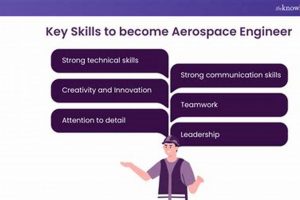
In addition to technical proficiency, strong communication skills, teamwork abilities, problem-solving aptitude, and adaptability are crucial for effective collaboration and navigating the complexities of aerospace projects.
These FAQs offer a brief overview of key considerations for those contemplating a future in aerospace engineering. Further exploration of specific interests and career goals is encouraged for informed decision-making.
The subsequent section will examine emerging trends shaping the future of the aerospace industry.
In Summary
This exploration has elucidated the multifaceted motivations driving individuals to engage with aerospace engineering. Technological advancement, scientific discovery, complex problem-solving, global impact, and the imperative for innovation and creativity collectively form the core rationales behind this pursuit. Each of these aspects presents compelling incentives, reflecting the field’s intrinsic value and its potential to shape the future.
The consistent demand for skilled professionals in aerospace engineering underscores its enduring significance. Individuals drawn to the field must embrace rigorous academic preparation and a commitment to continuous learning. The ongoing challenges and opportunities within aerospace engineering necessitate a dedication to excellence, pushing the boundaries of what is achievable in flight and space exploration. The future of this engineering field holds immense promise and requires the focused efforts of dedicated and well-prepared individuals.