The activities undertaken by professionals in the field of aeronautics and astronautics encompass a broad spectrum, ranging from the design and development of aircraft and spacecraft to the testing and maintenance of these complex systems. This endeavor often involves collaborating within interdisciplinary teams to solve intricate engineering challenges. For example, an individual might contribute to the aerodynamic modeling of a new wing design for a commercial airliner or work on the guidance and control systems for a satellite.
This professional’s contributions are vital to advancements in air travel, space exploration, and national defense. Their expertise ensures the safety, efficiency, and reliability of vehicles operating within Earth’s atmosphere and beyond. Historically, their efforts have driven innovation, leading to breakthroughs in materials science, propulsion systems, and communication technologies that have had a cascading effect on numerous other industries.
Therefore, a comprehensive understanding of the required skills, educational pathways, and potential career trajectories associated with this field is essential for those considering entering or progressing within this dynamic and impactful profession. Subsequent sections will delve into the specific tasks, necessary qualifications, and outlook for these technical specialists.
Advancement Strategies for Professionals in Aeronautics and Astronautics
The following guidelines offer strategies for individuals seeking to excel and progress within the multifaceted realm of aeronautical and astronautical engineering.
Tip 1: Emphasize Continuous Learning: Technical expertise requires perpetual updating. Stay abreast of emerging technologies and methodologies through professional development courses, conferences, and advanced academic studies. For example, acquiring proficiency in additive manufacturing techniques or advanced computational fluid dynamics software can significantly enhance capabilities.
Tip 2: Cultivate Strong Analytical Skills: The field relies on rigorous analysis and problem-solving. Hone analytical abilities by engaging in complex projects, simulations, and failure analysis exercises. This skillset is crucial for identifying potential issues and implementing effective solutions in design and operation.
Tip 3: Develop Effective Communication: Clear and concise communication is paramount in team-based environments. Practice communicating technical information effectively through presentations, reports, and design reviews. The ability to articulate complex concepts to both technical and non-technical audiences is essential for successful collaboration.
Tip 4: Seek Cross-Disciplinary Experience: Exposure to various engineering disciplines expands perspective and enhances problem-solving capabilities. Consider projects that involve collaboration with electrical, mechanical, or software engineers. This interdisciplinary approach fosters a more holistic understanding of complex systems.
Tip 5: Prioritize Safety and Reliability: Maintain an unwavering focus on safety protocols and quality assurance measures. Participate in safety audits, hazard analyses, and root cause investigations to ensure adherence to industry best practices. A commitment to safety is non-negotiable in this field.
Tip 6: Embrace Innovation and Experimentation: The aerospace industry is driven by innovation. Foster a mindset of experimentation and continuous improvement. Explore new design concepts, materials, and manufacturing processes to drive technological advancement.
These strategies, when diligently implemented, offer a framework for professional growth and advancement within the demanding yet rewarding field of aeronautical and astronautical engineering.
The subsequent section will provide an overview of the educational prerequisites and career pathways available to aspiring and established professionals.
1. Design and Development

Design and development are central to activities in aerospace engineering. The application of theoretical knowledge to create tangible products and systems represents a core function.
- Conceptual Design and Modeling
The initial phase involves generating innovative ideas and translating them into preliminary designs. Computer-Aided Design (CAD) software is employed to create 3D models and simulate performance characteristics. An engineer, for example, might develop a conceptual design for a hypersonic vehicle, modeling its aerodynamics and propulsion system.
- Detailed Engineering Design
Refinement of the conceptual design into detailed specifications suitable for manufacturing and assembly. This requires precise calculations, selection of appropriate materials, and adherence to stringent safety standards. An engineer could be responsible for designing the internal structure of an aircraft wing, ensuring it can withstand specified loads.
- Prototyping and Testing
Construction of physical prototypes to validate designs and identify potential weaknesses. Testing is conducted under simulated operational conditions to assess performance and reliability. This might involve wind tunnel testing of an aircraft model or vibration testing of a satellite component.
- System Integration and Verification
Combining individual components into a functional system and verifying that it meets all specified requirements. This phase requires careful coordination between different engineering disciplines. The process might include integrating a new navigation system into an aircraft and verifying its accuracy through flight testing.
These facets of design and development represent the tangible output of the engineer’s work. Their activities in these areas drive innovation and technological advancements within the field.
2. Analysis and Testing

Analysis and testing are integral functions within the professional sphere of aerospace engineering. These processes provide the empirical data and validation necessary to ensure the safety, reliability, and performance of aircraft, spacecraft, and related systems.
- Structural Analysis
Structural analysis determines the ability of aerospace components to withstand anticipated loads and stresses. Finite element analysis (FEA) is frequently employed to simulate these conditions and identify potential failure points. For example, an engineer may conduct a structural analysis on an aircraft fuselage to ensure it can withstand the pressure differential at high altitudes. The implications for the safety and performance of airframes are significant.
- Aerodynamic Testing
Aerodynamic testing evaluates the aerodynamic characteristics of aircraft and spacecraft designs. Wind tunnels are used to simulate airflow and measure lift, drag, and stability. Computational Fluid Dynamics (CFD) provides a complementary analytical approach. This testing provides crucial validation for new aircraft wing designs to ensure optimal flight characteristics.
- Materials Testing
Materials testing determines the mechanical and thermal properties of materials used in aerospace applications. Tests may include tensile strength testing, fatigue testing, and corrosion resistance testing. The selection of materials for a spacecraft heat shield requires thorough testing to ensure it can withstand extreme temperatures during atmospheric reentry.
- Systems Testing
Systems testing evaluates the performance and integration of complex aerospace systems. This can include testing avionics systems, propulsion systems, and control systems. A flight test of a new autopilot system ensures the system performs reliably under varying flight conditions, including automatic landing and navigation capabilities.
These elements of analysis and testing are essential components of an engineer’s duties, ensuring that the designs and systems meet stringent performance criteria and safety regulations. The findings from these analyses directly influence design modifications and improvements, contributing to the overall advancement and reliability of aerospace technology.
3. Project Management

Project management constitutes a critical function within the professional activities of aerospace engineers. The complex and multidisciplinary nature of aerospace projects necessitates rigorous planning, execution, and control to ensure timely completion within budgetary constraints. The effective application of project management principles directly impacts the success of aerospace endeavors, from the development of new aircraft to the deployment of satellite systems. For example, the development of a new commercial airliner requires the coordination of numerous engineering teams, manufacturing processes, and regulatory approvals, all managed through structured project management methodologies. A failure in project management, such as inadequate risk assessment or poor communication, can result in significant delays, cost overruns, and potential safety hazards.
The specific responsibilities of an aerospace engineer in project management roles often include defining project scope, developing work breakdown structures, creating project schedules, allocating resources, and monitoring progress. They must also identify and mitigate potential risks, manage stakeholder expectations, and ensure compliance with relevant industry standards and regulations. Consider the development of a new satellite, where an aerospace engineer, acting as a project manager, would oversee the integration of various subsystems (e.g., propulsion, communications, power) and ensure that the satellite meets its performance specifications and launch window. Expertise in software such as Microsoft Project or Primavera P6 may be required.
In summary, project management skills are indispensable for aerospace engineers. The ability to effectively manage complex projects is essential for delivering innovative and reliable aerospace systems. Mastering these skills enables engineers to contribute to the overall efficiency and success of aerospace organizations, while poor management increases the risk of project failure. Therefore, integrating formal project management training and experience into the professional development of aerospace engineers is vital for the advancement of the industry.
4. Systems Integration

Systems integration represents a critical aspect of activity for aerospace engineers, concerning the complex orchestration of diverse subsystems into a cohesive and functional whole. Given the intricate nature of aerospace vehicles and platforms, these specialists are frequently tasked with ensuring that individual components operate harmoniously to meet overall performance objectives.
- Interface Management
The definition and control of interfaces between different subsystems is fundamental. This includes ensuring compatibility in terms of electrical signals, mechanical connections, and data protocols. An aerospace engineer might be responsible for specifying the communication protocols between an aircraft’s flight control system and its navigation system, ensuring seamless data exchange for accurate flight guidance. Mismatched interfaces can lead to system malfunctions and compromise overall vehicle performance.
- Testing and Validation
Following integration, rigorous testing and validation are conducted to verify that the integrated system functions as intended under various operational conditions. This involves simulating real-world scenarios and evaluating system performance against predefined criteria. For example, an aerospace engineer would oversee the testing of an integrated satellite system in a thermal vacuum chamber to ensure it can withstand the harsh conditions of space. Failures identified during testing necessitate design modifications and re-integration efforts.
- Troubleshooting and Problem Resolution
During the integration process, unexpected issues and incompatibilities often arise. Aerospace engineers must possess strong analytical and problem-solving skills to diagnose the root causes of these issues and implement effective solutions. For instance, an engineer might need to troubleshoot a communication failure between two subsystems on a spacecraft, identifying and correcting the underlying hardware or software problem.
- Configuration Management
Maintaining a detailed record of system configurations, including hardware and software versions, is essential for managing complexity and ensuring traceability. Aerospace engineers are responsible for implementing configuration management processes to track changes and ensure that all components are compatible. This is particularly critical for safety-critical systems where even minor configuration errors can have severe consequences. Accurate and up-to-date configuration records are essential for maintenance, upgrades, and troubleshooting activities.
These facets of systems integration demonstrate the complex challenges encountered by aerospace engineers. The successful integration of diverse systems is crucial for the development of safe, reliable, and high-performance aerospace vehicles and platforms, underscoring the importance of strong technical expertise and effective collaboration.
5. Regulatory Compliance
The work of an aerospace engineer is inextricably linked to regulatory compliance. Government agencies and international bodies establish stringent regulations governing the design, manufacturing, and operation of aircraft, spacecraft, and related systems. These regulations aim to ensure safety, security, and environmental protection. An aerospace engineers activities are therefore directly influenced by and must conform to these legal and ethical parameters. The cause is the need for public safety and secure operation; the effect is the necessity for aerospace engineers to embed compliance into every stage of their work. A key component of aerospace engineering is the thorough understanding and application of these regulations, which dictate material selection, structural design, testing procedures, and operational protocols.
Practical examples of regulatory compliance affecting the work of an aerospace engineer are numerous. Consider the Federal Aviation Administration (FAA) regulations for commercial aircraft. An engineer designing a new aircraft wing must ensure it meets specific structural strength requirements outlined in FAA regulations. Similarly, engineers working on spacecraft must adhere to international agreements regarding space debris mitigation to minimize the risk of collisions in orbit. These regulations mandate specific design features, operational procedures, and end-of-life disposal plans for spacecraft. The practical significance of understanding these regulatory frameworks is that non-compliance can lead to costly design changes, project delays, or even grounding of aircraft, thereby hindering innovation and impacting economic viability.
In conclusion, regulatory compliance is not merely an ancillary concern, but a fundamental aspect of an aerospace engineer’s responsibilities. The challenges lie in keeping abreast of evolving regulations and integrating them seamlessly into the design and development process. Adherence to these standards is essential for fostering trust in the aerospace industry and enabling safe and sustainable advancements in air and space travel. Ignoring regulatory demands presents a high risk that can directly damage public safety and organizational liability.
6. Research and Innovation

Research and innovation form the bedrock of progress in the aerospace field, directly influencing the responsibilities and activities of aerospace engineers. These endeavors push the boundaries of existing technologies and generate novel solutions that address emerging challenges. The engineer’s work is thus intrinsically linked to the outcomes of these research efforts, translating theoretical advancements into practical applications.
- Materials Science Advancements
The development of new materials with enhanced strength-to-weight ratios and thermal resistance directly impacts aircraft and spacecraft design. Research in this area enables the creation of lighter and more durable structures. For instance, the introduction of carbon fiber composites in aircraft construction, driven by materials research, has allowed for significant weight reduction and improved fuel efficiency, directly influencing the design choices and manufacturing processes employed by aerospace engineers.
- Propulsion System Enhancements
Research and innovation in propulsion systems drive improvements in fuel efficiency, thrust output, and emissions reduction. The development of advanced engine designs, such as scramjets and electric propulsion systems, requires engineers to integrate these technologies into aircraft and spacecraft. This integration process demands expertise in aerodynamics, thermodynamics, and control systems, directly shaping the design and operational characteristics of the vehicles.
- Aerodynamics and Flight Control Innovations
Advancements in aerodynamics and flight control systems enhance the maneuverability, stability, and efficiency of aircraft. Research in areas such as active flow control and morphing wings leads to innovative design solutions that engineers must implement. These innovations have the capacity to optimize the performance of aircraft across a wide range of flight conditions, demanding adaptation of existing designs.
- Autonomous Systems and Robotics
The integration of autonomous systems and robotics into aerospace applications is transforming operations, maintenance, and exploration. Research in artificial intelligence, sensor technologies, and robotics enables the development of autonomous aircraft, spacecraft, and robotic assistants. Aerospace engineers are instrumental in designing and implementing these systems, requiring expertise in software engineering, control theory, and human-machine interaction.
These facets exemplify the symbiotic relationship between research and innovation and the everyday activities of aerospace engineers. The continuous cycle of research, development, and implementation ensures that the field remains at the forefront of technological advancement, consistently pushing the limits of what is possible in air and space travel. The active pursuit and application of these innovations are paramount to the profession.
7. Problem Solving
Problem solving constitutes a core competency for all engineers; however, its significance is amplified within the field of aerospace engineering. This discipline routinely confronts novel and complex challenges arising from the extreme environments, demanding performance criteria, and stringent safety requirements inherent in air and space travel. The activities of an aerospace engineer inherently involve identifying, analyzing, and resolving technical issues across diverse domains, ranging from aerodynamics and propulsion to structural mechanics and systems integration. The effectiveness of these professionals is directly proportional to their problem-solving abilities, as each design, test, and operational challenge presents unique hurdles that must be overcome to ensure project success. Consider, for instance, the development of a spacecraft heat shield: engineers must solve intricate problems related to material selection, thermal management, and aerodynamic stability to protect the vehicle during atmospheric reentry. The implications of inadequate problem-solving can be catastrophic, leading to mission failures, loss of life, and significant financial repercussions.
Further examples of problem-solving in aerospace engineering abound. The design of a fuel-efficient aircraft wing requires engineers to optimize aerodynamic performance while minimizing structural weight, necessitating trade-offs between conflicting requirements and innovative solutions. The diagnosis of engine malfunctions during flight requires engineers to apply analytical skills and data analysis techniques to identify the root cause of the problem and implement corrective actions. Similarly, the development of autonomous control systems for unmanned aerial vehicles (UAVs) involves solving complex problems related to sensor fusion, path planning, and decision-making. In each of these cases, the application of systematic problem-solving methodologies, such as root cause analysis, design of experiments, and failure mode and effects analysis (FMEA), is essential for achieving optimal outcomes. This involves both theoretical knowledge and practical application of technical skills.
In conclusion, problem solving is not merely a desirable trait but a fundamental requirement for an aerospace engineer. The success of aerospace projects hinges on the ability to effectively address technical challenges and implement robust solutions. The complexities inherent in aerospace systems, coupled with the stringent safety and performance requirements, demand that these engineers possess exceptional analytical and problem-solving abilities. As the aerospace industry continues to evolve, the demand for engineers with advanced problem-solving skills will only intensify. It can be stated directly: The effectiveness of aerospace engineers can be directly linked to their prowess in problem resolution. Without competent engineers who have mastered critical thinking and logical reasoning, it can be guaranteed that aerospace operations would cease function effectively.
Frequently Asked Questions
The following section addresses common inquiries regarding the roles and responsibilities associated with this area of engineering. It aims to provide clarity on the practical application of skills and knowledge in aerospace contexts.
Question 1: What are the primary responsibilities related to work aerospace engineer?
Core responsibilities include the design, development, testing, and maintenance of aircraft, spacecraft, satellites, and related systems. This also encompasses project management, systems integration, regulatory compliance, research, and problem-solving activities.
Question 2: What educational qualifications are typically required to work aerospace engineer?
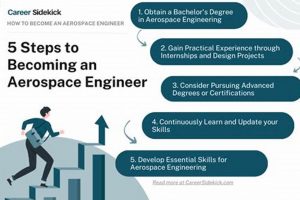
A bachelor’s degree in aerospace engineering or a closely related field is typically the minimum requirement. Advanced positions may require a master’s degree or doctorate, particularly those in research or specialized design roles. Certain positions may necessitate specific certifications or licenses, dependent on the nature of work.
Question 3: What skill sets are most important for an aerospace engineering career?
Essential skills include strong analytical and mathematical abilities, proficiency in computer-aided design (CAD) and engineering software, a thorough understanding of aerodynamics, structural mechanics, propulsion systems, and effective communication and teamwork skills.
Question 4: What is the typical work environment for someone within the role of an aerospace engineer?
Work environments vary depending on the specific role, ranging from office settings for design and analysis work to laboratory environments for testing and experimentation, or even field locations for flight testing or launch operations. Collaboration within interdisciplinary teams is standard.
Question 5: How does regulatory compliance affect an aerospace engineers activities?
Regulatory compliance is a critical aspect of activities in this field. All designs and systems must adhere to stringent safety standards and regulations established by government agencies and international bodies. This affects every stage of the design, manufacturing, and operational process.
Question 6: What are the potential career paths and advancement opportunities?
Career paths can range from design engineering and systems integration to project management, research and development, and consulting. Advancement opportunities often involve specialization in a particular area, leadership roles, or pursuing advanced degrees.
These FAQs offer a foundational understanding of the core responsibilities, required qualifications, and potential career trajectories within the dynamic sphere of aeronautics and astronautics.
The subsequent section will provide information regarding potential tools and technologies utilized within the field.
Conclusion
The preceding sections have detailed the multifaceted nature of activities performed by specialists in aeronautical and astronautical engineering. It is a field demanding rigorous technical expertise, unwavering adherence to regulatory standards, and continuous innovation. Design and development, analysis and testing, project management, systems integration, regulatory compliance, research and innovation, and effective problem solving define the core competencies required for successful engagement within this domain. These functions ensure the creation, operation, and maintenance of safe, reliable, and efficient aerospace vehicles and systems.
The ongoing demand for professionals with these skills underscores the continued importance of the aeronautics and astronautics fields in national security, space exploration, and commercial aviation. As technology continues to evolve, the aerospace engineers dedication to mastering emerging technologies and addressing complex challenges will be critical for advancing this pivotal industry. The future of flight and space exploration rests on the shoulders of these dedicated and highly skilled individuals.
![Best: Top 20 Aerospace Engineering Colleges Guide [2024] | Innovating the Future of Flight with Reliable Aviation Solutions](https://mixaerospace.com/wp-content/uploads/2026/04/th-337-300x200.jpg "Best: Top 20 Aerospace Engineering Colleges Guide [2024] Innovating the Future of Flight with Reliable Aviation Solutions")