This professional is responsible for conceiving, developing, and testing mechanical systems and components for aircraft, spacecraft, and related equipment. Their work involves applying principles of mechanics, thermodynamics, materials science, and structural analysis to ensure the safety, efficiency, and reliability of aerospace vehicles. For instance, they might design a new landing gear system, optimize the thermal management of a satellite, or develop lighter and stronger materials for aircraft wings.
The role is vital to the advancement of air and space travel, contributing directly to enhanced performance, reduced operational costs, and increased safety standards. Historically, these engineers have been instrumental in breakthroughs ranging from jet engine technology to the development of reusable spacecraft. Their expertise is essential for both government space programs and the commercial aerospace sector, pushing the boundaries of what is possible in flight and space exploration.
The following sections will delve into the specific responsibilities, required skills, educational pathways, and career prospects associated with this critical engineering discipline, providing a detailed overview of the profession.
Guidance for Aspiring Professionals
The following guidelines offer insights for individuals pursuing a career in the field. These recommendations are based on established practices and observations within the industry.
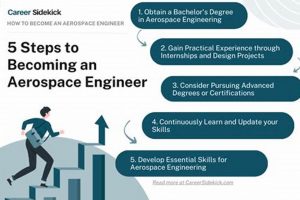
Tip 1: Cultivate a Strong Foundation in Core Engineering Principles: A thorough understanding of mechanics, thermodynamics, fluid dynamics, and materials science is paramount. These principles are the bedrock upon which all designs and analyses are built. For example, understanding finite element analysis (FEA) is crucial for stress analysis of airframe components.
Tip 2: Develop Proficiency in CAD and Simulation Software: Mastery of industry-standard software such as CATIA, SolidWorks, ANSYS, and MATLAB is essential for design, modeling, and simulation. These tools enable engineers to create and analyze complex systems before physical prototyping.
Tip 3: Prioritize Practical Experience Through Internships and Projects: Seek out internships or research opportunities with aerospace companies or research institutions. Hands-on experience in designing, building, and testing hardware is invaluable and significantly enhances theoretical knowledge. Consider participating in student design competitions focused on aerospace vehicles.
Tip 4: Focus on Specific Areas of Specialization: Aerospace engineering is a broad field. Specializing in areas such as propulsion, structures, avionics, or control systems allows for in-depth expertise. For instance, specializing in composite materials can lead to opportunities in designing lightweight aircraft structures.
Tip 5: Emphasize Systems Engineering Perspective: Understand how individual components and subsystems interact within the larger aerospace vehicle. Systems thinking is crucial for designing integrated and efficient solutions. For example, consider the impact of a new engine design on the overall aircraft weight and performance.
Tip 6: Maintain Continuous Learning and Professional Development: The aerospace industry is constantly evolving. Stay current with new technologies, materials, and design techniques through continuing education courses, conferences, and publications. Obtain certifications relevant to specialized areas, such as composite materials or finite element analysis.
Tip 7: Hone Communication and Collaboration Skills: Effective communication is critical for collaborating with multidisciplinary teams, presenting designs, and writing technical reports. Clear and concise communication is essential for conveying complex engineering concepts to both technical and non-technical audiences. Practice active listening and learn to clearly articulate ideas.
Adherence to these guidelines can significantly enhance an individual’s prospects and effectiveness in the demanding yet rewarding profession. A solid foundation, coupled with practical experience and a commitment to lifelong learning, are key determinants of success.
The subsequent sections will explore the future trends shaping the profession and the challenges and opportunities that lie ahead for practitioners in this vital field.
1. Thermodynamics

Thermodynamics is a foundational science for the aerospace mechanical design engineer. Its principles govern the behavior of energy transfer and conversion, which are critical in the design and analysis of aerospace systems.
- Engine Design and Performance
Thermodynamics plays a crucial role in the design of aircraft engines, including jet engines and rocket engines. Engineers apply thermodynamic cycles, such as the Brayton cycle and the Rankine cycle, to optimize engine efficiency and performance. They analyze heat transfer, combustion processes, and fluid flow to improve thrust, reduce fuel consumption, and minimize emissions. The performance of turbines and compressors depends heavily on adherence to these laws.
- Thermal Management Systems
Aerospace vehicles generate significant amounts of heat due to aerodynamic friction, engine operation, and electronic equipment. Thermodynamics is essential for designing thermal management systems that regulate the temperature of critical components and prevent overheating. These systems include heat exchangers, cooling loops, and insulation materials, ensuring reliable operation of sensitive electronics and passenger comfort. Spacecraft, in particular, require sophisticated thermal control systems to manage extreme temperature variations in space.
- Hypersonic Vehicle Design
The design of hypersonic vehicles, such as scramjets and hypersonic aircraft, relies heavily on thermodynamics. At hypersonic speeds, the compression of air generates extreme temperatures, requiring careful consideration of thermal stresses and heat transfer. Engineers use computational fluid dynamics (CFD) simulations based on thermodynamic principles to analyze and optimize the aerodynamic and thermal performance of these vehicles. Material selection is a crucial element, as are active cooling techniques.
In summation, thermodynamics is integral to the design, analysis, and operation of aerospace vehicles. From optimizing engine performance to managing thermal loads and designing hypersonic vehicles, thermodynamic principles guide engineers in creating safe, efficient, and reliable systems. The ongoing advancements in aerospace technology necessitate a continued and deepened understanding of thermodynamic principles and their application.
2. Structural Integrity
Structural integrity is paramount in aerospace engineering, directly influencing the safety and reliability of aircraft and spacecraft. The aerospace mechanical design engineer bears primary responsibility for ensuring that all components and systems can withstand the forces and stresses encountered during operation. This involves careful design, analysis, and testing to prevent catastrophic failures. A compromised structure leads to potential loss of life and equipment, making structural integrity an unwavering priority. Failure to adequately address stress concentrations, fatigue, and material defects can have devastating consequences, as exemplified by historical accidents resulting from structural deficiencies. The role demands expertise in stress analysis, material properties, and fatigue life prediction.
The practical application of structural integrity principles extends throughout the entire design and development process. Engineers utilize finite element analysis (FEA) software to simulate stress distributions in complex geometries and identify potential weak points. Material selection is guided by the need for high strength-to-weight ratios and resistance to environmental factors such as corrosion and extreme temperatures. Prototype testing, including static load tests and fatigue tests, validates the design and identifies any unforeseen structural issues. Non-destructive testing (NDT) techniques, such as ultrasonic inspection and radiography, are employed to detect internal flaws that could compromise structural integrity without damaging the component. For example, the development of composite materials for aircraft wings requires careful consideration of their layered structure and the potential for delamination under stress.
Ensuring structural integrity presents ongoing challenges due to the constant push for lighter, more efficient aerospace vehicles. The use of advanced materials and novel designs requires continuous refinement of analysis techniques and testing methodologies. Furthermore, the increasing complexity of aerospace systems demands a holistic approach that considers the interactions between different structural components. By maintaining a rigorous focus on structural integrity, aerospace mechanical design engineers safeguard the lives of passengers and crew, protect valuable assets, and contribute to the advancement of air and space travel. The dedication to this principle directly promotes innovation and reliability across the aerospace field.
3. Materials Science

Materials science forms a critical foundation for the activities undertaken by an aerospace mechanical design engineer. The selection, application, and performance of materials directly influence the structural integrity, efficiency, and lifespan of aerospace vehicles and systems. The engineer must possess a thorough understanding of the properties, behaviors, and limitations of a wide range of materials, from traditional alloys to advanced composites and ceramics. A fundamental understanding of materials science enables the engineer to make informed decisions that optimize performance while mitigating risks associated with material failure. For example, the shift from aluminum to carbon fiber reinforced polymers in aircraft construction exemplifies the impact of materials science advancements, resulting in lighter, stronger, and more fuel-efficient aircraft. Without the knowledge of material characteristics, such as tensile strength, fatigue resistance, and thermal expansion coefficients, a safe and effective design is impossible.
The practical application of materials science extends to various aspects of aerospace design. Engineers must consider the effects of extreme temperatures, pressures, and radiation exposure on material properties. The design of a spacecraft heat shield, for instance, requires the selection of materials with exceptional thermal resistance and ablative properties to protect the vehicle during atmospheric reentry. Similarly, the design of turbine blades in jet engines necessitates the use of high-temperature alloys capable of withstanding immense centrifugal forces and thermal stresses. The engineer’s understanding of corrosion mechanisms is also vital for ensuring the long-term durability of aerospace structures operating in harsh environments. The integration of new materials, such as shape memory alloys and nanomaterials, requires a deep understanding of their unique properties and potential applications in aerospace systems.
In conclusion, materials science is not merely a supporting discipline but an integral and indispensable component of aerospace mechanical design engineering. A comprehensive knowledge of materials properties, behavior, and processing techniques is essential for designing safe, reliable, and high-performance aerospace vehicles and systems. The challenges associated with pushing the boundaries of aerospace technology necessitate continuous advancements in materials science and engineering, underscoring the enduring importance of this connection.
4. CAD Proficiency
Computer-Aided Design (CAD) proficiency constitutes a fundamental skill for the aerospace mechanical design engineer. It provides the means by which theoretical concepts are translated into tangible designs ready for analysis, simulation, and eventual manufacturing. Without mastery of CAD software, the engineer is severely limited in the ability to effectively communicate design ideas, create accurate models, and collaborate with manufacturing teams. The direct result of inadequate CAD skills is often increased design cycle time, higher production costs, and a greater risk of errors that could compromise the performance or safety of the aerospace vehicle. Industry standards, such as CATIA, SolidWorks, and NX, dictate the software tools these engineers must be adept at using.
The practical application of CAD skills extends to every stage of the design process. Initially, CAD is employed for creating 3D models of components and assemblies based on engineering specifications. These models serve as the basis for structural analysis using Finite Element Analysis (FEA) software, which also necessitates seamless integration with the CAD environment. Furthermore, CAD models are used for generating manufacturing drawings, Computer Numerical Control (CNC) machining programs, and assembly instructions. Consider the design of a complex aircraft wing: the engineer uses CAD to create a detailed model incorporating aerodynamic profiles, internal structural elements, and attachment points. This model is then subjected to FEA to ensure it can withstand aerodynamic loads, and ultimately, the CAD data is used to manufacture the wing with precision.
CAD proficiency is therefore an indispensable tool for the aerospace mechanical design engineer. Its importance stems from its capacity to enhance design accuracy, facilitate collaboration, and streamline the manufacturing process. As aerospace technology continues to advance, the demands on engineers to create increasingly complex and sophisticated designs will only intensify, making CAD skills even more critical. Engineers must commit to ongoing training and development to maintain their CAD skills and adapt to new software versions and functionalities. The mastery of CAD is not merely a technical skill but a foundational competency that directly impacts an engineer’s ability to contribute meaningfully to the aerospace industry.
5. Systems Integration

Systems integration represents a crucial domain within aerospace mechanical design engineering, demanding a comprehensive understanding of how disparate components and subsystems interact to form a cohesive, functional aerospace vehicle. The aerospace mechanical design engineer serves as a central figure in this process, bridging the gap between individual component design and the overall system architecture. A deficiency in systems integration can lead to performance degradation, reliability issues, and even catastrophic failures, highlighting its importance. Consider, for example, the integration of a new engine into an existing aircraft. This requires not only mechanical adaptation but also careful consideration of the engine’s impact on the aircraft’s electrical, hydraulic, and control systems. Improper integration could result in instability, excessive vibration, or insufficient power delivery.
The practical application of systems integration principles encompasses several key areas. One critical aspect involves ensuring compatibility between mechanical, electrical, and software components. This necessitates a deep understanding of interface requirements, communication protocols, and potential sources of interference. Another crucial consideration is the optimization of system-level performance. Engineers must analyze how individual components contribute to the overall efficiency, weight, and aerodynamic characteristics of the aerospace vehicle. For instance, the integration of a new avionics system requires careful consideration of its power consumption, cooling requirements, and impact on the aircraft’s center of gravity. Moreover, systems integration plays a vital role in ensuring compliance with regulatory requirements and safety standards. Engineers must demonstrate that the integrated system meets all applicable certification criteria, including those related to electromagnetic compatibility, vibration resistance, and environmental protection.
Effective systems integration requires a combination of technical expertise, communication skills, and a holistic understanding of the aerospace system. Challenges in this field often arise from the increasing complexity of modern aerospace vehicles, the diverse backgrounds of engineering teams, and the need to manage conflicting requirements. Ultimately, successful systems integration translates to enhanced performance, improved reliability, and reduced development costs. The aerospace mechanical design engineers pivotal role in this process directly contributes to the safety and advancement of air and space travel.
6. Problem Solving

Problem-solving forms the core of the aerospace mechanical design engineer’s responsibilities. This professional confronts a continuous stream of complex challenges, demanding innovative and effective solutions. From optimizing the aerodynamic performance of aircraft wings to mitigating the thermal stresses on spacecraft components, the engineer’s ability to dissect problems, analyze constraints, and devise practical solutions is paramount.
- Addressing Structural Failures
Aerospace engineers must diagnose and resolve structural failures in aircraft and spacecraft. This often involves meticulous examination of stress concentrations, material defects, and fatigue-related issues. For example, if an aircraft exhibits cracks in its fuselage after repeated flights, the engineer must determine the root cause, redesign the affected area, and implement preventative measures to avoid future occurrences. This necessitates a deep understanding of material properties, stress analysis, and non-destructive testing methods.
- Optimizing System Performance
Aerospace engineers frequently grapple with optimizing the performance of complex aerospace systems. This can involve improving fuel efficiency, reducing weight, or enhancing reliability. If an engine fails to meet its performance targets, the engineer must identify the limiting factors, such as combustion inefficiency or aerodynamic losses, and implement design modifications to address these issues. This calls for expertise in thermodynamics, fluid dynamics, and control systems.
- Managing Thermal Challenges
Aerospace vehicles operate in extreme thermal environments, ranging from the intense heat generated during atmospheric reentry to the frigid temperatures of outer space. Aerospace engineers are responsible for designing thermal management systems that protect sensitive components from overheating or freezing. If a satellite experiences temperature fluctuations that exceed its operational limits, the engineer must develop solutions such as improved insulation, heat pipes, or active cooling systems to maintain thermal stability.
- Mitigating Vibration and Noise
Vibration and noise pose significant challenges in aerospace engineering, affecting both passenger comfort and structural integrity. Aerospace engineers must design damping systems, vibration isolators, and noise reduction measures to mitigate these effects. If an aircraft exhibits excessive vibration during flight, the engineer must identify the source of the vibration, such as engine imbalance or aerodynamic turbulence, and implement solutions to minimize its impact. This requires knowledge of structural dynamics, acoustics, and control engineering.
The problems faced by aerospace mechanical design engineers are rarely straightforward. They require a multifaceted approach, combining technical expertise with creative thinking and collaboration with diverse teams. The ability to effectively define problems, generate potential solutions, evaluate alternatives, and implement optimal solutions is what defines the success of the engineer and, by extension, the advancement of the aerospace field.
7. Regulatory Compliance
The aerospace mechanical design engineer operates within a highly regulated environment where strict adherence to industry standards and government regulations is non-negotiable. Compliance with these regulations is not merely a procedural formality but a fundamental aspect of ensuring the safety, airworthiness, and environmental responsibility of aerospace vehicles and systems. Failure to comply can result in severe penalties, including fines, revocation of certifications, and, most importantly, compromised safety.
- Airworthiness Directives (ADs)
ADs are legally enforceable rules issued by aviation authorities, such as the FAA (Federal Aviation Administration) or EASA (European Union Aviation Safety Agency), to correct unsafe conditions found in aircraft, engines, propellers, and other components. The aerospace mechanical design engineer must ensure that designs and modifications comply with all applicable ADs. For example, if an AD mandates the replacement of a specific part due to a potential fatigue failure, the engineer must incorporate this requirement into the design process and verify that the replacement part meets the AD’s specifications. Non-compliance can ground aircraft and lead to significant financial losses.
- Federal Aviation Regulations (FARs) / EASA Regulations
These regulations establish the standards for aircraft design, manufacturing, operation, and maintenance. Aerospace mechanical design engineers must have a thorough understanding of the relevant FARs/EASA regulations pertaining to their area of specialization. For instance, FAR Part 25 outlines the airworthiness standards for transport category airplanes, covering aspects such as structural strength, fire protection, and emergency egress. Engineers must demonstrate that their designs meet these standards through rigorous analysis, testing, and documentation. Failing to meet these requirements can prevent an aircraft from obtaining type certification, effectively blocking its entry into service.
- Environmental Regulations
Aerospace activities are subject to environmental regulations aimed at minimizing emissions, noise pollution, and the impact on wildlife. Aerospace mechanical design engineers play a role in developing technologies and designs that reduce the environmental footprint of aircraft and spacecraft. For example, engineers may work on designing more fuel-efficient engines, developing noise-reducing nacelles, or using sustainable materials in aircraft construction. Compliance with environmental regulations is becoming increasingly important as society demands greater environmental responsibility from the aerospace industry. Violations can lead to substantial fines and reputational damage.
- Safety Management Systems (SMS)
SMS are systematic approaches to managing safety risks in aviation organizations. Aerospace mechanical design engineers contribute to SMS by identifying potential hazards associated with their designs and implementing risk mitigation strategies. This involves conducting hazard analyses, developing safety procedures, and participating in safety reviews. For instance, during the design of a new landing gear system, engineers must consider potential failure modes, such as hydraulic leaks or structural overload, and implement redundancy measures or warning systems to mitigate the risks. A robust SMS is essential for preventing accidents and incidents and maintaining a high level of safety.
In summary, regulatory compliance is an intrinsic aspect of the work performed by the aerospace mechanical design engineer. The engineer’s designs must not only meet performance objectives but also adhere to a complex web of regulations intended to ensure safety, airworthiness, and environmental protection. This requires a commitment to continuous learning, meticulous attention to detail, and a proactive approach to identifying and mitigating potential risks.
Frequently Asked Questions
The following addresses common inquiries regarding the profession. It aims to provide clear and concise answers based on industry practices and established knowledge.
Question 1: What distinguishes this engineering role from other mechanical engineering positions?
The focus lies specifically on the design, analysis, and testing of mechanical systems within the aerospace industry. This entails a deeper understanding of aerodynamics, propulsion, materials science tailored for aerospace applications, and adherence to stringent airworthiness regulations, differentiating it from broader mechanical engineering roles that may apply to diverse industries.
Question 2: What level of mathematical proficiency is expected?
A strong foundation in calculus, differential equations, linear algebra, and numerical methods is essential. These mathematical tools are used extensively in stress analysis, fluid dynamics simulations, control system design, and other critical aspects of the profession.
Question 3: Is prior experience in the aerospace industry a prerequisite for entry-level positions?
While not always mandatory, internships, co-op programs, or research experience within the aerospace sector significantly enhance candidacy. Practical exposure to aerospace systems, design processes, and industry standards provides a distinct advantage.
Question 4: What are the typical career progression pathways for individuals in this role?
Career progression commonly involves advancing from entry-level design or analysis roles to more senior positions with increased responsibility for project management, team leadership, and technical expertise. Opportunities may also arise to specialize in specific areas such as propulsion, structures, or avionics, or to transition into management or research positions.
Question 5: What are the most sought-after software skills for prospective employees?
Proficiency in industry-standard CAD software, such as CATIA, SolidWorks, or NX, is paramount. Additionally, expertise in simulation and analysis tools, such as ANSYS, NASTRAN, or MATLAB, is highly valued. Familiarity with programming languages like Python or C++ can also be beneficial.
Question 6: How crucial is ongoing professional development in this rapidly evolving field?
Continuous learning is essential for remaining competitive and effective. The aerospace industry is characterized by rapid technological advancements and evolving regulatory requirements. Engineers must actively seek opportunities to update their skills and knowledge through continuing education courses, conferences, and professional certifications.
In short, preparation must emphasize a strong technical base, CAD/CAE proficiency, and adaptability.
This is the final section. Thank you for your time.
Conclusion
This exploration has illuminated the multifaceted role, underscoring the blend of technical expertise, regulatory awareness, and problem-solving acumen demanded within this discipline. The necessity for a strong foundation in core engineering principles, proficiency in CAD/CAE software, and an understanding of systems integration has been emphasized. Regulatory adherence, materials science, and structural integrity were clearly described for a better understanding of the aerospace field.
As aerospace technology continues to advance, the demand for skilled practitioners will only intensify. The future of flight, space exploration, and innovative aerospace systems hinges upon the capabilities of these professionals. Therefore, the pursuit of excellence and dedication to continuous learning remain paramount for those seeking to shape the future of this field.

![Best Work Environment for Aerospace Engineers [2024] | Innovating the Future of Flight with Reliable Aviation Solutions](https://mixaerospace.com/wp-content/uploads/2026/04/th-277-300x200.jpg "Best Work Environment for Aerospace Engineers [2024] Innovating the Future of Flight with Reliable Aviation Solutions")