



A structured academic program equips individuals with the requisite knowledge and skills to design, develop, test, and maintain software systems used in aircraft, spacecraft, and related aerospace technologies. This specialized curriculum blends principles of computer science, software engineering, and aerospace engineering, offering a comprehensive understanding of both the theoretical and practical aspects of the field. Core coursework often includes programming languages, data structures, algorithms, control systems, embedded systems, and aerospace-specific applications.
Completing such a program offers significant advantages in the competitive aerospace sector. It demonstrates a commitment to the specialized demands of the industry and provides a foundation for contributing to innovative solutions in areas such as flight control systems, navigation, simulation, and satellite communication. Historically, the increasing reliance on complex software in aerospace systems has driven the demand for professionals with this focused educational background, contributing to safer, more efficient, and technologically advanced aerospace operations.
The subsequent sections will delve into specific areas of study, career prospects, relevant skills, and the overall impact this specialized educational path has on the broader aerospace industry. Detailed examples of common projects and the technologies utilized within this career path will also be explored.
Essential Guidance for Aspiring Professionals
This section outlines key strategies for individuals pursuing studies focused on software development for the aerospace domain. These guidelines are designed to enhance academic performance and professional readiness.
Tip 1: Emphasize Foundational Knowledge: A strong understanding of core computer science principles, including data structures, algorithms, and software design patterns, is paramount. Master these concepts thoroughly to provide a solid basis for more specialized aerospace software applications.
Tip 2: Cultivate Proficiency in Multiple Programming Languages: Exposure to languages like C++, Python, and Ada, frequently used in aerospace applications, is critical. Develop fluency in at least two to enhance adaptability and problem-solving capabilities.
Tip 3: Seek Practical Experience Through Internships: Actively pursue internship opportunities with aerospace companies or research institutions. Hands-on experience in real-world projects provides invaluable insights and accelerates learning.
Tip 4: Specialize in Relevant Sub-Disciplines: Aerospace software engineering encompasses diverse areas. Consider specializing in areas such as flight control systems, embedded systems, or avionics, based on interests and career aspirations.
Tip 5: Develop Strong Mathematical Skills: A solid foundation in mathematics, including calculus, linear algebra, and differential equations, is essential for understanding the underlying principles of many aerospace applications.
Tip 6: Focus on System Integration and Testing: Aerospace software is rarely developed in isolation. Gain experience with system integration and testing methodologies to ensure seamless interaction with other hardware and software components.
Tip 7: Adhere to Rigorous Standards and Regulations: Aerospace software development adheres to stringent safety standards and regulations. Familiarize yourself with these requirements, such as DO-178C, early in the educational journey.
By implementing these strategies, individuals can significantly enhance their prospects within the aerospace sector. A combination of strong fundamentals, practical experience, and regulatory awareness will contribute to a successful career in this demanding yet rewarding field.
The following sections will explore specific career paths, required skillsets, and the future outlook for professionals with education in aerospace software development.
1. Technical Proficiency
Technical proficiency forms a bedrock upon which the value of a formal educational achievement rests. In the context of aerospace software, the successful application of theoretical knowledge hinges directly on an individual’s ability to translate concepts into functional, reliable code. For example, an understanding of control systems theory, gained through coursework, becomes practically relevant only when the engineer can implement those control algorithms in a programming language like C++ or Ada for use in flight control software. A theoretical understanding, without the practical skill to implement it, severely limits contribution to the field.
The connection between technical skill and formal educational achievement is further exemplified in the development of safety-critical systems. Certifications under DO-178C, a crucial standard in aerospace, require demonstrable evidence of not only understanding the standards but also the ability to produce software that adheres to its stringent requirements. This adherence involves skillful application of coding best practices, rigorous testing methodologies, and meticulous documentation, all skills honed through practical application and reinforced through a robust educational curriculum.
Ultimately, a formal degree in aerospace software engineering provides the theoretical framework and structured learning environment, while technical proficiency represents the actionable skills that bring that knowledge to fruition. Without that actionable skill, academic credentials become less impactful in the aerospace industry. This interdependency underscores the need for aspiring engineers to diligently cultivate their technical abilities alongside their academic pursuits, ensuring they are equipped to contribute meaningfully to the field’s advancements and safety imperatives.
2. Regulatory Compliance

The aerospace sector is subject to stringent regulatory frameworks designed to ensure the safety and reliability of flight operations. Therefore, regulatory compliance is inextricably linked to a formal education focused on software engineering for this domain. A relevant degree program equips individuals with the knowledge of these regulations, such as DO-178C, and the methodologies necessary to develop software that adheres to them. Failure to comply with these standards can have severe consequences, ranging from project delays and financial penalties to catastrophic system failures and loss of life. The formal education introduces the critical importance of traceability, verification, and validation processes integral to meeting regulatory requirements.
For instance, in the development of flight control systems, software engineers must demonstrate compliance with DO-178C at specific Design Assurance Levels (DALs) based on the potential consequences of a software failure. Achieving this requires meticulous documentation, rigorous testing, and adherence to coding standards that are typically taught and reinforced within a structured degree program. Specific examples include ensuring code coverage during testing, conducting formal reviews of software requirements, and maintaining a complete audit trail of all development activities. These practices are not merely optional; they are essential for obtaining certification and ensuring the safe operation of aircraft.
In summary, the relationship between regulatory compliance and specialized education is symbiotic. The formal education provides the foundational knowledge and practical skills necessary to navigate the complex landscape of aerospace regulations. The ability to effectively apply these regulations in software development is paramount to ensuring the safety, reliability, and success of aerospace endeavors. Therefore, the integration of regulatory compliance into specialized software engineering curricula is essential for producing competent and responsible professionals in this critical field.
3. System Integration

System integration is a pivotal aspect of aerospace software engineering. Formal education in this area provides the necessary foundation for professionals to effectively manage the complexities inherent in combining disparate software and hardware components into cohesive, functional systems. The successful operation of modern aircraft and spacecraft depends heavily on seamlessly integrated systems; therefore, a deep understanding of integration principles is paramount.
- Interface Management
Effective system integration hinges on the precise definition and management of interfaces between various software modules and hardware components. Educational programs equip engineers with the skills to specify, document, and test these interfaces rigorously. Examples include defining communication protocols between avionics systems or ensuring data compatibility between navigation software and display units. Improper interface management can lead to data corruption, system malfunctions, and potentially catastrophic failures.
- Testing and Validation
Comprehensive testing and validation are essential for verifying the correct operation of integrated aerospace systems. Educational curricula emphasize various testing methodologies, including unit testing, integration testing, and system-level testing. Students learn to design test plans, execute test cases, and analyze results to identify and resolve integration issues. For instance, simulating flight conditions to test the performance of integrated flight control and navigation systems is a common practice, revealing potential problems under realistic operating conditions.
- Configuration Management
Aerospace systems undergo continuous evolution and modification throughout their lifecycle. Configuration management ensures that all changes to software and hardware components are tracked, controlled, and properly integrated. Engineers learn to use configuration management tools and processes to maintain system integrity and prevent compatibility issues. This is particularly crucial when integrating new software updates or hardware upgrades into existing systems, ensuring that all components continue to function harmoniously.
- Interoperability Standards
Adherence to interoperability standards is vital for enabling different aerospace systems to communicate and collaborate effectively. These standards, such as those defined by ARINC or MIL-STD, specify common protocols and data formats for various applications. Educational programs familiarize students with these standards, ensuring they can design systems that seamlessly integrate with other components in the aerospace ecosystem. This interoperability is essential for enabling features like automatic dependent surveillance-broadcast (ADS-B) and other advanced air traffic management technologies.
These facets of system integration underscore the importance of specialized education in aerospace software engineering. A comprehensive understanding of interface management, testing and validation, configuration management, and interoperability standards is crucial for developing reliable, safe, and effective aerospace systems. The skills acquired through formal education in this domain are essential for professionals seeking to contribute to the advancement of the aerospace industry.
4. Mathematical Foundation

A robust mathematical foundation is not merely a desirable attribute but a fundamental prerequisite for individuals pursuing formal training in aerospace software engineering. The intricate nature of aerospace systems necessitates a deep understanding of mathematical principles to design, analyze, and implement reliable and safe software solutions. The following elements delineate the key facets of this critical foundation.
- Calculus and Differential Equations
Calculus and differential equations form the backbone for modeling dynamic systems, such as aircraft flight dynamics and spacecraft orbital mechanics. Aerospace software engineers utilize these mathematical tools to simulate and control the behavior of these systems. For example, designing autopilots requires solving differential equations that govern aircraft motion, ensuring stability and responsiveness. A weak grasp of these concepts can lead to inaccurate models and potentially unstable control algorithms.
- Linear Algebra
Linear algebra provides the framework for representing and manipulating data in multi-dimensional spaces, essential for tasks such as image processing, sensor fusion, and control system design. In satellite navigation systems, for instance, linear algebra is used to process GPS signals and determine the precise location and orientation of the satellite. A strong understanding of linear algebra is crucial for developing efficient and accurate algorithms for these applications.
- Probability and Statistics
Probability and statistics are vital for dealing with uncertainty and noise in aerospace systems. These mathematical disciplines enable engineers to analyze sensor data, estimate system parameters, and assess the reliability of software components. For example, in radar signal processing, statistical techniques are used to detect targets amidst background noise and clutter. A solid grounding in probability and statistics is essential for developing robust and fault-tolerant aerospace software.
- Numerical Analysis
Numerical analysis focuses on developing algorithms for approximating solutions to mathematical problems that cannot be solved analytically. This is particularly relevant in aerospace software engineering, where complex simulations and calculations often require numerical methods. For instance, simulating fluid flow around an aircraft wing involves solving partial differential equations using numerical techniques. A strong understanding of numerical analysis is essential for ensuring the accuracy and efficiency of these simulations.
These facets illustrate the inextricable link between a strong mathematical foundation and the successful completion of a specialized degree program. The ability to effectively apply these mathematical principles is critical for developing the innovative and reliable software solutions that define modern aerospace systems. Individuals considering this educational path should prioritize strengthening their mathematical skills to ensure a successful and impactful career in this field.
5. Problem-Solving Acumen

Problem-solving acumen is not merely a desirable trait but a core competency cultivated through a comprehensive program focused on aerospace software engineering. The curriculum, structured to challenge students with intricate technical problems specific to the aerospace domain, fosters this crucial skill. Real-world challenges such as developing fault-tolerant flight control systems, optimizing satellite communication protocols, or creating accurate simulation models for aerodynamic analysis demand innovative and methodical problem-solving approaches. Each module, assignment, and project is deliberately designed to hone the ability to dissect complex issues, identify root causes, formulate effective solutions, and implement them rigorously. The cause-and-effect relationship is evident: a focused educational path provides the framework and opportunities for the development and refinement of problem-solving abilities, essential for the field.
The practical significance of problem-solving capabilities is manifest in numerous aerospace applications. For example, when faced with unexpected anomalies in satellite telemetry data, aerospace software engineers must swiftly diagnose the underlying cause, whether it is a software glitch, hardware malfunction, or external interference. This process demands systematic analysis, creative thinking, and the capacity to leverage expertise in multiple disciplines. Similarly, during the development of autonomous drone navigation systems, engineers confront challenges related to sensor data fusion, path planning, and obstacle avoidance, necessitating advanced problem-solving skills to ensure safe and reliable operation. These are not abstract scenarios; they are representative of the everyday challenges encountered by professionals holding a formal educational background in aerospace software engineering.
In summary, problem-solving acumen is an indispensable attribute cultivated through a rigorous educational path. It serves as a linchpin connecting theoretical knowledge with practical application in the demanding and safety-critical aerospace environment. The integration of problem-solving skill development within the curriculum directly impacts the engineer’s ability to contribute to innovation, ensure system reliability, and mitigate risks, addressing common challenges and reinforcing the broader theme of achieving excellence in aerospace software engineering.
6. Continuous Learning
The rapid pace of technological advancement within the aerospace industry necessitates continuous learning for individuals holding a formal degree focused on aerospace software engineering. The knowledge acquired during a degree program serves as a foundation, but it must be continually augmented and updated to remain relevant and effective throughout a career. This ongoing education is not merely optional; it is a crucial component of professional competence, enabling engineers to adapt to emerging technologies, address novel challenges, and maintain the highest standards of safety and performance.
The impact of continuous learning manifests in various practical applications. For instance, the development and integration of artificial intelligence (AI) and machine learning (ML) techniques into aerospace systems requires engineers to acquire new skills and knowledge beyond their initial formal education. This may involve taking specialized courses, attending industry conferences, or engaging in self-directed study to master the principles and applications of AI/ML in areas such as autonomous flight control, predictive maintenance, and data analytics. Similarly, the evolution of cybersecurity threats demands that aerospace software engineers stay abreast of the latest vulnerabilities and mitigation strategies to protect critical systems from cyberattacks. This requires continuous learning about new security protocols, encryption methods, and intrusion detection techniques.
In summary, continuous learning is an indispensable element for professionals with a formal background in aerospace software engineering. It enables them to remain at the forefront of technological innovation, adapt to evolving industry demands, and uphold the highest levels of safety and reliability. The dynamic nature of the aerospace sector necessitates a lifelong commitment to learning, ensuring that engineers possess the skills and knowledge required to contribute to the advancement of the industry and address emerging challenges effectively. This commitment links directly back to the investment made in the initial formal education, transforming a static credential into a dynamic platform for continued growth and expertise.
Frequently Asked Questions
The following section addresses common inquiries regarding formal educational paths focused on aerospace software engineering. The intent is to provide clear and concise information to prospective students and professionals considering this career trajectory.
Question 1: What are the fundamental differences between a general software engineering qualification and a degree specializing in aerospace software?
A general software engineering program provides a broad foundation in computer science principles and software development methodologies. A specialized degree incorporates aerospace-specific topics such as flight dynamics, control systems, avionics, and relevant regulatory standards like DO-178C. The latter equips graduates with knowledge tailored to the unique challenges and requirements of the aerospace industry.
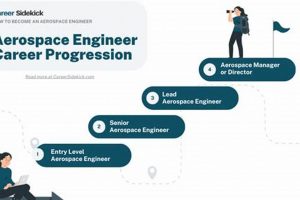
Question 2: What specific career paths are accessible with formal educational achievement?
Graduates find employment in various roles, including flight software engineers, avionics software developers, embedded systems engineers, simulation software engineers, and software verification and validation engineers. These roles exist within aerospace manufacturing companies, government agencies, research institutions, and defense contractors.
Question 3: What are the most crucial technical skills prospective students should cultivate during their education?
Proficiency in programming languages commonly used in aerospace, such as C, C++, Ada, and Python, is essential. Additionally, a strong understanding of real-time operating systems, embedded systems, control systems theory, and software testing methodologies is highly valuable.
Question 4: How important is practical experience, such as internships or research projects, in complementing formal education?
Practical experience is considered invaluable. Internships or research projects provide opportunities to apply theoretical knowledge to real-world problems, develop critical skills, and gain exposure to industry practices and technologies. Many employers prioritize candidates with demonstrable practical experience.
Question 5: What are the primary regulatory standards that aerospace software engineers must adhere to, and how does the degree program prepare students for compliance?
DO-178C is the primary standard governing the development of safety-critical airborne software. Degree programs incorporate instruction on DO-178C principles, including requirements management, software design, coding standards, testing, and verification processes. This preparation ensures graduates understand the importance of regulatory compliance and are equipped to develop software that meets these stringent requirements.
Question 6: What is the long-term career outlook for aerospace software engineers, considering the ongoing advancements in technology and automation?
Despite advancements in automation, the demand for skilled aerospace software engineers is expected to remain strong. The increasing complexity of aerospace systems, the growing reliance on software-defined solutions, and the continued emphasis on safety and reliability will drive the need for qualified professionals capable of designing, developing, and maintaining these critical systems.
In summary, acquiring specific qualifications represents a strategic investment in a demanding yet rewarding career path. The combination of theoretical knowledge, practical skills, and regulatory awareness positions graduates for success in the dynamic aerospace industry.
The subsequent section will provide insights into resources for further exploration and professional development within aerospace software engineering.
Conclusion
The preceding sections have explored the multifaceted nature of formal educational paths dedicated to aerospace software engineering. It has highlighted the synthesis of theoretical knowledge, technical proficiency, regulatory compliance, and essential skills such as problem-solving and continuous learning. The importance of practical experience and the long-term career prospects within this specialized domain have also been addressed.
A solid foundation, demonstrated by the attainment of a specialized degree, equips individuals to contribute to advancements in aviation, space exploration, and related fields. The future demands for skilled engineers in this sector are expected to remain robust, urging those with aptitude and passion to pursue studies and contribute to ensuring safety, innovation, and technological progress. Therefore, continued investment in formal education remains paramount for the sustained growth and development of the aerospace industry.
![Is a Masters in Aerospace Engineering Worth It? [Guide] | Innovating the Future of Flight with Reliable Aviation Solutions](https://mixaerospace.com/wp-content/uploads/2026/05/th-66-300x200.jpg "Is a Masters in Aerospace Engineering Worth It? [Guide] Innovating the Future of Flight with Reliable Aviation Solutions")