The foundational elements necessary to pursue a career path focused on designing, developing, testing, and maintaining aircraft and spacecraft encompass a combination of academic preparation, technical skills, and professional qualities. These elements serve as the cornerstone for individuals seeking to contribute to the advancement of flight and space exploration. A strong aptitude for mathematics and physics is critical, along with demonstrated problem-solving abilities and meticulous attention to detail.
Meeting the demands of this profession yields significant rewards, including the opportunity to innovate in a field that constantly pushes technological boundaries. The work contributes directly to advancements in transportation, communication, national defense, and scientific discovery. Historically, the path to this profession has been shaped by landmark achievements in aviation and spaceflight, fostering a continuous drive for improvement and ingenuity.
The ensuing discussion will delve into the specific educational prerequisites, essential technical proficiencies, vital soft skills, and necessary certifications and licenses that define the pathway to becoming qualified within this specialized field. This includes a detailed examination of degree programs, pertinent coursework, and recommended extracurricular activities. Furthermore, the importance of internships, practical training, and ongoing professional development will be highlighted.
Guidance for Aspiring Professionals
The following recommendations are designed to aid individuals pursuing entry into the aerospace engineering field, emphasizing strategic planning and proactive development of necessary skills and qualifications.
Tip 1: Prioritize a Strong Foundation in STEM. Excellence in mathematics, physics, and computer science is paramount. Focus on developing a deep understanding of fundamental principles, as these concepts will underpin all advanced coursework and practical applications.
Tip 2: Select an Accredited Educational Program. Ensure that the chosen university or college offers an aerospace engineering program accredited by ABET (Accreditation Board for Engineering and Technology). Accreditation signifies that the program meets rigorous quality standards and prepares graduates for professional practice.
Tip 3: Gain Practical Experience Through Internships. Actively seek internship opportunities with aerospace companies, government agencies (such as NASA or the Department of Defense), or research institutions. Hands-on experience is invaluable and provides exposure to real-world engineering challenges.
Tip 4: Develop Proficiency in Relevant Software. Familiarize oneself with industry-standard software packages used for design, analysis, and simulation, such as CAD (Computer-Aided Design) software, FEA (Finite Element Analysis) tools, and CFD (Computational Fluid Dynamics) software. Competency in these tools enhances employability.
Tip 5: Cultivate Strong Communication Skills. Effective communication, both written and oral, is essential for collaborating with teams, presenting technical findings, and writing clear and concise reports. Participate in activities that foster communication skills, such as public speaking courses or technical writing workshops.
Tip 6: Pursue Relevant Extracurricular Activities. Join clubs or organizations related to aerospace engineering, such as student chapters of professional societies (e.g., AIAA – American Institute of Aeronautics and Astronautics) or participate in engineering competitions (e.g., design-build-fly competitions). These activities provide opportunities for networking and applying theoretical knowledge.
Tip 7: Consider a Specialization. Aerospace engineering encompasses various specializations, such as aerodynamics, propulsion, structures, and avionics. Identify an area of interest and focus on developing expertise in that particular field. This focused approach can lead to greater career opportunities and advancements.
These guidelines emphasize the importance of a multifaceted approach that combines rigorous academic preparation with practical experience and the development of essential professional skills. Adhering to these recommendations will significantly enhance an individual’s prospects of successfully entering and excelling within the aerospace engineering profession.
The subsequent section will address potential career paths and future trends within this dynamic field.
1. Accredited Bachelor's Degree

An accredited bachelor’s degree serves as a fundamental prerequisite for individuals seeking to enter the aerospace engineering profession. Its significance stems from the structured curriculum and quality control measures inherent in accredited programs, directly impacting the preparedness of graduates for the demands of the field.
- Curriculum Standardization
Accreditation ensures that the curriculum covers essential aerospace engineering topics, including aerodynamics, propulsion, structures, and control systems. The standardized curriculum provides a baseline of knowledge and skills necessary for entry-level positions. For instance, an accredited program will invariably include coursework in fluid mechanics, a foundational element for understanding aerodynamic principles crucial in aircraft design.
- Quality Assurance and Program Evaluation
Accrediting bodies, such as ABET (Accreditation Board for Engineering and Technology), conduct rigorous evaluations of aerospace engineering programs. This includes assessing faculty qualifications, laboratory facilities, and student outcomes. The assurance of quality provides employers with confidence in the competence of graduates. Without accreditation, the quality of education and preparation can be inconsistent, making it difficult for employers to assess candidate capabilities.
- Professional Licensure Eligibility
Graduation from an accredited program is often a requirement for obtaining professional engineering licensure. Licensure demonstrates competency and ethical conduct, enabling engineers to take responsibility for engineering designs and approve projects. In many jurisdictions, individuals lacking an accredited degree may face significant barriers to achieving professional licensure, thereby limiting their career advancement opportunities.
- Industry Recognition and Employability
Employers in the aerospace industry actively seek graduates from accredited programs. The industry recognizes the value of the standardized curriculum and quality assurance provided by accreditation. Graduates of accredited programs are typically more competitive in the job market and often command higher starting salaries. For example, major aerospace companies like Boeing and Lockheed Martin prioritize recruiting from universities with ABET-accredited aerospace engineering programs.
In summary, an accredited bachelor’s degree is not merely a piece of paper; it is a critical validation of an individual’s academic preparation and competency in aerospace engineering principles. It ensures curriculum standardization, quality assurance, licensure eligibility, and industry recognition, all of which are vital components for meeting the overall requirements to be considered an aerospace engineer and for achieving career success in this demanding field.
2. STEM Proficiency

STEM proficiency, encompassing science, technology, engineering, and mathematics, represents a cornerstone in meeting the requirements to be an aerospace engineer. It is not merely a collection of subjects, but an integrated skillset that forms the bedrock of understanding, analyzing, and innovating within the aerospace domain. A deep understanding of STEM principles is essential for tackling the complex challenges inherent in designing, building, and maintaining aircraft and spacecraft.
- Mathematical Foundation
Aerospace engineering relies heavily on mathematical modeling and analysis. Calculus, differential equations, linear algebra, and statistics are used extensively to analyze aerodynamic forces, structural stresses, and orbital mechanics. For instance, determining the trajectory of a spacecraft requires precise calculations based on gravitational forces and orbital parameters. A weak mathematical foundation will impede an engineer’s ability to accurately predict performance and ensure the safety and efficiency of aerospace systems.
- Scientific Understanding
A solid grasp of physics, particularly mechanics, thermodynamics, and electromagnetism, is crucial. Understanding the principles governing fluid dynamics is fundamental for designing efficient airfoils and propulsion systems. Thermodynamics is essential for analyzing engine performance and heat transfer within spacecraft. Electromagnetism is vital for designing avionics systems and communication networks. Lack of scientific understanding can lead to flawed designs and potentially catastrophic failures.
- Technological Application
Proficiency in technology involves the application of scientific knowledge to solve practical problems. This includes familiarity with computer-aided design (CAD) software, finite element analysis (FEA) tools, and computational fluid dynamics (CFD) software. These tools enable engineers to create virtual prototypes, simulate performance, and optimize designs before physical construction. Inability to effectively utilize these technologies severely limits an engineer’s ability to contribute to modern aerospace projects.
- Engineering Design Principles
Engineering proficiency involves applying scientific and mathematical principles to design, test, and evaluate aerospace systems. This includes understanding design methodologies, material properties, manufacturing processes, and quality control procedures. Designing a safe and reliable aircraft or spacecraft requires a holistic approach, considering all aspects of the system and its operating environment. A deficiency in engineering principles can result in designs that are inefficient, unreliable, or even dangerous.
The multifaceted nature of STEM proficiency underscores its critical role in shaping competent aerospace engineers. The examples provided illustrate how each facet of STEM directly impacts the practical application of engineering principles, ultimately influencing the success and safety of aerospace endeavors. A well-rounded STEM education is therefore indispensable for individuals aspiring to meet the demands of this challenging and rewarding profession.
3. Software Expertise

Software expertise constitutes a fundamental component of the overall skill set necessary to meet the requirements of a successful aerospace engineer. The increasing complexity of aerospace systems and the reliance on computer-aided design, analysis, and manufacturing processes necessitate proficiency in a range of specialized software applications. This expertise directly impacts an engineer’s ability to contribute effectively to the design, development, and testing of aircraft and spacecraft. For example, accurately simulating the aerodynamic performance of a new wing design relies on computational fluid dynamics (CFD) software. Engineers lacking proficiency in such tools cannot perform these analyses independently, hindering their ability to make informed design decisions.
Proficiency extends beyond basic operation of software; it involves a deeper understanding of the underlying principles and limitations of each tool. Engineers must be able to interpret results critically, validate simulations, and identify potential sources of error. This includes the ability to utilize CAD (Computer-Aided Design) software for creating detailed 3D models of components, FEA (Finite Element Analysis) software for assessing structural integrity under various loads, and simulation software for modeling system behavior under different operating conditions. The use of MATLAB and Simulink for control system design and analysis exemplifies the demand for advanced software capabilities. The ability to script and automate tasks within these software packages further enhances efficiency and accuracy.
In summary, software expertise is not merely an ancillary skill but a core requirement for modern aerospace engineers. Its impact spans the entire product lifecycle, from initial design to final testing and certification. The industry’s continued reliance on sophisticated software tools underscores the importance of developing and maintaining proficiency in these applications throughout an engineer’s career. The ability to adapt to new software technologies and integrate them into existing workflows is essential for remaining competitive and contributing to advancements in the field. The integration of AI and machine learning into aerospace design and analysis further emphasizes the growing importance of advanced software skills.
4. Practical Experience

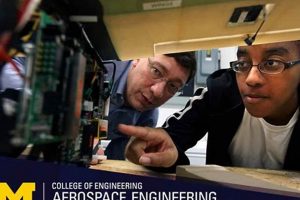
The acquisition of practical experience constitutes an indispensable component when defining the requirements to be an aerospace engineer. Theoretical knowledge, while foundational, requires practical application to solidify understanding and develop essential skills. Internships, co-op programs, and research assistantships provide opportunities to apply classroom learning to real-world problems. For instance, participation in a design-build-fly competition allows students to translate aerodynamic principles into a functioning aircraft, testing their design skills and problem-solving abilities in a tangible way. This hands-on engagement bridges the gap between theory and practice, fostering a deeper comprehension of engineering concepts.
The benefits of practical experience extend beyond reinforcing theoretical knowledge. It cultivates critical skills such as teamwork, communication, and project management, all of which are essential in the collaborative environment of aerospace engineering. Working on multidisciplinary projects during internships exposes individuals to diverse perspectives and challenges, promoting adaptability and problem-solving ingenuity. Furthermore, practical experience provides exposure to industry standards, regulations, and ethical considerations, shaping a well-rounded and professionally responsible engineer. Observing senior engineers tackle complex problems, and learning from their experience, is invaluable in shaping a developing engineer’s perspective. Such experiences simply cannot be replicated through classroom learning alone.
In summary, practical experience serves as a crucial catalyst in transforming academic knowledge into applicable engineering competence. It is not merely a supplemental activity, but an essential element in meeting the requirements of a skilled and effective aerospace engineer. The ability to apply theoretical knowledge to real-world challenges, collaborate effectively within teams, and navigate the complexities of the aerospace industry is fundamentally shaped by the opportunities afforded through robust practical experience.
5. Problem-Solving Acumen

Problem-solving acumen constitutes a central pillar in the constellation of attributes defining the requirements to be an aerospace engineer. The field inherently deals with complex systems and novel challenges, demanding the capacity to analyze intricate problems, develop innovative solutions, and implement them effectively. This ability is not simply a desirable trait; it is a fundamental prerequisite for success in this demanding profession. The design of a more fuel-efficient engine, for example, requires engineers to identify inefficiencies, analyze thermodynamic processes, and devise creative solutions to optimize combustion and reduce drag. The absence of strong problem-solving skills would render such endeavors virtually impossible.
The significance of problem-solving acumen is further underscored by the diverse challenges encountered in aerospace engineering. From optimizing aircraft aerodynamics to ensuring the structural integrity of spacecraft, engineers confront multifaceted problems that demand a systematic and analytical approach. The development of autonomous flight control systems, for instance, requires engineers to address issues related to sensor integration, data processing, and decision-making algorithms. The ability to break down complex problems into manageable components, identify critical variables, and formulate effective strategies is paramount. Moreover, the capacity to learn from failures, adapt to changing circumstances, and continuously improve solutions is crucial for ongoing innovation and advancement in the field. The ability to debug complex code, troubleshoot unexpected system behavior, and creatively circumvent design limitations exemplifies the practical application of this skillset.
In summary, problem-solving acumen is inextricably linked to the essential qualities required of an aerospace engineer. It is not merely a skill to be honed but a fundamental cognitive attribute that enables engineers to navigate the complexities of the field, develop innovative solutions, and contribute to advancements in aerospace technology. The capacity to analyze problems, generate creative solutions, and implement them effectively is a critical determinant of success, ultimately shaping the future of flight and space exploration. Neglecting the development of strong problem-solving abilities will severely limit an individual’s potential to meet the demands of this challenging yet rewarding profession.
6. Communication Prowess

Effective communication is not merely a supplementary skill, but rather an indispensable core competency when assessing the requirements to be an aerospace engineer. The ability to articulate technical concepts clearly, collaborate effectively with multidisciplinary teams, and convey complex information accurately is paramount to the success of projects and the overall advancement of the field.
- Technical Documentation and Reporting
Aerospace engineers are frequently required to produce detailed technical documentation, including design specifications, test reports, and research findings. The ability to write clearly and concisely is essential for conveying critical information to colleagues, clients, and regulatory agencies. For example, a poorly written test report could lead to misinterpretation of data, potentially compromising the safety and performance of an aircraft. Therefore, mastery of technical writing is a non-negotiable aspect of the profession.
- Collaboration and Teamwork
Aerospace projects typically involve large, multidisciplinary teams comprising engineers from various specialties, as well as technicians, designers, and project managers. Effective communication is crucial for coordinating efforts, resolving conflicts, and ensuring that all team members are working towards a common goal. The inability to articulate ideas clearly or listen attentively to others can lead to misunderstandings, delays, and ultimately, project failure. Participating effectively in design reviews, providing constructive feedback, and clearly explaining complex technical issues to non-technical stakeholders are all critical aspects of teamwork in aerospace engineering.
- Presentations and Public Speaking
Aerospace engineers often need to present their work to clients, colleagues, and the public. The ability to deliver clear, concise, and engaging presentations is essential for conveying the value of their work and securing support for new projects. For instance, presenting the benefits of a new aircraft design to potential investors requires strong communication skills, including the ability to articulate complex technical details in a way that is accessible to a non-technical audience. The ability to handle questions effectively and address concerns persuasively is also crucial.
- Interpersonal Communication
Beyond formal presentations and written reports, effective interpersonal communication is vital for building relationships, fostering trust, and resolving conflicts. Aerospace engineers often work in high-pressure environments, and the ability to communicate effectively with colleagues, supervisors, and subordinates is essential for maintaining a positive and productive work environment. Active listening, empathy, and the ability to provide constructive feedback are all important aspects of interpersonal communication. Addressing disagreements constructively, negotiating effectively, and building consensus are also crucial skills.
The facets of communication prowess outlined above are intricately woven into the fabric of what it means to be a competent aerospace engineer. Demonstrating proficiency in these areas not only enhances an individual’s professional standing but also contributes significantly to the collective success of aerospace endeavors. The demanding nature of this field necessitates that engineers possess not only technical expertise but also exceptional communication skills to navigate the complexities of collaborative projects and effectively convey their knowledge to a diverse range of stakeholders.
Frequently Asked Questions
The following questions address common inquiries regarding the prerequisites and qualifications necessary for pursuing a career in aerospace engineering. The responses aim to provide clear and concise information to prospective students and professionals.
Question 1: Is a graduate degree essential for career advancement in aerospace engineering?
While an entry-level position typically requires a bachelor’s degree, a graduate degree, such as a Master of Science (M.S.) or Doctor of Philosophy (Ph.D.), can significantly enhance career prospects and open doors to specialized roles, research positions, and leadership opportunities. Advanced degrees often provide in-depth knowledge and research experience valued by employers in the industry.
Question 2: How crucial is ABET accreditation for an aerospace engineering program?
ABET accreditation is highly significant. It ensures that the aerospace engineering program meets rigorous quality standards, covering essential topics and providing adequate resources. Graduates from ABET-accredited programs are often preferred by employers and are typically eligible for professional licensure, which is often required for career advancement.
Question 3: What specific software skills are most beneficial for aspiring aerospace engineers?
Proficiency in industry-standard software is essential. This includes CAD (Computer-Aided Design) software like CATIA or SolidWorks for design and modeling, FEA (Finite Element Analysis) tools like ANSYS or ABAQUS for structural analysis, and CFD (Computational Fluid Dynamics) software like Fluent or OpenFOAM for aerodynamic simulations. Familiarity with programming languages like MATLAB and Python is also valuable.
Question 4: How important are internships and co-op programs in gaining practical experience?
Internships and co-op programs are extremely valuable for gaining practical experience. They provide opportunities to apply classroom knowledge to real-world problems, develop professional skills, and network with industry professionals. Employers often view internship experience as a significant advantage when evaluating candidates for entry-level positions.
Question 5: What role does mathematics play in aerospace engineering?
Mathematics is foundational to aerospace engineering. Calculus, differential equations, linear algebra, and statistics are essential for analyzing aerodynamic forces, structural stresses, and orbital mechanics. A strong mathematical foundation is critical for understanding and solving complex engineering problems.
Question 6: Are strong communication skills truly necessary for aerospace engineers?
Yes, strong communication skills are essential. Aerospace engineers must be able to communicate technical information clearly and concisely, both in writing and verbally. This includes writing technical reports, presenting research findings, and collaborating with multidisciplinary teams. Effective communication is crucial for ensuring that projects are completed successfully and safely.
In conclusion, the path to becoming an aerospace engineer involves a combination of academic rigor, practical experience, and essential soft skills. Prospective engineers should focus on developing a strong foundation in STEM subjects, gaining practical experience through internships, and honing their communication skills to enhance their career prospects.
The subsequent section will delve into potential career paths and future trends within this dynamic field.
Conclusion
This exploration into what are the requirements to be a aerospace engineer has illuminated a multifaceted landscape of academic preparation, technical capabilities, and professional attributes. The significance of a strong foundation in STEM disciplines, coupled with practical experience gained through internships and specialized software proficiency, is paramount. Effective communication and robust problem-solving acumen serve as essential complements to technical expertise.
The outlined qualifications serve as a guiding framework for aspiring professionals. Adherence to these standards will not only facilitate entry into the field but also foster long-term career success and meaningful contributions to aerospace innovation. As the industry continues to evolve, driven by technological advancements and global challenges, dedication to continuous learning and professional development remains crucial for individuals seeking to excel within this demanding and vital domain.

![[IIT Aero Expert] Abhay Singh: Aerospace Engineering Insights | Innovating the Future of Flight with Reliable Aviation Solutions](https://mixaerospace.com/wp-content/uploads/2026/05/th-139-300x200.jpg "[IIT Aero Expert] Abhay Singh: Aerospace Engineering Insights Innovating the Future of Flight with Reliable Aviation Solutions")