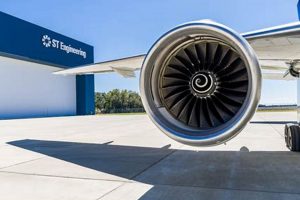
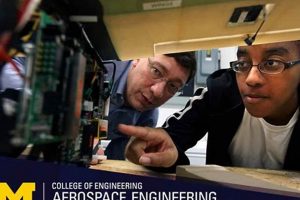
The trajectory for individuals trained in the design, development, testing, and production of aircraft and spacecraft is multifaceted. It encompasses a spectrum of opportunities within governmental agencies, private sector companies, research institutions, and academic settings. For example, a graduate with a background in fluid dynamics might find work simulating airflow over a new wing design, while another specializing in materials science could contribute to the development of lighter, stronger composite materials for spacecraft structures.
Understanding these professional opportunities is crucial for students considering this field of study, as well as for seasoned engineers seeking to redirect or advance their expertise. A clear comprehension of the diverse roles available enables informed decision-making regarding specialization, skill development, and long-term career planning. Historically, advancement in aviation and space exploration has created evolving roles, adapting to new technological breakthroughs and engineering challenges.
This exploration will examine various sectors where individuals with aerospace expertise are employed, the specific roles they fulfill within those sectors, and the necessary education and skills required to succeed. Furthermore, it will outline the pathways to advancement within each of these specializations, offering a comprehensive view of the professional landscape.
The following recommendations are designed to assist individuals in effectively charting a course within the expansive and dynamic field related to aircraft and spacecraft. These are provided to offer clarity and direction.
Tip 1: Focus on Foundational Knowledge. A strong grounding in core engineering principles, such as thermodynamics, fluid mechanics, and structural analysis, is essential. Specialization should build upon this base, not replace it. For example, even a controls engineer benefits from understanding the aerodynamic principles governing aircraft flight.
Tip 2: Cultivate Specific Skillsets. The industry values expertise in specific areas. This could include proficiency in CAD/CAM software, expertise in specific materials (e.g., composites), or deep knowledge of particular systems (e.g., propulsion). Develop verifiable skills beyond theoretical knowledge.
Tip 3: Seek Internship or Research Experience. Practical exposure is invaluable. Internships at aerospace companies or participation in research projects provide hands-on experience, networking opportunities, and a realistic view of the profession. Document accomplishments during these experiences.
Tip 4: Obtain Relevant Certifications. Certifications can demonstrate competence and enhance credibility. Examples include certifications in project management, quality control, or specific software packages. Select certifications relevant to the desired specialization.
Tip 5: Network Actively. Attend industry conferences, join professional organizations (e.g., AIAA), and connect with engineers on professional networking platforms. Networking can lead to valuable insights, mentorship opportunities, and job prospects.
Tip 6: Consider Advanced Education. A master’s degree or Ph.D. can open doors to more specialized and research-oriented positions. Assess whether advanced education aligns with long-term professional goals.
Tip 7: Maintain Awareness of Industry Trends. The sector is continually evolving. Stay informed about new technologies, materials, and approaches. This can be achieved through industry publications, continuing education courses, and participation in technical conferences. Example: Electric propulsion is developing rapidly.
Following these directives will better position an individual for success in this demanding, yet rewarding, engineering discipline. A combination of education, experience, and continuous learning is required.
Moving forward, this article will present detailed profiles of individuals occupying a range of roles within the industry, offering real-world perspectives and demonstrating successful navigation of these professional landscapes.
1. Design

Design serves as a foundational pillar within professional routes associated with aircraft and spacecraft. It is the initial step in realizing innovative solutions to complex engineering challenges. Design, in this context, includes conceptualization, creation, and refinement of aircraft and spacecraft components, systems, and overall architectures. A design flaw can have cascading effects throughout the entire development process, potentially leading to catastrophic failures or significant delays and cost overruns. For instance, a poorly designed wing structure could lead to flutter, compromising aircraft stability. Conversely, a well-designed propulsion system enhances performance and reduces fuel consumption. Understanding the principles of aerodynamic design, structural integrity, and system integration is, therefore, paramount for aerospace engineers pursuing roles in design.
Several specialized roles directly involve design in the aerospace sector. Aerodynamic engineers are responsible for optimizing the shape of aircraft to minimize drag and maximize lift. Structural engineers ensure that aircraft and spacecraft can withstand the stresses and strains of flight. Propulsion engineers design and improve engine systems. Systems engineers integrate these components into a cohesive and functional whole. These design-centric careers demand a deep understanding of engineering principles, proficiency in computer-aided design (CAD) software, and the ability to collaborate effectively with other engineering disciplines. For example, a mechanical design team would need to understand software that analyzes stress under multiple constraints, while working with electrical engineers to determine correct wiring schematics.
In summary, design constitutes a critical component of aerospace routes, influencing performance, safety, and cost-effectiveness. Mastery of design principles, coupled with specialized expertise in areas like aerodynamics, structures, or propulsion, positions engineers for rewarding careers in this sector. A persistent challenge lies in balancing conflicting design requirements, such as maximizing performance while minimizing weight and cost. Addressing this challenge necessitates innovative solutions and a holistic approach to design.
2. Analysis

Analysis is an indispensable element within engineering professions relating to aircraft and spacecraft. It involves the utilization of computational and experimental methods to assess the performance, safety, and reliability of aerospace systems. An error in analytical results can lead to incorrect design decisions, potentially resulting in structural failures or performance degradation. A simple example would be the underestimation of stress concentrations around a fastener hole, which can initiate fatigue cracks and cause catastrophic structural failure. Conversely, proper analytical results provide data that enables optimized designs, reduced costs, and enhanced safety margins. Such analysis includes structural assessments, thermal assessments, fluid dynamics simulations, and controls system evaluations. For individuals in aerospace engineering, proficiency in analysis is fundamental to securing roles in design, testing, and research.
Numerous specialized positions emphasize analysis. Structural analysts employ finite element analysis (FEA) to determine the stresses and strains on aircraft components under various loading conditions. Thermal analysts predict temperature distributions within spacecraft to ensure that components operate within acceptable temperature limits. Computational fluid dynamics (CFD) engineers simulate airflow around aircraft to optimize aerodynamic performance. Control systems engineers analyze the stability and performance of aircraft control systems. These analytic roles demand a deep understanding of engineering principles, mathematical modeling, and proficiency in specialized software tools. Consider the use of Monte Carlo simulations for risk assessment in the design of safety-critical components; such analysis relies on advanced probability and statistics to assure the reliability of aerospace systems.
In summary, analysis forms a cornerstone of paths related to aircraft and spacecraft, contributing directly to the safety, performance, and cost-effectiveness of designs. Proficiency in analytical techniques, combined with expertise in specialized areas, prepares engineers for highly valued positions within this sector. Persistent challenges in analysis include the accurate modeling of complex phenomena, such as turbulence, and the validation of analytical results with experimental data. Continual advancements in computational power and experimental techniques drive progress in the field, enabling more accurate and reliable analyses.
3. Research
Research is a vital catalyst for innovation and advancement within aerospace engineering. It directly shapes the evolution of technology, leading to new capabilities and improved performance across all domains of flight and space exploration. It also defines a set of specific professional routes for engineers focused on discovery and development.
- Fundamental Studies in Aerodynamics and Materials
This area focuses on basic scientific inquiry, such as developing novel airfoil designs to reduce drag or creating lighter, stronger composite materials for aircraft structures. Such research is often conducted at universities or government laboratories and serves as a foundation for future technological advancements. For example, research into boundary layer control can lead to more efficient aircraft designs, while materials science research can produce heat-resistant alloys for hypersonic vehicles.
- Development of Advanced Propulsion Systems
This research explores next-generation propulsion technologies, including electric propulsion, hypersonic engines, and alternative fuels. Success in this field translates to faster, more efficient, and environmentally friendly aerospace vehicles. For instance, research into scramjet engines aims to enable sustained hypersonic flight, while development of ion thrusters aims to provide efficient propulsion for long-duration space missions.
- Autonomous Systems and Robotics
This facet involves the development of autonomous flight control systems, robotic spacecraft, and unmanned aerial vehicles (UAVs). These technologies enable safer and more efficient operation of aircraft and spacecraft, as well as access to hazardous or inaccessible environments. Example applications include autonomous navigation of UAVs for surveillance and reconnaissance, and development of robotic arms for in-space assembly and repair of satellites.
- Space Exploration Technologies
This research addresses the challenges of long-duration space missions, including life support systems, radiation shielding, and in-situ resource utilization (ISRU). Advances in these areas are critical for enabling human exploration of Mars and other destinations beyond Earth. For instance, research into closed-loop life support systems aims to recycle water and air on spacecraft, reducing the need for resupply missions.
The described research areas, ranging from fundamental scientific inquiry to the development of advanced technologies, collectively fuel progress in aerospace engineering. These efforts establish specific roles and career trajectories focused on discovery, experimentation, and the practical application of new knowledge to solve pressing aerospace challenges. Pursuing these paths requires a strong foundation in mathematics, science, and engineering principles, as well as a passion for innovation and a commitment to pushing the boundaries of what is possible.
4. Management

Management roles within aerospace engineering career paths are instrumental in orchestrating complex projects, teams, and resources to achieve strategic objectives. Effective management ensures projects adhere to stringent safety standards, budgetary constraints, and rigorous timelines, thereby guaranteeing mission success and maintaining a competitive edge.
- Project Management
Project management in aerospace involves planning, executing, monitoring, and closing projects, such as designing a new aircraft or launching a satellite. These professionals oversee budgets, schedules, and technical requirements, ensuring alignment with stakeholder expectations. An example is the development of a new commercial aircraft, where project managers coordinate engineers from various disciplines, manage risks, and ensure compliance with aviation regulations.
- Engineering Management
Engineering managers lead and supervise teams of engineers working on specific projects or within specialized departments. They provide technical guidance, allocate resources, and ensure that engineering processes are followed. For instance, an engineering manager overseeing the propulsion systems department would ensure designs meet performance specifications and safety requirements. These managers require both technical expertise and leadership skills.
- Program Management
Program managers oversee multiple related projects, aligning them with organizational goals. They manage overall program budgets, schedules, and risks, ensuring that individual projects contribute to the larger strategic vision. An example involves managing the development and deployment of a new satellite constellation, where the program manager coordinates the design, manufacturing, launch, and operation of multiple satellites.
- Executive Leadership
Executive leadership roles in aerospace involve strategic planning, decision-making, and overall organizational management. These leaders set the direction of the company, allocate resources, and ensure long-term sustainability. An example includes a CEO of an aerospace manufacturer defining the company’s product strategy, overseeing research and development investments, and ensuring regulatory compliance. Executive leaders must possess a strong understanding of the aerospace industry, as well as financial and business acumen.
The spectrum of management roles within aerospace engineering underscores the necessity of leadership skills, strategic thinking, and the ability to integrate technical expertise with business objectives. These positions are critical for driving innovation, ensuring project success, and maintaining competitiveness in the global aerospace industry.
5. Testing

Testing, a critical phase in aerospace engineering, validates designs, ensuring functionality, safety, and compliance with stringent regulatory standards. Effective testing reveals potential flaws, enabling engineers to implement corrective measures before deployment, thereby mitigating risks of catastrophic failures. The absence of rigorous testing can lead to tragic outcomes, as demonstrated by historical incidents attributed to design flaws that went undetected. Conversely, thorough testing contributes to the reliability and longevity of aerospace systems, enhancing overall performance and minimizing operational costs. Example of testing include wind tunnel testing to validate aerodynamic characteristics, structural testing to access structural integrity, and software testing to access its performance.
Aerospace engineers specializing in testing design and implement test plans, conduct experiments, analyze data, and generate reports documenting findings. Test engineers may specialize in areas such as nondestructive testing (NDT), vibration testing, or flight testing, requiring expertise in specialized equipment and techniques. For example, NDT specialists use ultrasonic or radiographic methods to detect internal flaws in composite structures without causing damage. A test pilot, a specialized aerospace engineer, evaluates an aircraft’s performance and handling characteristics in actual flight conditions. Test engineers provide valuable feedback to design teams, enabling iterative improvements and refined designs. Additionally, effective planning of the test, along with proper data collection and analysis, are essential steps in the validation process.
Testing forms an integral component of aerospace engineering pathways, influencing performance, safety, and regulatory compliance. Mastery of testing methodologies, combined with specialized expertise, prepares engineers for critical roles within the industry. The relentless pursuit of safer, more reliable, and high-performance aerospace systems drives advancements in testing technologies and techniques. Future challenges include developing more efficient and cost-effective testing methods for increasingly complex aerospace systems and adapting to the evolving landscape of autonomous systems and space exploration.
6. Education
Education serves as the foundational pillar upon which all paths related to aircraft and spacecraft are constructed. The formal educational system, encompassing undergraduate and graduate programs, imparts the fundamental knowledge and skills necessary for success in the profession. A rigorous curriculum in mathematics, physics, and engineering principles is essential, providing a framework for comprehending complex aerospace systems. For example, understanding fluid dynamics, a cornerstone of the aerospace curriculum, is crucial for designing efficient airfoils and propulsion systems. Furthermore, specialized coursework in areas such as aerodynamics, structures, propulsion, and control systems equips graduates with the specific knowledge needed to contribute to particular sectors of the aerospace industry. Without a solid educational foundation, navigating the complexities of the domain becomes exceedingly difficult.
Beyond foundational knowledge, education cultivates critical thinking, problem-solving abilities, and adaptabilityattributes highly valued by employers. Project-based learning, research opportunities, and internships supplement classroom instruction, providing hands-on experience and fostering a practical understanding of engineering concepts. For instance, designing, building, and testing a model rocket can reinforce theoretical knowledge and develop teamwork skills. Moreover, advanced degrees, such as master’s degrees and doctorates, enable specialization and research in emerging areas, such as autonomous systems and advanced materials. Continuous professional development, including short courses, workshops, and conferences, is essential for staying abreast of technological advancements and maintaining professional competence. Examples include courses on finite element analysis, computational fluid dynamics, and project management.
In summary, education is a necessary pre-condition for a successful route associated with aircraft and spacecraft, shaping the skills, knowledge, and mindset required for the demanding profession. A commitment to lifelong learning, coupled with a strong educational foundation, empowers aerospace engineers to tackle complex problems, drive innovation, and contribute to the advancement of the field. Challenges include adapting educational curricula to keep pace with rapid technological advancements and ensuring that educational programs adequately prepare students for the evolving needs of the aerospace industry. A strong focus on interdisciplinary education and collaboration will be increasingly important for addressing future challenges and opportunities in the sector.
Frequently Asked Questions Regarding Aerospace Engineering Career Paths
The following section addresses common inquiries concerning professional options for individuals with training in aerospace engineering. These answers are intended to provide clarity and informed guidance.
Question 1: What are the primary sectors employing aerospace engineers?
Aerospace engineers find employment across diverse sectors, including governmental agencies (e.g., NASA, Department of Defense), private aerospace companies (e.g., Boeing, SpaceX, Lockheed Martin), research institutions, and academic institutions. Each sector offers distinct opportunities and demands specific skill sets.
Question 2: What specialized roles are available within the aerospace industry?
Specialized roles encompass aerodynamic engineers, structural engineers, propulsion engineers, systems engineers, control systems engineers, test engineers, and research scientists. These positions often require expertise in specific areas, such as computational fluid dynamics, finite element analysis, or materials science.
Question 3: What educational qualifications are typically required for an aerospace engineering role?
A bachelor’s degree in aerospace engineering or a closely related field (e.g., mechanical engineering, electrical engineering) is generally the minimum requirement for entry-level positions. Advanced degrees (master’s or doctoral) are often necessary for research-oriented positions and leadership roles.
Question 4: How important are internships and practical experience in securing a job?
Internships and practical experience are highly valued by employers. These opportunities provide hands-on experience, networking opportunities, and a realistic perspective on the aerospace profession. Participation in research projects or industry internships significantly enhances a candidate’s competitiveness.
Question 5: What skills, beyond technical knowledge, are essential for success in this field?
Beyond technical knowledge, essential skills include problem-solving abilities, critical thinking, communication skills, teamwork skills, and project management skills. The ability to work effectively in interdisciplinary teams and adapt to evolving technologies is also crucial.
Question 6: How can one stay current with the latest technological advancements in aerospace engineering?
Staying current with technological advancements requires continuous learning and professional development. This can be achieved through industry publications, continuing education courses, participation in technical conferences, and membership in professional organizations.
In conclusion, a clear understanding of common questions and misconceptions is vital for those interested in exploring and pursuing professional areas involving aircraft and spacecraft. Seeking further insight can provide a successful career.
This article will now delve into the future outlook for aerospace engineering careers and the emerging trends that will shape the industry.
Aerospace Engineering Career Paths
This exploration of aerospace engineering career paths has revealed the breadth and depth of opportunities available to qualified individuals. From design and analysis to research, management, testing, and education, the sector offers a diverse range of fulfilling and impactful professional routes. A solid foundation in engineering principles, coupled with specialized knowledge, practical experience, and continuous learning, is paramount for success.
The future of aerospace engineering is poised for continued growth and innovation, driven by advancements in technology and the expansion of space exploration initiatives. Individuals considering or already navigating aerospace engineering career paths should embrace the challenges and opportunities that lie ahead, contributing to the advancement of flight and space exploration for the benefit of humanity. Further exploration, preparation, and proactive engagement with the industry will be necessary to achieve professional fulfillment and contribute to the progress of the aerospace sector.
![[IIT Aero Expert] Abhay Singh: Aerospace Engineering Insights | Innovating the Future of Flight with Reliable Aviation Solutions](https://mixaerospace.com/wp-content/uploads/2026/05/th-139-300x200.jpg "[IIT Aero Expert] Abhay Singh: Aerospace Engineering Insights Innovating the Future of Flight with Reliable Aviation Solutions")