Aerospace engineers design, develop, test, and supervise the manufacture of aircraft, spacecraft, and missiles. Their work encompasses a broad spectrum of activities, from conceptualizing initial designs to overseeing the final production stages. For example, they might create aerodynamic models for new aircraft wings or design propulsion systems for rockets.
The contributions of these engineers are vital for advancements in air travel, space exploration, and national defense. Their expertise leads to safer, more efficient transportation systems, enhanced satellite technology, and the development of critical defense capabilities. Historically, aerospace engineering breakthroughs have consistently driven significant progress across various sectors, benefiting society as a whole.
This field encompasses the creation of diverse and complex systems. The following sections will detail some specific areas of focus, including aircraft design, spacecraft engineering, and the creation of advanced propulsion systems.
Guidance for Aspiring Aerospace Engineers
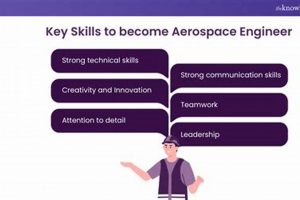
The creation of aircraft and spacecraft demands a rigorous skillset. Individuals considering a career in this field should focus on developing a strong foundation in relevant areas.
Tip 1: Emphasize Mathematics and Physics: A deep understanding of calculus, differential equations, linear algebra, and physics principles is crucial. Aerospace engineering heavily relies on these disciplines for analysis and design.
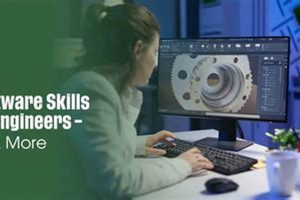
Tip 2: Cultivate Computer-Aided Design (CAD) Proficiency: Familiarity with CAD software is essential for creating and analyzing designs. Practice with industry-standard tools like CATIA, SolidWorks, or AutoCAD.
Tip 3: Gain Experience in Aerodynamics: Understanding airflow and its impact on vehicle performance is paramount. Seek opportunities to learn about aerodynamics through coursework, simulations, or research projects.
Tip 4: Explore Propulsion Systems: Familiarize oneself with various propulsion methods, including jet engines, rocket engines, and electric propulsion. Knowledge of thermodynamics and fluid mechanics is beneficial.
Tip 5: Develop Strong Problem-Solving Skills: Aerospace engineering frequently presents complex challenges. Cultivate analytical and critical thinking abilities to effectively address these issues.
Tip 6: Seek Internship Opportunities: Practical experience is invaluable. Internships at aerospace companies or research institutions provide hands-on exposure to real-world engineering projects.
Tip 7: Focus on Materials Science: Understanding the properties and behavior of different materials is crucial for selecting appropriate materials for aircraft and spacecraft components.
Adhering to these guidelines can significantly enhance preparation for a successful career in aerospace engineering, leading to more effective design and development outcomes.
The following concluding remarks summarize the importance of the work accomplished in this field.
1. Aircraft

Aircraft represent a core element of aerospace engineering output, demonstrating the practical application of theoretical knowledge. The design, development, and manufacture of aircraft are direct consequences of aerospace engineering principles. These principles govern aerodynamics, structural integrity, propulsion systems, and control mechanisms, all of which are essential for creating functional and safe air vehicles. The ongoing evolution of aircraft, from improving fuel efficiency to enhancing passenger comfort, is fundamentally linked to advancements in aerospace engineering.
Consider the development of composite materials in aircraft construction. Aerospace engineers have pioneered the use of these lightweight, high-strength materials to reduce aircraft weight, leading to lower fuel consumption and improved performance. Similarly, the implementation of advanced flight control systems, such as fly-by-wire technology, enhances stability and maneuverability, contributing to safer and more efficient air travel. The creation of more efficient jet engines and turboprops provides increased range and reduced emissions, directly influencing the environmental impact of air transportation.
Understanding the role of aircraft as a tangible product of aerospace engineering is crucial for appreciating the field’s practical significance. Challenges remain in areas such as noise reduction and the development of sustainable aviation fuels, driving continued innovation. Ultimately, the relationship between aircraft and aerospace engineering underscores the discipline’s ongoing contribution to transportation, commerce, and global connectivity.
2. Spacecraft
Spacecraft represent a pivotal outcome of aerospace engineering, encompassing a broad range of vehicles designed for operation beyond Earth’s atmosphere. These vessels serve diverse purposes, from scientific research and communication to planetary exploration and national defense. The successful development and deployment of spacecraft demand a deep understanding of various engineering disciplines, all coordinated by aerospace engineers.
- Orbital Mechanics and Trajectory Design
Spacecraft trajectories are meticulously calculated to achieve specific mission objectives, taking into account gravitational forces, orbital perturbations, and fuel constraints. Aerospace engineers utilize complex mathematical models to determine optimal launch windows, orbital insertion maneuvers, and interplanetary transfer orbits. Examples include the precise trajectories required for missions to Mars, involving gravity assists and carefully timed engine burns to minimize travel time and fuel consumption.
- Environmental Protection and Thermal Management
Spacecraft face extreme environmental conditions, including vacuum, radiation, and extreme temperature variations. Aerospace engineers design thermal control systems, such as multi-layer insulation (MLI) and radiators, to maintain internal temperatures within acceptable limits. They also incorporate radiation shielding to protect sensitive electronic components from damage. For instance, the James Webb Space Telescope uses a large sunshield to maintain cryogenic temperatures for its infrared detectors, enabling observations of distant galaxies.
- Power Generation and Management
Spacecraft require reliable power sources to operate their instruments, communication systems, and other essential functions. Aerospace engineers design power systems based on solar arrays, radioisotope thermoelectric generators (RTGs), or fuel cells, depending on mission requirements. They also develop power management systems to efficiently distribute power to different subsystems. The International Space Station (ISS) relies on large solar arrays to generate electricity, which is then distributed through a complex network to power the various modules and experiments.
- Communication Systems
Maintaining reliable communication with spacecraft is crucial for mission control, data transmission, and command execution. Aerospace engineers design communication systems that operate at various frequencies and utilize different modulation techniques to transmit data over vast distances. They also develop antennas and transceivers optimized for specific mission profiles. Deep space missions, such as Voyager, employ large parabolic antennas to transmit weak signals back to Earth across billions of kilometers.
The design and construction of spacecraft epitomizes the capabilities of aerospace engineering, representing a tangible culmination of theoretical knowledge and practical application. From the intricate calculations of orbital mechanics to the complex engineering solutions for environmental protection and power management, each facet of spacecraft development underscores the critical role of aerospace engineers in enabling space exploration and expanding human knowledge.
3. Missiles

Missiles constitute a significant output of aerospace engineering, representing a complex integration of aerodynamics, propulsion, guidance, and control systems. These guided projectiles are designed to deliver payloads with precision, necessitating a thorough understanding of physics, materials science, and advanced manufacturing techniques. The development of missiles directly reflects the expertise of aerospace engineers in creating systems capable of operating under extreme conditions, showcasing their ability to apply theoretical knowledge to practical, high-performance applications. The effectiveness of a missile system is intrinsically linked to the quality of its design, which relies heavily on the skills and knowledge of aerospace engineers. For example, the evolution of cruise missiles, from early, less accurate models to modern precision-guided variants, demonstrates the continuous advancements driven by aerospace engineering innovation. These improvements involve refinements in aerodynamic design for enhanced maneuverability, the integration of sophisticated guidance systems for increased accuracy, and the use of advanced materials to withstand high-speed flight and extreme temperatures.
The practical application of missile technology extends beyond military applications. Research and development in missile technology have spurred advancements in other fields, such as propulsion systems for space launch vehicles and high-speed transportation systems. The development of scramjet engines, initially conceived for missile applications, has the potential to revolutionize air travel by enabling hypersonic flight. Furthermore, the guidance and control systems developed for missiles have found applications in autonomous vehicles and robotics. The design and production of missile defense systems also present significant engineering challenges. Aerospace engineers are at the forefront of developing technologies to intercept and neutralize incoming missiles, requiring innovative solutions in areas such as radar technology, kinetic energy weapons, and directed energy weapons. These defensive systems necessitate advanced algorithms for threat detection and tracking, as well as robust control systems for interceptor missiles.
In summary, missiles are a critical manifestation of aerospace engineering expertise, demanding a multidisciplinary approach to design, development, and manufacturing. The ongoing pursuit of improved performance and accuracy in missile systems drives innovation in various technological domains, benefiting both military and civilian sectors. Challenges remain in areas such as reducing the cost and complexity of missile systems, improving their reliability, and minimizing their environmental impact. Addressing these challenges requires continued investment in research and development, as well as the ongoing training and education of skilled aerospace engineers.
4. Satellites
Satellites are a prime illustration of what aerospace engineers create, representing a culmination of diverse engineering disciplines. The design, construction, and deployment of these orbiting platforms necessitate expertise in areas such as orbital mechanics, thermal management, power systems, and communication technologies. Satellites enable a wide range of services, including global communication, weather forecasting, Earth observation, and navigation, demonstrating the practical impact of aerospace engineering on daily life. The development of the Global Positioning System (GPS), for example, relied heavily on the expertise of aerospace engineers to design and build a constellation of satellites capable of providing precise positioning data to users worldwide. Similarly, Earth observation satellites, such as those used for monitoring climate change and tracking deforestation, are a direct result of aerospace engineering capabilities.
Aerospace engineers play a crucial role in ensuring the long-term reliability and functionality of satellites. This involves designing robust systems capable of withstanding the harsh environment of space, including extreme temperatures, vacuum, and radiation. They also develop fault-tolerant systems that can continue operating even in the event of component failures. Furthermore, aerospace engineers are responsible for developing the software and algorithms that control satellite operations, including attitude control, orbit maintenance, and data processing. The successful operation of communication satellites, which transmit data and voice signals around the globe, depends on the precise design and implementation of these control systems. Advances in satellite technology, such as the development of smaller, more efficient satellites (CubeSats), are expanding the possibilities for space-based research and applications.
In conclusion, satellites are a tangible and impactful outcome of aerospace engineering efforts, demonstrating the field’s ability to create sophisticated systems that benefit society in numerous ways. The ongoing development of new satellite technologies presents significant engineering challenges, requiring continued innovation and collaboration among aerospace engineers and other specialists. The future of satellite technology holds great promise, with potential applications in areas such as space-based solar power, asteroid mining, and interplanetary exploration, further underscoring the importance of aerospace engineering in shaping the future of space exploration and utilization.
5. Propulsion Systems

Propulsion systems are integral to the creations of aerospace engineers, directly determining the performance capabilities of aircraft, spacecraft, and missiles. The design, development, and testing of these systems constitute a primary focus within the field. The relationship is causal: advancements in propulsion technology directly result in improved speed, range, altitude, and payload capacity of aerospace vehicles. Without effective propulsion, the potential of other engineering advancements in areas such as aerodynamics and materials science cannot be fully realized. For instance, the development of high-efficiency turbofan engines has significantly improved the fuel economy and range of commercial airliners, while the creation of powerful rocket engines has enabled missions to distant planets.
Specific examples further illustrate this connection. The design of a solid rocket booster for a space launch vehicle requires careful consideration of factors such as propellant composition, nozzle geometry, and structural integrity. Aerospace engineers apply principles of thermodynamics, fluid mechanics, and materials science to optimize these parameters for maximum thrust and efficiency. Similarly, the development of air-breathing engines for hypersonic aircraft demands expertise in areas such as combustion, heat transfer, and aerodynamics. These engines must be capable of operating at extremely high speeds and temperatures, requiring innovative solutions to challenges such as flame stabilization and component cooling. The practical significance lies in the ability to access space, transport goods and people efficiently, and defend national interests.
In summary, propulsion systems are an indispensable component of aerospace engineering outcomes. Continued progress in this area is essential for achieving future advancements in air and space travel. Challenges remain in developing more efficient, reliable, and environmentally friendly propulsion systems. Addressing these challenges requires ongoing research and development efforts, as well as a multidisciplinary approach that integrates expertise from various engineering fields. The future of aerospace engineering is inextricably linked to the future of propulsion technology.
6. Avionics

Avionics, encompassing the electronic systems used on aircraft, satellites, and spacecraft, is a critical component of what aerospace engineers develop. These systems are essential for controlling, navigating, and communicating with vehicles in the air and in space. Avionics integrates various technologies to ensure safe and efficient operation.
- Flight Management Systems (FMS)
Flight Management Systems automate and optimize flight operations, enhancing efficiency and safety. These systems integrate navigation, performance, and guidance functions, enabling precise route planning and execution. For example, in modern airliners, the FMS calculates the optimal flight path, taking into account factors like wind, altitude, and fuel consumption, reducing pilot workload and minimizing fuel usage. Aerospace engineers design these systems to ensure seamless integration with other aircraft components, contributing to overall flight performance.
- Navigation Systems
Navigation systems provide accurate positioning and guidance information to pilots and spacecraft controllers. These systems rely on various technologies, including GPS, inertial navigation systems (INS), and radio navigation aids. For instance, satellites utilize star trackers and inertial measurement units (IMUs) for precise attitude determination, enabling accurate pointing of instruments and communication antennas. Aerospace engineers develop navigation algorithms and hardware to ensure reliable positioning, even in challenging environments, such as during space missions.
- Communication Systems
Communication systems facilitate data exchange between vehicles and ground control stations, ensuring constant monitoring and control. These systems utilize radio frequencies and satellite links to transmit voice, data, and video signals. For example, in military aircraft, secure communication systems are crucial for coordinating operations and exchanging tactical information. Aerospace engineers design communication systems to withstand interference and maintain reliable connectivity, contributing to the overall effectiveness of air and space operations.
- Control Systems
Control systems manage and regulate the movement and stability of aircraft and spacecraft. These systems utilize sensors, actuators, and feedback loops to maintain desired flight parameters. For example, fly-by-wire systems in modern aircraft replace traditional mechanical controls with electronic signals, enhancing maneuverability and stability. Aerospace engineers design control algorithms and hardware to ensure precise and responsive vehicle control, enhancing safety and performance in various flight conditions.
Avionics systems represent a crucial facet of the overall design and functionality of aircraft and spacecraft. The development and integration of these systems directly showcase the impact of aerospace engineering, enabling advanced capabilities in air travel, space exploration, and national defense. As technology evolves, the role of avionics will continue to expand, driving further innovation in the field.
Frequently Asked Questions
This section addresses common inquiries regarding the tangible products and systems that result from aerospace engineering efforts. These answers are intended to provide clarity and insight into the practical outcomes of this field.
Question 1: What types of aircraft are designed and developed by aerospace engineers?
Aerospace engineers contribute to the creation of a wide array of aircraft, encompassing commercial airliners, military jets, helicopters, cargo planes, and experimental aircraft. Their work involves optimizing aerodynamic performance, structural integrity, and propulsion systems to meet specific design requirements.
Question 2: Beyond traditional aircraft, what other flying vehicles are within the scope of aerospace engineering?
In addition to conventional aircraft, aerospace engineers design and develop unmanned aerial vehicles (UAVs), also known as drones, for various applications, including surveillance, reconnaissance, and delivery services. They also work on advanced concepts such as hypersonic vehicles and flying cars.
Question 3: What specific components of a spacecraft are typically engineered by aerospace professionals?
Aerospace engineers are involved in the design and development of numerous spacecraft components, including propulsion systems, thermal control systems, communication systems, power systems, and structural elements. They ensure these components function reliably in the harsh environment of space.
Question 4: How does aerospace engineering contribute to the development of missile systems?
Aerospace engineers play a crucial role in the design and development of missile systems, encompassing aspects such as aerodynamics, guidance and control, propulsion, and payload integration. They ensure that missiles meet performance requirements and achieve their intended objectives.
Question 5: What role do aerospace engineers have in the creation of satellite technology?
Aerospace engineers are integral to the design, construction, and deployment of satellites used for communication, Earth observation, navigation, and scientific research. Their expertise spans areas such as orbital mechanics, satellite subsystems, and mission operations.
Question 6: What are examples of propulsion systems created or improved by aerospace engineers?
Aerospace engineers design and improve a diverse range of propulsion systems, including jet engines, rocket engines, ramjets, scramjets, and electric propulsion systems. These systems power aircraft, spacecraft, and missiles, enabling flight within and beyond Earth’s atmosphere.
These examples illustrate the breadth and depth of contributions from aerospace engineers. Their work shapes the future of air and space travel, defense, and scientific discovery.
The following section will summarize the overall importance of the items and elements that comprise the outputs from the field of aerospace engineering.
What Aerospace Engineers Make
This exploration has detailed the tangible outputs resulting from the work of aerospace engineers. Aircraft, spacecraft, missiles, satellites, and propulsion systems represent concrete manifestations of their expertise. These creations impact various facets of modern society, from global transportation and communication to national security and scientific discovery. Each of these outputs requires a multidisciplinary approach, integrating principles of physics, mathematics, and materials science to achieve optimal performance and reliability.
The ongoing advancement of these technologies demands continuous innovation and rigorous research. Investment in aerospace engineering is, therefore, an investment in the future, driving progress that extends beyond the field itself to benefit the broader economy and global community. Sustained commitment to this field will ensure continued progress in areas crucial to global advancement.