The environments in which professionals dedicated to the design, development, and testing of aircraft, spacecraft, and related systems operate are varied. Factors such as physical location, workplace culture, project demands, and the specific tasks undertaken all contribute to the daily experience of these engineers. These elements encompass aspects of occupational safety, ergonomics, intellectual challenge, and career advancement opportunities. Understanding these realities is vital for career planning and professional development in this demanding field.
A beneficial work setting enhances productivity, promotes innovation, and ensures employee well-being. Historically, improvements in the aerospace sector have been linked to enhancements in the workplace, reflecting an increasing recognition of the value of a healthy and stimulating environment. This focus translates into safer designs, more efficient manufacturing processes, and a more creative approach to problem-solving. Prioritizing the needs of these professionals is therefore directly linked to the advancement of the industry as a whole.
The following sections will explore specific elements influencing these professional experiences. Topics such as typical project assignments, common stressors, safety protocols, collaborative dynamics, and opportunities for ongoing education will be examined. A focus on these factors provides a deeper understanding of the rewards and challenges inherent within this engineering domain.
Understanding and adapting to the realities of professional environments in aerospace engineering is crucial for success. The following tips provide insights into optimizing performance and well-being in this demanding field.
Tip 1: Prioritize Safety Protocols: Adherence to established safety guidelines is paramount. Aerospace engineering often involves working with complex machinery, hazardous materials, and high-pressure systems. Strict compliance with safety regulations minimizes risk and ensures a secure working environment.
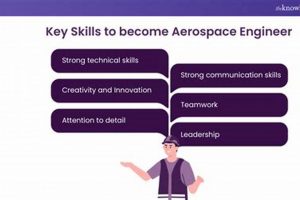
Tip 2: Cultivate Effective Communication Skills: Aerospace projects are inherently collaborative. The ability to clearly and concisely communicate technical information, project updates, and potential challenges is essential for efficient teamwork and successful project completion. Active listening and constructive feedback are also vital.
Tip 3: Manage Stress and Maintain Work-Life Balance: Aerospace engineering projects often involve tight deadlines, complex problems, and significant responsibilities. Developing effective stress management techniques, such as time management and prioritization, is crucial for maintaining both professional performance and personal well-being. Maintaining clear boundaries between work and personal life is also essential.
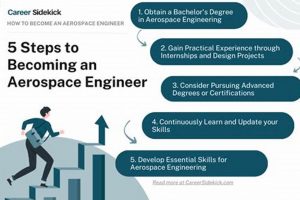
Tip 4: Continuously Enhance Technical Proficiency: The aerospace field is constantly evolving. Ongoing professional development, including pursuing advanced certifications, attending industry conferences, and engaging in self-directed learning, is essential for staying current with the latest technologies and methodologies.
Tip 5: Seek Mentorship and Guidance: Engaging with experienced professionals in the field can provide valuable insights into navigating the complexities of the work environment. A mentor can offer guidance on career development, problem-solving, and navigating workplace dynamics.
Tip 6: Understand Project Management Methodologies: Familiarity with project management principles and tools is highly beneficial. Aerospace projects typically involve numerous stakeholders, complex tasks, and strict timelines. A solid understanding of project management techniques can significantly improve efficiency and ensure timely project completion.
Tip 7: Adapt to Dynamic Environments: Aerospace projects can be unpredictable, requiring adaptability and flexibility. Professionals should be prepared to adjust to changing priorities, unexpected challenges, and evolving project requirements. Maintaining a proactive and solution-oriented mindset is crucial for navigating these situations effectively.
These strategies enable professionals to thrive. By focusing on safety, communication, professional development, and personal well-being, professionals can maximize their contributions to the field and achieve long-term career success.
The following sections will delve into specific challenges and opportunities within the aerospace engineering sector.
1. Safety protocols stringent

Stringent safety protocols form the bedrock of operational practices within aerospace engineering environments. The industry’s commitment to safety is not merely a regulatory requirement, but a deeply ingrained cultural imperative. These protocols dictate every facet of an engineer’s work, influencing design processes, testing methodologies, and maintenance procedures.
- Hazard Identification and Risk Assessment
Aerospace engineers engage in rigorous hazard identification and risk assessment processes before commencing any task. This involves systematically identifying potential hazards associated with equipment, materials, and procedures. Risk assessments then quantify the likelihood and severity of potential incidents, informing the development of appropriate control measures. For example, engineers designing fuel systems must meticulously analyze potential leak points and implement redundant safety features to mitigate the risk of fuel fires.
- Personal Protective Equipment (PPE) Compliance
The use of personal protective equipment is mandatory in many aerospace engineering settings. Engineers working in manufacturing facilities, test centers, or on aircraft maintenance crews must adhere to strict PPE guidelines. This may include wearing safety glasses, hearing protection, respirators, and specialized clothing to protect against hazards such as loud noises, hazardous chemicals, and physical impacts. Failure to comply with PPE requirements can result in disciplinary action and compromise personal safety.
- Emergency Response Procedures
Aerospace engineering organizations maintain well-defined emergency response procedures to address potential incidents such as fires, chemical spills, or equipment malfunctions. Engineers are trained to recognize emergency signals, evacuate work areas safely, and administer first aid if necessary. Regular drills and simulations are conducted to ensure that personnel are prepared to respond effectively in the event of an emergency. For instance, simulated evacuation exercises are a routine part of training at launch facilities.
- Regulatory Compliance and Audits
Aerospace engineering activities are subject to stringent regulatory oversight by agencies such as the Federal Aviation Administration (FAA) and the European Aviation Safety Agency (EASA). Organizations undergo regular audits to ensure compliance with safety regulations and industry best practices. Engineers play a critical role in ensuring that their work meets all applicable regulatory requirements. This includes maintaining accurate documentation, adhering to approved procedures, and participating in safety audits.
The emphasis on stringent safety protocols profoundly shapes the daily routines and decision-making processes of aerospace engineers. These protocols are not viewed as impediments to progress, but rather as essential enablers of innovation and reliability within the aerospace sector. By prioritizing safety above all else, the industry seeks to minimize risks, protect personnel, and ensure the continued safety and efficiency of air and space travel.
2. Teamwork collaborative essential

Aerospace engineering, by its very nature, demands a high degree of collaborative teamwork. Complex projects, involving the design, development, and testing of aircraft and spacecraft, necessitate the integration of diverse expertise from various engineering disciplines. The ability of aerospace engineers to effectively collaborate is not merely a desirable trait, but a fundamental requirement for successful project outcomes. This collaboration permeates all aspects of their professional environment.
Consider, for instance, the development of a new aircraft wing. This project involves aerodynamicists designing the wing’s shape, structural engineers ensuring its integrity under stress, materials scientists selecting appropriate lightweight composites, and manufacturing engineers devising efficient production methods. Each group possesses specialized knowledge, and their collective input is crucial for creating a safe, efficient, and cost-effective wing design. Without effective teamwork and communication, design flaws can easily arise, leading to costly delays or even catastrophic failures. Practical applications of this understanding extend to the implementation of concurrent engineering methodologies, where different engineering teams work simultaneously, sharing information and resolving conflicts in real-time. This reduces development time and minimizes the risk of design discrepancies.
In summary, collaborative teamwork is not simply a component of aerospace engineering environments; it is the very foundation upon which successful projects are built. Challenges related to coordinating diverse teams, managing communication effectively, and resolving conflicts constructively are inherent in this field. Recognizing the essential nature of teamwork allows aerospace engineers to proactively address these challenges, fostering a collaborative atmosphere that promotes innovation, efficiency, and, most importantly, safety.
3. Innovation Intellectually Stimulating

Within aerospace engineering, innovation serves as a core driving force, providing continuous intellectual stimulation for professionals and fundamentally shaping their work environments. This aspect transcends mere technological advancement; it embodies a culture of continuous learning, problem-solving, and the pursuit of groundbreaking solutions.
- Challenging Conventional Boundaries
Aerospace engineers frequently encounter problems with no readily available solutions, necessitating innovative approaches that push the boundaries of conventional engineering. This intellectual challenge is a significant source of job satisfaction, fostering an environment where creativity and novel thinking are highly valued. Examples include developing new propulsion systems for hypersonic flight or designing lightweight structures for space exploration. This constant need for innovative solutions shapes the work environment, promoting a culture of experimentation and calculated risk-taking.
- Cross-Disciplinary Collaboration and Knowledge Integration
Aerospace projects often require integrating knowledge from diverse engineering fields, such as aerodynamics, materials science, and control systems. This interdisciplinary collaboration fosters intellectual stimulation by exposing engineers to different perspectives and problem-solving techniques. Real-world instances involve designing aircraft that minimize fuel consumption while maintaining structural integrity, necessitating close cooperation between aerodynamics and materials specialists. This integration broadens the intellectual scope of the work, encouraging engineers to think beyond their specific areas of expertise.
- Adaptation to Technological Advancements
The aerospace industry is characterized by rapid technological advancements, requiring engineers to continuously update their skills and knowledge. This constant learning process provides intellectual stimulation by introducing new tools, techniques, and materials. The increasing use of additive manufacturing (3D printing) in aerospace, for instance, necessitates engineers to understand new design principles and manufacturing processes. This adaptation to technological advancements keeps the work environment dynamic and intellectually engaging.
- Research and Development Opportunities
Many aerospace engineering roles involve participation in research and development activities, providing opportunities for intellectual exploration and discovery. Engineers may conduct experiments, analyze data, and develop new theories to advance the state-of-the-art. Contributing to research projects, such as developing new composite materials for aircraft fuselages, allows engineers to push the boundaries of knowledge and contribute to technological breakthroughs. These research opportunities are a significant source of intellectual stimulation and career advancement.
In conclusion, innovation acts as a potent source of intellectual stimulation within the aerospace engineering field, shaping the work conditions by fostering a culture of continuous learning, interdisciplinary collaboration, and adaptation to technological advancements. This stimulation not only enhances job satisfaction but also drives progress and ensures the industry remains at the forefront of technological development.
4. Stress management critical

The demanding nature of aerospace engineering inherently creates a high-stress environment, making effective stress management a critical component of favorable working conditions. Contributing factors include tight deadlines, complex technical challenges, significant responsibility for safety, and the potential for high-stakes project outcomes. The pressure to meet stringent performance requirements, coupled with the potential for catastrophic consequences stemming from engineering errors, necessitates robust stress management strategies. The absence of effective coping mechanisms can lead to burnout, reduced productivity, increased error rates, and diminished overall well-being. Real-life examples include project engineers facing immense pressure during critical flight testing phases, or design teams grappling with unforeseen technical challenges that threaten project timelines. Ignoring the necessity of stress management therefore directly deteriorates the professional atmosphere and individual capabilities.
Effective implementation of stress management techniques benefits both the individual and the organization. Individual strategies encompass time management skills, prioritization techniques, and the cultivation of healthy lifestyle habits such as exercise and sufficient rest. From an organizational standpoint, supportive workplace policies, adequate resources, and open communication channels are essential. For example, companies that offer employee assistance programs, promote work-life balance, and foster a culture of psychological safety are better equipped to mitigate the negative impacts of stress. Providing engineers with access to mental health resources, encouraging regular breaks, and fostering a sense of teamwork can create a more supportive and resilient work environment. Additionally, structured processes for managing project risks and addressing technical challenges proactively can reduce the overall level of stress experienced by project teams.
In summary, the critical importance of stress management within aerospace engineering work conditions cannot be overstated. Failure to address this element effectively can have detrimental consequences on individual performance, team productivity, and the overall safety and reliability of aerospace systems. By prioritizing stress management strategies and fostering a supportive work environment, organizations can mitigate the negative effects of stress, enhance employee well-being, and ultimately contribute to the success of their engineering endeavors. Therefore, integrating stress management into the organizational culture is not merely a benefit, but a necessity.
5. Deadlines frequently tight
The imposition of frequent, tight deadlines significantly shapes the conditions under which aerospace engineers operate. This prevalence stems from the high-stakes nature of the industry, where project delays can incur substantial financial penalties, compromise competitive advantages, and potentially impact national security. The need to adhere to strict schedules imposed by government contracts, commercial agreements, and internal milestones introduces a constant pressure to deliver results within constrained timeframes. This pervasive characteristic directly influences work patterns, resource allocation, and the overall level of stress experienced by engineers within the aerospace sector. For instance, the development of a new satellite system for weather forecasting often involves intricate project schedules dictated by launch windows and budgetary limitations. The ability to meet these deadlines is paramount to ensuring timely delivery of critical data for weather prediction and disaster preparedness.
The presence of frequently tight deadlines necessitates a high degree of efficiency, organization, and collaboration. Engineers must effectively prioritize tasks, manage their time meticulously, and coordinate with diverse teams to ensure that project milestones are achieved on schedule. The implementation of project management methodologies, such as Agile or Waterfall, becomes essential for tracking progress, identifying potential bottlenecks, and mitigating risks that could lead to delays. The use of computer-aided design (CAD) software and simulation tools also plays a vital role in accelerating the design and testing processes. Furthermore, a culture of open communication and proactive problem-solving is crucial for addressing unforeseen challenges and keeping projects on track. The pressure to meet deadlines can also spur innovation, as engineers are compelled to find creative solutions to overcome obstacles and accelerate development cycles.
In conclusion, the prevalence of frequently tight deadlines is an inherent and defining characteristic of aerospace engineering work conditions. While this pressure can contribute to stress and burnout, it also fosters efficiency, collaboration, and innovation. Understanding the causes and consequences of these time constraints, and implementing effective strategies for managing them, is essential for ensuring the success and well-being of aerospace engineers, as well as the timely completion of critical aerospace projects. Recognizing the interplay between tight deadlines and other conditions necessitates adopting holistic approaches towards creating sustainable work environment and productivity.
6. Regulations continuously evolving

The dynamic nature of the aerospace industry is mirrored by the constant evolution of its regulatory landscape, significantly shaping the operational environment for aerospace engineers. These regulations, encompassing airworthiness standards, environmental mandates, and safety protocols, exert a direct influence on design processes, testing procedures, and maintenance practices. The continuous updates and revisions necessitate ongoing adaptation, impacting project timelines, resource allocation, and the skill sets required of engineering professionals. The cause-and-effect relationship is evident: new regulations emerge in response to technological advancements, accident investigations, and societal concerns, subsequently altering the tasks and responsibilities of engineers responsible for compliance.
For instance, increasingly stringent emissions standards for aircraft engines necessitate engineers to develop and implement innovative technologies aimed at reducing fuel consumption and minimizing greenhouse gas emissions. This requires expertise in areas such as advanced combustion techniques, lightweight materials, and alternative fuel sources. Similarly, evolving cybersecurity regulations for aircraft systems demand engineers to incorporate robust security measures into the design and development of onboard electronics, protecting against potential cyberattacks. The practical significance of understanding this continuous evolution is paramount. Engineers must remain abreast of the latest regulatory changes and proactively integrate them into their work, ensuring that their designs and processes meet the current standards and anticipate future requirements. The failure to comply can result in project delays, costly rework, and potential safety hazards.
In summary, the ongoing evolution of regulations is a defining characteristic of aerospace engineering conditions. It necessitates a commitment to continuous learning, adaptability, and a proactive approach to compliance. This aspect presents both challenges and opportunities for engineers, driving innovation and ensuring the safety and sustainability of the aerospace sector. Understanding the implications of these regulatory changes is therefore fundamental to success in this dynamic field.
Frequently Asked Questions
The following questions address common inquiries and clarify aspects regarding the professional environment for aerospace engineers.
Question 1: What are the typical physical demands associated with aerospace engineering roles?
Physical demands vary depending on the specific role and work environment. Some positions may involve extended periods of computer work, while others require hands-on work in manufacturing facilities, test centers, or on flight lines. Exposure to loud noises, hazardous materials, and confined spaces may be required in certain roles. Some engineers may participate in field testing, which could involve working outdoors in various weather conditions.
Question 2: How prevalent is travel in aerospace engineering careers?
The extent of travel varies depending on the position and the organization. Some roles may involve frequent travel to supplier facilities, customer sites, or test ranges. Other positions may require minimal travel. Engineers involved in flight testing or aircraft certification often travel extensively. Individuals considering a career in aerospace engineering should be prepared for the possibility of travel.
Question 3: What is the typical work schedule for aerospace engineers?
Work schedules typically adhere to standard full-time hours, however, project deadlines and unexpected challenges may necessitate overtime. Certain roles, such as those involving flight testing or launch operations, may require working irregular hours, including nights and weekends. Flexibility and adaptability are often necessary to meet project requirements.
Question 4: What opportunities exist for professional development within aerospace engineering?
Aerospace engineering offers abundant opportunities for professional growth. Engineers may pursue advanced degrees, certifications, and specialized training to enhance their skills and knowledge. Participation in industry conferences, workshops, and professional organizations provides opportunities for networking and staying abreast of the latest developments. Many companies offer internal training programs and mentorship opportunities to support employee development.
Question 5: What are the most common sources of stress for aerospace engineers?
Common sources of stress include tight deadlines, complex technical challenges, high-stakes project outcomes, and the responsibility for ensuring safety. Budgetary constraints, regulatory compliance requirements, and the need to constantly adapt to evolving technologies also contribute to stress. Effective stress management techniques and a supportive work environment are crucial for mitigating these stressors.
Question 6: What is the level of job security within the aerospace engineering profession?
The level of job security fluctuates depending on economic conditions, government spending, and industry trends. Aerospace engineering is generally considered a stable profession, with long-term growth potential, particularly in areas such as sustainable aviation, space exploration, and unmanned aerial systems. Maintaining up-to-date skills and knowledge enhances job security in this rapidly evolving field.
Understanding the nuances of aerospace engineer work conditions is important. Recognizing both the challenges and opportunities facilitates informed career decisions and fosters a more sustainable and productive professional journey.
The following section will explore career advancement opportunities for aerospace engineers.
Conclusion
This exploration of aerospace engineer work conditions reveals a multifaceted professional landscape. The demanding nature of the field necessitates stringent safety protocols, robust teamwork, constant innovation, effective stress management, adherence to tight deadlines, and adaptation to evolving regulations. These elements collectively define the daily realities faced by engineers dedicated to advancing air and space technology.
A thorough understanding of aerospace engineer work conditions is crucial for aspiring professionals and established practitioners alike. Continued attention to these factors ensures a safer, more productive, and sustainable future for the industry, promoting both individual well-being and the advancement of aerospace engineering as a whole. Further research and proactive initiatives are essential to optimizing these professional environments and fostering continued success in this critical sector.