Computer-aided design software plays a pivotal role in the design, analysis, and manufacturing processes within the aeronautical and astronautical fields. This specialized application of CAD involves using software to create precise models and drawings of aircraft, spacecraft, satellites, and related components. As an example, engineers might employ such a system to develop a detailed 3D model of an airplane wing, complete with internal structures and aerodynamic surfaces, before physical prototyping begins.
Its significance lies in enhancing design accuracy, reducing development time, and facilitating collaboration among engineers and manufacturers. Historically, the shift to digital design tools has revolutionized aerospace, enabling the creation of more complex and efficient designs than previously possible with manual drafting methods. These tools allow for simulations and analyses to be performed virtually, mitigating risks and optimizing performance before committing to physical construction.
The following sections will delve into specific applications within structural design, fluid dynamics simulations, manufacturing processes, and the overall workflow of integrating design and analysis in the context of aerospace projects.
Tips for Efficient CAD Utilization in Aeronautics and Astronautics
The following recommendations aim to enhance the effectiveness of computer-aided design implementation in aerospace projects, emphasizing precision, collaboration, and workflow optimization.
Tip 1: Establish Standardized Templates: Implement pre-designed templates for common aerospace components, such as airfoils, fuselage sections, and structural members. This ensures consistency across projects and reduces repetitive modeling tasks.
Tip 2: Leverage Parametric Modeling: Employ parametric modeling techniques to define geometry based on design parameters. Modifying these parameters automatically updates the entire model, facilitating rapid design iterations and optimization.
Tip 3: Integrate Finite Element Analysis (FEA): Seamlessly integrate CAD models with FEA software to simulate structural behavior under various load conditions. This allows for early detection of design flaws and optimization of structural integrity.
Tip 4: Implement Version Control Systems: Utilize robust version control systems to manage CAD files and track design changes. This ensures that all team members are working with the latest version and minimizes the risk of data loss or corruption.
Tip 5: Optimize for Manufacturing Processes: Design components with manufacturing constraints in mind, considering factors such as machining tolerances, material availability, and assembly processes. This reduces manufacturing costs and improves product quality.
Tip 6: Utilize Cloud-Based Collaboration Platforms: Adopt cloud-based platforms to facilitate real-time collaboration among geographically dispersed teams. This enables efficient sharing of CAD files, design reviews, and project management.
Tip 7: Conduct Regular Training: Provide ongoing training to engineers and designers to ensure they are proficient in the latest CAD software features and best practices. This maximizes their productivity and improves the quality of their work.
Efficient utilization of CAD software, through the application of these guidelines, contributes significantly to the success of aerospace projects by enhancing design accuracy, reducing development time, and fostering effective collaboration.
The subsequent section will explore the challenges associated with CAD implementation and potential solutions to overcome these obstacles.
1. Precision Modeling

Precision modeling constitutes a fundamental requirement in computer-aided design for the aerospace domain. The accuracy and detail achieved in these digital representations directly impact subsequent stages of design, analysis, and manufacturing. Compromises in precision can lead to catastrophic failures in flight-critical systems; therefore, meticulous attention to detail is paramount.
- Geometric Accuracy
Geometric accuracy refers to the fidelity with which the CAD model represents the intended physical geometry. In aerospace, even minor deviations from specified dimensions can alter aerodynamic performance, structural integrity, and fitment of components. For instance, an inaccurate airfoil profile can significantly reduce lift efficiency or increase drag. The design of turbine blades or fuselage sections requires tolerances measured in micrometers to achieve desired operational parameters.
- Material Properties Integration
Precision extends beyond geometric representation to include accurate assignment and application of material properties. Aerospace components often utilize advanced materials with anisotropic properties that must be precisely defined within the CAD model. Incorrect material property assignment can lead to inaccurate structural simulations and potentially under-designed components. Consider composite materials used in aircraft wings where fiber orientation and resin distribution must be accurately modeled to predict performance under load.
- Assembly and Interface Modeling
The accurate modeling of assemblies and interfaces is critical for ensuring proper fit and function of interconnected components. This requires precise definition of mating surfaces, fastener locations, and clearances. Inadequate modeling of these interfaces can lead to assembly difficulties, stress concentrations, and potential failure points. A prime example is the accurate modeling of engine mounts and their interface with the aircraft frame.
- Simulation Fidelity
Precision modeling directly impacts the fidelity of simulations used to validate aerospace designs. Accurate geometry and material properties are essential inputs for finite element analysis (FEA) and computational fluid dynamics (CFD) simulations. Inaccurate models will yield unreliable simulation results, potentially leading to flawed design decisions. Simulating the airflow around a spacecraft during reentry requires a highly precise model of its heat shield to accurately predict temperature distribution and thermal stresses.
The stringent demands of aerospace engineering necessitate a commitment to precision modeling throughout the entire design process. The consequences of inaccuracies are far-reaching, impacting performance, safety, and reliability. Therefore, investment in advanced CAD tools and rigorous modeling practices is essential for success in this field.
2. Simulation Integration
The integration of simulation tools with computer-aided design (CAD) workflows is a cornerstone of modern aerospace engineering. Within the realm of CAD applications specific to this field, simulation integration represents a critical juncture where design intent is subjected to rigorous virtual testing. This practice involves transferring geometric models, material properties, and boundary conditions defined within the CAD environment to specialized simulation software for structural, thermal, fluid dynamic, or other analyses. The accuracy of these simulations directly influences design validation and optimization, enabling engineers to predict performance characteristics and identify potential weaknesses before physical prototyping.
For instance, the design of an aircraft wing, meticulously crafted within CAD software, undergoes finite element analysis (FEA) to assess stress distribution under flight loads. This simulation integration enables the identification of areas requiring reinforcement or design modification. Similarly, computational fluid dynamics (CFD) simulations are performed on aircraft fuselage models to optimize aerodynamic performance and reduce drag. The results of these simulations are then fed back into the CAD model, prompting iterative design refinements. This closed-loop process, facilitated by simulation integration, reduces the reliance on costly and time-consuming physical testing. Furthermore, advanced composite materials are used in aerospace engineering with specific characteristics such as orientation that need to be modeled within CAD simulation software such as Ansys. The design is often manufactured by utilizing robotic systems that depend on the simulated material properties for correct end product.
In summary, simulation integration within the context of CAD in aerospace engineering significantly enhances the efficiency and reliability of design processes. By incorporating virtual testing into the design cycle, engineers can identify and address potential issues early on, minimizing risks associated with physical prototypes and ultimately leading to safer, more efficient, and higher-performing aerospace vehicles and systems. The continued development of more sophisticated simulation tools and their seamless integration with CAD platforms will remain a key driver of innovation within the aerospace industry.
3. Material Optimization

Material optimization, in the context of computer-aided design for aerospace engineering, is the process of selecting and configuring materials within a design to meet specific performance criteria while minimizing weight, cost, and environmental impact. This practice is crucial for aerospace applications due to the stringent demands for high strength-to-weight ratios, durability in extreme conditions, and fuel efficiency.
- Weight Reduction through Composites
The utilization of composite materials, such as carbon fiber reinforced polymers (CFRP), allows for significant weight reduction compared to traditional metals. CAD software enables engineers to model and analyze the behavior of these anisotropic materials, optimizing fiber orientation and laminate stacking sequences to achieve desired strength and stiffness properties with minimal mass. For example, the Boeing 787 Dreamliner utilizes a CFRP fuselage, contributing to significant fuel savings. In CAD, the precise layering and orientation of composite plies are modeled to predict structural behavior, optimizing the material layout for minimum weight and maximum strength. Simulation tools estimate that each pound of weight removed from a rocket can save thousands of dollars in launch costs.
- Topology Optimization for Component Design
Topology optimization algorithms integrated within CAD software can automatically generate designs that minimize material usage while meeting specified load requirements. This technique is particularly valuable for designing complex structural components, such as brackets and ribs, where material can be strategically removed from low-stress areas. Airbus has used topology optimization tools to design lighter and stronger aircraft components, resulting in improved fuel efficiency. This process integrates with CAD by automatically generating optimized geometries that can then be refined and detailed for manufacturing.
- Material Selection for Extreme Environments
Aerospace components are often subjected to extreme temperatures, pressures, and radiation levels. CAD software facilitates the selection of appropriate materials by providing access to material databases containing thermophysical properties, radiation resistance, and corrosion behavior. Engineers can simulate the performance of different materials under these conditions to ensure long-term reliability. For instance, the heat shield of a spacecraft requires materials that can withstand extreme temperatures during atmospheric reentry. CAD simulations, incorporating material properties, predict temperature distribution and thermal stresses, guiding material selection.
- Multi-Material Design Optimization
Modern aerospace designs often incorporate multiple materials to achieve synergistic performance benefits. CAD software enables engineers to model and analyze the interaction between different materials, optimizing their placement and bonding techniques to achieve desired performance characteristics. For example, a turbine blade may consist of a high-temperature alloy core with a ceramic coating for improved thermal resistance. CAD tools are used to model the thermal expansion mismatch between the materials and to optimize the coating thickness for maximum durability. These simulations are vital for predicting component life and ensuring safe operation.
Material optimization, enabled by sophisticated CAD tools, plays a crucial role in enhancing the performance, efficiency, and safety of aerospace vehicles and systems. The ability to model and simulate the behavior of advanced materials under complex loading conditions is essential for meeting the stringent demands of this industry. Continued advancements in CAD software and material science will drive further innovation in material optimization for aerospace applications.
4. Manufacturing Liaison
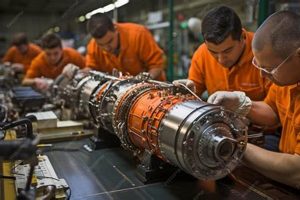
Manufacturing liaison represents a critical interface between the design and production phases of aerospace projects utilizing computer-aided design. It ensures that the designs conceived in CAD software are feasible, efficient, and cost-effective to manufacture. A primary cause for incorporating manufacturing liaison is to mitigate design flaws that, while viable in a virtual environment, pose significant challenges during physical production. This phase analyzes design tolerances, material availability, assembly processes, and potential tooling requirements, thereby affecting downstream production efficiency. For instance, excessively tight tolerances in CAD models may necessitate specialized and expensive machining techniques, impacting overall project costs. Boeing’s experience with the 787 Dreamliner illustrates the importance of this liaison; initial design choices required extensive rework during manufacturing due to a lack of early consideration for production constraints. As a component of computer-aided design, this function focuses on preemptively addressing potential issues that could hinder smooth transition from design to actual manufacturing, thereby optimizing resource allocation and project timelines.
Further practical application of manufacturing liaison involves integrating design for manufacturability (DFM) and design for assembly (DFA) principles into the CAD process. DFM considers factors such as material removal rates, tooling accessibility, and the complexity of machining operations. DFA focuses on streamlining the assembly process by minimizing the number of parts, standardizing fasteners, and simplifying assembly sequences. CAD software integrated with DFM/DFA tools can automatically analyze designs for potential manufacturing issues, such as undercuts, sharp corners, or difficult-to-reach features. This proactive approach enables designers to modify the CAD model early in the design cycle, avoiding costly rework later. Consider the design of an aircraft wing rib; a design that incorporates multiple intricate curves and thin walls may be structurally sound but difficult and expensive to manufacture. Manufacturing liaison would identify these issues and suggest design modifications, such as simplifying the geometry or increasing wall thickness, to improve manufacturability without compromising structural integrity. This ensures that CAD models are not merely representations of ideal designs but also practical blueprints for production.
In conclusion, the effective connection between manufacturing liaison and computer-aided design in aerospace engineering is paramount for project success. By proactively addressing manufacturing constraints during the design phase, this liaison minimizes costly rework, optimizes production processes, and improves product quality. The challenges lie in ensuring clear communication between design and manufacturing teams and in integrating DFM/DFA tools effectively into the CAD workflow. This interface is essential for translating innovative designs into tangible aerospace components, bridging the gap between virtual conception and physical realization.
5. Lifecycle Management

Lifecycle management (LCM) constitutes a strategic framework for governing an aerospace asset from initial design conception to decommissioning, encompassing all stages of development, manufacturing, operation, maintenance, and eventual retirement. As an integral component in the application of computer-aided design (CAD) within aerospace engineering, LCM ensures that digital design data generated using CAD software is not merely a static representation of the product but an evolving repository of information used throughout its entire existence. CAD models, therefore, are not simply blueprints but dynamic digital twins that reflect the assets configuration, modifications, and performance history. Boeings digital twin initiative, for example, seeks to connect design, manufacturing, and operational data to optimize aircraft performance and maintenance schedules, significantly reducing downtime and operational costs. The impact of effective LCM is demonstrated through improved resource allocation, streamlined maintenance procedures, and enhanced product reliability and safety.
The practical application of LCM in conjunction with aerospace CAD involves several key elements. Configuration management, a critical aspect, tracks design revisions, component changes, and software updates throughout the asset’s lifecycle. CAD models serve as the central repository for this information, providing a comprehensive audit trail of all modifications. Maintenance, repair, and overhaul (MRO) operations benefit significantly from LCM by accessing detailed CAD models to diagnose problems, plan repairs, and order replacement parts. Data from sensors and operational systems can be integrated with the CAD model to predict potential failures and schedule preventative maintenance. Airbus’s Skywise platform exemplifies this approach, utilizing data analytics and digital twins to optimize aircraft maintenance and improve operational efficiency. End-of-life considerations, such as recycling and disposal, are also addressed through LCM, ensuring compliance with environmental regulations and promoting sustainable practices. All of these operations are only possible through computer-aided design.
In summary, lifecycle management is inextricably linked to the utility of computer-aided design within aerospace engineering. The success of any aerospace project hinges on the ability to effectively manage the vast amounts of data generated throughout the product’s lifecycle, and CAD models serve as the foundational element for this process. Challenges remain in integrating disparate data sources, maintaining data integrity, and ensuring cybersecurity throughout the asset’s lifespan. The continued advancement of LCM methodologies and the seamless integration with CAD platforms will be critical for driving innovation, reducing costs, and enhancing safety in the aerospace industry. The overall design must encompass its entire life.
Frequently Asked Questions
The following section addresses common inquiries related to the application of computer-aided design in aerospace engineering, offering clarifications and insights.
Question 1: What are the primary benefits of employing CAD in aerospace design compared to traditional drafting methods?
CAD systems offer enhanced precision, accelerated design cycles, and facilitated collaboration. Virtual prototyping and simulation capabilities, integral to CAD, enable early detection of design flaws and optimization of performance before physical construction.
Question 2: How does CAD software contribute to material optimization in aerospace component design?
CAD software facilitates the modeling and analysis of advanced materials, such as composites, allowing engineers to optimize material usage while meeting stringent strength, weight, and environmental resistance requirements. Topology optimization algorithms automatically generate designs that minimize material usage while satisfying load constraints.
Question 3: What role does CAD play in ensuring manufacturability of aerospace designs?
CAD software, when integrated with Design for Manufacturability (DFM) and Design for Assembly (DFA) tools, enables engineers to identify and address potential manufacturing issues early in the design cycle. This proactive approach reduces costly rework and optimizes production processes.
Question 4: How are CAD models used in lifecycle management of aerospace assets?
CAD models serve as the central repository for configuration management, tracking design revisions, component changes, and software updates throughout the asset’s lifecycle. They are utilized in maintenance, repair, and overhaul (MRO) operations for problem diagnosis, repair planning, and parts ordering.
Question 5: What are the key challenges associated with implementing CAD in aerospace engineering?
Challenges include ensuring data integrity across disparate systems, maintaining cybersecurity throughout the asset’s lifespan, integrating simulation tools seamlessly with CAD platforms, and providing adequate training to engineers and designers.
Question 6: How does CAD contribute to safety and reliability in aerospace engineering?
CAD enables rigorous simulation and analysis of structural, thermal, and fluid dynamic behavior, facilitating early detection of potential failure points and optimization of designs for improved safety and reliability. Precise geometric modeling and accurate material property assignment are essential for simulation fidelity.
CAD systems play a vital role in increasing efficiency in product development.
The next section will discuss the future advancements in CAD and their potential impact on aerospace engineering.
Conclusion
This exploration has underscored the vital role of specialized computer-aided design systems in the aerospace industry. From facilitating precise geometric modeling and material optimization to enabling comprehensive simulation integration and lifecycle management, these tools are integral to the design, analysis, and manufacturing of aerospace vehicles and systems. The seamless integration of CAD with other engineering disciplines, such as structural analysis and fluid dynamics, has demonstrably improved design accuracy, reduced development time, and enhanced product performance.
The continued evolution of capabilities holds immense promise for the future of aerospace engineering. As CAD systems become increasingly sophisticated, incorporating advanced algorithms and artificial intelligence, their ability to address complex design challenges will only grow. A commitment to embracing these advancements, fostering collaboration between design and manufacturing teams, and prioritizing data integrity will be essential for sustaining innovation and maintaining leadership in this dynamic field. The future trajectory is one of increased reliance on advanced design and simulation capabilities to develop the next generation of safe, efficient, and high-performing aerospace systems.