Institutes of Technology, particularly those in India, offer specialized degree programs focused on the design, development, and testing of aircraft and spacecraft. This field combines principles of mathematics, physics, and engineering to address challenges related to flight within and beyond Earth’s atmosphere. Students undertaking this course of study learn about aerodynamics, propulsion, structural mechanics, and control systems as applied to aerial vehicles and space-bound machinery. An example involves calculating the optimal wing shape for a new passenger jet to minimize drag and maximize fuel efficiency.
This area of academic and professional pursuit is crucial for advancing transportation, communication, and exploration. It fosters innovation in materials science, energy efficiency, and automation, leading to improvements in civilian air travel, satellite technology, and space exploration endeavors. Historically, advancements in this sphere have driven significant economic growth and national security enhancements by fostering technological independence and competitiveness. The development of more efficient aircraft engines, satellite launch vehicles, and robotic space probes all stem from expertise within this demanding discipline.
The following sections will delve deeper into specific aspects of the curriculum, research opportunities, and career paths associated with this specialized engineering field. Furthermore, it will examine the role that specific Indian institutions play in educating the next generation of engineers and scientists who will shape the future of aviation and space technology.
Guidance for Pursuing Specialization
The following insights are aimed at individuals considering rigorous scientific and engineering disciplines at prominent Indian Institutes of Technology.
Tip 1: Cultivate a Strong Foundation in Core Sciences: A robust understanding of physics, mathematics, and chemistry is paramount. Coursework often requires advanced calculus, differential equations, and linear algebra. Practical application is solidified through laboratory work and computational modeling, such as simulating airflow around a wing using computational fluid dynamics software.
Tip 2: Prioritize Development of Analytical and Problem-Solving Skills: Success hinges on the ability to deconstruct complex problems into manageable components and apply logical reasoning to derive effective solutions. For example, analyze the stress distribution on a structural component of an aircraft under varying load conditions.
Tip 3: Seek Research Opportunities Early: Active involvement in research projects provides invaluable practical experience and exposure to cutting-edge technologies. Contribute to faculty-led research on topics like composite materials for lightweight aircraft structures or the development of advanced propulsion systems.
Tip 4: Master Relevant Software and Simulation Tools: Proficiency in industry-standard software packages for design, analysis, and simulation is essential. Gain familiarity with tools like CATIA for CAD, ANSYS for finite element analysis, and MATLAB for control system design.
Tip 5: Participate in Aerospace-Related Competitions: Engaging in competitions such as the SAE Aero Design Challenge or CanSat provides hands-on experience in designing, building, and testing aerial vehicles. This fosters teamwork and reinforces theoretical knowledge.
Tip 6: Network with Professionals in the Field: Attend conferences, seminars, and workshops to connect with industry experts, faculty members, and fellow students. Building a professional network can open doors to internships, research collaborations, and future employment opportunities.
Tip 7: Develop Strong Communication Skills: The ability to effectively communicate technical concepts, both orally and in writing, is crucial for collaboration and professional success. Practice presenting research findings, writing technical reports, and participating in group discussions.
Adherence to these guidelines facilitates a successful and rewarding academic journey. By focusing on foundational knowledge, practical application, and professional development, individuals increase their prospects of becoming leaders and innovators in the aerospace sector.
The subsequent sections will examine the diverse career paths and research opportunities available to graduates from these programs.
1. Aerodynamics and Propulsion

Aerodynamics and propulsion constitute fundamental pillars within the framework of advanced engineering studies. The mastery of these interconnected disciplines is paramount for individuals pursuing specialized knowledge and skills for aeronautical and astronautical applications at leading Indian Institutes of Technology. Aerodynamic principles govern the interaction between a vehicle and the air it traverses, dictating lift, drag, and stability. Propulsion systems provide the necessary thrust to overcome drag and enable sustained flight or space travel. These components are intrinsically linked; efficient aerodynamic design minimizes drag, thereby reducing the required thrust and fuel consumption, a crucial factor in aircraft performance. Consider the development of the scramjet engine, a propulsion system reliant on supersonic airflow, which necessitates sophisticated aerodynamic modeling and simulation to ensure efficient combustion and thrust generation.
The integration of theoretical knowledge with practical application is a hallmark of these programs. Students engage in wind tunnel testing, computational fluid dynamics simulations, and engine design projects to solidify their understanding of these concepts. This hands-on experience is vital for translating theoretical models into tangible engineering solutions. For example, the design of a turbine blade for a jet engine requires a deep understanding of both aerodynamic forces and the thermodynamics of combustion. Furthermore, research into boundary layer control techniques aims to reduce skin friction drag, leading to increased fuel efficiency and reduced emissions, representing a significant contribution to environmentally sustainable air travel. This mastery prepares graduates to address real-world challenges in the design and optimization of air and space vehicles.
In summary, aerodynamics and propulsion are indispensable elements that enable engineers to design aircraft and spacecraft that are safer, more efficient, and more capable. Addressing challenges such as reducing noise pollution from aircraft engines, developing hypersonic propulsion systems, and optimizing aerodynamic performance for unmanned aerial vehicles highlights the continued relevance and importance of expertise in these areas. These challenges are actively investigated at IITs, ensuring the relevance and impact of graduates in advancing the frontiers of aerospace technology.
2. Structural Analysis

Structural analysis constitutes a cornerstone of the aerospace engineering curriculum, particularly at institutions like the Indian Institutes of Technology. It provides the theoretical and practical foundation necessary for ensuring the integrity and safety of aircraft and spacecraft. The discipline focuses on determining the effects of loads and stresses on physical structures, enabling engineers to design robust and reliable aerospace vehicles.
- Finite Element Analysis (FEA)
FEA involves the use of computational methods to predict how a structure reacts to real-world forces, vibration, heat, and other physical phenomena. In the context of aerospace engineering, FEA is employed to simulate the stress distribution in an aircraft wing during flight or the thermal stresses experienced by a spacecraft during reentry. These simulations allow engineers to identify potential weak points and optimize designs for maximum strength and minimum weight, a critical balance in aerospace applications. For instance, FEA is used extensively in designing lightweight composite structures for aircraft, ensuring they can withstand extreme aerodynamic loads without failure.
- Material Properties and Selection
A comprehensive understanding of material properties is essential for structural analysis. Aerospace engineers must be adept at selecting materials that meet specific performance requirements, considering factors such as strength-to-weight ratio, corrosion resistance, and fatigue life. This knowledge informs decisions about the optimal materials for different components, from the aluminum alloys used in aircraft fuselages to the high-temperature alloys used in jet engine turbines. For example, the choice of titanium alloys for certain aircraft components is driven by their high strength and resistance to corrosion in harsh environments.
- Load Analysis and Stress Determination
Load analysis involves calculating the forces and moments acting on a structure under various operating conditions. This includes aerodynamic loads, inertial loads, and thermal loads. Stress determination uses these load values to calculate the resulting stresses and strains within the structure. Accurate load analysis and stress determination are crucial for predicting structural behavior and preventing failures. An example would be calculating the aerodynamic loads on an aircraft’s control surfaces during maneuvering to ensure that they do not exceed their design limits.
- Structural Testing and Validation
Theoretical analysis is complemented by physical testing to validate design assumptions and identify potential weaknesses. This involves subjecting structural components to controlled loads and monitoring their response using strain gauges, displacement sensors, and other instrumentation. Data from these tests is used to refine analytical models and ensure that the structure meets performance requirements. A common example is conducting static load tests on aircraft wings to verify their ability to withstand extreme aerodynamic forces.
These facets underscore the indispensable role of structural analysis in aerospace engineering programs, particularly at institutions like IITs. By integrating theoretical knowledge with practical application and experimental validation, graduates are equipped to design and analyze aerospace structures that are safe, efficient, and reliable. Continuous advancements in computational methods and materials science further enhance the capabilities of structural analysis, enabling engineers to tackle ever more challenging problems in the design of advanced aircraft and spacecraft.
3. Control Systems Design

Control Systems Design is inextricably linked to aeronautical and astronautical engineering programs at Indian Institutes of Technology. This specialization addresses the principles and techniques for creating systems that regulate the behavior of dynamic systems, an essential capability for modern aircraft and spacecraft. The ability to precisely control altitude, trajectory, and stability is not merely desirable but critical for safe and efficient operation. Within the curriculum, control systems are not viewed as isolated components but as integral elements affecting overall vehicle performance. The design of an autopilot system for an aircraft, for example, requires a deep understanding of aerodynamics, sensor technology, and feedback control loops to maintain a stable flight path under varying environmental conditions.
The significance of control systems extends beyond basic flight operations. Advanced control algorithms are employed in numerous critical applications, including trajectory optimization, autonomous navigation, and the stabilization of flexible structures in space. Consider the guidance and control system of a satellite launch vehicle, which must accurately deliver its payload to a precise orbital location despite atmospheric disturbances and engine variations. Such systems rely on sophisticated control strategies incorporating Kalman filtering, adaptive control, and robust control techniques to ensure mission success. Moreover, the design of flight control systems for unmanned aerial vehicles (UAVs) presents unique challenges due to their diverse operational environments and requirements for autonomous decision-making. The development of these capabilities is directly relevant to national security, environmental monitoring, and disaster response efforts.
In summary, Control Systems Design is an indispensable facet of engineering programs at IITs, enabling the creation of intelligent and adaptive aerospace vehicles. The ability to design, analyze, and implement control systems that guarantee stability, optimize performance, and ensure safety is paramount. Continuous advancements in control theory and computational power drive ongoing innovation in this field, paving the way for increasingly sophisticated autonomous systems and enhanced capabilities in both civilian and military aerospace applications. Graduates proficient in control systems are essential for future advancements in aviation, space exploration, and related technological domains.
4. Spacecraft Engineering

Spacecraft engineering, as a specialized domain within aeronautical and astronautical studies, receives focused attention at the Indian Institutes of Technology. This field encompasses the design, development, testing, and operation of vehicles intended for use in the space environment. Its relevance to aerospace engineering curricula at IITs stems from its role in expanding technological capabilities beyond Earth’s atmosphere, covering areas such as satellite communications, remote sensing, and space exploration.
- Orbital Mechanics and Mission Design
Orbital mechanics deals with the motion of spacecraft in orbit, including trajectory design, orbit determination, and attitude control. Mission design involves planning and executing space missions, considering factors such as launch windows, orbital parameters, and payload requirements. For instance, IITs engage in research related to optimizing satellite constellations for Earth observation, designing interplanetary trajectories for robotic missions, and developing autonomous navigation systems for deep-space probes. A deep understanding of orbital mechanics is necessary to ensure mission success and minimize fuel consumption during spaceflight. Example includes: Calculating the trajectory for a satellite to maintain a geostationary orbit, accounting for perturbations from the Sun and Moon.
- Spacecraft Propulsion Systems
Spacecraft propulsion involves the development and implementation of systems that provide thrust for orbital maneuvers, attitude control, and interplanetary travel. This includes chemical rockets, electric propulsion systems, and advanced concepts such as solar sails. IITs contribute to research on improving the efficiency and performance of these systems, focusing on areas such as propellant management, nozzle design, and plasma physics. Example: Designing a high-efficiency ion thruster for long-duration space missions, considering factors such as thrust-to-power ratio and propellant lifetime.
- Spacecraft Structures and Thermal Control
Spacecraft structures must withstand the harsh conditions of space, including extreme temperatures, vacuum, and radiation. Thermal control systems are essential for maintaining spacecraft components within their operating temperature ranges. Research at IITs focuses on developing lightweight and high-strength materials, designing thermal insulation systems, and implementing active cooling techniques. For example, the development of a multi-layer insulation (MLI) system for a satellite to minimize heat loss and maintain stable internal temperatures. Example: Designing a high-temperature resistant shield for a spacecraft re-entering the Earth’s atmosphere.
- Satellite Communication Systems
Satellite communication systems enable the transmission of data, voice, and video signals between ground stations and spacecraft. IITs conduct research on developing advanced modulation techniques, antenna designs, and signal processing algorithms to improve the bandwidth and reliability of satellite communication links. This includes the development of robust communication protocols for deep-space missions and the design of high-gain antennas for direct broadcast satellites. Example: Optimizing the design of a satellite antenna to maximize signal strength and minimize interference with other communication systems.
These specialized facets of spacecraft engineering are integral components of advanced aerospace engineering programs at IITs. By providing comprehensive training and research opportunities in these areas, the IITs equip graduates with the skills and knowledge necessary to contribute to the ongoing advancement of space technology and exploration.
5. Materials Science Innovation

Materials science innovation is fundamentally linked to the advancement of aerospace engineering. The performance capabilities of aircraft and spacecraft are intrinsically tied to the properties of the materials from which they are constructed. As a result, advancements in materials science directly impact the design, efficiency, and safety of aerospace vehicles. Indian Institutes of Technology recognize this relationship, integrating materials science research and education into their aerospace engineering programs. The pursuit of lighter, stronger, and more heat-resistant materials is a continuous driver of innovation in the field. For example, the development of carbon fiber reinforced polymers (CFRPs) has enabled the construction of aircraft structures with significantly reduced weight compared to traditional aluminum alloys, leading to improved fuel efficiency and payload capacity. This innovation, and others like it, highlights the tangible benefits of materials science in aerospace applications.
The development of new materials not only enhances existing capabilities but also enables entirely new aerospace technologies. For instance, the creation of high-temperature ceramics has facilitated the development of more efficient and powerful jet engines, while the design of radiation-resistant materials is essential for the long-term operation of spacecraft in the harsh environment of space. IITs contribute to these advances through research programs focused on developing novel alloys, composites, and coatings that can withstand extreme conditions. Students are exposed to the latest advancements in materials science and are trained to apply this knowledge to the design of aerospace systems. Furthermore, they gain practical experience in materials characterization, testing, and failure analysis, ensuring they are well-equipped to address the challenges of the aerospace industry.
In conclusion, materials science innovation is an indispensable component of aerospace engineering. Its impact extends across all aspects of vehicle design, from structural integrity to propulsion efficiency and environmental protection. The ongoing research and educational efforts at IITs focused on materials science are critical for advancing aerospace technology and ensuring that Indian engineers remain at the forefront of this dynamic field. Challenges remain in developing materials that can simultaneously meet multiple performance requirements, but the continued pursuit of materials innovation will undoubtedly shape the future of aerospace engineering.
Frequently Asked Questions Regarding IIT Aerospace Engineering
The following section addresses common inquiries concerning the academic pursuit of aeronautical and astronautical engineering degrees at the Indian Institutes of Technology. The information presented aims to provide clarity and guidance for prospective students.
Question 1: What distinguishes aerospace engineering from other engineering disciplines offered at IITs?
Aerospace engineering concentrates on the design, development, and testing of aircraft and spacecraft, integrating principles of aerodynamics, propulsion, structural mechanics, and control systems. Other engineering disciplines at IITs, such as mechanical or electrical engineering, possess broader applications across various industries, whereas aerospace engineering remains focused on the challenges specific to flight within and beyond Earth’s atmosphere.
Question 2: What are the typical admission requirements for an aerospace engineering program at an IIT?
Admission to an IIT aerospace engineering program generally requires successful completion of the Joint Entrance Examination (JEE Advanced). This examination assesses proficiency in physics, chemistry, and mathematics at the 10+2 level. Specific cutoff scores and eligibility criteria are determined by each IIT individually and may vary annually.
Question 3: What core subjects comprise the curriculum of an IIT aerospace engineering program?
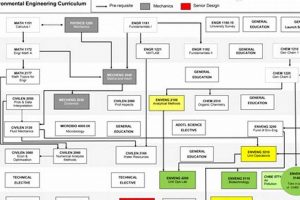
The curriculum typically includes courses in aerodynamics, propulsion, structural analysis, flight mechanics, control systems, spacecraft engineering, and materials science. Furthermore, students engage in laboratory work, design projects, and computational simulations to gain practical experience in these areas.
Question 4: What career paths are commonly pursued by graduates of IIT aerospace engineering programs?
Graduates often find employment in the aerospace industry, defense organizations, research institutions, and government agencies. Common roles include design engineer, structural analyst, propulsion engineer, flight control engineer, and research scientist. Some graduates also pursue advanced degrees (Master’s or Doctorate) to specialize in specific areas of aerospace engineering.
Question 5: What research opportunities are available to students enrolled in IIT aerospace engineering programs?
IITs typically offer a range of research opportunities in areas such as advanced propulsion systems, composite materials, computational fluid dynamics, space mission design, and autonomous flight control. Students may participate in faculty-led research projects, independent research studies, and collaborative research initiatives with industry partners.
Question 6: How does an IIT aerospace engineering degree contribute to national technological advancement?
The rigorous training and research opportunities provided by IIT aerospace engineering programs contribute to the development of indigenous aerospace technologies, enhance national security capabilities, and support India’s participation in global space exploration efforts. Graduates of these programs play a critical role in driving innovation and fostering technological self-reliance in the aerospace sector.
The aforementioned questions represent a selection of frequent inquiries pertaining to aerospace engineering studies at the Indian Institutes of Technology. Prospective students are encouraged to consult official IIT websites for comprehensive details and admission requirements.
The subsequent section will provide detailed information regarding the historical development and current state of aerospace engineering within the Indian context.
IIT Aerospace Engineering
This article has thoroughly explored the domain of IIT aerospace engineering, highlighting its core components: aerodynamics and propulsion, structural analysis, control systems design, spacecraft engineering, and materials science innovation. The rigorous curriculum, demanding admission requirements, and diverse research opportunities associated with this discipline have been examined. The contribution of IIT aerospace engineering to national technological advancement and the potential career paths available to its graduates have also been addressed.
Given its pivotal role in advancing aviation, space exploration, and national security, continued investment in and development of IIT aerospace engineering programs remain essential. This concerted effort fosters innovation, cultivates expertise, and ensures that India remains competitive in the global aerospace arena. The pursuit of excellence within this field is not merely an academic endeavor but a strategic imperative with far-reaching implications for the future of technological progress.