The academic path to becoming an aerospace engineer typically involves obtaining a bachelor’s degree in aerospace engineering or a closely related field. This foundational degree provides the necessary scientific and mathematical principles to design, develop, test, and maintain aircraft and spacecraft. For example, coursework includes aerodynamics, propulsion, structural analysis, and control systems, which are essential for a career in this field.
Possessing the appropriate qualifications is crucial for entry into this competitive profession. It ensures individuals have the fundamental knowledge to contribute effectively and safely to aerospace projects. Historically, advancements in aviation and space exploration have been driven by highly educated and skilled engineers, highlighting the importance of rigorous academic training.
The following sections will delve deeper into the specific types of degrees commonly pursued, the typical curriculum covered, and the potential career paths available to graduates. It will also explore advanced degree options and their potential impact on career progression and specialization within the aerospace industry.
Guidance for Aspiring Aerospace Engineers
The following points offer guidance to individuals considering a career in aerospace engineering and the requisite educational qualifications.
Tip 1: Select an Accredited Program: Ensure the aerospace engineering program is accredited by ABET (Accreditation Board for Engineering and Technology). Accreditation signifies that the program meets established quality standards and that graduates are well-prepared for professional practice.
Tip 2: Emphasize Core Math and Science Courses: A strong foundation in mathematics, physics, and chemistry is critical. Focus on excelling in courses such as calculus, differential equations, linear algebra, and thermodynamics. These subjects form the bedrock of aerospace engineering principles.
Tip 3: Gain Practical Experience Through Internships: Seek internship opportunities with aerospace companies or government agencies. Practical experience allows students to apply theoretical knowledge to real-world problems and gain valuable industry insights.
Tip 4: Develop Proficiency in Computer-Aided Design (CAD) Software: Familiarize yourself with industry-standard CAD software such as CATIA, SolidWorks, or AutoCAD. These tools are essential for designing and modeling aerospace components and systems.
Tip 5: Cultivate Strong Communication Skills: Aerospace engineers must be able to effectively communicate technical information to both technical and non-technical audiences. Develop strong written and oral communication skills through coursework and extracurricular activities.
Tip 6: Consider a Minor or Double Major: Enhancing qualifications with a minor in a related field, such as computer science or materials science, can broaden expertise and improve career prospects. A double major can also provide a more comprehensive skill set.
Tip 7: Explore Research Opportunities: Engage in undergraduate research projects to gain experience in experimental design, data analysis, and technical writing. Research experience can strengthen applications for graduate school or research-oriented positions.
These points underscore the need for a solid academic foundation, practical experience, and strong communication skills when pursuing a degree in aerospace engineering.
The subsequent sections will provide additional insights into career opportunities and the value of advanced degrees in this field.
1. Bachelor's Required

The baseline requirement for pursuing a career as an aerospace engineer is the attainment of a bachelor’s degree. This educational qualification provides the fundamental knowledge and skills essential for understanding and applying the complex principles of aerospace engineering.
- Foundational Knowledge
A bachelor’s degree program in aerospace engineering imparts a comprehensive understanding of core engineering disciplines, including aerodynamics, propulsion, structural analysis, and control systems. These principles form the basis for designing, analyzing, and testing aircraft, spacecraft, and related systems. Without this foundational knowledge, engineers would lack the ability to contribute effectively to aerospace projects.
- Entry-Level Positions
Many entry-level aerospace engineering positions, such as design engineer, test engineer, or systems engineer, require only a bachelor’s degree. These roles allow recent graduates to apply their knowledge under the guidance of experienced engineers, gaining practical experience and developing their professional skills. A bachelor’s degree is often seen as a stepping stone to more advanced roles.
- Accreditation Standards
A crucial aspect of the bachelor’s degree is accreditation by ABET (Accreditation Board for Engineering and Technology). ABET accreditation ensures that the program meets established quality standards and prepares graduates for professional practice. Employers often prioritize candidates from ABET-accredited programs, as it signifies a certain level of competency and preparedness.
- Career Advancement
While a bachelor’s degree is sufficient for entry-level positions, further career advancement and specialization often necessitate pursuing a master’s or doctoral degree. However, the bachelor’s degree provides the necessary foundation upon which advanced studies are built. Without a strong undergraduate background, success in graduate-level aerospace engineering programs would be significantly hindered.
In summary, the requirement of a bachelor’s degree in aerospace engineering serves as the cornerstone of a successful career in this field. It provides the foundational knowledge, access to entry-level opportunities, assurance of program quality through accreditation, and a pathway to further specialization and career advancement. It is a mandatory first step in understanding and applying the principles of aerospace engineering.
2. ABET Accreditation

ABET (Accreditation Board for Engineering and Technology) accreditation is a critical component in determining the value and recognition of a degree in aerospace engineering. It serves as a benchmark for academic programs, ensuring they meet specific quality standards and provide students with the necessary skills and knowledge for successful careers. Its presence significantly influences the perceived worth of the educational qualification.
- Quality Assurance
ABET accreditation provides assurance that an aerospace engineering program meets defined standards in curriculum, faculty qualifications, and resources. This ensures students receive a rigorous and comprehensive education, covering essential topics such as aerodynamics, propulsion, and structural analysis. For example, a program lacking ABET accreditation might not adequately cover industry-relevant software or provide sufficient laboratory experience.
- Employer Recognition
Employers in the aerospace industry, including companies like Boeing, Lockheed Martin, and NASA, often prioritize graduates from ABET-accredited programs. Accreditation signals that the graduate possesses the foundational knowledge and problem-solving skills necessary to contribute effectively to engineering projects. Non-accredited degrees may be viewed with skepticism, potentially limiting job opportunities.
- Professional Licensure
In many jurisdictions, graduates seeking professional licensure as an engineer are required to hold a degree from an ABET-accredited program. Professional licensure demonstrates competence and allows engineers to take responsibility for engineering designs and projects. Lack of an ABET-accredited degree may impede the path to obtaining professional licensure, thus impacting career progression.
- Continuous Improvement
The ABET accreditation process requires programs to continuously assess and improve their curriculum, teaching methods, and facilities. This commitment to continuous improvement ensures that the program remains relevant and prepares students for the evolving challenges of the aerospace industry. Regular reviews and updates help to maintain the high standards associated with ABET accreditation.
The correlation between ABET accreditation and the desirability of an aerospace engineering degree is strong. Accreditation not only ensures a quality education but also enhances job prospects, facilitates professional licensure, and promotes continuous program improvement. A degree from a non-accredited program may limit career opportunities and hinder professional development, highlighting the significant value of ABET accreditation in the field of aerospace engineering.
3. Advanced degrees

While a bachelor’s degree is the standard entry point into aerospace engineering, advanced degrees, specifically Master’s and Doctoral degrees, provide avenues for specialization, research, and leadership roles. Understanding the impact of these advanced qualifications is crucial for those considering the “what degree is needed for aerospace engineer” question for long-term career goals.
- Master’s Degree: Specialization and Career Advancement
A Master’s degree in Aerospace Engineering allows individuals to focus on a specific area within the field, such as propulsion, aerodynamics, or structural mechanics. This specialization can lead to more in-depth knowledge and expertise, making graduates more competitive for specialized roles. For example, a Master’s in Astronautical Engineering could lead to positions focused on spacecraft design or mission planning. A master’s degree enhances career trajectory.
- Doctoral Degree: Research and Innovation
A doctoral (Ph.D.) degree is geared toward research and development. Individuals pursuing a Ph.D. conduct original research, contributing to the advancement of aerospace technology. This degree is often required for positions in academia, research institutions, or advanced research and development roles within aerospace companies. An example includes researching new materials for hypersonic aircraft, improving the performance capabilities of aircraft.
- Increased Earning Potential
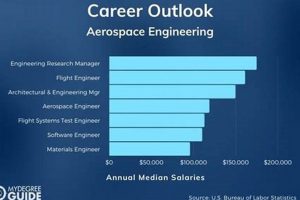
Generally, individuals holding advanced degrees in engineering fields command higher salaries compared to those with only a bachelor’s degree. The specialized knowledge and research skills acquired through Master’s and Doctoral programs translate to increased value in the job market. This becomes a vital consideration when determining the return on investment for advanced education relative to the core question, “what degree is needed for aerospace engineer” to fulfill financial considerations.
- Leadership and Management Opportunities
Advanced degrees can also open doors to leadership and management positions within aerospace organizations. The analytical and problem-solving skills honed during graduate studies, combined with specialized knowledge, make individuals well-suited for roles involving project management, technical leadership, or strategic decision-making. Pursuing such careers often relies on having skills from advanced degrees to perform their role effectively, contributing more strategically to the aerospace business model.
In essence, while a bachelor’s degree provides the foundational knowledge for aerospace engineering, advanced degrees offer pathways to specialization, research, increased earning potential, and leadership opportunities. For individuals seeking to push the boundaries of aerospace technology or assume leadership roles, a Master’s or Doctoral degree becomes necessary. However, it’s important to note that when asking “what degree is needed for aerospace engineer”, the answer is contingent upon the specific career goals and aspirations.
4. Core Curriculum

The core curriculum within an aerospace engineering degree program represents the fundamental knowledge base deemed essential for all practitioners in the field. It addresses the “what degree is needed for aerospace engineer” question by defining the core competencies that an aerospace engineer must possess, regardless of their specialization. Without a firm grasp of these foundational concepts, successful contribution to the aerospace industry is severely limited.
- Mathematics and Physics Foundations
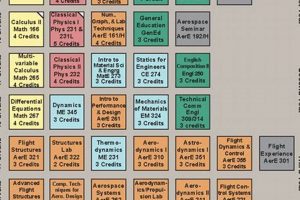
The cornerstone of any aerospace engineering curriculum is a rigorous grounding in mathematics and physics. This includes calculus, differential equations, linear algebra, classical mechanics, thermodynamics, and electromagnetism. For example, understanding fluid dynamics, a core component of aerodynamics, requires a strong foundation in calculus and differential equations. These mathematical and physical principles are essential for modeling and analyzing the behavior of aircraft and spacecraft, directly impacting the “what degree is needed for aerospace engineer” requirements.
- Aerodynamics and Fluid Mechanics
Aerodynamics, the study of air in motion, is central to the design and analysis of aircraft. Fluid mechanics, a broader field, encompasses the behavior of liquids and gases and their interactions with solid objects. Courses in these areas cover topics such as lift, drag, boundary layers, and compressible flow. Practical applications include wing design, aircraft performance analysis, and wind tunnel testing. These are foundational courses that help to understand the basic understanding of air flow that is required for a degree in the aerospace field.
- Structures and Materials
Understanding the behavior of materials under stress and the principles of structural design is crucial for ensuring the safety and reliability of aerospace vehicles. Courses in this area cover topics such as stress-strain relationships, failure theories, finite element analysis, and composite materials. For instance, selecting the appropriate materials for an aircraft fuselage or spacecraft heat shield requires a deep understanding of material properties and structural analysis techniques. Having courses like material science and structure will enhance one’s understanding in the aerospace field.
- Propulsion and Control Systems
Propulsion systems are responsible for generating the thrust needed to propel aircraft and spacecraft. Control systems are used to maintain stability and guide these vehicles. Courses in these areas cover topics such as engine cycles, rocket propulsion, feedback control, and navigation systems. Designing efficient and reliable propulsion systems and control systems is vital for ensuring the performance and safety of aerospace vehicles. With courses like these you will have a deeper understanding of core aspects of the aeronautics field.
These four core curriculum components represent a fundamental body of knowledge that defines “what degree is needed for aerospace engineer.” Mastery of these areas is essential for graduates to be successful in designing, analyzing, and testing aerospace vehicles and systems. Without this foundation, advancement within the aerospace industry is significantly hampered, underscoring the critical importance of a robust core curriculum.
5. Specialization options
The question of “what degree is needed for aerospace engineer” is often addressed at a general level, highlighting the necessity of a bachelor’s degree in aerospace engineering or a related field. However, specialization options significantly influence the specific knowledge and skills acquired, shaping the engineer’s career trajectory. These specialized paths often necessitate focused coursework and, in some cases, advanced degrees, augmenting the foundational “what degree is needed for aerospace engineer.” For example, an individual interested in spacecraft propulsion may pursue coursework in advanced thermodynamics and rocket propulsion, differing significantly from someone specializing in aircraft structures who would focus on finite element analysis and composite materials. This divergence underscores the influence of specialization on academic choices beyond the core requirements.
Consider the practical implications. An aerospace engineer specializing in flight control systems for unmanned aerial vehicles (UAVs) requires expertise in areas such as embedded systems, sensor fusion, and control algorithms. This engineer might take specialized courses in robotics and autonomous systems, demonstrating the need to tailor the curriculum to specific career aspirations. Similarly, an engineer focused on the design and analysis of satellite communication systems would need extensive knowledge of signal processing, antenna theory, and orbital mechanics. These specialized skill sets are often developed through elective courses and, increasingly, through master’s-level studies, exceeding the minimum requirements of “what degree is needed for aerospace engineer” for entry-level positions.
In conclusion, while a bachelor’s degree forms the bedrock of aerospace engineering education, specialization options dictate the specific knowledge and skills required for particular career paths. The phrase “what degree is needed for aerospace engineer” should thus be viewed not as a static requirement, but as a dynamic equation influenced by individual career aspirations and the chosen area of specialization. Advanced degrees and targeted coursework augment the fundamental requirements, shaping the engineer’s expertise and professional trajectory. The challenge lies in aligning academic pursuits with desired specialization to maximize career potential within the diverse field of aerospace engineering.
6. Licensing/Certification
Licensing and certification represent crucial components within the aerospace engineering profession, directly impacting the perceived and actual value of the educational qualifications. While a relevant degree forms the foundational requirement, the attainment of professional licensure or specific certifications often elevates an engineer’s credibility and expands career opportunities. This process validates the knowledge gained during the academic phase and assesses the practical application of that knowledge in real-world scenarios.
- Professional Engineer (PE) Licensure
The Professional Engineer (PE) license is a widely recognized credential indicating a high level of competency and ethical conduct. Obtaining a PE license typically requires graduating from an ABET-accredited engineering program, passing the Fundamentals of Engineering (FE) exam, gaining several years of relevant work experience, and passing the Principles and Practice of Engineering (PE) exam. In the context of “what degree is needed for aerospace engineer,” holding a PE license demonstrates that the engineer has not only acquired the necessary academic knowledge but also possesses the practical skills to independently practice engineering in a responsible and ethical manner. Many senior engineering roles and independent consulting positions require PE licensure.
- FAA Certification
The Federal Aviation Administration (FAA) offers various certifications relevant to aerospace engineers working in specific areas, such as aircraft maintenance, repair, and inspection. For instance, an aerospace engineer involved in designing modifications to aircraft structures might need to obtain FAA certification to ensure compliance with safety regulations. These certifications validate an engineer’s expertise in a particular area of aircraft operations and maintenance, demonstrating a commitment to adhering to industry standards and regulatory requirements. These are an important addition to the degree someone has attained.
- Industry-Specific Certifications
Various industry organizations offer certifications that validate an aerospace engineer’s expertise in specific technologies or processes. For example, a certification in finite element analysis (FEA) or computational fluid dynamics (CFD) could demonstrate proficiency in using these tools for aerospace design and analysis. Similarly, certifications in project management or systems engineering could enhance an engineer’s ability to lead complex aerospace projects. These certifications complement the academic degree by providing specialized knowledge and skills directly applicable to specific industry needs.
- Importance of Continuing Education
Maintaining professional licensure and certifications often requires ongoing professional development and continuing education. This ensures that aerospace engineers stay abreast of the latest technological advancements and industry best practices. Continuing education courses, workshops, and conferences provide opportunities for engineers to expand their knowledge base and maintain their professional competence. This ongoing learning process underscores the dynamic nature of the aerospace field and the importance of lifelong learning for maintaining a competitive edge.
In summary, while “what degree is needed for aerospace engineer” establishes the foundational academic qualifications, licensing and certification enhance an engineer’s credibility, expand career opportunities, and demonstrate a commitment to professional competence. These credentials validate the practical application of academic knowledge and ensure adherence to industry standards and regulations, significantly elevating the overall value of the initial educational investment. It provides a framework for the understanding of a career in the aerospace field.
Frequently Asked Questions
This section addresses common inquiries regarding the educational qualifications necessary for a career in aerospace engineering. It aims to clarify misconceptions and provide definitive answers based on industry standards.
Question 1: Does an aspiring aerospace engineer need a bachelor’s degree specifically in aerospace engineering?
While a bachelor’s degree in aerospace engineering is the most direct route, degrees in related fields such as mechanical engineering, physics, or applied mathematics can also provide a pathway. However, supplemental coursework in aerospace-specific topics may be necessary to compensate for gaps in knowledge.
Question 2: Is an aerospace engineering technology degree equivalent to an aerospace engineering degree?
No. Aerospace engineering technology programs typically focus on the practical application of existing technologies, while aerospace engineering programs emphasize the theoretical and design aspects. Job opportunities and responsibilities differ significantly between the two.
Question 3: How important is ABET accreditation when selecting an aerospace engineering program?
ABET accreditation is extremely important. Employers often prioritize graduates from ABET-accredited programs, as it signifies that the program meets established quality standards and prepares graduates for professional practice. Furthermore, ABET accreditation is often a prerequisite for professional licensure.
Question 4: Can relevant work experience substitute for a formal aerospace engineering degree?
While relevant work experience is valuable, it cannot typically substitute for a formal engineering degree. A degree provides the theoretical foundation and analytical skills necessary for designing and analyzing complex aerospace systems. Experience complements, but does not replace, this fundamental knowledge.
Question 5: What is the value of a master’s or doctoral degree in aerospace engineering?
Advanced degrees offer opportunities for specialization, research, and leadership roles. A master’s degree can enhance career prospects and earning potential, while a doctoral degree is often required for positions in academia or advanced research and development. These degrees further improve skills to apply to the specific requirements.
Question 6: Is professional licensure required for all aerospace engineers?
Professional licensure is not strictly required for all aerospace engineers, but it is highly recommended and often necessary for certain roles, such as those involving independent practice or signing off on engineering designs. Licensure demonstrates competence and ethical conduct.
In summary, while various paths exist, a bachelor’s degree in aerospace engineering from an ABET-accredited program is the most direct and recognized route to a career in the field. Advanced degrees and professional licensure further enhance career opportunities and earning potential.
The following section will explore resources for further learning and professional development in aerospace engineering.
Conclusion
The preceding exploration has detailed the academic requirements for a career in aerospace engineering. A bachelor’s degree in aerospace engineering, ideally from an ABET-accredited institution, serves as the essential foundation. While related fields offer alternative entry points, supplementary aerospace-specific knowledge is often required. Advanced degrees, professional licensure, and ongoing professional development enhance career prospects and earning potential, but the baseline remains a strong undergraduate education in aerospace engineering. This answers the “what degree is needed for aerospace engineer” question.
The pursuit of an aerospace engineering career demands rigorous academic preparation and a commitment to lifelong learning. Understanding these requirements is paramount for individuals considering this path. The future of aerospace innovation hinges on the expertise of well-educated and qualified engineers, emphasizing the significance of adhering to established educational standards. A call to action is also in order for future professionals to always innovate and adapt their skills as technology gets more and more advanced.